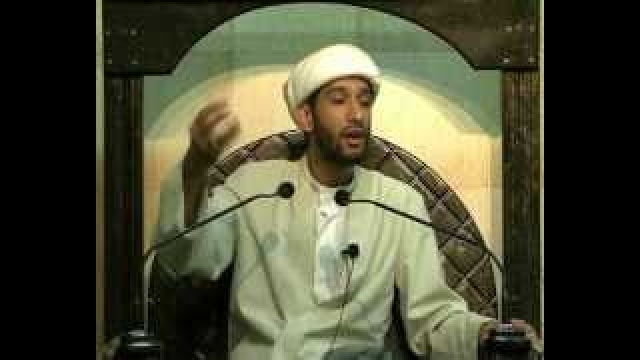
Tafsir Du'a Al-Iftitah 2/14 - Ramadan 1433/2012

Sallu 'ala Muhammad wa ali Muhammad [Allahuma salli 'ala Muhammad wa ali Muhammad ]. Before we begin, we have been requested to recite Du'a ash-Shifa' for a sister in India who is going for an operation tomorrow, for all of our mareedh around the world. And as we mentioned yesterday, there are still problems for our brothers in Syria, especially in the, say, the Sayyida Zaynab area, so InshaAllah, we pray for all of those who are in need around the world.
Bismillah al-Rahman al-Rahim. “Amman yujibu al-mudtarra idha da‘ahu wa yakshifu us-su’u”. “Amman yujibu al-mudtarra idha da‘ahu wa yakshifu us-su’u”. “Amman yujibu al-mudtarra idha da‘ahu wa yakshifu us-su’u”. “Amman yujibu al-mudtarra idha da‘ahu wa yakshifu us-su’u”. “Amman yujibu al-mudtarra idha da‘ahu wa yakshifu us-su’u” (27:62) [Allahuma salli 'ala Muhammad wa ali Muhammad]. For the love of our Awaited Saviour, Imam al-Hujjah, one more salawat [Allahuma salli 'ala Muhammad wa ali Muhammad].
'A'udhu bil-Lahi, min al-Shaytan, al-rajim. Bismillah, Al-Rahman, Al-Rahim. Al-hamdu lil-Laahi, Rabbi Al-'Alameen. "Al-hamdu lil-Laahi alladhee hadana li hadha, wa ma kunna linahtadiya lawla ann hadana Allah" (7:43) [All praise is due to Allah Who guided us to this, and we would not have found the way had it not been that Allah had guided us]. Wa as-salat, wa as-salamu 'ala ashrafi Al-Anbiya'i, wa al-Mursaleen, Khatam an-Nabiyyin, Sayyidin il-Mumajjad, Bashirin il-Musaddaq, Al-Mustafa al-Amjad, Mahmood al-Ahmad, Abil Qasimi Muhammad. [Allahuma salli 'ala Muhammad wa ali Muhammad]. Wa 'ala ahlih, at-tayyibin, at-taharin, al-masoomeen. Wa la'ana Allahu ala adh-Dhaalimina min al-awwalina wa al-Akhirin.
Amma Ba'ad, qala Imam Al-Hujjah 'alayhi as-salam [Allahuma salli 'ala Muhammad wa ali Muhammad]. Allahumma inni aftatihu ath-thana'a bi hamdik. Wa Anta musaddidun lissawabi bimannik. Wa ayqantu annaka anta Arhamu al-Rahimeena fi mawdi'i al-'afwi wa-al Rahmah. Salawaat [Allahuma salli 'ala Muhammad wa ali Muhammad].
Awaited Saviour Imam az-Zamana, my respected teachers, elders, brothers and sisters, Salamun alaykum jamee'an, wa rahmat Ullahi wa barakatuh [Wa 'alaikum salam wa rahmat Ullahi wa barakatuh].
Amongst the greatest actions specified within the Holy month of Ramadan is the supplication, to continuously perform Du'a, supplicating toward Allah Subhana wa Ta'ala, for all of our very different kinds of needs throughout the day. When it comes to this specific supplication within Shahr Ramadan, the emphasis can be seen by how many different types of supplication are recommended within this month. And how we see that there is a formulation, a difference of type of supplication that is recommended within Shahr Ramadan. For example, we see that when we begin our fast, we are given a supplication. When we open our fast, we are given a supplication. At the end of our Salah, there is a different supplication. There is a different supplication for each of the ten nights as we end the Holy month itself.
And therefore, you can see by virtue of so many different supplications, and how often we are recommended to recite these different supplications, there is a huge and specific emphasis on the Du'a within this particular month, and therefore it formulates part and parcel of the system of Allah Subhana wa Ta'ala within Shahr Ramadan as part of the fasting process, as part of the purification process that comes alongside the recitation of the Holy Qur'an, the additional prayers that we are supposed to pray, and therefore all of these things together formulate that direction towards Allah Subhana wa Ta'ala.
This supplication process, these additional Du'a that we find that are given to us within this particular month, they serve a very specific purpose. There is a concept, a theory behind these different Du'a that are recommended within this month. The concept is that when we supplicate, we are in communication with Allah Subhana wa Ta'ala. We are discussing with Him between myself, my soul, and Him, being the All-Listening Creator and Sustainer of this universe. And therefore, by virtue of my communication with Him, and by virtue of there being so many different types of supplication, I am communicating with Him about so many different things throughout this day.
As we look within the different Du'a that are given to us, I might be supplicating to him seeking Istighfar or I might be supplicating to him telling him of my needs, or I am supplicating telling him of my weaknesses, or telling him about my family, or telling him about the politics of the world. Every different type of situation that I could possibly need to converse with my Lord about, there is a Du'a for, and specifically within this month, we are recommended to increase our supplication, and we can see that by virtue of how much we are doing that.
With this, the idea is that I am constantly attracting Tawhid. The more I am in communication with Him, the more I am in remembrance of Him. Sallu 'ala Muhammad wa 'ali Muhammad [Allahuma salli 'ala Muhammad wa ali Muhammad]. And therefore, the concept of being in this constant communication with Allah Subhana wa Ta'ala, is in order to ensure that I am in a constant state of Tawhid. In that throughout my day, whether I am walking, whether I am about to open my fast, whether I am in an evening, whether I am about to finish the recitation of Qur'an, I am constantly in communication with Allah, Subhana wa Ta'ala.
The resulting factor of this is to mould me for this particular month, and therefore to continue to mould me for the rest of the year coming. What we mean by this, is that many of our Ahl ul-Bayt, peace be upon them, have a synonymous tradition. They say to us that this particular month, the month of Ramadan, is the first month of the year. The first month of the year, but straight away, we question and we say 'Well, Muharram is the first month of the year and Safar is the second month of the year. How can we have traditions from our Ahl ul-Bayt, peace be upon them, saying that Shahr Ramadan is the first month of the year?'
What they are trying to inculcate in us is that Shahr Ramadan is the first spiritual month of the year, to the extent that our 6th Imam, Imam Ja'far Al-Sadiq, salawat Allahi wa as-salamu alayh [Allahuma salli 'ala Muhammad wa ali Muhammad], is narrated to have said 'He who keeps away from sins in Shahr Ramadan, will be able to keep away from sins for the rest of the year.' Hence, Shahr Ramadan is the first of the, is the first month of the year. The idea is, in this month, I mould myself to be that individual, that character that I want to be, so that as Shawwal begins, as the rest of the year continues, I have already reached that peak of myself within the year and continue on that person.
Now here we need to contextualize what the Imam is saying in our time. Sometimes in our families at home, or in ourselves, we choose to do something or choose to close off something in Shahr Ramadan. For example, and we hear this many times within our families, for example, dad or mum or the elder of the family will say in this month, don't watch certain types of films or you are not supposed to go here within this month. Or the youth will say 'Well I am putting in the effort, so for this month, I won't listen to music.' Have you seen this within the family?
Family specifically says in Shahr Ramadan, don't watch Indian films. Dad says in this month, in Shahr Ramadan, so you need to make sure that you don't listen to music. Now here, it's brilliant from one perspective that we are inculcating the idea that in Shahr Ramadan, I increase my spirituality. But on the other hand, when we begin to observe what we are really saying, there is a degree of hypocrisy in the same thing.
I am respecting the month of Ramadan, so therefore I will switch off a certain type of film or I won't listen to a certain type of thing. But the moment Shawwal comes, you know what? It's ok, I'll put it back on again. Which one was greater? Shahr Ramadan, or the Creator of Shahr Ramadan? The Creator is greater! Therefore, in our families, we have to break this mould of saying 'In Shahr Ramadan, I won't watch the Indian film, I won't listen to music. Oh son of mine, don't listen to music in this month.' It shouldn't be the statement 'In this month.'
It should be 'In Shahr Ramadan, learn how to be the individual you want to be for the whole year.' [Subhana Allah] If you are capable of switching off that particular film and let's be honest, it happens within our community. Let's not say 'Why is he bringing this from the pulpit? It happens in our families. If you are capable in Shahr Ramadan of switching of that kind of film, you are capable of switching it off for the entire year. If you are a person who abstains from listening to music, or smoking, or any physical, spiritual, emotional weakness in this month, the purpose of this month was to inculcate that, so that you carry through, throughout the rest of the year. Hence our Ahl ul-Bayt say that this is the first month of the year. This is the first spiritual month of the year. When you practice, you practice for the entire year, InshaAllah.
Now with that, we see that Shahr Ramadan is the peak of the year. There is nothing compared to Shahr Ramadan. The blessings that we are sitting in now are incomprehensible. There is no way for you and I to tangibly understand what is happening in our souls, in the unseen realm, how much Mercy Allah Subhana wa Ta'ala is throwing upon us at this very moment. It is greater than that mother who hasn't seen her child for so many months. When he lands at the airport and she has her open arms, Allah Subhana wa Ta'ala has His open arms metaphorically saying 'Come towards me O my son, O my creation, I am waiting for you to run into My open arms of Mercy.'
The fact that Shahr Ramadan is the greatest of months, and the fact that this Du'a is emphasized so much in the month, the idea is not to just finish. In the next month, coming in Shawwal, however much you have practiced to be in communion with your Lord, when you open a meal, you say to Him thank you, because in this month you prepare yourself. When you open your meal you say it, when you close your meal, after Salah you make your Du'a, carry this through because you are in communion with your Lord.
The fact that Shahr Ramadan is the peak of the month, we find that the preceding two months are the ones that help build us in preparation. Everything is geared towards this climax, this crescendo of the year. Rajab is preparing us for Sha'ban, Sha'ban prepares us for Shahr Ramadan. What do we mean by this? As an example, in the months of Rajab and Sha'ban, there is clearly an emphasis on fasting. Fast. He who fasts one day within those months, Hell is closed to him. There's an emphasis. Prepare yourself.
For example, there is an emphasis in the months of Rajab and Sha'ban to perform Ziyarah. We go towards Holy Karbala and there is such a level of emphasis of Ziyarah to Ahl ul-Bayt, peace upon them, in the month of Rajab and Sha'ban. Why? It is preparing us to perform the Ziyarat of the Table of Allah Subhana wa Ta'ala. The fact that we are building, we are preparing ourselves, in the same way, Du'a is also preparing us.
In the month of Rajab, we had a specific Du'a we are recommended to recite every night: 'Yaa Dhul Jalali wa al-ikraam, Ya Dhal na'maa'i wa al-jood, Ya Dhal manni wa at-tawl, harrim shaybatee 'ala an-naar.' Every night, practice this one in Rajab. But then because Sha'ban is supposed to increase us, it is building the foundations towards Shahr Ramadan, in Sha'ban, there is another Du'a to be recited. We have the Munajat of Sha'baniyyah. Imam al-Khomeini 'alayhi ar-Rahmah is, narrated to have said 'Of all the Du'as, Munajat Sha'baniyyah is my favourite.'
Imagine what secrets must be within this particular Du'a. Rajab building to Sha'ban. And therefore, if the Holy month of Ramadan is the peak of all the months within the year, it must have the very best of Du'a within this particular month. And that is the Du'a Iftitah, given to us by the Awaited Savior and Imam of our time, Imam Al-Hujjah, ajj'ala Allahu ta'ala farajahu ash-shareef [Allahuma salli 'ala Muhammad wa ali Muhammad]. If these are the best of nights, and these are the best of days, we must have an equivalent Du'a for this particular month and that is the Du'a Al-Iftitah.
Our scholars have reviewed this Du'a time and time again, and they have verified it, and stated that it is completely correct by their opinion, to the extent that they quote one tradition which says that the Imam narrates, that 'He who recites Du'a Iftitah, the Angels seek Istighfar for that person on their behalf.' Can you imagine when the Angels take time away from worshipping Allah Subhana wa Ta'ala in order to seek Istighfar for you and I? That must be a worship on behalf of us, that they are doing for Allah Subhana wa Ta'ala, to ask for our forgiveness.
Du'a Iftitah, therefore, must be a Du'a that we consider to be of a huge rank, to the extent that we could also and may also be reciting this Du'a outside of these particular nights of Shahr Ramadan. The themes within it are universal. The concepts within it are ones that can be applied throughout the whole of the year. And therefore it is this recommendation that maybe once a month we can take time out to recite Du'a Iftitah, to remind ourselves what is the concept of what this Imam is trying to give us.
Now, here InshaAllah, we have many of our elders and our youth who have been reciting Du'a Iftitah every single year, and now Al-hamduli-Llah Ta'ala, we also have the translation of it as well. So we become accustomed to the words that the Imam, the treasures that the Imam is giving to us.
In today's world, culture, society, we need to continue to build on what we have. We need to encourage our youth to ponder upon these verses, not just to recite them beautifully, not just to be given awards because they recite them beautifully, but also we must recognize them when they have understood the value of the words therein, because without understanding the value of the words therein, we are only reciting this particular Du'a as a parrot and therefore, InshaAllah, we encourage ourselves to really take the Du'a home, and ponder as to what the Imam is trying to tell us.
Let us start with this question or these series of questions and ask ourselves what the Imam would be giving to us within this Du'a? What we know, what facts do we know? Let us analyze the facts of this Du'a and see what questions we can come with and then as we begin our commentary of Du'a Iftitah throughout the nights, we will come back to these very questions. This Du'a is given to us in Shahr Ramadan and therefore it must have a special relationship with this month.
Our Imams, peace be upon them all, are in tune with the unseen realm. They understand Tawhid, Allah Subhana wa Ta'ala, the world and the next world for everything that it really is. And therefore, when they give us a Du'a at any particular night or any particular occasion, it is specific to that particular occasion. Du'a Kumayl is specific for the Thursday night. It doesn't mean you can't recite it outside, of course you can. Recite it as often, as much as you want. But the reason as to why the Commander of the Faithful gave us this Du'a and specified to at least recite it once a week on this Thursday, is because something in the unseen realm of Thursday night has a connection with the verses therein [Subhana Allah].
Similarly, Du'a Iftitah is very specific. Why didn't the Imam give us this Du'a in Sha'ban? And why don't we recite Munajat Sha'baniyyah within Shahr Ramadan? There must be a reason for this Du'a and its relationship within this particular month. And therefore every verse that you read, every verse that you read tonight and throughout the rest of your life, pose that question, why did Imam say this line in context of Shahr Ramadan? One.
Two. If this Du'a is given to us by the Imam of our time, it must be that he has a relationship with this Du'a. Why didn't the Commander of the Faithful give us this Du'a? Did he not know about it? Of course he knew about it. Why didn't our fifth imam or our tenth Imam give us this Du'a? Of course they knew about it. Why did our 12th Imam give us this Du'a? And therefore the fact that our Imam is in ghaybah for such a lengthy period, may Allah hasten his reappearance, there must be a relationship between the Imam himself and this particular Du'a. And therefore by virtue of there being a relationship between those two, we are obliged to understand it a) in context of ghaybah, but b) also in context of his reappearance whenever that may be. And therefore, this is another question that we can pose every time we read a verse 'My master, why would you say this? What relationship does it have towards you? And what relationship does it have towards Shahr Ramadan? Sallu 'ala Muhammad wa 'ali Muhammad [Allahuma salli 'ala Muhammad wa ali Muhammad].
The opening line of Du'a Iftitah. 'Allahuma salli 'ala Muhammad wa ali Muhammad wa ajjil al-farajahum. Bismillah al-Rahman al-Rahim. Allahumma inni aftatihu ath-thana'a bi hamdik. O Allah. 'Allahumma inni' - I begin, 'Allahumma inni aftatihu ath-thana'a bi hamdik' - I begin by Glorifying You and Praising You.' Or another way to translate this would be 'I begin by Glorifying You with Praise.' 'Allahumma inni aftatihu ath-thana'a bi hamdik.' I begin this Glorification through Your Praise. Now here InshaAllah, we want to spend the rest of the discussion focusing on this one word, Iftitah, because in regards to the one word, Iftitah, it sets a precedent for every single feature of this particular Du'a. And once we understand this one word, Iftitah, and what it is truly saying to you and I, we will have an understanding of how the Imam sets the precedent of the remainder of the Du'a.
The Du'a can be split into two. The scholars who write the commentary of this Du'a and make comment, they suggest that the Du'a can be split into two. The first half is a supplication and praise towards Allah Subhana wa Ta'ala. It is in regards to the relationship between us as creation and Him as Allah Subhana wa Ta'ala. The second half of the Du'a is in regards to our relationship and as a praise towards the Divine Leaders, but also an exposition upon what life should be and how we should be thinking in order to aid these particular Divine Leaders.
So we have a praise for Allah and we have a praise for Divine Leadership. Interaction with Allah, interaction with Divine Leadership. And therefore, this Du'a is split into two. As we know, as a community when we finish that Salawat upon the Awaited Savior, that is when we sit and we begin to address the Imam, and we begin to speak about the facets of the world that we live in, and what we want from his coming, how we want his government to be, how we want the earth to be. And Therefore, the idea is for us to participate in that particular coming.
Now, when it comes to this, the word Iftitah itself, has its own measurement upon these particular features. The word Iftitah follows an Arabic rule in the science of syntax. As you know, in Arabic, we have morphology and we have the syntax. We have sarf and we have nahw and one has to master these sciences before they're able to really understand what the Holy Qur'an is saying in accordance with the language, in accordance with jurisprudence, in accordance with all the different things that language is going to bear testimony to.
In the science of syntax, there is a particular rule that this word, Iftitah, follows. Ziyadat ul-mabadi, tadullu 'ala ziyadat ul-ma'aani. The rule translated in syntax is, the more letters that you have in a particular word, the more meaning it has to it. Yes? The more letters that the Arabic word has, the more meaning that this particular word has to it, the more depth that you can begin to extract from this particular word.
Let me give you an example and you will understand this very simply, this example and then we'll apply it InshaAllah to the Holy Qur'an. When we say Bismillah al-Rahman al-Rahim, we begin in the name of Allah, the Most Kind, the Most Merciful, al-Rahman al-Rahim. We know that the words al-Rahman and al-Rahim denote something very specific. Al-Rahman and al-Rahim come from the very same root word Rahmah. They both mean Mercy but al-Rahman is different from al-Rahim. Al-Rahman is a very encompassing Mercy. It is a Mercy for everything and everybody in creation, be you believer or disbeliever, polytheist or atheist, you are still encompassed within this particular Mercy of Allah Subhana wa Ta'ala. Al-Rahim, however, is a specific type of Mercy. It is the Mercy for the believers, those who have strived hard, those who are worthy of being designated with a specific type of Mercy in this world and in the next. They are given that specific type of Mercy.
Now we know this, because Qur'an shows us this. We know this because Ahl ul-Bayt have told us this. But also, even if these two sources hadn't told us this, the Arabic rule of syntax, that the more letters you have, the more meaning there is to it. Al-Rahman has 5 letters, Al-Rahim has 4 letters, therefore, by virtue of this principle rule that if you have more letters to a particular word, you have a greater meaning, al-Rahman having five letters over four letters is more encompassing within itself. This is the principle of this rule. Let us apply this now towards the word Iftitah and understand what the word Iftitah actually means.
Iftitah, we will translate 'Allahumma inni aftatihu. O my Lord, I begin.' I begin Praising You and Glorifying You, my Lord. But it doesn't mean this, only we say this in translation. But the reality of this is so much more. In the Arabic language, you have root words or root letters and additional letters. The root letters are called huruf ul-asliyah and the additional huruf ul-mazidah. In the word Iftitah, the root letters are Fa, Ta, Ha. Fa, Ta, Ha. Therefore, the additional letters, the additional alif and additional Ta to make Iftitah, are the huruf ul-mazidah, they are the additional letters. And therefore when you apply the additional letters, they add the value to the meaning. When you add these letters, it changes the context of the word, instead of just saying, 'My Lord, I begin in Your Praise and Glory, the additional two letters make this into a continuous tense, meaning that I continuously begin in Praise of You, My Lord. There's never a time when I stop. I continuously Praise You, My Lord, I never stop Praising You.
Let us see how this is in Qur'an and then re-review this within the word Iftitah. There are two examples we want to present to you about this particular rule within the Holy Qur'an. The first one is within Surat ul-Hujurat, chapter number 49, verse number 9 in the Qur'an. It says: Bismillah al-Rahman al-Rahim. "Wa in ta'ifatani min al-mu'minin, iqtatalu faslihu baynahuma" (49:9). 'When you see two groups from amongst the believers arguing, fighting among themselves, "Faslihu baynahuma" (49:9), bring about peace, reformation between the two of them.'
The word 'iqtatalu' follows this same rule as the word Iftitah. When you see two groups fighting "iqtatalu faslihu baynahuma" (49:9) bring about reformation with them. The word 'iqtatalu' is a continuous tense. It means when you see two groups of the believers continuously fighting, that is when there is an obligation upon us to step in, bring these two groups together in order to bring about that reformation.
But the beauty is, that this word 'iqtatalu' specifies continuous argument. For example, if you and I argue once, let's say we have fallen out with a business transaction, we are brothers, we are family members. Sometimes we have a difference of opinion. If you and I argue once, but that is the end of it, it means that there's no need to step in because you and I have concluded our disagreement. We have put it aside, we have moved on but the Qur'an specified 'iqtatalu'. When you see them going through continuous arguments, when there's no ending towards our disagreement, that is when someone should step in and be able to say, we will bring about reformation, we will bring about sulh, and peace between these two people.
The Commander of the Faithful once brought his two magnificent sons. He said to them, O Hasan, O Husayn, I will tell you what your grandfather told me. If you see two groups from amongst the believers arguing, bring about reformation, for it is dearer in the eyes of Allah Subhana wa Ta'ala than the person who fasts, and prays mustahabbat for a whole year. Bring about reformation because it is better than these.
There is a story of a scholar who took this to the highest of levels. Marhum Ayatullah Sayyid Muhammad Ridha Shirazi, may Allah bless his soul, he's buried in Holy Karbala. When you go and you stand in front of Qibla and you're facing towards Qibla, if you look immediately left, you will find that his grave is buried there, within the compounds of the Master of the Martyrs. It's once narrated that Sayyid Shirazi, as a very senior scholar within the Holy city of Qum, there were other scholars that didn't agree with him so much. They had a falling out. They didn't like his way of thinking, they didn't agree with him. Intellectual differences of opinion happened.
He said to himself, I can wait for believers to come and bring me and this other scholarly group together, or I can take it upon myself to go and sit with that scholar. He called that particular scholar, invited himself home and sat with him. At the end, the scholar came out and said, this is no ordinary Marja, Ayatullah Sayyid Muhammad Ridha Shirazi is an angel walking upon this earth. That is the level in which someone goes in order to bring about reconciliation. There is a problem between us, I won't wait till he comes and steps in, I will come to you and say, let us separate or let us bring about our reconciliation.
The Qur'an said "iqtatalu faslihu baynahuma" (49:9), in the continuous tense. Or as another example, within Surat ul-Furqan, Allah Subhana wa Ta'ala quotes the disbelievers, they would say "Wa qalu asateeru al-awwaleen iktatabaha" (25:5). The disbelievers would say that these are just stories from the ancients, the Prophet, he's not really bringing wahi, there's no real revelation, it's just stories of the old. He's just regurgitating the stories of Nabi Allah Nuh, Nabi Allah Yusuf, and so on and so forth. This same accusation is one that is labelled amongst us today by the other people. They come today and still say that these words are nothing but a regurgitation of the Bible. The Qur'an quoted the disbelievers in the continuous sense, "Wa qalu asateeru al-awwaleen iktatabaha" (25:5). He does nothing but plagiarise continuously.
Whenever we ask him about Yusuf, he says 'Wait, I will bring you a story.' He plagiarises. When we ask him about Nuh or Dhul Qarnain, he plagiarises. These were the continuous tenses that were made within this particular thing to the point that this continuous tense in the Arabic language denotes that when you actively, continuously perform this action, it becomes habitual for you. When we argue, we continuously argue, it becomes habitual. When the Prophet was accused of plagiarism, he was becoming habitual in his plagiarism, wa ayyadhu bi-Llah .
Similarly, when we begin with the words: Allahumma inni aftatihu ath-thana'a bi hamdik,' we say 'My Lord, I am Praising You so often it becomes part and parcel of who I am.' Wherever I walk, I look around the universe, I say praise be to Allah, for I see the stars, He is the Creator. When I see the sea, I say Praise be to my Lord, for You are the Creator of the sea. Whatever, whenever, I am the one who is continuously Praising You. And that is what is meant by Allahumma inni aftatihu ath-thana'a bi hamdik.
My Master says: 'I begin by continuously Praising You. It is habitual for me. I can't stop Praising you, my Lord.' And therefore this Du'a is split into two. It follows the same theme. The Imam states, he begins by the Praise. And if the Du'a is split into two, and the first half is a Praise for Allah Subhana wa Ta'ala then the second half must be an evident Praise towards the Divine Leaders. And that is why in the second half of the Du'a, the Imam praises Ahl ul-Bayt in such a manner that you may not have seen elsewhere from any other Imam in his time.
Allahumma salli 'ala Muhammadin abdika wa Rasulik. Allahumma salli 'ala Muhammadin 'abdika wa Rasulik, Wa ameenika wa safiyyik, wa habeebika, wa khiyaratika min khalqik, wa hafidhi sirrika, wa muballighi risalatik, afdhala, wa ahsana, wa ajmala, wa akmala, wa azka, wa anma, wa atyaba, wa athara wa asna, wa akthara ma sallayta wa barakta, wa tarahhamta wa tahannanta, wa sallamta.'
He continues then. He turns towards the Commander of the Faithful 'Allahumma wa salli 'ala 'Aliyyin Amiri al-Mu'minin, wa wasiyyi Rasuli Rabbi al-'alameen, 'abdika wa waliyyika wa akhi Rasulika, wa hujjatika 'ala khalqik, wa ayatika al-kubra, wa an-naba'i al-'adheem, wa salli 'ala as-Siddiqati at-Tahirah, Fatimat uz-Zahra [Allahuma salli 'ala Muhammad wa ali Muhammad].
Allahumma inni aftatihu ath-thana'a bi hamdik. I begin this Du'a in continuous Praise, continuous Glorification, continuous recognization of the Greatness of Who is in front of me. And therefore he starts with Allah Subhana wa Ta'ala and in the second half he concludes with the praise of Ahl ul-Bayt, peace be upon them. At the end of this first line 'Allahumma inni aftatihu ath-thana'a bi hamdik.' Ath-thana' and Hamd are two different types of Glorification and Praise. Hamd is superior, and therefore every type of Thana is Hamd but Hamd is superior. And therefore when you give Hamd, it is not Thana. And therefore the Imam starts by saying 'I begin this Praise by Glorifying You and Praising You in such a way.
Please raise your hands, join us in Du'a. We pray to Allah Subhana wa Ta'ala for the hastening of the reappearance of the Awaited Savior. We ask You, Ya Allah, through the wasilah of the Holy Qur'an, and the Awaited Savior of our time, to allow us to be alongside him at all times in our life and in our death. We ask You, Ya Allah, if we are to pass away from this world before the reappearance, raise us from our graves to be alongside our Imam.
We ask You, Ya Allah, through the wasilah of the Holy Qur'an and our wonderful Imam, to allow us to fulfil this month as You have commanded us to fulfil it, to understand and recite Qur'an as You have obliged us to recite it, to fast as we have been obliged to fast. We ask You, Ya Allah to forgive the sins of our parents, our marhumeen, all those whom we love, all those that love us, and all of our leaders. And we ask for, Ya Allah, to perform the opportunity, to have the opportunity to perform the Ziyarat of all of Ahl ul-Bayt, peace be upon them all. And we ask You, Ya Allah, for the opportunity to die in the love of Muhammad wa ali Muhammad. Wa as-salamu alaykum jamee'un wa rahmatullahi wa barakatuh.
Sallu 'ala Muhammad wa ali Muhammad [Allahuma salli 'ala Muhammad wa ali Muhammad ]. Bevor wir beginnen, wurden wir gebeten, Du'a ash-Shifa' für eine Schwester in Indien zu rezitieren, die morgen operiert wird, für alle unsere mareedh auf der ganzen Welt. Und wie wir gestern erwähnt haben, gibt es immer noch Probleme für unsere Brüder in Syrien, besonders in der Gegend von Sayyida Zaynab, also InshaAllah beten wir für alle, die auf der ganzen Welt in Not sind.
Bismillah al-Rahman al-Rahim. "Amman yujibu al-mudtarra idha da'ahu wa yakshifu us-su'u". "Amman yujibu al-mudtarra idha da'ahu wa yakshifu us-su'u". "Amman yujibu al-mudtarra idha da'ahu wa yakshifu us-su'u". "Amman yujibu al-mudtarra idha da'ahu wa yakshifu us-su'u". "Amman yujibu al-mudtarra idha da'ahu wa yakshifu us-su'u" (27:62) [Allahuma salli 'ala Muhammad wa ali Muhammad]. Aus Liebe zu unserem erwarteten Erlöser, Imam al-Hujjah, ein weiteres Salawat [Allahuma salli 'ala Muhammad wa ali Muhammad].
A'udhu bil-Lahi, min al-Shaytan, al-rajim. Bismillah, Al-Rahman, Al-Rahim. Al-hamdu lil-Laahi, Rabbi Al-'Alameen. "Al-hamdu lil-Laahi alladhee hadana li hadha, wa ma kunna linahtadiya lawla ann hadana Allah" (7:43) [Alles Lob gebührt Allah, Der uns zu diesem Weg geführt hat, und wir hätten den Weg nicht gefunden, wenn Allah uns nicht geführt hätte]. Wa as-salat, wa as-salamu 'ala ashrafi Al-Anbiya'i, wa al-Mursaleen, Khatam an-Nabiyyin, Sayyidin il-Mumajjad, Bashirin il-Musaddaq, Al-Mustafa al-Amjad, Mahmood al-Ahmad, Abil Qasimi Muhammad. (Allahuma salli 'ala Muhammad wa ali Muhammad). Wa 'ala ahlih, at-tayyibin, at-taharin, al-masoomeen. Wa la'ana Allahu ala adh-Dhaalimina min al-awwalina wa al-Akhirin.
Amma Ba'ad, qala Imam Al-Hujjah 'alayhi as-salam [Allahuma salli 'ala Muhammad wa ali Muhammad]. Allahumma inni aftatihu ath-thana'a bi hamdik. Wa Anta musaddidun lissawabi bimannik. Wa ayqantu annaka anta Arhamu al-Rahimeena fi mawdi'i al-'afwi wa-al Rahmah. Salawaat [Allahuma salli 'ala Muhammad wa ali Muhammad].
Erwarteter Retter Imam az-Zamana, meine verehrten Lehrer, Ältesten, Brüder und Schwestern, Salamun alaykum jamee'an, wa rahmat Ullahi wa barakatuh [Wa 'alaikum salam wa rahmat Ullahi wa barakatuh].
Zu den wichtigsten Handlungen, die im heiligen Monat Ramadan vorgeschrieben sind, gehört das Bittgebet, das ständige Du'a, das Flehen zu Allah Subhana wa Ta'ala, für all unsere verschiedenen Bedürfnisse während des Tages. Wenn es um dieses spezielle Bittgebet im Shahr Ramadan geht, kann man den Schwerpunkt daran erkennen, wie viele verschiedene Arten von Bittgebeten in diesem Monat empfohlen werden. Und wir sehen, dass es eine Formulierung gibt, einen Unterschied in der Art des Bittgebets, das im Schahr Ramadan empfohlen wird. Wenn wir zum Beispiel unser Fasten beginnen, wird uns ein Bittgebet gegeben. Wenn wir unser Fasten öffnen, wird uns ein Bittgebet gegeben. Am Ende unseres Salahs gibt es ein anderes Bittgebet. Für jede der zehn Nächte, in denen wir den Heiligen Monat beenden, gibt es ein anderes Bittgebet.
Anhand der vielen verschiedenen Bittgebete und der Häufigkeit, mit der uns empfohlen wird, diese verschiedenen Bittgebete zu rezitieren, können Sie sehen, dass in diesem besonderen Monat eine große und spezifische Betonung auf dem Du'a liegt, und daher ist es ein wesentlicher Bestandteil des Systems von Allah Subhana wa Ta'ala im Shahr Ramadan als Teil des Fastenprozesses, als Teil des Reinigungsprozesses, der mit dem Rezitieren des Heiligen Qur'an und den zusätzlichen Gebeten, die wir beten sollen, einhergeht, und daher formulieren all diese Dinge zusammen diese Richtung zu Allah Subhana wa Ta'ala.
Dieser Prozess des Bittgebets, diese zusätzlichen Du'a, die uns in diesem besonderen Monat gegeben werden, dienen einem ganz bestimmten Zweck. Es gibt ein Konzept, eine Theorie hinter diesen verschiedenen Du'a, die in diesem Monat empfohlen werden. Das Konzept besteht darin, dass wir, wenn wir ein Bittgebet sprechen, mit Allah Subhana wa Ta'ala kommunizieren. Wir unterhalten uns mit Ihm zwischen mir, meiner Seele, und Ihm, dem Allhörenden Schöpfer und Erhalter dieses Universums. Und deshalb, aufgrund meiner Kommunikation mit Ihm, und aufgrund der vielen verschiedenen Arten des Bittgebets, kommuniziere ich mit Ihm über so viele verschiedene Dinge während dieses Tages.
Wenn wir uns die verschiedenen Du'a ansehen, die uns gegeben werden, dann kann es sein, dass ich ihn anflehe, Istighfar zu erbitten, oder dass ich ihn anflehe, ihm meine Bedürfnisse mitzuteilen, oder dass ich ihn anflehe, ihm meine Schwächen mitzuteilen, oder ihm von meiner Familie zu erzählen, oder ihm von der Weltpolitik zu erzählen. Für jede Art von Situation, über die ich mit meinem Herrn sprechen möchte, gibt es ein Du'a, und speziell in diesem Monat wird uns empfohlen, unser Bittgebet zu verstärken, und wir können das daran erkennen, wie sehr wir das tun.
Der Gedanke dahinter ist, dass ich ständig Tawhid anziehe. Je mehr ich in Kommunikation mit Ihm bin, desto mehr bin ich in Erinnerung an Ihn. Sallu 'ala Muhammad wa 'ali Muhammad [Allahuma salli 'ala Muhammad wa ali Muhammad]. Und deshalb ist das Konzept, in dieser ständigen Kommunikation mit Allah Subhana wa Ta'ala zu sein, um sicherzustellen, dass ich in einem ständigen Zustand von Tawhid bin. Das heißt, dass ich den ganzen Tag über, egal ob ich spazieren gehe, ob ich mein Fasten öffne, ob ich am Abend bin oder ob ich die Qur'an-Rezitation beende, ständig mit Allah Subhana wa Ta'ala in Verbindung stehe.
Der daraus resultierende Faktor ist, mich für diesen besonderen Monat zu formen, und somit auch für den Rest des kommenden Jahres. Was wir damit meinen, ist, dass viele unserer Ahl ul-Bayt, Friede sei mit ihnen, eine synonyme Tradition haben. Sie sagen uns, dass dieser bestimmte Monat, der Monat Ramadan, der erste Monat des Jahres ist. Der erste Monat des Jahres, aber wir stellen sofort Fragen und sagen: "Nun, Muharram ist der erste Monat des Jahres und Safar ist der zweite Monat des Jahres. Wie können wir Überlieferungen von unseren Ahl ul-Bayt, Friede sei mit ihnen, haben, die besagen, dass Shahr Ramadan der erste Monat des Jahres ist?'
Sie versuchen uns beizubringen, dass Shahr Ramadan der erste spirituelle Monat des Jahres ist, und zwar in dem Maße, dass von unserem 6. Imam, Imam Ja'far Al-Sadiq, salawat Allahi wa as-salamu alayh [Allahuma salli 'ala Muhammad wa ali Muhammad], überliefert ist, dass er sagte: "Wer sich im Shahr Ramadan von Sünden fernhält, wird in der Lage sein, sich für den Rest des Jahres von Sünden fernzuhalten. Daher ist Shahr Ramadan der erste Monat des Jahres, der erste Monat des Jahres. Der Gedanke dahinter ist, dass ich mich in diesem Monat zu der Person forme, zu dem Charakter, der ich sein möchte, so dass ich, wenn Shawwal beginnt, wenn der Rest des Jahres weitergeht, bereits den Höhepunkt meiner selbst innerhalb des Jahres erreicht habe und mit dieser Person weitermache.
Hier müssen wir das, was der Imam sagt, in den Kontext unserer Zeit stellen. Manchmal beschließen wir in unseren Familien zu Hause oder in uns selbst, etwas zu tun oder etwas im Shahr Ramadan abzuschließen. Zum Beispiel, und das hören wir oft in unseren Familien, sagen Vater oder Mutter oder der Älteste in der Familie, dass man in diesem Monat bestimmte Filme nicht sehen darf oder dass man in diesem Monat nicht hierher gehen soll. Oder ein Jugendlicher sagt: "Ich strenge mich an, also höre ich diesen Monat keine Musik". Haben Sie das auch in der Familie erlebt?
Die Familie sagt ausdrücklich, dass man im Shahr Ramadan keine indischen Filme sehen soll. Papa sagt, in diesem Monat, in Shahr Ramadan, musst du darauf achten, dass du keine Musik hörst. Einerseits ist es brillant, dass wir die Idee einimpfen, dass ich im Shahr Ramadan meine Spiritualität verstärke. Aber andererseits, wenn wir uns ansehen, was wir wirklich sagen, steckt darin auch ein gewisses Maß an Heuchelei.
Ich respektiere den Monat Ramadan, also schalte ich bestimmte Filme aus oder höre bestimmte Dinge nicht. Aber sobald Shawwal kommt, weißt du was? Es ist in Ordnung, ich schalte es wieder ein. Was war größer? Shahr Ramadan, oder der Schöpfer von Shahr Ramadan? Der Schöpfer ist größer! Deshalb müssen wir in unseren Familien mit diesem Schema brechen und sagen: "Im Shahr Ramadan schaue ich keinen indischen Film, ich höre keine Musik. Oh mein Sohn, höre in diesem Monat keine Musik.' Es sollte nicht heißen: "In diesem Monat.
Es sollte heißen: "Lerne im Shahr Ramadan, wie du der Mensch sein kannst, der du das ganze Jahr über sein willst. [Subhana Allah] Wenn Sie in der Lage sind, diesen speziellen Film abzuschalten, und seien wir ehrlich, das passiert in unserer Gemeinschaft. Wir sollten nicht sagen: 'Warum bringt er das von der Kanzel? Es kommt in unseren Familien vor. Wenn Sie in Shahr Ramadan in der Lage sind, diese Art von Filmen abzuschalten, dann können Sie sie auch das ganze Jahr über abschalten. Wenn du dich in diesem Monat des Musikhörens, des Rauchens oder jeglicher körperlicher, geistiger oder emotionaler Schwäche enthälst, dann war es der Zweck dieses Monats, dir das einzutrichtern, damit du es den Rest des Jahres durchhältst. Deshalb sagen unsere Ahl ul-Bayt, dass dies der erste Monat des Jahres ist. Dies ist der erste spirituelle Monat des Jahres. Wenn man übt, übt man für das ganze Jahr, InshaAllah.
Wir sehen also, dass der Shahr Ramadan der Höhepunkt des Jahres ist. Es gibt nichts, was mit Shahr Ramadan zu vergleichen wäre. Die Segnungen, in denen wir jetzt sitzen, sind unbegreiflich. Es gibt keine Möglichkeit für dich und mich, greifbar zu verstehen, was in unseren Seelen, im unsichtbaren Bereich, geschieht, wie viel Barmherzigkeit Allah Subhana wa Ta'ala in diesem Augenblick auf uns wirft. Sie ist größer als die einer Mutter, die ihr Kind seit vielen Monaten nicht mehr gesehen hat. Wenn es am Flughafen landet und sie ihre offenen Arme ausbreitet, hat Allah Subhana wa Ta'ala Seine offenen Arme, die metaphorisch sagen: "Komm zu mir, oh mein Sohn, oh meine Schöpfung, ich warte darauf, dass du in Meine offenen Arme der Barmherzigkeit kommst.
Die Tatsache, dass Shahr Ramadan der größte aller Monate ist, und die Tatsache, dass dieses Du'a in diesem Monat so sehr betont wird, bedeutet, dass man nicht einfach aufhört. Im nächsten Monat, im Shawwal, wie sehr du auch geübt hast, in Gemeinschaft mit deinem Herrn zu sein, wenn du eine Mahlzeit öffnest, sagst du Ihm Danke, denn in diesem Monat bereitest du dich vor. Wenn du deine Mahlzeit öffnest, sagst du es, wenn du deine Mahlzeit beendest, nach dem Salah machst du dein Du'a, führe dies durch, weil du in Gemeinschaft mit deinem Herrn bist.
Die Tatsache, dass Shahr Ramadan der Höhepunkt des Monats ist, zeigt uns, dass die beiden vorangehenden Monate uns bei der Vorbereitung helfen. Alles ist auf diesen Höhepunkt, dieses Crescendo des Jahres, ausgerichtet. Rajab bereitet uns auf Sha'ban vor, Sha'ban bereitet uns auf Shahr Ramadan vor. Was meinen wir damit? In den Monaten Rajab und Sha'ban liegt beispielsweise der Schwerpunkt eindeutig auf dem Fasten. Fasten. Wer in diesen Monaten einen Tag fastet, für den ist die Hölle verschlossen. Das ist eine Betonung. Bereite dich vor.
Zum Beispiel wird in den Monaten Rajab und Sha'ban besonderer Wert auf die Verrichtung von Ziyarah gelegt. Wir begeben uns in Richtung des heiligen Karbala, und die Ahl ul-Bayt, Friede sei mit ihnen, legen in den Monaten Rajab und Sha'ban so viel Wert auf Ziyarah. Und warum? Es bereitet uns darauf vor, die Ziyarat am Tisch Allahs Subhana wa Ta'ala zu vollziehen. Die Tatsache, dass wir bauen, bereitet uns vor, und so bereitet uns auch das Du'a vor.
Im Monat Rajab hatten wir ein bestimmtes Du'a, das wir jede Nacht rezitieren sollten: "Yaa Dhul Jalali wa al-ikraam, Ya Dhal na'maa'i wa al-jood, Ya Dhal manni wa at-tawl, harrim shaybatee 'ala an-naar. Übe dies jede Nacht im Rajab. Aber weil Sha'ban uns erhöhen soll, weil es das Fundament für Shahr Ramadan bildet, gibt es im Sha'ban ein weiteres Du'a, das rezitiert werden muss. Wir haben die Munajat von Sha'baniyyah. Von Imam al-Khomeini 'alayhi ar-Rahmah wird überliefert, dass er sagte: "Von allen Du'as ist der Munajat Sha'baniyyah mein Lieblingsdu'a.
Stellen Sie sich vor, welche Geheimnisse in diesem besonderen Du'a stecken müssen. Rajab baut auf Sha'ban auf. Wenn also der heilige Monat Ramadan der Höhepunkt aller Monate des Jahres ist, dann muss er auch das allerbeste Du'a in diesem besonderen Monat enthalten. Und das ist die Du'a Iftitah, die uns vom erwarteten Retter und Imam unserer Zeit, Imam Al-Hujjah, ajj'ala Allahu ta'ala farajahu ash-shareef [Allahuma salli 'ala Muhammad wa ali Muhammad], gegeben wurde. Wenn dies die besten der Nächte und die besten der Tage sind, müssen wir ein entsprechendes Du'a für diesen besonderen Monat haben, und das ist das Du'a Al-Iftitah.
Unsere Gelehrten haben dieses Du'a immer wieder überprüft und verifiziert und festgestellt, dass es ihrer Meinung nach völlig korrekt ist, bis hin zu einer Überlieferung, die besagt, dass der Imam überliefert, dass "Wer das Du'a Iftitah rezitiert, für den suchen die Engel Istighfar. Kannst du dir vorstellen, dass die Engel sich die Zeit nehmen, Allah Subhana wa Ta'ala zu verehren, um Istighfar für dich und mich zu suchen? Das muss eine Anbetung in unserem Namen sein, die sie für Allah Subhana wa Ta'ala tun, um uns um Vergebung zu bitten.
Der Du'a Iftitah muss also ein Du'a sein, den wir als sehr hochrangig betrachten, und zwar in dem Maße, dass wir diesen Du'a auch außerhalb dieser besonderen Nächte von Shahr Ramadan rezitieren könnten und dürfen. Die darin enthaltenen Themen sind universell. Die darin enthaltenen Konzepte sind solche, die das ganze Jahr über angewendet werden können. Und deshalb ist es diese Empfehlung, dass wir uns vielleicht einmal im Monat eine Auszeit nehmen können, um das Du'a Iftitah zu rezitieren, um uns daran zu erinnern, was das Konzept dessen ist, was dieser Imam uns zu geben versucht.
Nun, hier, InshaAllah, haben wir viele unserer Älteren und unsere Jugend, die jedes Jahr die Du'a Iftitah rezitiert haben, und nun, Al-hamduli-Llah Ta'ala, haben wir auch die Übersetzung davon. So gewöhnen wir uns an die Worte des Imams, an die Schätze, die der Imam uns gibt.
In der heutigen Welt, Kultur und Gesellschaft müssen wir weiterhin auf dem aufbauen, was wir haben. Wir müssen unsere Jugend ermutigen, über diese Verse nachzudenken, nicht nur, um sie schön zu rezitieren, nicht nur, um Auszeichnungen zu erhalten, weil sie sie schön rezitieren, sondern wir müssen sie auch anerkennen, wenn sie den Wert der Worte darin verstanden haben, denn ohne den Wert der Worte darin zu verstehen, rezitieren wir dieses spezielle Du'a nur wie ein Papagei, und deshalb, InshaAllah, ermutigen wir uns selbst, das Du'a wirklich mit nach Hause zu nehmen und darüber nachzudenken, was der Imam uns zu sagen versucht.
Beginnen wir mit dieser Frage oder dieser Reihe von Fragen und fragen wir uns, was der Imam uns mit dieser Du'a sagen will? Was wissen wir, welche Fakten kennen wir? Lasst uns die Fakten dieses Du'a analysieren und sehen, welche Fragen wir stellen können, und dann, wenn wir in den Nächten unseren Kommentar zum Du'a Iftitah beginnen, werden wir auf genau diese Fragen zurückkommen. Dieser Du'a wird uns im Shahr Ramadan gegeben und muss daher eine besondere Beziehung zu diesem Monat haben.
Unsere Imame, Friede sei mit ihnen allen, sind im Einklang mit dem unsichtbaren Reich. Sie verstehen Tawhid, Allah Subhana wa Ta'ala, die Welt und die nächste Welt als das, was sie wirklich ist. Wenn sie uns also in einer bestimmten Nacht oder zu einem bestimmten Anlass ein Du'a geben, dann ist es spezifisch für diesen bestimmten Anlass. Das Du'a Kumayl ist spezifisch für den Donnerstagabend. Das bedeutet nicht, dass man ihn nicht auch außerhalb rezitieren kann, natürlich kann man das. Man kann es so oft und so oft rezitieren, wie man will. Aber der Grund, warum der Befehlshaber der Gläubigen uns dieses Du'a gab und festlegte, es zumindest einmal pro Woche an diesem Donnerstag zu rezitieren, ist, dass etwas im unsichtbaren Bereich der Donnerstagnacht eine Verbindung mit den Versen darin hat [Subhana Allah].
Ähnlich ist das Du'a Iftitah sehr spezifisch. Warum hat der Imam uns dieses Du'a nicht in Sha'ban gegeben? Und warum rezitieren wir Munajat Sha'baniyyah nicht im Shahr Ramadan? Es muss einen Grund für dieses Du'a und seine Beziehung zu diesem besonderen Monat geben. Und deshalb sollte jeder Vers, den du liest, jeder Vers, den du heute Abend und für den Rest deines Lebens liest, die Frage stellen, warum hat Imam diese Zeile im Zusammenhang mit Shahr Ramadan gesagt? Erstens.
Zweitens. Wenn uns dieses Du'a vom Imam unserer Zeit gegeben wird, muss es sein, dass er eine Beziehung zu diesem Du'a hat. Warum hat der Befehlshaber der Gläubigen uns dieses Du'a nicht gegeben? Wusste er nicht davon? Natürlich wusste er davon. Warum hat unser fünfter Imam oder unser zehnter Imam uns dieses Du'a nicht gegeben? Natürlich wussten sie davon. Warum hat unser 12. Imam uns dieses Du'a gegeben? Die Tatsache, dass unser Imam für eine so lange Zeit in ghaybah ist, möge Allah sein Wiedererscheinen beschleunigen, muss eine Beziehung zwischen dem Imam selbst und diesem speziellen Du'a bestehen. Und da es eine Beziehung zwischen diesen beiden gibt, sind wir verpflichtet, sie a) im Zusammenhang mit ghaybah zu verstehen, aber b) auch im Zusammenhang mit seiner Wiederkunft, wann immer das sein mag. Und deshalb ist dies eine weitere Frage, die wir uns jedes Mal stellen können, wenn wir einen Vers lesen: "Mein Herr, warum sagst du das? In welcher Beziehung steht es zu dir? Und in welcher Beziehung steht er zu Shahr Ramadan?
Sallu 'ala Muhammad wa 'ali Muhammad [Allahuma salli 'ala Muhammad wa ali Muhammad].
Die erste Zeile des Du'a Iftitah. Allahuma salli 'ala Muhammad wa ali Muhammad wa ajjil al-farajahum. Bismillah al-Rahman al-Rahim. Allahumma inni aftatihu ath-thana'a bi hamdik. O Allah. 'Allahumma inni' - ich beginne, 'Allahumma inni aftatihu ath-thana'a bi hamdik' - ich beginne, indem ich Dich verherrliche und preise. Oder eine andere Übersetzung wäre: "Ich beginne damit, Dich mit Lob zu verherrlichen". Allahumma inni aftatihu ath-thana'a bi hamdik'. Ich beginne diese Verherrlichung durch Deinen Lobpreis. Nun, InshaAllah, wollen wir den Rest der Diskussion auf dieses eine Wort, Iftitah, konzentrieren, weil dieses eine Wort, Iftitah, einen Präzedenzfall für jedes einzelne Merkmal dieses besonderen Du'a darstellt. Und sobald wir dieses eine Wort, Iftitah, verstehen und was es wirklich zu dir und mir sagt, werden wir verstehen, wie der Imam den Präzedenzfall für den Rest des Du'a setzt.
Der Du'a kann in zwei Teile geteilt werden. Die Gelehrten, die den Kommentar zu diesem Du'a verfassen und kommentieren, schlagen vor, dass der Du'a in zwei Teile geteilt werden kann. Die erste Hälfte ist ein Bittgebet und ein Lobpreis an Allah Subhana wa Ta'ala. Sie bezieht sich auf die Beziehung zwischen uns als Schöpfung und Ihm als Allah Subhana wa Ta'ala. Die zweite Hälfte des Du'a bezieht sich auf unsere Beziehung und ist ein Lobpreis an die göttlichen Führer, aber auch eine Erklärung darüber, wie das Leben sein sollte und wie wir denken sollten, um diesen besonderen göttlichen Führern zu helfen.
Wir haben also ein Lob für Allah und ein Lob für die göttliche Führung. Interaktion mit Allah, Interaktion mit der göttlichen Führung. Und deshalb ist dieses Du'a in zwei Teile geteilt. Wie wir wissen, setzen wir uns als Gemeinschaft, wenn wir das Salawat auf den erwarteten Erlöser beendet haben, hin und beginnen, uns an den Imam zu wenden, und wir beginnen, über die Facetten der Welt, in der wir leben, zu sprechen und darüber, was wir uns von seinem Kommen wünschen, wie wir uns seine Regierung wünschen, wie wir uns die Erde vorstellen. Die Idee ist also, dass wir an diesem besonderen Kommen teilnehmen.
Das Wort Iftitah selbst hat sein eigenes Maß an diesen besonderen Merkmalen. Das Wort Iftitah folgt einer arabischen Regel in der Wissenschaft der Syntax. Wie Sie wissen, haben wir im Arabischen die Morphologie und die Syntax. Wir haben sarf und nahw, und man muss diese Wissenschaften beherrschen, bevor man in der Lage ist, wirklich zu verstehen, was der Heilige Qur'an in Übereinstimmung mit der Sprache, in Übereinstimmung mit der Jurisprudenz, in Übereinstimmung mit all den verschiedenen Dingen, die die Sprache bezeugen wird, sagt.
In der Wissenschaft der Syntax gibt es eine besondere Regel, der dieses Wort, Iftitah, folgt. Ziyadat ul-mabadi, tadullu 'ala ziyadat ul-ma'aani. Die in der Syntax übersetzte Regel lautet: Je mehr Buchstaben ein bestimmtes Wort hat, desto mehr Bedeutung hat es. Ja? Je mehr Buchstaben ein arabisches Wort hat, desto mehr Bedeutung hat dieses Wort, desto mehr Tiefe kann man aus diesem Wort herausholen.
Lassen Sie mich Ihnen ein Beispiel geben, und Sie werden dies sehr einfach verstehen, dieses Beispiel, und dann werden wir es InshaAllah auf den Heiligen Qur'an anwenden. Wenn wir Bismillah al-Rahman al-Rahim sagen, beginnen wir im Namen Allahs, des Gütigen, des Barmherzigen, al-Rahman al-Rahim. Wir wissen, dass die Worte al-Rahman und al-Rahim etwas ganz Bestimmtes bezeichnen. Al-Rahman und al-Rahim stammen vom gleichen Wortstamm Rahmah ab. Sie bedeuten beide Barmherzigkeit, aber al-Rahman unterscheidet sich von al-Rahim. Al-Rahman ist ein sehr umfassendes Erbarmen. Es ist eine Barmherzigkeit für alles und jeden in der Schöpfung, ob du gläubig oder ungläubig, Polytheist oder Atheist bist, du bist immer noch von dieser besonderen Barmherzigkeit Allahs Subhana wa Ta'ala umfasst. Al-Rahim ist jedoch eine besondere Art der Barmherzigkeit. Es ist die Barmherzigkeit für die Gläubigen, für diejenigen, die sich angestrengt haben, für diejenigen, die es wert sind, mit einer besonderen Art von Barmherzigkeit in dieser und in der nächsten Welt bedacht zu werden. Ihnen wird diese besondere Art der Barmherzigkeit zuteil.
Wir wissen dies, weil der Koran es uns zeigt. Wir wissen dies, weil die Ahl ul-Bayt uns dies gesagt haben. Aber auch, wenn diese beiden Quellen uns dies nicht gesagt hätten, die arabische Regel der Syntax, dass je mehr Buchstaben man hat, desto mehr Bedeutung hat es. Al-Rahman hat 5 Buchstaben, Al-Rahim hat 4 Buchstaben, daher hat al-Rahman mit fünf Buchstaben eine größere Bedeutung als mit vier Buchstaben, da diese Regel besagt, dass ein Wort mit mehr Buchstaben eine größere Bedeutung hat. Das ist das Prinzip dieser Regel. Wenden wir dies nun auf das Wort Iftitah an und verstehen wir, was das Wort Iftitah eigentlich bedeutet.
Iftitah, übersetzen wir "Allahumma inni aftatihu. O mein Herr, ich beginne.' Ich beginne Dich zu loben und zu preisen, mein Herr. Aber das bedeutet es nicht, wir sagen es nur in der Übersetzung. Aber in Wirklichkeit bedeutet es so viel mehr. In der arabischen Sprache gibt es Wortstämme oder Grundbuchstaben und zusätzliche Buchstaben. Die Wurzelbuchstaben werden huruf ul-asliyah genannt und die zusätzlichen huruf ul-mazidah. Bei dem Wort Iftitah sind die Wurzelbuchstaben Fa, Ta, Ha. Fa, Ta, Ha. Daher sind die zusätzlichen Buchstaben, das zusätzliche alif und das zusätzliche Ta, die Iftitah bilden, die huruf ul-mazidah, sie sind die zusätzlichen Buchstaben. Wenn man also die zusätzlichen Buchstaben anbringt, verleihen sie der Bedeutung einen zusätzlichen Wert. Wenn man diese Buchstaben hinzufügt, ändert sich der Kontext des Wortes. Anstatt nur zu sagen: "Mein Herr, ich beginne mit Deinem Lob und Deiner Herrlichkeit", machen die zusätzlichen zwei Buchstaben dies zu einer kontinuierlichen Zeitform, was bedeutet, dass ich kontinuierlich mit dem Lobpreis von Dir, meinem Herrn, beginne.
Es gibt keine Zeit, in der ich aufhöre. Ich lobe Dich ständig, mein Herr, ich höre nie auf, Dich zu loben.
Schauen wir uns an, wie das im Koran ist, und überprüfen wir dann noch einmal das Wort Iftitah. Es gibt zwei Beispiele, die wir Ihnen zu dieser besonderen Regel im Heiligen Qur'an vorstellen möchten. Das erste findet sich in Surat ul-Hujurat, Kapitel 49, Vers 9 im Koran. Dort heißt es: Bismillah al-Rahman al-Rahim. "Wa in ta'ifatani min al-mu'minin, iqtatalu faslihu baynahuma" (49:9). Wenn du siehst, dass zwei Gruppen unter den Gläubigen streiten und sich bekriegen, "Faslihu baynahuma" (49:9), dann stifte Frieden, Reformation zwischen den beiden von ihnen.
Das Wort "iqtatalu" folgt der gleichen Regel wie das Wort Iftitah. Wenn du siehst, dass sich zwei Gruppen streiten, "iqtatalu faslihu baynahuma" (49:9), führe mit ihnen eine Reformation durch. Das Wort 'iqtatalu' ist eine kontinuierliche Zeitform. Es bedeutet, dass wir verpflichtet sind, einzugreifen und diese beiden Gruppen zusammenzubringen, um die Reformation herbeizuführen, wenn wir sehen, dass sich zwei Gruppen von Gläubigen ständig streiten.
Aber das Schöne ist, dass dieses Wort "iqtatalu" einen ständigen Streit bezeichnet. Wenn du und ich uns zum Beispiel einmal streiten, sagen wir, wir haben uns bei einer geschäftlichen Transaktion zerstritten, wir sind Brüder, wir sind Familienmitglieder. Manchmal haben wir eine Meinungsverschiedenheit. Wenn du und ich uns einmal streiten, aber das ist das Ende, bedeutet das, dass es keinen Grund gibt, einzugreifen, weil du und ich unsere Meinungsverschiedenheit beendet haben. Wir haben sie beiseite geschoben, wir sind weitergegangen, aber der Koran schreibt 'iqtatalu' vor. Wenn man sieht, wie sie sich ständig streiten, wenn unsere Meinungsverschiedenheiten kein Ende nehmen, dann sollte jemand eingreifen und sagen können: Wir werden Reformation, Sulh und Frieden zwischen diesen beiden Menschen herbeiführen.
Der Befehlshaber der Gläubigen brachte einst seine beiden prächtigen Söhne. Er sagte zu ihnen: "O Hasan, o Husayn, ich werde euch sagen, was euer Großvater mir gesagt hat. Wenn ihr seht, dass zwei Gruppen unter den Gläubigen streiten, dann führt die Reformation herbei, denn sie ist in den Augen Allahs, des Erhabenen, wertvoller als derjenige, der ein ganzes Jahr lang fastet und Mustahabbat betet. Bringt die Reformation herbei, denn sie ist besser als diese.
Es gibt eine Geschichte über einen Gelehrten, der dies auf die höchste Ebene gebracht hat. Marhum Ayatullah Sayyid Muhammad Ridha Shirazi, möge Allah seine Seele segnen, ist im heiligen Karbala begraben. Wenn man dort hingeht und vor der Qibla steht und in Richtung Qibla blickt, wird man, wenn man sofort nach links schaut, feststellen, dass sein Grab dort auf dem Gelände des Meisters der Märtyrer liegt. Es wird erzählt, dass Sayyid Shirazi, ein sehr hochrangiger Gelehrter in der heiligen Stadt Qum, andere Gelehrte hatte, die nicht so sehr mit ihm einverstanden waren. Sie hatten sich zerstritten. Sie mochten seine Denkweise nicht, sie stimmten nicht mit ihm überein. Es kam zu intellektuellen Meinungsverschiedenheiten.
Er sagte sich: "Ich kann darauf warten, dass die Gläubigen kommen und mich und diese andere Gelehrtengruppe zusammenbringen, oder ich kann es auf mich nehmen, zu diesem Gelehrten zu gehen und mich mit ihm zusammenzusetzen. Er rief diesen Gelehrten an, lud sich selbst nach Hause ein und saß bei ihm. Am Ende kam der Gelehrte heraus und sagte: Das ist kein gewöhnlicher Marja, Ayatullah Sayyid Muhammad Ridha Shirazi ist ein Engel, der auf dieser Erde wandelt. Das ist die Ebene, auf die sich jemand begibt, um Versöhnung herbeizuführen. Es gibt ein Problem zwischen uns, ich werde nicht warten, bis er kommt und eingreift, ich werde zu dir kommen und sagen, lass uns trennen oder lass uns unsere Versöhnung herbeiführen.
Der Koran sagt "iqtatalu faslihu baynahuma" (49:9), in der kontinuierlichen Zeitform. Ein weiteres Beispiel: In der Surat ul-Furqan zitiert Allah Subhana wa Ta'ala die Ungläubigen mit den Worten "Wa qalu asateeru al-awwaleen iktatabaha" (25:5). Die Ungläubigen würden sagen, dass dies nur Geschichten von den Alten sind, dass der Prophet nicht wirklich wahi bringt, dass es keine wirkliche Offenbarung gibt, dass es nur Geschichten von den Alten sind. Er kotzt nur die Geschichten von Nabi Allah Nuh, Nabi Allah Yusuf und so weiter und so fort wieder aus. Das ist derselbe Vorwurf, der uns heute von anderen Leuten gemacht wird. Sie kommen heute und sagen immer noch, dass diese Worte nichts anderes als ein Wiederkäuen der Bibel sind. Der Koran zitiert die Ungläubigen im ständigen Sinne: "Wa qalu asateeru al-awwaleen iktatabaha" (25:5). Er tut nichts anderes, als ständig zu plagiieren.
Immer, wenn wir ihn nach Yusuf fragen, sagt er: "Wartet, ich bringe euch eine Geschichte". Er plagiiert. Wenn wir ihn nach Nuh oder Dhul Qarnain fragen, plagiiert er. Dies waren die fortlaufenden Zeitformen, die in dieser bestimmten Sache gemacht wurden, bis zu dem Punkt, dass diese fortlaufende Zeitform in der arabischen Sprache bedeutet, dass, wenn man diese Handlung aktiv, kontinuierlich ausführt, sie für einen zur Gewohnheit wird. Wenn wir uns streiten, streiten wir ständig, es wird zur Gewohnheit. Als der Prophet des Plagiats beschuldigt wurde, wurde er zur Gewohnheit in seinem Plagiat, wa ayyadhu bi-Llah .
Ähnlich ist es, wenn wir mit den Worten beginnen: Allahumma inni aftatihu ath-thana'a bi hamdik", sagen wir: "Mein Herr, ich preise Dich so oft, dass es zu einem festen Bestandteil meines Wesens wird. Wohin ich auch gehe, wenn ich mich im Universum umsehe, sage ich: "Gelobt sei Allah, denn ich sehe die Sterne, Er ist der Schöpfer. Wenn ich das Meer sehe, sage ich: 'Gelobt sei mein Herr, denn Du bist der Schöpfer des Meeres. Was auch immer, wann auch immer, ich bin derjenige, der Dich ständig preist. Und das ist es, was mit Allahumma inni aftatihu ath-thana'a bi hamdik gemeint ist.
Mein Meister sagt: "Ich beginne damit, Dich ständig zu preisen. Das ist für mich zur Gewohnheit geworden. Ich kann nicht aufhören, Dich zu preisen, mein Herr.' Und deshalb ist dieses Du'a in zwei Teile geteilt. Es folgt demselben Thema. Der Imam sagt, er beginnt mit dem Lobpreis. Und wenn das Du'a in zwei Teile geteilt ist, und die erste Hälfte ein Lobpreis für Allah Subhana wa Ta'ala ist, dann muss die zweite Hälfte ein offensichtlicher Lobpreis gegenüber den göttlichen Führern sein. Und deshalb lobt der Imam in der zweiten Hälfte des Du'a die Ahl ul-Bayt in einer Weise, wie man sie vielleicht von keinem anderen Imam zu seiner Zeit gesehen hat.
Allahumma salli 'ala Muhammadin abdika wa Rasulik. Allahumma salli 'ala Muhammadin 'abdika wa Rasulik, Wa ameenika wa safiyyik, wa habeebika, wa khiyaratika min khalqik, wa hafidhi sirrika, wa muballighi risalatik, afdhala, wa ahsana, wa ajmala, wa akmala, wa azka, wa anma, wa atyaba, wa athara wa asna, wa akthara ma sallayta wa barakta, wa tarahhamta wa tahannanta, wa sallamta.'
Dann fährt er fort. Er wendet sich dem Befehlshaber der Gläubigen zu: "Allahumma wa salli 'ala 'Aliyyin Amiri al-Mu'minin, wa wasiyyi Rasuli Rabbi al-'alameen, 'abdika wa waliyyika wa akhi Rasulika, wa hujjatika 'ala khalqik, wa ayatika al-kubra, wa an-naba'i al-'adheem, wa salli 'ala as-Siddiqati at-Tahirah, Fatimat uz-Zahra [Allahuma salli 'ala Muhammad wa ali Muhammad].
Allahumma inni aftatihu ath-thana'a bi hamdik. Ich beginne dieses Du'a mit ununterbrochenem Lobpreis, ununterbrochener Verherrlichung, ununterbrochener Anerkennung der Größe dessen, der vor mir ist. Und so beginnt er mit Allah Subhana wa Ta'ala und in der zweiten Hälfte schließt er mit dem Lobpreis der Ahl ul-Bayt, Friede sei mit ihnen. Am Ende dieser ersten Zeile steht "Allahumma inni aftatihu ath-thana'a bi hamdik". Ath-thana' und Hamd sind zwei verschiedene Arten der Verherrlichung und des Lobes. Hamd ist übergeordnet, und deshalb ist jede Art von Thana Hamd, aber Hamd ist übergeordnet. Wenn man also Hamd gibt, ist es nicht Thana. Und deshalb beginnt der Imam mit den Worten: "Ich beginne diesen Lobpreis, indem ich Dich verherrliche und Dich auf diese Weise preise.
Bitte hebt eure Hände und schließt euch uns im Du'a an. Wir beten zu Allah Subhana wa Ta'ala für die Beschleunigung des Wiedererscheinens des erwarteten Erlösers. Wir bitten Dich, Ya Allah, durch die Wasilah des Heiligen Qur'an und den erwarteten Erlöser unserer Zeit, uns zu erlauben, jederzeit an seiner Seite zu sein, in unserem Leben und in unserem Tod. Wir bitten Dich, Ya Allah, wenn wir vor der Wiederkunft aus dieser Welt scheiden, erwecke uns aus unseren Gräbern, um an der Seite unseres Imams zu sein.
Wir bitten Dich, Ya Allah, durch die Wasilah des Heiligen Qur'an und unseren wunderbaren Imam, uns zu erlauben, diesen Monat so zu erfüllen, wie Du es uns befohlen hast, den Qur'an zu verstehen und zu rezitieren, wie Du uns verpflichtet hast, ihn zu rezitieren, zu fasten, wie wir zum Fasten verpflichtet wurden. Wir bitten Dich, Ya Allah, um die Vergebung der Sünden unserer Eltern, unserer Marhumeen, all derer, die wir lieben, all derer, die uns lieben, und all unserer Führer. Und wir bitten Dich, Ya Allah, um die Möglichkeit, die Ziyarat aller Ahl ul-Bayt, Friede sei mit ihnen allen, zu verrichten. Und wir bitten Dich, Ya Allah, um die Möglichkeit, in der Liebe zu Muhammad wa ali Muhammad zu sterben. Wa as-salamu alaykum jamee'un wa rahmatullahi wa barakatuh.