Rules Relating To The Deceased - Philosophy And Ahkam

Rules Relating to the Deceased - Philosophy and Ahkam
According to the Fatawa (Islamic Rulings of) Ayatullah al-’Uzma al-Hajj as-Sayyid ‘Ali al-Husayni as-Sistani
This text offers a comprehensive guide to Islamic rulings and philosophical insights concerning death and the deceased, as provided by Ayatullah al-’Uzma al-Hajj as-Sayyid ‘Ali al-Husayni as-Sistani.
It covers essential aspects such as the proper way to write a will, the obligatory and recommended practices for those nearing death, and the detailed procedures for preparing and burying the deceased.
It also explores the spiritual significance and rewards associated with these rituals. Additionally, the text addresses the responsibilities and conduct of the bereaved family, offering guidance on how to observe Islamic customs and fulfil religious obligations during times of loss.
Transliteration Table
The method of transliteration of Islamic terminology from the ‘Arabic language has been carried out according to the standard transliteration table mentioned below.
| ء | ` | ض | ď | |
|---|---|---|---|---|
| ا | A | ط | t | |
| ب | B | ظ | ť | |
| ت | T | ع | ‘ | |
| ث | Th | غ | gh | |
| ج | J | ف | f | |
| ح | H | ق | q | |
| خ | Kh | ك | k | |
| د | D | ل | l | |
| ذ | Dh | م | m | |
| ر | R | ن | n | |
| ز | Z | و | w | |
| س | S | ي | y | |
| ش | Sh | ه | h | |
| ص | S | |||
| Long Vowels | Short Vowels | |||
| ا | A | ـــَـــ | a | |
| وَ | U | ـــُـــ | u | |
| ي | I | ـــِـــ | i |
(SwT) - Free from imperfections and Exalted is He
(S) - Prayers be upon him and his family
(‘aj) - May God hasten his reappearance
(‘a) - Peace be upon him, her, or them
Translator’s Foreword
كُلُّ نَفْسٍ ذَائِقَةُ الْمَوْتِ ثُمَّ إِلَيْنَا تُرْجَعُونَ
“Every soul shall taste death then you shall (all) be brought back to Him”. (Al-Qur’an Al-Karim, 29:57).
*****
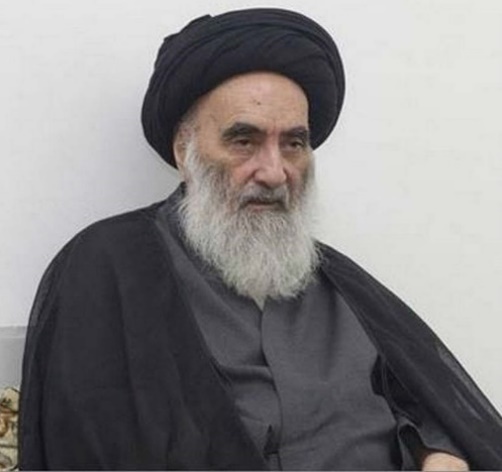
The book that is in your hands is the English translation of Rules Relating to the Deceased, according to the fatawa of the highest Shi’a Religious Authority of our age, His Eminence Ayatullah al-’Uzma al-Hajj as-Sayyid ‘Ali al-Husayni as-Sistani (May Allah grant him a long life in the service of Islam).
Numerous other books detailing the Islamic rulings according to this scholar have been printed in ‘Arabic and Farsi, with a growing number being translated into various other languages. Currently, eight books have been translated and printed in English, including:
(1) The Islamic Laws (A Translation of Tawdhhi a- Masail),
(2) Contemporary Legal Rulings in Shi’i Law,
(3) Manasik al-Hajj,
(4) The Simplified Islamic Rules for Youth and Young Adults,
(5) Jurisprudence Made Easy,
(6) A Code of Practice for Muslims living in the West,
(7) Rules Relating to the Deceased: Condensed Version, and the present book1.
Because of the important responsibility that lies on the shoulders of all Muslims - both men and women - after the death of a fellow Muslim, it was decided to translate and publish this book which beings with the rules regarding the correct procedure of writing a Will, continuing on to the important rites of burial, and all other aspects related to the deceased.
In undertaking the translation of this book, we have tried our hardest to convey the meaning to the English reader in a simple and standard English, however, we have decided to use ‘Arabic terminology throughout the text. To guide you, the reader, to the meanings of the ‘Arabic terms, we have also provided a Glossary at the end of the book.
We have relied on the electronic version of the Holy Qur’an translation of Muhammad Sarwar as found on his web site for the translation of the Surahs of the Qur’an, however we have made some modifications where it was deemed necessary. We have also included text in ‘Arabic for both the Surahs of the Qur’an and various Duas including the translation of two Duas from as-Sahifah as-Sajjadiyyah done by William Chittick and published by Muhammad Trust.
It should be mentioned that the book that this translation is based on, was originally compiled according to the fatawa of the Late Marja’ Taqlid of the Shi’a world, Ayatullah al-’Uzma al-Hajj as-Sayyid Muhammad al-Ridha al-Gulpaygani (May Allah raise his status). Needless to say, countless hours were spent in researching and compiling these laws so as to correspond with the fatawa of the highest Shi’a Religious Authority in our age, Ayatullah al-’Uzma al-Hajj as-Sayyid ‘Ali al-Husayni as-Sistani (May Allah grant him a long life). The different supplications including the various methods of Salat al-Mayyit were presented in written form to the office of His Eminence in Qum, Iran for approval, which, after going through, gave us the permission to print the same under the Ayatullah’s name.
Many chapters start with Ahadith concerning the philosophy of that particular section which in itself, form a separate part of the book. We have also included valuable information from the book, Manazil al-Akhirah by the late Muhaddith al-Qummi, the compiler of Mafatih al-Jinan, concerning the deceased. These sections have been noted accordingly.
We would like to extend our thanks and appreciation to some of the brothers in Qum, Iran who helped us out with the proofreading and editing certain parts of the text. Without their help, the completion of this book would not have been possible. May Allah (SwT) reward them for their troubles.
It goes without saying that whatever knowledge and effort is put into such a work, it will always remain far from being perfect, as perfection is only for Allah (SwT). We therefore request you the readers that if any inaccuracies are found in this book that you to write to us so that in future editions, those errors may be corrected. We also ask for your feedback regarding the translation of this work or if you would like to raise any points as to the contents of the book.
In closing, we pray to the Almighty to forgive any of our short- comings and any mistakes that we may have missed in the course of this translation. We pray to Him to accept this work of ours and to give us the ability to continue translating Islamic literature and serving the cause of Islam, Insha-Allah.
- 1. All of these books can be ordered from the Islamic Humanitarian Service, individually or as a complete set. Please contact our head office for more details.
A Glance Into The Life Of The Grand Marja’ At-Taqlid Of The Shi’a World
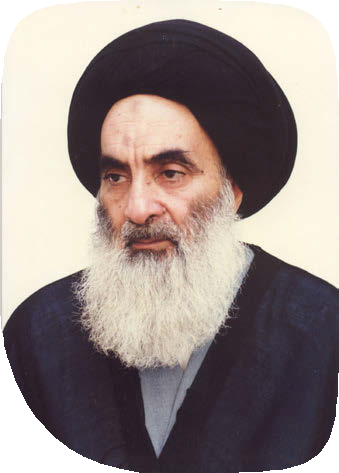
Ayatullah Al-’Uzma Al-Hajj As-Sayyid ‘Ali Al-Husayni As-Sistani
المرجع الديني الأعلى سماحة آية الله العظمى الحاج السيد علي الحسيني السيستاني
قَالَ رَسُولُ اللَّهِ:فَقِيهٌ وَاحِدٌ أَشَدُّ عَلَى الشَّيْطَانِ مِنْ أَلْفِ عَابِدٍ
The Prophet of Islam (S) said:
“One Scholar is more powerful against the Devil than one thousand worshippers”.
*****
For more than half a century, the school of the late Grand Ayatullah al-’Uzma al-Hajj as-Sayyid Abu al-Qasim al-Musawi al-Khu’i (May Allah raise his rank) has been an inexhaustible spring that has enriched and enlivened Islamic thought and knowledge throughout the world. From his school graduated hundreds of jurists, scholars, and dignitaries who took it upon themselves to continue his ideological path, which was full of achievements and sacrifices in the service of faith, knowledge, and the society.
Among those, are the outstanding ‘Ulama’ of the Hawza ‘Ilmiyyah, especially those in the holy cities of Najaf and Qum. Some of them have attained the level of Ijtihad - the competence to deduce independent legal judgments - enabling them to assume the office of supreme religious authority. Others have reached lofty levels qualifying them for shouldering the responsibilities of teaching and educating the future generation of scholars.
One of the most distinguished among these towering figures in today’s age is His Eminence Grand Ayatullah al-’Uzma al-Hajj as-Sayyid ‘Ali al-Husayni as-Sistani. He ranks among the brightest, most qualified and knowledgeable of Imam al-Khu’i’s (May Allah raise his status) students.
1. His Birth And Upbringing
His Eminence, Ayatullah al-’Uzma al-Hajj as-Sayyid ‘Ali al-Husayni as- Sistani was born in 1349 A.H. (1928) in the month of Rabi’ al-Awwal1 in the holy city of Mashad, Iran, where the sacred shrine of Imam ‘Ali Ibn Musa al-Ridha (‘a) is located. His father was one of the devout Scholars of his region, and in order to help his son continue his Islamic studies and to gain a deeper knowledge of the Islamic sciences, he introduced him to the ‘Ulama and scholars of the Hawza ‘Ilmiyyah.
Ayatullah al-’Uzma as-Sistani began his introductory ‘Arabic studies, including eloquence (Balagha), in Khurasan under the renowned teacher of ‘Arabic, Muhammad Taqi Adib Nishaburi. He also studied jurisprudence (Fiqh), principles of jurisprudence (Usul), logic (Mantiq), and beliefs (Aqaid) under the great ‘Ulama and teachers of Khurasan. It was in this city that he took part in Dars al-Kharij (the highest level of studies in the Hawza). At this time, he also benefited from the presence of Allamah Muhaqqiq Mirza Mahdi Isfahani (May Allah sanctify his spirit).
In order to advance further and complete his studies, he travelled to the city of Qum in 1368 A.H. (1948), so as to benefit from the ‘Ulama of the grand Hawza in this city. The Hawza ‘Ilmiyyah of Qum was at that time under the supervision and guidance of the sole Marja’ of the Shi’a world, namely Ayatullah al-’Uzma as-Sayyid al-Hajj Husayn Burujerdi (May Allah raise his rank).
Ayatullah Sistani who was present in the lessons of Fiqh and Usul, which at that time were being taught by Ayatullah Burujerdi, was quickly recognized as the brightest student in the fields of Fiqh, Usul, and Rijal. He also took part in the classes of Ayatullah al-’Uzma Hujjat Kuhkumrai and other teachers and scholars in order to quench his thirst for knowledge.
As-Sayyid as-Sistani excelled his peers, especially in the force-fullness of his interjections, his quick wit, research in jurisprudence, biographies of the transmitters of Ahadith, and his keeping abreast with many theories in different fields of the theological sciences.
In the year 1371 A.H. (1951), Ayatullah Sistani once again moved, this time to Najaf al-Ashraf. At that time, the Hawza of Najaf was blooming and was full of splendour and glory. He took part in the classes that were being offered and learnt the various Islamic sciences from the most well-known ‘Ulama of that time.
For more than 10 years he took part in the lessons of Ayatullah al-’Uzma al-Hajj as-Sayyid Abu al-Qasim al-Musawi al-Khu’i (May Allah be pleased with him). At this time, he also attended the lessons taught by Ayatullah al-’Uzma as-Sayyid Mohsin al-Hakim (May Allah sanctify his spirit). He also finished one complete course in Usul al-Fiqh under the auspices of Ayatullah al-’Uzma al-Shaykh Husayn Hilli (May Allah be pleased with him).
In the year 1380 A.H. (1960), in recognition of his achievements, he was awarded the distinction certifying that he had attained the level of Ijtihad - deduction of legal judgment in matters of religion, by Imam al-Khu’i and again, by al-Shaykh al-Hilli.
In the same year, he was awarded certification by the distinguished traditionalist and scholar al-Shaykh Agha Buzurg al-Tehrani testifying to his skill in the science of ‘Ilm al-Rijal, or research into the biographies of the narrators of Ahadith. He achieved this grand status when he was a mere 31 years of age!
In the year 1381 A.H. (1961), after years of studies and participating in the lessons of Usul, Fiqh, and Mantiq in the Hawzas of Mashad, Qum, and Najaf he started to teach his own lessons in Dars al-Kharij, revolving around the book, al-Makasib by Shaykh Ansari (May Allah be pleased with him). After teaching Dars al-Kharij based on the framework found in al-Makasib for years, he advanced his lessons onto a higher level by teaching from the book Urwat ul-Wuthqa.
2. His Comparison Between The Various Schools Of Thought
In order to put forward a sound study for any subject, as-Sayyid as-Sistani compares his findings with those of al-Mirza Mahdi al-Isfahani, representing the Mashhad school of thought, as-Sayyid al-Burujerdi of Qum, and of as-Sayyid al-Khu’i and al-Shaykh Hussain al-Hillu representing Najaf.
3. His Juristic Methodology
His juristic methodology has the following distinct characteristic: Comparative Jurisprudence between Shi’a and Sunni. Familiarizing one- self with the Sunni juristic thought, contemporary to the time of the text such as Imam Malik’s “al-Muwatta” or Abu Yusuf’s “al-Khiraj”, make clear to us the opinions and goals of the A’immah (Peace be upon them) at those times. Making use of modern-made laws in certain juristic respects, as is the case with his reference to Iraqi, Egyptian and French laws when he discusses the topic of “Contract of Sale and Right of Withdrawal”, widens one’s scope in analysing juristic principles, its goals, and expands its practical use.
4. His Inventiveness Of Approach
Unlike traditional clerics who follow literally what they have been taught, as-Sayyid as-Sistani’s approach to juristic principles is characterized by lending weight to some of these principles by re-interpreting them. To give an example, the principle of Izlam (compulsion) is expounded by some jurists as follows: “A practicing Muslim may make use of the laws of other Islamic Schools of Thought insofar as his personal interest is best served even though his school of thought does not approve it”.
As-Sayyid as-Sistani interprets such a practice on the basis of respect (Ihtiram) i.e. showing respect for other peoples’ laws and opinions. He has based his interpretation on the freedom of expression, like when we say, “Everyone has his/her own way of conducting marriage”; hence “the lawfulness of marriage of a polytheist”.
5. His Examining The Text In Its Social Context
Investigating the text in its social climate and the circumstances surrounding it helps us to arrive at a better understanding of it and leads to deducing a sound legal judgement.
Such is the approach of as-Sayyid as-Sistani for example when he tackled the hadith of the Holy Prophet (S) at Khaybar forbidding the eating of donkey meat. As-Sayyid as-Sistani’s interpretation was that such was prohibition is confined to that particular incident at that point in time. The evidence he puts forward is that the Prophet’s forbidding was due to a military requirement, in that the donkey was a means of transportation and protecting it was needed to serve that purpose. Hence, no extrapolation should be made from it at a later time since circumstances have changed.
6. His Expertise In The Tools Of Deduction
This great Marja’ is of the opinion that a jurist cannot be called as such until he has acquired all the necessary qualifications to enable him to be one. Among such vehicles is the mastery of ‘Arabic, full knowledge of the traditions of the Prophet and his Progeny (‘a) and detailed accounts of their narrators - for the science of ‘Ilm al-Rijal (biographies of transmitters of hadith) is a prerequisite for the jurist to achieve authenticity.
In this respect he holds many opinions which may go against what is universally held. He also stresses the importance of familiarizing oneself with the different compilations of hadith and their different copies to ensure knowledge about the author as regards to the accuracy, authenticity, and the manner of compiling.
7. His Character
Those who come into close contact with as-Sayyid as-Sistani will discover that he is endowed with ideal spiritual traits. Of these are the following:
A. Fairness And Respect For The Other Opinion
Based on his love for science and knowledge, interest in arriving at the truth, and upholding freedom of expression and the constructive word, he is constantly reading in order to acquaint himself with the different opinions - whether they are expressed by well-known scholars or less known ones. Thus, he may quote an opinion expressed by al-Shaykh Muhammad Ridha al-Mudhhaffar in his book Usul al-Fiqh (Fundamentals of Jurisprudence); and by the same token he may take the liberty of alluding to another opinion which he admires, though it may belong to a peer, rival, friend, or a less famous scholar.
B. Etiquette Of Debate
His manner of conducting a debate or discussion is a far cry from the heated, aimless, time-wasting arguments that others indulge in. He never resorts to silencing others, interrupting them or belittling their contribution to the subject that is to be discussed. No matter who the other side is - teacher, or student - and he always uses polite words to address them. Thus, he adopts an appropriate approach in handling any category without overstepping the line of courtesy and good manners in order to preserve the integrity and respect of those involved.
C. Manners Of The Teacher
Teaching is not simply a paid profession - if it is not coupled with the concern for the advancement of the student and showing love and affection for him, then the teaching process will be devoid of its noble aims and objectives in producing a committed, well-mannered generation, fully aware of their responsibilities towards themselves and the society in general. As-Sayyid as-Sistani is considered among the elite, just like as-Sayyid al-Hakim and as-Sayyid al-Khu’i who viewed teaching as a heavenly obligation which must be fulfilled to the best ability of the teacher.
Thus, he constantly reminds his students to spare no effort in asking about everything, however trivial it may seem to them, such as inquiring about the number of pages in a book, so that they may get used to close contact with the teacher. Moreover, he often encourages them to compare his study and research with the others in the same field, with a view to find out their strengths and weaknesses.
D. Godfearing And Piety
There is a striking phenomenon that the majority of scholars and great men seem to share, in that they do not allow controversy and disputes to get between them. Such a stand has proven to be wise since they have been necessitated by the concern for the public interest. Indeed, “... at times when innovations threaten to creep into the religion, it is incumbent on the scholar to put his knowledge to use in the defence of faith - otherwise Allah will take away the light of belief of the scholar,” as the Prophet of Islam (S) had put it.
When trials and tribulations are deployed to serve the personal ends of a scholar, or the community experiences propaganda warfare fanned by mutual enmity and envy, the ‘Ulama’ of the Hawza ‘Ilmiyyah, one of them being as-Sayyid as-Sistani, prefer silence and refrain from entering the conflict.
Such was the state of affairs in the aftermath of the death of as-Sayyid al-Hakim and as-Sayyid al-Burujerdi, and history repeated itself after the departure of the Guardian of the Hawza ‘Ilmiyyah, as-Sayyid al-Khu’i where competition and jockeying for titles and positions became widespread.
Furthermore, as-Sayyid as-Sistani’s contentment and humility is reflected in his simple attire, the small house in which he lives (but does not own) and the simple furniture therein.
E. His Ideological Production
As-Sayyid as-Sistani is not a jurist so to speak. Rather, he is a highly educated man who keeps in touch with modern visions with regard to the development of political and economic thought. He has very good ideas in the realm of administrative theory, as well as social thought that is compatible with modern progress. With all this in perspective, he views the dispensation of religious edicts as a right of the Islamic society.
F. Office Of The Supreme Religious Authority
Some scholars of the Najaf centre for theological studies (Hawza an-Najaf) were quoted as saying that after the death of as-Sayyid Nasrullah al-Mustanbit, they advised the late as-Sayyid al-Khu’i to groom someone for the office of the supreme religious authority and the guardianship and overseeing of the Najaf Hawzah. The choice fell on as-Sayyid as-Sistani for his excellence, knowledge, and impeccable character. Accordingly, he started leading the prayer in Imam al-Khu’i’s masjid, al-Khadra, during the lifetime of his late teacher, and writing and compiling his annotation based on as-Sayyid al-Khu’i’s “Islamic Laws”.
After the passing away of Marja’ Taqlid of the Shi’a World, and the Guardian of the Hawza ‘Ilmiyyah, the Late Ayatullah al-’Uzma al-Hajj as-Sayyid Abu al-Qasim al-Musawi al-Khu’i, Ayatullah al-’Uzma al-Hajj as-Sayyid ‘Ali al-Husayni as-Sistani was among the six people who were permitted to take part in his funeral and performed the services on the deceased.
8. Works Of This Scholar
Ayatullah Sistani, for close to 40 years, has been continuing the important task of teaching Dars al-Kharij in Fiqh and Usul, and Rijal, and the fruits of his struggle for knowledge and his accomplishments have been preserved in writing (now numbering over 40 books). Many of these books have been translated into the various world languages including; English, Urdu, Gujarati, Turkish, and others.
9. Books Translated Into English
-
Islamic Laws (Translation of Tawdhi al-Masa’il).
-
Manasik al-Hajj.
-
Contemporary Legal Rulings in Shi’i Law.
-
Jurisprudence Made Easy.
-
Simplified Islamic Laws for Youth and Young Adults.
-
A Code of Practice for Muslims in the West.
-
Rules Relating to the Deceased: Condensed Version.
-
Rules Relating to the Deceased: Philosophy and Ahkam.
*****
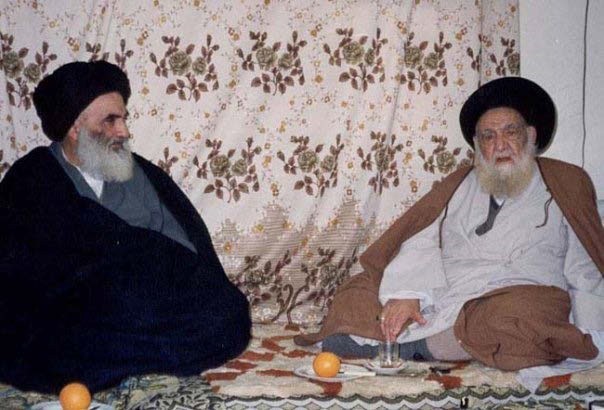
Ayatullah al-’Uzma al-Hajj as-Sayyid Abu al-Qasim al-Musawi al-Khu’i and Ayatullah al-’Uzma al-Hajj as-Sayyid ‘Ali al-Husayni as-Sistani
- 1. Webmaster’s note: 9th Rabi’ al-Awwal 1349 A.H.
Introduction
بسم الله الرحمن الرحيم
الحمد لله الذي لا يبلغ مدحته القائلون ولا يحصي نعمائه العادون ولا يؤدي حقه المجتهدون الذي ليس لصفته حد محدود ولا نعت موجود والصلاة والسلام على خير خلقه وأشرف بريته محمد وآله الطاهرين لاسيما بقية الله في الأرضيين ولعنة الله على أعدائهم أجمعين إلى قيام يوم الدين
Remembering Death
Before a believer approaches the final moment of his/her life and death overtakes him, it is necessary that he wakes up from the state of negligence and prepares for the final everlasting place. This way he will be able to avoid bewilderment and the fear of the so-called untimely death.
At the time of leaving this world, as attested to by the Qur’an, a person will be in one of two states - either he will be of the Companions of the Right, or of the Companions of the Left.1 If he is counted amongst the Companions of the Right, he will be in a good, final state, but if he is one of the Companions of the Left, he will be of those who has suffered a great loss.
At this point it is appropriate that we start this discussion by quoting Ahadith from the Ma’sumin (Peace be upon them all) on the preparation for death.
Who Is The Cleverest Believer?
Before a believer approaches the final moment of his/her life and death overtakes him, it is necessary that he wakes up from the state of negligence and prepares for the final everlasting place. This way he will be able to avoid bewilderment and the fear of the so-called untimely death.
At the time of leaving this world, as attested to by the Qur’an, a person will be in one of two states - either he will be of the Companions of the Right, or of the Companions of the Left.1 If he is counted amongst the Companions of the Right, he will be in a good, final state, but if he is one of the Companions of the Left, he will be of those who has suffered a great loss.
At this point it is appropriate that we start this discussion by quoting Ahadith from the Ma’sumin (Peace be upon them all) on the preparation for death.
قيل لأمير المؤمنين عليه السلام: ما الاستعداد للموت؟ فقال عليه السلام: أداء الفرائض واجتناب المحارم والاشتمال على المكارم، ثم لا يبالي أوقع على الموت أو وقع الموت عليه
Someone once asked Amir al-Mu’minin (‘a), “What is the best way to prepare for death?” He (‘a) said, “One should fulfil the obligatory acts, abstain from the forbidden, and exhibit exalted morals. At that point, one should not be concerned whether he falls upon death or death falls upon him”.1
عن محمود بن لبيد أن رسول الله صلى الله عليه وآله قال: شيئان يكرههما ابن آدم: يكره الموت والموت راحة للمؤمن من الفتنة، ويكره قلة المال وقلة المال أقل للحساب
Mahmud Ibn Labid relates that the Messenger of Islam (S) said, “There are two things that the son of Adam dislikes: death, even though death is ease for the believer from trials and tribulations; and a reduction in wealth even though in the reduction of wealth, lies a lessening in one’s accountability”.2
قال النبي صلى الله عليه وآله: اذكروا هادم اللذات، فقيل: وما هو يا رسول الله؟ فقال الموت، فما ذكره عبد على الحقيقة في سعة إلا ضاقت عليه الدنيا، ولا في شدة إلا اتسعت عليه، والموت أول منزل منازل الآخرة، وآخر منزل من منازل الدنيا، فطوبى لمن أكرم عند النزول بأولها، وطوبى لمن أحسن مشايعته في آخرها، والموت أقرب الأشياء من بني آدم وهو يعده أبعد، فما أجرأ الانسان على نفسه! وما أضعفه من خلق! وفي الموت نجاة المخلصين وهلاك المجرمين، ولذلك اشتاق من اشتاق إلى الموت وكره من كره.
The Messenger of Allah (S) said, “Remember the destroyer of pleasures”. Someone asked him, “And what is that, O’ Messenger of Allah?” He said, “It is death. No servant remembers it according to its reality in times of ease without the world losing its pleasure for him, nor in times of difficulty without it giving him ease. Death is the first stage of the next life, and the last stage of the stages of this world. Fortunate is he who is respected and welcomed in the first stage, and who has good company in the last stage. Death is the nearest thing to the descendants of Adam, while he considers it the furthest thing. How bold man is with regard to himself, and how weak of a creation is he! In death there is salvation for the sincere, and annihilation for the wicked, and that is why one who desires death, desires it, and one who dislikes death, dislikes it”.3
قال رجل لأبي ذر رحمه الله: ما لنا نكره الموت؟ قال: لأنكم عمرتم الدنيا وخربتم الآخرة فتكرهون أن تنتقلوا من عمران إلى خراب، قيل له: فكيف ترى قدومنا على الله؟ قال: أما المحسن فكالغائب يقدم على أهله، وأما المسئ فكالآبق يقدم على مولاه، قيل: فكيف ترى حالنا عند الله؟ قال: أعرضوا أعمالكم على كتاب الله تبارك و تعالى: " إن الأبرار لفي نعيم وإن الفجار لفي جحيم " قال الرجل: فأين رحمة الله؟ قال: إن رحمة الله قريب من المحسنين
A man one asked Abu Dharr, “Why do we dislike death?” Abu Dharr (Allah’s blessings be upon him) replied, “You do not like death because you have built and established the world and ruined the hereafter. So, you dislike moving from the established to the ruined”. Someone said to him, “How do you see our return to Allah?” He replied, “As for the pious (person), it is like a traveller returning to his family, and as for the wicked, it is like a runaway slave returning to his master”. He was questioned, “How do you see our situation with Allah (SwT)?” He replied, “Compare your actions to (what is written in) the Book of Allah (SwT), ‘Verily the good doers are enjoying blessings, and verily the evil doers are in Hell’”. The man said, “So where is Allah’s mercy?” He said, “Verily the Mercy of Allah (SwT) is near those who do good”.4
عن أبي جعفر عليه السلام قال: قال رسول الله صلى الله عليه وآله: الناس اثنان: واحد أراح، وآخر استراح، فأما الذي استراح فالمؤمن إذا مات استراح من الدنيا وبلائها، وأما الذي أراح فالكافر إذا مات أراح الشجر والدواب وكثيرا من الناس
Imam Muhammad al-Baqir (‘a) relates that the Messenger of Allah (S) said, “People are of two types: one group is pleased by death, while the other one makes others pleased by their death. As for he who is pleased by death, he is the true believer, who by dying, is relieved from the trials and tribulations of the world. And as for the one whose dying makes others pleased, he is the non-Believer who by dying, has relieved the trees, animals, and many people”.5
عن أبي عبد الله عليه السلام قال: قال رسول الله صلى الله عليه وآله: الموت كفارة لذنوب المؤمنين
Imam al-Sadiq (‘a) narrates from the Messenger of Islam (S), “Death is an atonement for the sins of a believer”6.
عن الرضا عليه السلام، عن آبائه عليهم السلام قال: لما حضرت الحسن بن علي عليهما السلام الوفاة بكى فقيل: يا بن رسول الله أتبكي ومكانك من رسول الله صلى الله عليه وآله مكانك الذي أنت به وقد قال فيك رسول الله صلى الله عليه وآله ما قال، وقد حججت عشرين حجة ماشيا، وقد قاسمت ربك مالك ثلاث مرات حتى النعل والنعل؟ فقال عليه السلام: إنما أبكي لخصلتين: لهول المطلع وفراق الأحبة.
Imam al-Ridha (‘a) narrates from his forefathers that when the time of death of Imam Hasan al-Mujtaba (‘a) approached, the Imam fell into tears. Someone said, “O’ son of the Messenger of Allah, why are you crying though your position with the Prophet is what it is and the Prophet has said about you what he has said. In addition to this, you have performed the Hajj twenty times walking; and three times in your life, you split your wealth and gave half of it in the way of Allah (SwT), even so much as your shoes?!" The Imam replied, “I am crying for two reasons; because of fear of death and because of separation from those whom I love”7.
The Reality Of Repentance For One’s Sins
The second stage for the person who sees the signs of death approaching is to repent for his sins. If a person succeeds in asking forgiveness for the sins that he has committed, his status is just as the one who had not committed any sins.
عن الرضا، عن آبائه عليهم السلام قال: قال رسول الله صلى الله عليه وآله: التائب من الذنب كمن لا ذنب له
In a hadith from ‘Ali Ibn Musa al-Ridha (‘a) from his forefathers, quoting the Messenger of Islam (S), it is stated that, “The person who repents from his sins is like the one who had not committed a sin at all”8.
However, asking for forgiveness for one’s sins has specific conditions that must be noted:
قال عليه السلام (لقائل قال بحضرته أستغفر الله): ثكلتك أمك أتدري ما الاستغفار؟ الاستغفار درجة العليين. وهو اسم واقع على ستة معان: أولها الندم على ما مضى. والثاني العزم على ترك العود إليه أبدا. والثالث أن تؤدي إلى المخلوقين حقوقهم حتى تلقى الله أملس ليس عليك تبعة. والرابع أن تعمد إلى كل فريضة عليك ضيعتها فتؤدي حقها. والخامس أن تعمد إلى اللحم الذي نبت على السحت فتذيبه بالأحزان حتى تلصق الجلد بالعظم وينشأ بينهما لحم جديد. والسادس أن تذيق الجسم ألم الطاعة كما أذقته حلاوة المعصية فعند ذلك تقول أستغفر الله
Amir al-Mu’minin (‘a) said to a person who, while in his presence said Astagfirullah: “May your mother lose you! Do you know what it means to repent? Repentance is the level of people of a high position. It is a word that comes for six meanings. The first is to repent over the past; the second is to make a firm determination never to revert to it; the third is to discharge all the rights of people so that you may meet Allah, clean with nothing to account for; the fourth is to fulfil every obligation which you ignored (in the past) so that you may now do justice with it; the fifth is to aim at the flesh that grew as a result of unlawful earning, such that you may melt it by grief (of repentance) till the skin touches the bone and new flesh grows on top of it; and the sixth is to make the body taste the pain of obedience as you (previously) made it taste the sweetness of disobedience. At that time you may say: Astagfirullah”9.
- 1. Bihar al-Anwar, Vol. 6, Page 138.
- 2. Bihar al-Anwar, Volume 6, Page 128.
- 3. Bihar al-Anwar, Volume 6, Page 133.
- 4. Bihar al-Anwar, Volume 6, Page 137.
- 5. Bihar al-Anwar, Volume 6, Page 151.
- 6. Bihar al-Anwar, Volume 6, Page 151.
- 7. Bihar al-Anwar, Volume 6, Page 160.
- 8. Bihar al-Anwar, Volume 6, Page 21.
- 9. Bihar al-Anwar, Volume 6, Page 57.
Rules Regarding The Writing Of A Will
Now that we have become familiar with some of the traditions concerning the remembrance of death and repentance for one’s sins, it is appropriate to discuss another topic of great importance that must be reviewed before one’s death - namely, the writing of a Will.
One of the most important topics, which has been greatly emphasized in Islam, is the writing of the Will. It has been narrated by Imam Ja’far al-Sadiq (‘a) that:
من مات بغير وصية مات ميتة جاهلية
“One who dies without a Will, dies the death of one during the days of Ignorance (Pre-Islamic age)”1.
لا ينبغي أن يبيت إلا ووصيته تحت رأسه
In another hadith, it is mentioned that it is better that when a Muslim intends to go to sleep, he keeps his Will underneath his pillow.2
In a hadith narrated by Abu Sabah Kanani, Imam Ja’far al-Sadiq (‘a) was asked regarding the reality and truth about the Will, and he replied, “This is an issue which is firmly rooted (in Islam), and is a necessity for every Muslim”3.
The Correct Will In Islam
With all the emphasis that has been placed on the writing of a Will, it is also necessary to learn the correct procedure of writing a Will, as taught to us by the Prophet and the Infallible A’immah (Peace be upon them). A correct Will is the one in which when one goes through it, he is satisfied that the rights of each of the inheritors have been observed, and none of them have been placed in a loss or disadvantage.
عن جعفر بن محمد، عن أبيه (عليهما السلام) قال: قال علي (عليه السلام) من أوصى ولم يحف ولم يضار كان كمن تصدق به في حياته.
Ja’far Ibn Muhammad (‘a) narrates from his fore-fathers (‘a) that ‘Ali (‘a) said, “The reward of a person who writes a Will in which there is no oppression or injustice and no one is put in a disadvantage or loss, is just as a person who spent all of his wealth (in the way of Allah (SwT)) during his life)”4.
عن جعفر بن محمد، عن أبيه (عليهم السلام) قال: من عدل في وصيته كان كمن تصدق بها في حياته ومن جار في وصيته لقى الله عز وجل يوم القيامة وهو عنه معرض.
In another hadith from Ja’far Ibn Muhammad (‘a) from his father (‘a) that he said, “A person who observes justice in writing his Will, is just as a person who during his lifetime has spent it (in the Way of Allah (SwT)). As for the person who commits oppression while writing his Will (meaning he does not adhere to the commandments set down by Allah (SwT) in relation to the rights of his inheritors), he will meet Allah (SwT) on the Day of Resurrection in such a condition that He will have turned away from him”.5
Willing 1/3 Or 1/5 Of One’s Wealth?
Once a person leaves this world, he loses the power of choice over his wealth and has no say in how his wealth should be spent. This can be averted if during his life, he had written a Will. In the Will he can specify that 1/3 of his wealth be spent in a certain way (as he desires).
عن علي بن يقطين قال: سألت أبا الحسن (عليه السلام): ما للرجل من ماله عند موته؟ قال: الثلث، والثلث كثير.
‘Ali Ibn Ibn Yaqtin, said, “I asked Aba al-Hasan (‘a) what amount of wealth a person is allowed to allot for specific uses after his death?” The Imam (‘a) replied, “He can specify 1/3 of his wealth, but even 1/3 is too much”6.
قال علي (عليه السلام): الوصية بالخمس لأن الله عز وجل رضى لنفسه بالخمس
In a hadith from Amir al-Mu’minin ‘Ali (‘a) he has said, “The (best) Will is that in which a person allots 1/5 for a specific use since Allah, The Glorious and High, in the Ayah referring to Khums, is pleased with the amount of 1/5”7.
This is a small sample of the Ahadith referring to the importance of the Will. We will now discuss this topic from the Fiqhi point of view, according to the fatawa of the Grand Marja’ Taqlid of the Shi’a World, Ayatullah al-’Uzma al-Hajj as-Sayyid ‘Ali al-Husayni as-Sistani.
Rulings
Rule 1
A Will is written to direct that after one’s death:
A certain task should be completed.
A portion of his property is to be given in ownership to someone.
The ownership of his property be transferred to someone else.
His wealth be spent for charitable purposes.
He appoints someone as a guardian for his children and dependants.
A person who is to give effect to a Will is called an executor (Wasi).
Rule 2
If a person who is dumb (mute), can make himself understood by means of signs, then he can Will for anything he likes; and even if a person who can speak, makes a Will by means of signs and makes himself understood, his Will is valid.
Rule 3
If a written paper is found signed and sealed by a deceased person, and if it is known or implied that he wrote it as a Will, then it must be acted upon. But if it is known that he did not have an intention to make any Will, and that he had simply made some notes for a Will to be written later, then it will not be considered as a Will.
Rule 4
A person making a Will must be Baligh, sane, and he should not be one who wastes his money. Moreover, the Will must have been made by one’s own choice and not by being compelled. A Will made by a non-Baligh child is invalid, but if a child of ten years of age Wills for the benefit of his blood relative, or for general charity, then that Will is valid. However, if he Wills for the benefit of those other than his blood relatives, or if a seven-year-old child Wills that a certain part of wealth be for someone, or be given to someone, then that Will is a matter of difficulty, and in both cases, precaution must be observed.
As for the who wastes his money, his Will which relates to his property is not valid, but in matters other than the property, like in matters of some tasks or duties to be performed for the deceased, his Will is valid.
Rule 5
If a person who injures himself intentionally or takes poison, such that death becomes certain or probable, makes a Will that a certain part of his property be put to some particular use, then his Will would not be in order.
Rule 6
If a person makes a Will that something from his property will belong to someone else, and if that person accepts the Will, then even if his acceptance took place during the lifetime of the testator, that thing will become his property after the death of the testator.
Rule 7
When a person sees the signs of death approaching in himself, he should immediately return the things held in trust by him to their owners, or he should inform the owners (acting according to the details mentioned in rule number 194). In addition, if he is indebted to others, and the time for repayment of the debt has matured, or if the creditors make the demand, then he must repay the debt. If he is not in a position to repay the debt, or the time for its repayment has not yet matured, or the creditor has not yet demanded it, then he should make arrangements to ensure that his creditor will be paid after his death, such as by making a Will to inform those who are unaware of the debt and also appoint a witness to the Will.
Rule 8
If a person who sees the signs of death approaching in himself has a debt of Khums, Zakat, or other liabilities, and if he cannot make the payment immediately, then he must make a Will directing payment if he owns some property, or if he knows someone will pay the debts on his behalf. The same rule applies if he had Hajj obligatory upon him. However, if he is capable of paying his religious dues immediately, he must pay them at once, even if he sees no signs of impending death.
Rule 9
If a person who finds signs of death approaching in himself, has lapsed (Qadha) of some prayers and fasts due, then he must direct in his Will that a person be hired, and paid from his estate for their performance. In fact, even if he does not have any estate, but feels it probable that someone would perform them without taking any fees, then it is obligatory upon him to make a Will in this behalf. In addition, if he has someone like his eldest son who would perform them, then it is sufficient to inform him about it and it is not obligatory to Will in that respect.
Rule 10
If a person who finds signs of impending death in himself has deposited some property with someone else, or has concealed it in some place of which his heirs are not aware, and if owing to the ignorance of the heirs their right is lost, then he must inform them about it. Also, it is not necessary for him to appoint a guardian, or an administrator for his minor children, except when it is feared that their property may perish, or that they themselves may be ruined without an administrator, in which case, he must appoint a trustworthy administrator for them.
Rule 11
The executor of the Will (Wasi) must be sane and trustworthy in matters related to the testator, and as a precaution, in matters related to others. Moreover, it is necessary as a precaution that the executor of a Muslim must be another Muslim. To appoint a non-Baligh child alone for putting the Will into effect is not permissible if the said child is expected to exercise discretion without permission of the guardian. However, if the child is directed to put the Will into effect after having become Baligh, or with the permission of the guardian, then there will be no objection.
Rule 12
If a person appoints more than one executor, allowing each of them to execute the Will independently, then it will not be necessary that they should obtain permission from one another for the execution of the Will. If he had not given such permission - whether he had said that or not that both of them should execute the Will jointly, they must execute the Will in consultation with one another. And if they are not prepared to execute the Will jointly, and this unwillingness is not accompanied by any religious misgiving, then the Mujtahid can force them to do so, and if they do not obey his orders or any one has a religious excuse for not being prepared to act jointly, then the Mujtahid can replace the dissenting executor.
Rule 13
If a person retracts a directive in his Will; for example, if he first says that 1/3 of his property must be given to a person, and then says that it must not be given to him, then the Will becomes void. If he changes his Will; for example, if he appoints an administrator for his children, and then replaces him with another person, then his first Will becomes void, and his second Will must be acted upon.
Rule 14
If a person conducts himself in a manner which shows that he has drawn back from his Will, for example, if he sells a house which he had willed to give away to someone, or appoints someone as his agent to sell it in spite of his original wish, then the Will becomes void.
Rule 15
If a person makes a Will that a particular thing must be given away to someone, and later changes it to say that half of the same thing must be given to another person, then that thing must be divided into two parts, and one part must be given to each of them.
Rule 16
If a person who is on his death-bed, bestows a part of his property as a gift to a certain person and makes a Will that after his death another quantity be given to yet another person, and if both the gifts exceed one-third of his estate and the heirs are not prepared to approve the excess, then in that case the first endowment must be given to the first beneficiary, and whatever remains from one-third must be spent according to the Will.
Rule 17
If a person makes a Will that 1/3 of his property must not be sold and its income must be spent for some particular purpose, then his instructions must be followed.
Rule 18
If a person during his terminal illness says that he owes a certain amount to someone, and if he is suspected of having said that to harm his heirs, then that amount specified by him must be given out of 1/3 of his property; and if he is not suspected of any such motive, his admission will be valid and the payment must be made out of his estate.
Rule 19
If a person makes a Will that something should be given to another person, then it is not necessary that that beneficiary be existing at the time of the Will. Therefore, if he makes a Will that something be given to a child who may possibly be born from a particular wife, then it is necessary that the thing must be given to the child if he is born after the death of the testator. If he is not born and if the Will is construed as general, then it must be spent in a manner, which would be nearer to the object of the Will, according to the testator.
However, if he makes a Will that after his death, a portion of his property will be owned by a particular person, and if that person exists at the time of the death of the testator, then his Will would be in order, otherwise it is void, and whatever he willed for that person must be divided by the heirs amongst themselves.
Rule 20
If a person comes to know that someone has appointed him as his executor, and he informs the testator that he is not prepared to perform the duties of an executor, then it is not necessary for him to act as an executor after the death of the testator. But, if he does not come to know of his appointment before the death of the testator, or comes to know about it but does not inform the testator that he is not prepared to act as an executor, then he must execute the Will. If the execution of the Will does not involve any hardship to him. Also, if the executor comes to know of his appointment at a time when, due to serious illness or some other hindrance, the testator cannot appoint any other executor, then he must accept the appointment, on the basis of precaution.
Rule 21
After a testator dies, the executor cannot appoint another person to execute the Will and withdraw himself. However, if he knows that the deceased did not mean that the executor should execute the Will himself, (rather) what he wanted was only that the given work should be accomplished, then he can appoint another person on his behalf.
Rule 22
If a person appoints two persons as joint executors and if one of them dies, become insane, or becomes an apostate, then the Mujtahid will appoint another person in his place. If both of them die, become insane or apostates, then the Mujtahid will appoint two people in their place. However, if one person can execute the Will, then it is not necessary to appoint two for that purpose.
Rule 23
If an executor alone cannot perform all the tasks laid down in the Will of the deceased even by appointing someone as his agent or by hiring someone else, then the Mujtahid will appoint someone to assist him in his duties.
Rule 24
If some quantity from the property of a dead person is lost or damaged while in the custody of the executor, then if he had been negligent in looking after it or had gone beyond moderation, he will be responsible. For example, if the dead person had willed him to give a certain quantity to the poor of a particular town and he took it to some other town, and in the process it perished, then he will be responsible for it. But if he was neither neglectful nor immoderate, then he will not be responsible for the loss.
Rule 25
If a person appoints someone as his executor, and says that after that executor’s death, another person should be the executor in his place, then the second executor must perform the tasks laid down in the Will of the deceased, after the death of the first one.
Rule 26
If an obligatory Hajj remained unperformed by the deceased person, or debts like Khums, Zakat and Mazalim (wealth wrongly appropriated) which were obligatory upon him to pay but were not paid, then they must be paid from the estate of the deceased though he may not have directed it in his Will.
Rule 27
If the estate of the deceased exceeds his debt, and expenses for an obligatory Hajj, obligatory religious dues like Khums, Zakat and Mazalim, and if he has also willed that 1/3 or a part thereof of his property be put to a particular use, then his Will must be followed; and if he had not made a Will, then whatever remains is the property of the heirs.
Rule 28
If the disposal specified by the deceased exceeds 1/3 of his property, then his Will, in respect of what exceeds the 1/3 of his property will be valid only if the heirs show their agreement, by words or by actions. Their unexpressed approval will not suffice and even if they give their consent after some time, it is in order. However, if some heirs permit and others decline to give consent (to the Will being acted upon), then the Will is valid and binding only in respect to the shares of those who have consented.
Rule 29
If the dispensation specified by the deceased exceeds 1/3 of his property and his heirs give consent to that dispensation before his death, then they cannot withdraw their permission after his death.
Rule 30
If a person makes a Will that Khums and Zakat and other debts due on him must be paid out of 1/3 of his property, and also someone should be hired for performing his Qadha prayers and fasts, and also perform Mustahab acts like feeding the poor, then the precaution will be that his debt must be paid first out of the 1/3 of his property, and if there is a balance remaining, then a person should be hired to perform his Qadha prayers and fasts, and if there is still a surplus, it should be spent on the Mustahab acts specified by him. If, however, 1/3 of his property is sufficient only for the payment of his debts, and his heirs also do not permit that anything more than the 1/3 of his property should be spent, then his Will in respect of prayers, fasts, and Mustahab acts is void.
Rule 31
If a testator wills that his debt should be paid, someone should be hired for the performance of his Qadha prayers and fasts, and also Mustahab acts should be performed, but does not direct that the expenses for those acts should be paid from 1/3 of his estate, then his debt must be paid from his estate, and if anything remains, 1/3 of it must be spent on prayers and fasts and Mustahab acts specified by him. If that 1/3 is not sufficient and if his heirs permit, then his Will should be implemented by paying from their share, and if they do not permit, then the expenses of prayers and fasts should be paid from the 1/3 of his estate, and if anything remains it should be spent on the Mustahab acts specified by him.
Rule 32
If a person claims that the deceased had willed that a certain amount should be given to him, and two ‘Adil men confirm his statement, or if he takes an oath and one ‘Adil man also confirms his statement, or if one ‘Adil man and two ‘Adil women, or four ‘Adil women bear witness to what he says, then the amount claimed by him must be given to him.
And if only one ‘Adil woman bears witness, 1/4 of the amount claimed by him must be given to him, and if two ‘Adil women bear witness, 1/2 of that amount, and if three ‘Adil women bear witness, 3/4 of it must be given to him.
Also, if two non-Muslim males from amongst Ahl al-Kitab (The People of the Book), who are esteemed as ‘Adil in their own religion confirm his statement, and if the deceased was obliged to make a Will while no ‘Adil man and woman was present at that time, then the amount claimed by that person must be given to him.
Rule 33
If a person claims that he is the executor of the deceased and can act according to the Will and put it into effect, or that the deceased had appointed him an administrator of his children, then his statement should be accepted only if two ‘Adil men confirm it.
Rule 34
If a person makes a Will that something from his estate is for a particular person, and that beneficiary dies before accepting or rejecting it, then his heirs can accept it as long as they do not reject the Will. However, this order applies when the testator does not retract his Will, otherwise the beneficiary has no right to lay claim on that thing.
Rules Related To A Dying Person
The word Muhtadhir is used to refer to a person who is on his deathbed.
When a person is in this situation, meaning that the signs of death are apparent in him and he is about to die, and either himself or those who are around him recognize that he is about to breathe his last breath - for example, he is told that within half an hour or one hour, he will pass away, then the rules related to a Muhtadhir will apply to him.
The rules related to a Muhtadhir are divided into two categories - the first category include those rules that are Wajib to be performed by the person himself who is the Muhtadhir; and the second category includes rules that are Wajib to be performed by those that are around him.
The Wajib Rules Related To The Muhtadhir (Dying Person)
The things which are Wajib upon the person who is at the end of his life and is in the state of Ihtidhar are:
Asking for forgiveness for his sins, and asking Allah (SwT) to have mercy and pardon those transgressions that he may have committed. The asking for forgiveness and mercy from Allah (SwT) is something that we are all in need of, especially he who is about to leave this world. Even the most pious and pure of people cannot be certain that at the time of death, they will not commit any misdeed or wrongdoing against Allah (SwT). It is for this reason that we see the A’immah (‘a) who although they were at the level of ‘Ismat and Purity from all sins and transgressions, still they were constantly in a state of asking forgiveness from Allah (SwT).
Writing A Will Relating To The Rights Of Others
Another thing which is Wajib on the person who is in Ihtidhar is that if he has any property or trust in his possession that belong to other people, or if he owes someone something, and if he himself is not able to fulfil the trust or pay back that which he owes, then he must inform those around him of this.
Writing A Will Relating To The Wajib Actions That Have Become Qadha
It is also Wajib upon the Muhtadhir that if there are any actions which were Wajib on him but were not performed, that he informs those around him. For example, he says that I have one year of Salat that I have not prayed, or that I have one month of fasting that I have not performed. The same applies for the performance of Hajj, if he had never gone, or for Khums and Zakat that he had not paid, or for any other loans or debts that are outstanding.
As for those things which are Wajib to perform, or an outstanding debt, it does not make any difference if he has money, some wealth or something that can be sold - although if he has anything that can be sold, then the responsibility is clear - since those who will execute his will and his inheritors will be able to pay his debts and make up the missed responsibilities from his money.
However, if he leaves behind no money nor anything else of value, then he must still announce those acts or worship which he has not performed, since the declaration of these things is Wajib upon the person who is Muhtadhir. Also, it is possible that those who are around him and who are concerned for him and his state in the next life, will come forward and for the pleasure of Allah (SwT), perform the actions that he did not discharge.
The Rules Related To Those Around The Muhtadhir (Dying Person)
Rule 35
A Muslim who is dying - whether man or woman, old or young, must according to precaution, be laid on his/her back, if possible, in such a manner that the soles of his/her feet would face the Qiblah (direction towards the holy Ka’bah).
Rule 36
It is recommended that the body be laid facing the Qiblah until it dies and the Ghusls are given. However, when the Ghusls are completed, it is better to lay it the same way as it is to be laid when the prayers are offered for it.
Rule 37
According to Ihtiyat, it is Wajib upon every Muslim to lay a dying person facing the Qiblah, and if the dying person consents to it, there is no need to seek the permission from the guardian. Otherwise, the permission must be sought.
Rule 38
It is recommended that the Shahadatain of Islam and the acknowledgement of the twelve Imams and the other tenets of faith be repeated to the dying person in such a manner that he or she would understand them. It is also recommended that those things recited to him are repeated until the time of his or her death.
Rule 39
It is recommended that the following supplication should be recited over a dying person in such a manner that he or she would understand it:
اللهم اغفر لي الكثير من معاصيك واقبل مني ايسير من طاعتك يا من يقبل اليسير ويعفو عن الكثير إقبل مني اليسير واعف عني الكثير إنك أنت العفو الغفور، اللهم ارحمني فإنك رحي
Translation: “O’ Allah! Forgive my sins, which are many and accept the little I have done in Your servitude. O’ the one who accepts the little (good deeds) and forgives the many (sins). Accept from me the little (good deeds) and forgive the many (sins). Truly, You are the Forgiver and the Merciful. O’ Allah, have mercy on me, truly You are the Merciful”.
Rule 40
It is Mustahab to carry a person who is experiencing a painfully slow death, to the place where he used to offer prayers, if it does not cause him too much discomfort.
Rule 41
For a person who is in the agony of death, it is Mustahab to recite the following: Surah Ya Sin, Surah as-Saffat, Surah al-Ahzab, Ayat al-Kursi, the 54th verse of Surah al-A’raf and the last three verses of Surah al-Baqarah by his side. In fact, it is better to recite as much from the Holy Qur’an as possible1.
Surah Ya Sin
سورة يس
بِسْمِ اللَّهِ الرَّحْمَٰنِ الرَّحِيمِ
In the Name of Allah, the Beneficent, the Merciful.
يس
I swear by Ya Sin (36:1)
وَالْقُرْآنِ الْحَكِيمِ
and the Qur’an, the Book of wisdom (36:2)
إِنَّكَ لَمِنَ الْمُرْسَلِينَ
that you (Muhammad) are a Messenger (36:3)
عَلَىٰ صِرَاطٍ مُسْتَقِيمٍ
and that you follow the right path (36:4)
تَنْزِيلَ الْعَزِيزِ الرَّحِيمِ
This is a revelation sent down from the Majestic and All-merciful (36:5)
لِتُنْذِرَ قَوْمًا مَا أُنْذِرَ آبَاؤُهُمْ فَهُمْ غَافِلُونَ
so that you may warn a people who are unaware because their fathers were not warned (36:6)
لَقَدْ حَقَّ الْقَوْلُ عَلَىٰ أَكْثَرِهِمْ فَهُمْ لَا يُؤْمِنُونَ
(I swear) that most of them are doomed to be punished. They have no faith. (36:7)
إِنَّا جَعَلْنَا فِي أَعْنَاقِهِمْ أَغْلَالًا فَهِيَ إِلَى الْأَذْقَانِ فَهُمْ مُقْمَحُونَ
We have enchained their necks up to their chins. Thus, they cannot bend their heads (to find their way). (36:8)
وَجَعَلْنَا مِنْ بَيْنِ أَيْدِيهِمْ سَدًّا وَمِنْ خَلْفِهِمْ سَدًّا فَأَغْشَيْنَاهُمْ فَهُمْ لَا يُبْصِرُونَ
We have set-up a barrier in front of and behind them and have made them blind. Thus, they cannot see. (36:9)
وَسَوَاءٌ عَلَيْهِمْ أَأَنْذَرْتَهُمْ أَمْ لَمْ تُنْذِرْهُمْ لَا يُؤْمِنُونَ
Whether you warn them or not, they will not believe. (36:10)
إِنَّمَا تُنْذِرُ مَنِ اتَّبَعَ الذِّكْرَ وَخَشِيَ الرَّحْمَٰنَ بِالْغَيْبِ ۖ فَبَشِّرْهُ بِمَغْفِرَةٍ وَأَجْرٍ كَرِيمٍ
You should only warn those who follow the Qur’an and have fear of the Beneficent God without seeing Him. Give them the glad news of their receiving forgiveness and an honourable reward (from God). (36:11)
إِنَّا نَحْنُ نُحْيِي الْمَوْتَىٰ وَنَكْتُبُ مَا قَدَّمُوا وَآثَارَهُمْ ۚ وَكُلَّ شَيْءٍ أَحْصَيْنَاهُ فِي إِمَامٍ مُبِينٍ
It is We who bring the dead to life and record the deeds of human beings and their consequences (of continual effects). We keep everything recorded in an illustrious Book.
(36:12)
وَاضْرِبْ لَهُمْ مَثَلًا أَصْحَابَ الْقَرْيَةِ إِذْ جَاءَهَا الْمُرْسَلُونَ
Tell them the story of the people of the town to whom Messengers came. (36:13)
إِذْ أَرْسَلْنَا إِلَيْهِمُ اثْنَيْنِ فَكَذَّبُوهُمَا فَعَزَّزْنَا بِثَالِثٍ فَقَالُوا إِنَّا إِلَيْكُمْ مُرْسَلُونَ
We sent them two Messengers whom they rejected. We supported them by sending a third one who told the people, “We are the Messengers (of God) who have been sent to you”. (36:14)
قَالُوا مَا أَنْتُمْ إِلَّا بَشَرٌ مِثْلُنَا وَمَا أَنْزَلَ الرَّحْمَٰنُ مِنْ شَيْءٍ إِنْ أَنْتُمْ إِلَّا تَكْذِبُونَ
The people said, “You are mere mortals like us and the Beneficent God has sent nothing. You are only liars”. (36:15)
قَالُوا رَبُّنَا يَعْلَمُ إِنَّا إِلَيْكُمْ لَمُرْسَلُونَ
They said, “Our Lord knows that We are Messengers (36:16)
وَمَا عَلَيْنَا إِلَّا الْبَلَاغُ الْمُبِينُ
Who have been sent to you. Our only duty is to preach clearly to you”. (36:17)
قَالُوا إِنَّا تَطَيَّرْنَا بِكُمْ ۖ لَئِنْ لَمْ تَنْتَهُوا لَنَرْجُمَنَّكُمْ وَلَيَمَسَّنَّكُمْ مِنَّا عَذَابٌ أَلِيمٌ
The people said, “We have ill omens about you. If you will not desist, we shall stone you and make you suffer a painful torment”. (36:18)
قَالُوا طَائِرُكُمْ مَعَكُمْ ۚ أَئِنْ ذُكِّرْتُمْ ۚ بَلْ أَنْتُمْ قَوْمٌ مُسْرِفُونَ
The Messengers said, “This ill omen lies within yourselves. Will you then take heed? In fact, you are a transgressing people”. (36:19)
وَجَاءَ مِنْ أَقْصَى الْمَدِينَةِ رَجُلٌ يَسْعَىٰ قَالَ يَا قَوْمِ اتَّبِعُوا الْمُرْسَلِينَ
A man came running from the farthest part of the city saying, “My people, follow the Messengers. (36:20)
تَّبِعُوا مَنْ لَا يَسْأَلُكُمْ أَجْرًا وَهُمْ مُهْتَدُونَ
Follow those who do not ask you for any reward and who are rightly guided. (36:21)
وَمَا لِيَ لَا أَعْبُدُ الَّذِي فَطَرَنِي وَإِلَيْهِ تُرْجَعُونَ
Why should I not worship God who has created me? To him you will all return. (36:22)
أَأَتَّخِذُ مِنْ دُونِهِ آلِهَةً إِنْ يُرِدْنِ الرَّحْمَٰنُ بِضُرٍّ لَا تُغْنِ عَنِّي شَفَاعَتُهُمْ شَيْئًا وَلَا يُنْقِذُونِ
Should I worship other gods besides Him? If the Beneficent God was to afflict me with hardship, the intercession of the idols can be of no benefit to me nor could it rescue me from hardship. (36:23)
إِنِّي إِذًا لَفِي ضَلَالٍ مُبِينٍ
(Had I worshipped things besides God, I would have been in manifest error). (36:24)
إِنِّي آمَنْتُ بِرَبِّكُمْ فَاسْمَعُونِ
Messengers, listen to me. I believe in your Lord”. (36:25)
قِيلَ ادْخُلِ الْجَنَّةَ ۖ قَالَ يَا لَيْتَ قَوْمِي يَعْلَمُونَ
(Having been murdered by the disbelievers) he was told to enter paradise, (36:26)
بِمَا غَفَرَ لِي رَبِّي وَجَعَلَنِي مِنَ الْمُكْرَمِينَ
(wherein he said), “Would that people knew how my Lord has granted me forgiveness and honour”. (36:27)
وَمَا أَنْزَلْنَا عَلَىٰ قَوْمِهِ مِنْ بَعْدِهِ مِنْ جُنْدٍ مِنَ السَّمَاءِ وَمَا كُنَّا مُنْزِلِينَ
We did not send an army against his people from the heaven after his death nor did We need to send one. (36:28)
إِنْ كَانَتْ إِلَّا صَيْحَةً وَاحِدَةً فَإِذَا هُمْ خَامِدُونَ
It was only a single blast, which made them extinct. (36:29)
يَا حَسْرَةً عَلَى الْعِبَادِ ۚ مَا يَأْتِيهِمْ مِنْ رَسُولٍ إِلَّا كَانُوا بِهِ يَسْتَهْزِئُونَ
Woe to human beings! Whenever a Messenger came to them, they mocked him. (36:30)
أَلَمْ يَرَوْا كَمْ أَهْلَكْنَا قَبْلَهُمْ مِنَ الْقُرُونِ أَنَّهُمْ إِلَيْهِمْ لَا يَرْجِعُونَ
Have they not seen how many generations, living before them, had We destroyed and they cannot ever come back to them? (36:31)
وَإِنْ كُلٌّ لَمَّا جَمِيعٌ لَدَيْنَا مُحْضَرُونَ
They will all be brought into Our presence together. (36:32)
وَآيَةٌ لَهُمُ الْأَرْضُ الْمَيْتَةُ أَحْيَيْنَاهَا وَأَخْرَجْنَا مِنْهَا حَبًّا فَمِنْهُ يَأْكُلُونَ
Evidence (of the truth) for them is how We revived the dead earth (36:33)
وَجَعَلْنَا فِيهَا جَنَّاتٍ مِنْ نَخِيلٍ وَأَعْنَابٍ وَفَجَّرْنَا فِيهَا مِنَ الْعُيُونِ
and produced therein grains from which they eat and established therein gardens of palms trees and vineyards and have made streams flow therein, (36:34)
لِيَأْكُلُوا مِنْ ثَمَرِهِ وَمَا عَمِلَتْهُ أَيْدِيهِمْ ۖ أَفَلَا يَشْكُرُونَ
so that they may consume the fruits and whatever their hands prepare. Will they not then be grateful? (36:35)
سُبْحَانَ الَّذِي خَلَقَ الْأَزْوَاجَ كُلَّهَا مِمَّا تُنْبِتُ الْأَرْضُ وَمِنْ أَنْفُسِهِمْ وَمِمَّا لَا يَعْلَمُونَ
All glory belongs to the One Who has created pairs out of what grow from the earth, out of their soul and out of that which they do not know. (36:36)
وَآيَةٌ لَهُمُ اللَّيْلُ نَسْلَخُ مِنْهُ النَّهَارَ فَإِذَا هُمْ مُظْلِمُونَ
Of the signs for them is how We separated the day from the night and thus they remained in darkless; (36:37)
وَالشَّمْسُ تَجْرِي لِمُسْتَقَرٍّ لَهَا ۚ ذَٰلِكَ تَقْدِيرُ الْعَزِيزِ الْعَلِيمِ
how the sun moves in its orbit and this is the decree of the Majestic and All-knowing God; (36:38)
وَالْقَمَرَ قَدَّرْنَاهُ مَنَازِلَ حَتَّىٰ عَادَ كَالْعُرْجُونِ الْقَدِيمِ
how We ordained the moon to pass through certain phases until it seems eventually to be like a bent twig; (36:39)
لَا الشَّمْسُ يَنْبَغِي لَهَا أَنْ تُدْرِكَ الْقَمَرَ وَلَا اللَّيْلُ سَابِقُ النَّهَارِ ۚ وَكُلٌّ فِي فَلَكٍ يَسْبَحُونَ
how the sun is not supposed to catch-up with the moon, nor is the night to precede the day. All of them are to float in a certain orbit; (36:40)
وَآيَةٌ لَهُمْ أَنَّا حَمَلْنَا ذُرِّيَّتَهُمْ فِي الْفُلْكِ الْمَشْحُونِ
how We carried them and their offspring inside the laden Ark (36:41)
وَخَلَقْنَا لَهُمْ مِنْ مِثْلِهِ مَا يَرْكَبُونَ
and created for them similar things to ride. (36:42)
وَإِنْ نَشَأْ نُغْرِقْهُمْ فَلَا صَرِيخَ لَهُمْ وَلَا هُمْ يُنْقَذُونَ
Had We wanted, We could have drowned them and nothing would have been able to help or rescue them (36:43)
إِلَّا رَحْمَةً مِنَّا وَمَتَاعًا إِلَىٰ حِينٍ
except Our mercy which could enable them to enjoy themselves for an appointed time. (36:44)
وَإِذَا قِيلَ لَهُمُ اتَّقُوا مَا بَيْنَ أَيْدِيكُمْ وَمَا خَلْفَكُمْ لَعَلَّكُمْ تُرْحَمُونَ
Whenever they are told to guard themselves against sin and the forth coming torment so that perhaps they could receive mercy (36:45)
وَمَا تَأْتِيهِمْ مِنْ آيَةٍ مِنْ آيَاتِ رَبِّهِمْ إِلَّا كَانُوا عَنْهَا مُعْرِضِينَ
and whenever a revelation out of their Lord’s revelations comes to them, they ignore it. (36:46)
وَإِذَا قِيلَ لَهُمْ أَنْفِقُوا مِمَّا رَزَقَكُمُ اللَّهُ قَالَ الَّذِينَ كَفَرُوا لِلَّذِينَ آمَنُوا أَنُطْعِمُ مَنْ لَوْ يَشَاءُ اللَّهُ أَطْعَمَهُ إِنْ أَنْتُمْ إِلَّا فِي ضَلَالٍ مُبِينٍ
When they are told to spend for the cause of God out of what He has provided for them for their sustenance, the disbelievers say to the believers, “Should we feed those whom God has decided to feed? You are in plain error”. (36:47)
وَيَقُولُونَ مَتَىٰ هَٰذَا الْوَعْدُ إِنْ كُنْتُمْ صَادِقِينَ
The unbelievers say, “When will the Day of Judgement come if what you say is at all true?” (36:48)
مَا يَنْظُرُونَ إِلَّا صَيْحَةً وَاحِدَةً تَأْخُذُهُمْ وَهُمْ يَخِصِّمُونَ
They will not have to wait long. When the Day of Judgement comes, it will only take a single blast of sound to strike them while they are quarrelling with one another. (36:49)
فَلَا يَسْتَطِيعُونَ تَوْصِيَةً وَلَا إِلَىٰ أَهْلِهِمْ يَرْجِعُونَ
Then they will not be able to make a will or return to their families. (36:50)
وَنُفِخَ فِي الصُّورِ فَإِذَا هُمْ مِنَ الْأَجْدَاثِ إِلَىٰ رَبِّهِمْ يَنْسِلُونَ
When the trumpet is sounded, they will be driven out of their grave into the presence of their Lord. (36:51)
قَالُوا يَا وَيْلَنَا مَنْ بَعَثَنَا مِنْ مَرْقَدِنَا ۜ ۗ هَٰذَا مَا وَعَدَ الرَّحْمَٰنُ وَصَدَقَ الْمُرْسَلُونَ
They will say, “Woe to us! Who has raised us up from our graves? This is what the Beneficent God has promised. The Messengers have also spoke the truth”. (36:52)
إِنْ كَانَتْ إِلَّا صَيْحَةً وَاحِدَةً فَإِذَا هُمْ جَمِيعٌ لَدَيْنَا مُحْضَرُونَ
Only after a single blast of sound, they will all be brought into Our presence. (36:53)
فَالْيَوْمَ لَا تُظْلَمُ نَفْسٌ شَيْئًا وَلَا تُجْزَوْنَ إِلَّا مَا كُنْتُمْ تَعْمَلُونَ
No soul will be in the least bit wronged on that Day and no one will receive any recompense other than what he deserves for his deeds. (36:54)
إِنَّ أَصْحَابَ الْجَنَّةِ الْيَوْمَ فِي شُغُلٍ فَاكِهُونَ
The dwellers of Paradise on that day will enjoy themselves (36:55)
مْ وَأَزْوَاجُهُمْ فِي ظِلَالٍ عَلَى الْأَرَائِكِ مُتَّكِئُونَ
They and their spouses will recline on couches in the shade (36:56)
لَهُمْ فِيهَا فَاكِهَةٌ وَلَهُمْ مَا يَدَّعُونَ
therein. They will have fruits and whatever they desire. (36:57)
سَلَامٌ قَوْلًا مِنْ رَبٍّ رَحِيمٍ
“Peace be with you,” will be a greeting for them from the Merciful Lord. (36:58)
وَامْتَازُوا الْيَوْمَ أَيُّهَا الْمُجْرِمُونَ
(The Lord will command), “Criminals, stand away from the others on this day”. (36:59)
أَلَمْ أَعْهَدْ إِلَيْكُمْ يَا بَنِي آدَمَ أَنْ لَا تَعْبُدُوا الشَّيْطَانَ ۖ إِنَّهُ لَكُمْ عَدُوٌّ مُبِينٌ
Children of Adam, did We not command you not to worship Satan. He was your sworn enemy. (36:60)
وَأَنِ اعْبُدُونِي ۚ هَٰذَا صِرَاطٌ مُسْتَقِيمٌ
Did We not command you to worship Me and tell you that this is the straight path? (36:61)
وَلَقَدْ أَضَلَّ مِنْكُمْ جِبِلًّا كَثِيرًا ۖ أَفَلَمْ تَكُونُوا تَعْقِلُونَ
Satan misled a great multitude of you. Did you not have any understanding? (36:62)
هَٰذِهِ جَهَنَّمُ الَّتِي كُنْتُمْ تُوعَدُونَ
This is hell with which you were threatened. (36:63)
اصْلَوْهَا الْيَوْمَ بِمَا كُنْتُمْ تَكْفُرُونَ
Suffer therein on this day for your disbelief. (36:64)
الْيَوْمَ نَخْتِمُ عَلَىٰ أَفْوَاهِهِمْ وَتُكَلِّمُنَا أَيْدِيهِمْ وَتَشْهَدُ أَرْجُلُهُمْ بِمَا كَانُوا يَكْسِبُونَ
We shall seal your mouths on that Day, let your hands speak to us and your feet testify to what you had achieved. (36:65)
وَلَوْ نَشَاءُ لَطَمَسْنَا عَلَىٰ أَعْيُنِهِمْ فَاسْتَبَقُوا الصِّرَاطَ فَأَنَّىٰ يُبْصِرُونَ
We could have blinded them had We wanted. Then they would have raced along to cross the Bridge but how could they have seen (their way)? (36:66)
وَلَوْ نَشَاءُ لَمَسَخْنَاهُمْ عَلَىٰ مَكَانَتِهِمْ فَمَا اسْتَطَاعُوا مُضِيًّا وَلَا يَرْجِعُونَ
We could have turned them into other creatures on the spot had We wanted and they would not have been able to precede or turn back. (36:67)
وَمَنْ نُعَمِّرْهُ نُنَكِّسْهُ فِي الْخَلْقِ ۖ أَفَلَا يَعْقِلُونَ
The physical growth of those whom We grant a long life will be reversed. Will you then not understand? (36:68)
وَمَا عَلَّمْنَاهُ الشِّعْرَ وَمَا يَنْبَغِي لَهُ ۚ إِنْ هُوَ إِلَّا ذِكْرٌ وَقُرْآنٌ مُبِينٌ
We did not teach him (Muhammad) poetry, nor was he supposed to be a poet. It is only the word (of God) and the illustrious Qur’an (36:69)
لِيُنْذِرَ مَنْ كَانَ حَيًّا وَيَحِقَّ الْقَوْلُ عَلَى الْكَافِرِينَ
by which he may warn those who are living and may let the words of God come true against the unbelievers. (36:70)
أَوَلَمْ يَرَوْا أَنَّا خَلَقْنَا لَهُمْ مِمَّا عَمِلَتْ أَيْدِينَا أَنْعَامًا فَهُمْ لَهَا مَالِكُونَ
Have they not seen what We have created from the labour of Our own hands? We have given them cattle. (36:71)
وَذَلَّلْنَاهَا لَهُمْ فَمِنْهَا رَكُوبُهُمْ وَمِنْهَا يَأْكُلُونَ
We have made the cattle subservient to them so they ride and consume them. (36:72)
وَلَهُمْ فِيهَا مَنَافِعُ وَمَشَارِبُ ۖ أَفَلَا يَشْكُرُونَ
From cattle they get milk and other benefits. Will they not then give thanks? (36:73)
وَاتَّخَذُوا مِنْ دُونِ اللَّهِ آلِهَةً لَعَلَّهُمْ يُنْصَرُونَ
They chose idols besides God in the hope of receiving help from them, (36:74)
لَا يَسْتَطِيعُونَ نَصْرَهُمْ وَهُمْ لَهُمْ جُنْدٌ مُحْضَرُونَ
but they will not be able to help them. Instead, the disbelievers will be brought into the presence of God as the soldiers of the idols. (36:75)
فَلَا يَحْزُنْكَ قَوْلُهُمْ ۘ إِنَّا نَعْلَمُ مَا يُسِرُّونَ وَمَا يُعْلِنُونَ
(Muhammad), let not their words annoy you. We certainly know whatever they conceal or reveal. (36:76)
أَوَلَمْ يَرَ الْإِنْسَانُ أَنَّا خَلَقْنَاهُ مِنْ نُطْفَةٍ فَإِذَا هُوَ خَصِيمٌ مُبِينٌ
Has the human being not considered that We have created him from a drop of fluid. He is openly quarrelsome (36:77)
وَضَرَبَ لَنَا مَثَلًا وَنَسِيَ خَلْقَهُ ۖ قَالَ مَنْ يُحْيِي الْعِظَامَ وَهِيَ رَمِيمٌ
He questions Our Resurrection of him, but has forgotten his own creation. He has said, “Who will give life to the bones which have become ashes?” (36:78)
قُلْ يُحْيِيهَا الَّذِي أَنْشَأَهَا أَوَّلَ مَرَّةٍ ۖ وَهُوَ بِكُلِّ خَلْقٍ عَلِيمٌ
(Muhammad), tell him, “He who gave them life in the first place will bring them back to life again. He has the best knowledge of all creatures. (36:79)
الَّذِي جَعَلَ لَكُمْ مِنَ الشَّجَرِ الْأَخْضَرِ نَارًا فَإِذَا أَنْتُمْ مِنْهُ تُوقِدُونَ
He has created fire for you out of the green tree from which you can kindle other fires. (36:80)
أَوَلَيْسَ الَّذِي خَلَقَ السَّمَاوَاتِ وَالْأَرْضَ بِقَادِرٍ عَلَىٰ أَنْ يَخْلُقَ مِثْلَهُمْ ۚ بَلَىٰ وَهُوَ الْخَلَّاقُ الْعَلِيمُ
Is the One who has created the heavens and the earth not able to create another creature like the human being? He certainly has the power to do so. He is the Supreme Creator and is All-knowing. (36:81)
إِنَّمَا أَمْرُهُ إِذَا أَرَادَ شَيْئًا أَنْ يَقُولَ لَهُ كُنْ فَيَكُونُ
Whenever He decides to create something, He has only to say, “Exist,” and it comes into existence. (36:82)
فَسُبْحَانَ الَّذِي بِيَدِهِ مَلَكُوتُ كُلِّ شَيْءٍ وَإِلَيْهِ تُرْجَعُونَ
All glory belongs to the One in whose hands is the control of all things. To Him you will all return. (36:83)
Surah As-Saffat
سورة الصافات
بِسْمِ اللَّهِ الرَّحْمَٰنِ الرَّحِيمِ
In the Name of Allah, the Beneficent, the Merciful.
وَالصَّافَّاتِ صَفًّا
I swear by (the angels) who stand in ranks, (37:1)
فَالزَّاجِرَاتِ زَجْرًا
by those who drive away the devil (to protect Our revelation), (37:2)
فَالزَّاجِرَاتِ زَجْرًا
and those who recite Our revelations, (37:3)
إِنَّ إِلَٰهَكُمْ لَوَاحِدٌ
that your Lord is the only Lord. (37:4)
رَبُّ السَّمَاوَاتِ وَالْأَرْضِ وَمَا بَيْنَهُمَا وَرَبُّ الْمَشَارِقِ
He is the Lord of the heavens and the earth and all that is between them, the Lord of the Eastern regions. (37:5)
إِنَّا زَيَّنَّا السَّمَاءَ الدُّنْيَا بِزِينَةٍ الْكَوَاكِبِ
We have decked the lower heavens with stars (37:6)
وَحِفْظًا مِنْ كُلِّ شَيْطَانٍ مَارِدٍ
to protect them from the rebellious Satan. (37:7)
لَا يَسَّمَّعُونَ إِلَى الْمَلَإِ الْأَعْلَىٰ وَيُقْذَفُونَ مِنْ كُلِّ جَانِبٍ
The devils cannot hear that high above. They would be struck from all sides (37:8)
دُحُورًا ۖ وَلَهُمْ عَذَابٌ وَاصِبٌ
and driven away to suffer the necessary torment. (37:9)
إِلَّا مَنْ خَطِفَ الْخَطْفَةَ فَأَتْبَعَهُ شِهَابٌ ثَاقِبٌ
Some of them who stealthily steal words from the heavens are pursued by a glistening flame. (37:10)
فَاسْتَفْتِهِمْ أَهُمْ أَشَدُّ خَلْقًا أَمْ مَنْ خَلَقْنَا ۚ إِنَّا خَلَقْنَاهُمْ مِنْ طِينٍ لَازِبٍ
(Muhammad), ask them, “Have they (people) been created stronger than what We have created?” We have created them from moist clay. (37:11)
بَلْ عَجِبْتَ وَيَسْخَرُونَ
(Muhammad), you will be surprised that they still mock (God’s revelations). (37:12)
وَإِذَا ذُكِّرُوا لَا يَذْكُرُونَ
They pay no attention when they are reminded (37:13)
وَإِذَا رَأَوْا آيَةً يَسْتَسْخِرُونَ
and when they see a miracle, they mock (37:14)
وَقَالُوا إِنْ هَٰذَا إِلَّا سِحْرٌ مُبِينٌ
it and say, “It is only plain magic”. (37:15)
أَإِذَا مِتْنَا وَكُنَّا تُرَابًا وَعِظَامًا أَإِنَّا لَمَبْعُوثُونَ
They say, “Shall we be brought to life again after we die and turn into dust and bones? (37:16)
وَآبَاؤُنَا الْأَوَّلُونَ
Will our forefathers also be brought to life again?” (37:17)
قُلْ نَعَمْ وَأَنْتُمْ دَاخِرُونَ
Say, “You will certainly be brought back to life in disgrace”. (37:18)
فَإِنَّمَا هِيَ زَجْرَةٌ وَاحِدَةٌ فَإِذَا هُمْ يَنْظُرُونَ
The Day of Judgement will come within a single roar and they will remain gazing at it. (37:19)
وَقَالُوا يَا وَيْلَنَا هَٰذَا يَوْمُ الدِّينِ
They will say, “Woe to us!” (They will be told), “This is the day of receiving recompense”. (37:20)
هَٰذَا يَوْمُ الْفَصْلِ الَّذِي كُنْتُمْ بِهِ تُكَذِّبُونَ
This is the Day of Judgement in which you disbelieved. (37:21)
احْشُرُوا الَّذِينَ ظَلَمُوا وَأَزْوَاجَهُمْ وَمَا كَانُوا يَعْبُدُونَ
(God will command the angels), “Gather together the unjust, their spouses, and what they had worshipped (37:22)
مِنْ دُونِ اللَّهِ فَاهْدُوهُمْ إِلَىٰ صِرَاطِ الْجَحِيمِ
besides God, and show them the way of hell (37:23)
وَقِفُوهُمْ ۖ إِنَّهُمْ مَسْئُولُونَ
Stop them. They must be questioned”. (37:24)
مَا لَكُمْ لَا تَنَاصَرُونَ
They will be asked, “Why do you not help each other?” (37:25)
بَلْ هُمُ الْيَوْمَ مُسْتَسْلِمُونَ
In fact, on that day they will be submissive. (37:26)
وَأَقْبَلَ بَعْضُهُمْ عَلَىٰ بَعْضٍ يَتَسَاءَلُونَ
They will turn to each other saying, (37:27)
قَالُوا إِنَّكُمْ كُنْتُمْ تَأْتُونَنَا عَنِ الْيَمِينِ
“It was you who tried to mislead us from righteousness”. (37:28)
قَالُوا بَلْ لَمْ تَكُونُوا مُؤْمِنِينَ
Others will respond, “It was you who did not want to have any faith. (37:29)
وَمَا كَانَ لَنَا عَلَيْكُمْ مِنْ سُلْطَانٍ ۖ بَلْ كُنْتُمْ قَوْمًا طَاغِينَ
We had no authority over you, in fact, you were a rebellious people. (37:30)
فَحَقَّ عَلَيْنَا قَوْلُ رَبِّنَا ۖ إِنَّا لَذَائِقُونَ
Thus, the words of Our Lord about us have come true and now we are suffering the torment. (37:31)
فَأَغْوَيْنَاكُمْ إِنَّا كُنَّا غَاوِينَ
We mislead you and we ourselves had also gone astray”. (37:32)
فَإِنَّهُمْ يَوْمَئِذٍ فِي الْعَذَابِ مُشْتَرِكُونَ
On that day they will all share the torment. (37:33)
إِنَّا كَذَٰلِكَ نَفْعَلُ بِالْمُجْرِمِينَ
This is how We deal with the criminals. (37:34)
إِنَّهُمْ كَانُوا إِذَا قِيلَ لَهُمْ لَا إِلَٰهَ إِلَّا اللَّهُ يَسْتَكْبِرُونَ
They were the ones, who on being told, “God is only One,” become puffed-up with pride (37:35)
وَيَقُولُونَ أَئِنَّا لَتَارِكُو آلِهَتِنَا لِشَاعِرٍ مَجْنُونٍ
and said, “Should we give up our idols for the sake of an insane poet”. (37:36)
بَلْ جَاءَ بِالْحَقِّ وَصَدَّقَ الْمُرْسَلِينَ
In fact, he had brought them the truth and had acknowledged the Messengers (who were sent before him). (37:37)
إِنَّكُمْ لَذَائِقُو الْعَذَابِ الْأَلِيمِ
(They will be told), “You will certainly suffer the painful torment (37:38)
وَمَا تُجْزَوْنَ إِلَّا مَا كُنْتُمْ تَعْمَلُونَ
and will be recompensed only for what you deserve”. (37:39)
إِلَّا عِبَادَ اللَّهِ الْمُخْلَصِينَ
But the sincere servants of God (37:40)
أُولَٰئِكَ لَهُمْ رِزْقٌ مَعْلُومٌ
will have their determined sustenance (37:41)
فَوَاكِهُ ۖ وَهُمْ مُكْرَمُونَ
and fruits while they are honoured. (37:42)
فِي جَنَّاتِ النَّعِيمِ
(They will live) in the bountiful gardens, (37:43)
عَلَىٰ سُرُرٍ مُتَقَابِلِينَ
on couches facing each other. (37:44)
يُطَافُ عَلَيْهِمْ بِكَأْسٍ مِنْ مَعِينٍ
They will be served with a cup fill of crystal-clear wine, (37:45)
بَيْضَاءَ لَذَّةٍ لِلشَّارِبِينَ
delicious to those who drink it, (37:46)
لَا فِيهَا غَوْلٌ وَلَا هُمْ عَنْهَا يُنْزَفُونَ
but not harmful or intoxicating. (37:47)
وَعِنْدَهُمْ قَاصِرَاتُ الطَّرْفِ عِينٌ
They will have with them loving wives with big black and white eyes, (37:48)
كَأَنَّهُنَّ بَيْضٌ مَكْنُونٌ
who are as chaste as sheltered eggs. (37:49)
فَأَقْبَلَ بَعْضُهُمْ عَلَىٰ بَعْضٍ يَتَسَاءَلُونَ
They will turn to each other and ask questions. (37:50)
قَالَ قَائِلٌ مِنْهُمْ إِنِّي كَانَ لِي قَرِينٌ
One of them will say, “I had a companion who asked me, (37:51)
يَقُولُ أَإِنَّكَ لَمِنَ الْمُصَدِّقِينَ
‘Do you believe in the Day of Judgement? (37:52)
أَإِذَا مِتْنَا وَكُنَّا تُرَابًا وَعِظَامًا أَإِنَّا لَمَدِينُونَ
Shall we be recompensed for our deeds after we die and become bones and dust? (37:53)
قَالَ هَلْ أَنْتُمْ مُطَّلِعُونَ
Do you want to see him?’” (37:54)
فَاطَّلَعَ فَرَآهُ فِي سَوَاءِ الْجَحِيمِ
He will look down and see him in hell. (37:55)
قَالَ تَاللَّهِ إِنْ كِدْتَ لَتُرْدِينِ
He will say to his friend in hell, “By God, you almost destroyed me. (37:56)
وَلَوْلَا نِعْمَةُ رَبِّي لَكُنْتُ مِنَ الْمُحْضَرِينَ
Had I not the guidance of my Lord, I would certainly have been brought into torment”. (37:57)
أَفَمَا نَحْنُ بِمَيِّتِينَ
He will ask his companion, “Did you not say that there would only be one death (37:58)
إِلَّا مَوْتَتَنَا الْأُولَىٰ وَمَا نَحْنُ بِمُعَذَّبِينَ
and that we would not be punished?” (37:59)
إِنَّ هَٰذَا لَهُوَ الْفَوْزُ الْعَظِيمُ
This is certainly the greatest triumph (37:60)
لِمِثْلِ هَٰذَا فَلْيَعْمَلِ الْعَامِلُونَ
for which one must strive hard (37:61)
أَذَٰلِكَ خَيْرٌ نُزُلًا أَمْ شَجَرَةُ الزَّقُّومِ
Is this not a better reward than the tree of Zaqqum (37:62)
إِنَّا جَعَلْنَاهَا فِتْنَةً لِلظَّالِمِينَ
which We have made as a torment for the unjust? (37:63)
إِنَّهَا شَجَرَةٌ تَخْرُجُ فِي أَصْلِ الْجَحِيمِ
(Zaqqum) is a tree which grows from the deepest part of hell, (37:64)
طَلْعُهَا كَأَنَّهُ رُءُوسُ الشَّيَاطِينِ
and its fruits are like the heads of devils. (37:65)
فَإِنَّهُمْ لَآكِلُونَ مِنْهَا فَمَالِئُونَ مِنْهَا الْبُطُونَ
The dwellers of hell will eat that fruit and fill-up their bellies. (37:66)
ثُمَّ إِنَّ لَهُمْ عَلَيْهَا لَشَوْبًا مِنْ حَمِيمٍ
Then they will have on top of it a mixture of boiling water. (37:67)
ثُمَّ إِنَّ مَرْجِعَهُمْ لَإِلَى الْجَحِيمِ
They can only return to hell. (37:68)
إِنَّهُمْ أَلْفَوْا آبَاءَهُمْ ضَالِّينَ
They found their father going astray (37:69)
فَهُمْ عَلَىٰ آثَارِهِمْ يُهْرَعُونَ
and rushed to follow them. (37:70)
وَلَقَدْ ضَلَّ قَبْلَهُمْ أَكْثَرُ الْأَوَّلِينَ
Most of the ancient people had also gone astray. (37:71)
وَلَقَدْ أَرْسَلْنَا فِيهِمْ مُنْذِرِينَ
We had certainly sent warners to them. (37:72)
فَانْظُرْ كَيْفَ كَانَ عَاقِبَةُ الْمُنْذَرِينَ
See how terrible was the end of those who were warned. (37:73)
إِلَّا عِبَادَ اللَّهِ الْمُخْلَصِينَ
Only Our sincere servants were saved. (37:74)
وَلَقَدْ نَادَانَا نُوحٌ فَلَنِعْمَ الْمُجِيبُونَ
Noah called for help. How blessed was the answer, which he received. (37:75)
وَنَجَّيْنَاهُ وَأَهْلَهُ مِنَ الْكَرْبِ الْعَظِيمِ
We rescued him and his people from the greatest affliction (37:76)
وَجَعَلْنَا ذُرِّيَّتَهُ هُمُ الْبَاقِينَ
and We made his offspring the only survivors. (37:77)
وَتَرَكْنَا عَلَيْهِ فِي الْآخِرِينَ
We perpetuated his praise in later generations. (37:78)
سَلَامٌ عَلَىٰ نُوحٍ فِي الْعَالَمِينَ
Peace be with Noah among all men in the worlds. (37:79)
إِنَّا كَذَٰلِكَ نَجْزِي الْمُحْسِنِينَ
Thus do We reward the righteous ones. (37:80)
إِنَّهُ مِنْ عِبَادِنَا الْمُؤْمِنِينَ
He was one of Our believing servants. (37:81)
ثُمَّ أَغْرَقْنَا الْآخَرِينَ
We drowned all the others (besides Noah and his people). (37:82)
وَإِنَّ مِنْ شِيعَتِهِ لَإِبْرَاهِيمَ
Abraham was one of his followers. (37:83)
إِذْ جَاءَ رَبَّهُ بِقَلْبٍ سَلِيمٍ
He turned to his Lord with a sound heart (37:84)
إِذْ قَالَ لِأَبِيهِ وَقَوْمِهِ مَاذَا تَعْبُدُونَ
and asked his father and his people, “What is that you worship? (37:85)
أَئِفْكًا آلِهَةً دُونَ اللَّهِ تُرِيدُونَ
Do you want to worship false idols as your lords besides God? (37:86)
فَمَا ظَنُّكُمْ بِرَبِّ الْعَالَمِينَ
What do you think about the Lord of the Universe?” (37:87)
فَنَظَرَ نَظْرَةً فِي النُّجُومِ
(The people invited him to attend their feast). Then he looked at the stars (37:88)
فَقَالَ إِنِّي سَقِيمٌ
and said, “I am sick!” (37:89)
فَتَوَلَّوْا عَنْهُ مُدْبِرِينَ
All the people turned away from him (37:90)
فَرَاغَ إِلَىٰ آلِهَتِهِمْ فَقَالَ أَلَا تَأْكُلُونَ
and he turned to their idols and asked them, “Do you eat? (37:91)
مَا لَكُمْ لَا تَنْطِقُونَ
Why do you not speak?” (37:92)
فَرَاغَ عَلَيْهِمْ ضَرْبًا بِالْيَمِينِ
He struck them with his right hand. (37:93)
فَأَقْبَلُوا إِلَيْهِ يَزِفُّونَ
Thereupon the people came running to him. (37:94)
قَالَ أَتَعْبُدُونَ مَا تَنْحِتُونَ
He said, “How can you worship what you yourselves have carved (37:95)
قَالَ أَتَعْبُدُونَ مَا تَنْحِتُونَ
even though God created both you and that which you have made?” (37:96)
قَالُوا ابْنُوا لَهُ بُنْيَانًا فَأَلْقُوهُ فِي الْجَحِيمِ
They said, “Let us build a fire and throw him into the flames”. (37:97)
فَأَرَادُوا بِهِ كَيْدًا فَجَعَلْنَاهُمُ الْأَسْفَلِينَ
They plotted against him, but We brought humiliation upon them (37:98)
وَقَالَ إِنِّي ذَاهِبٌ إِلَىٰ رَبِّي سَيَهْدِينِ
(Abraham) said, “I will go to my Lord who will guide me”. (37:99)
رَبِّ هَبْ لِي مِنَ الصَّالِحِينَ
Abraham prayed, “Lord, grant me a righteous son”. (37:100)
فَبَشَّرْنَاهُ بِغُلَامٍ حَلِيمٍ
We gave him the glad news of the birth of a forbearing son. (37:101)
فَلَمَّا بَلَغَ مَعَهُ السَّعْيَ قَالَ يَا بُنَيَّ إِنِّي أَرَىٰ فِي الْمَنَامِ أَنِّي أَذْبَحُكَ فَانْظُرْ مَاذَا تَرَىٰ ۚ قَالَ يَا أَبَتِ افْعَلْ مَا تُؤْمَرُ ۖ سَتَجِدُنِي إِنْ شَاءَ اللَّهُ مِنَ الصَّابِرِينَ
When his son was old enough to work with him, he said, “My son, I have had a dream that I must sacrifice you. What do you think of this?” He replied, “Father, fulfil whatever you are commanded to do and you will find me patient, by the will of God”. (37:102)
فَلَمَّا أَسْلَمَا وَتَلَّهُ لِلْجَبِينِ
When they both agreed and Abraham had lain down his son on the side of his face (for slaughtering), (37:103)
وَنَادَيْنَاهُ أَنْ يَا إِبْرَاهِيمُ
We called to him, “Abraham, (37:104)
قَدْ صَدَّقْتَ الرُّؤْيَا ۚ إِنَّا كَذَٰلِكَ نَجْزِي الْمُحْسِنِينَ
you have fulfilled what you were commanded to do in your dream”. Thus do We reward the righteous ones. (37:105)
إِنَّ هَٰذَا لَهُوَ الْبَلَاءُ الْمُبِينُ
It was certainly an open trial. (37:106)
وَفَدَيْنَاهُ بِذِبْحٍ عَظِيمٍ
We ransomed his son with a great sacrifice (37:107)
وَتَرَكْنَا عَلَيْهِ فِي الْآخِرِينَ
and perpetuated his praise in later generations. (37:108)
سَلَامٌ عَلَىٰ إِبْرَاهِيمَ
Peace be with Abraham. (37:109)
كَذَٰلِكَ نَجْزِي الْمُحْسِنِينَ
Thus, do We reward the righteous ones. (37:110)
إِنَّهُ مِنْ عِبَادِنَا الْمُؤْمِنِينَ
He was one of Our believing servants. (37:111)
وَبَشَّرْنَاهُ بِإِسْحَاقَ نَبِيًّا مِنَ الصَّالِحِينَ
We gave him the glad news of the birth of Isaac, one of the righteous Prophets. (37:112)
وَبَارَكْنَا عَلَيْهِ وَعَلَىٰ إِسْحَاقَ ۚ وَمِنْ ذُرِّيَّتِهِمَا مُحْسِنٌ وَظَالِمٌ لِنَفْسِهِ مُبِينٌ
We had blessed him and Isaac. Some of their offspring were righteous and others were openly unjust to themselves. (37:113)
وَلَقَدْ مَنَنَّا عَلَىٰ مُوسَىٰ وَهَارُونَ
We certainly bestowed Our favour upon Moses and Aaron (37:114)
وَنَجَّيْنَاهُمَا وَقَوْمَهُمَا مِنَ الْكَرْبِ الْعَظِيمِ
and saved them and their people from great distress. (37:115)
وَنَصَرْنَاهُمْ فَكَانُوا هُمُ الْغَالِبِينَ
We helped them and they were victorious. (37:116)
وَآتَيْنَاهُمَا الْكِتَابَ الْمُسْتَبِينَ
We gave them the enlightening Book, (37:117)
وَهَدَيْنَاهُمَا الصِّرَاطَ الْمُسْتَقِيمَ
guided them to the right path, (37:118)
وَتَرَكْنَا عَلَيْهِمَا فِي الْآخِرِينَ
and perpetuated their praise in later generations. (37:119)
سَلَامٌ عَلَىٰ مُوسَىٰ وَهَارُونَ
Peace be with Moses and Aaron. (37:120)
إِنَّا كَذَٰلِكَ نَجْزِي الْمُحْسِنِينَ
Thus, do We reward the righteous ones. (37:121)
إِنَّهُمَا مِنْ عِبَادِنَا الْمُؤْمِنِينَ
They were two of Our believing servants. (37:122)
وَإِنَّ إِلْيَاسَ لَمِنَ الْمُرْسَلِينَ
Elias was certainly a Messenger. (37:123)
إِذْ قَالَ لِقَوْمِهِ أَلَا تَتَّقُونَ
He told his people, “Why do you not have fear of God? (37:124)
أَتَدْعُونَ بَعْلًا وَتَذَرُونَ أَحْسَنَ الْخَالِقِينَ
Do you worship Ba’al and abandon the Best Creator. (37:125)
اللَّهَ رَبَّكُمْ وَرَبَّ آبَائِكُمُ الْأَوَّلِينَ
who is your Lord and the Lord of your forefathers?” (37:126)
فَكَذَّبُوهُ فَإِنَّهُمْ لَمُحْضَرُونَ
They called him a liar. Thus, all of them will suffer torment, (37:127)
إِلَّا عِبَادَ اللَّهِ الْمُخْلَصِينَ
except the sincere servants of God. (37:128)
وَتَرَكْنَا عَلَيْهِ فِي الْآخِرِينَ
We perpetuated his praise in the later generations. (37:129)
سَلَامٌ عَلَىٰ إِلْ يَاسِينَ
Peace be with the followers of El Yasin. (37:130)
إِنَّا كَذَٰلِكَ نَجْزِي الْمُحْسِنِينَ
In this way do We reward the righteous ones. (37:131)
إِنَّهُ مِنْ عِبَادِنَا الْمُؤْمِنِينَ
He was one of Our believing servants. (37:132)
وَإِنَّ لُوطًا لَمِنَ الْمُرْسَلِينَ
Lot was certainly a Messenger. (37:133)
إِذْ نَجَّيْنَاهُ وَأَهْلَهُ أَجْمَعِينَ
We rescued him and his whole family, (37:134)
إِلَّا عَجُوزًا فِي الْغَابِرِينَ
except for an old woman who remained behind. (37:135)
ثُمَّ دَمَّرْنَا الْآخَرِينَ
Then We totally destroyed the others. (37:136)
وَإِنَّكُمْ لَتَمُرُّونَ عَلَيْهِمْ مُصْبِحِينَ
You pass by (their ruined town) in the morning and at night (37:137)
وَبِاللَّيْلِ ۗ أَفَلَا تَعْقِلُونَ
Will you then not understand? (37:138)
وَإِنَّ يُونُسَ لَمِنَ الْمُرْسَلِينَ
Jonah was certainly a Messenger. (37:139)
إِذْ أَبَقَ إِلَى الْفُلْكِ الْمَشْحُونِ
He abandoned his people (37:140)
فَسَاهَمَ فَكَانَ مِنَ الْمُدْحَضِينَ
and sailed away in a laden ship, where in people cast lots. Because he lost, he was thrown into the water. (37:141)
فَالْتَقَمَهُ الْحُوتُ وَهُوَ مُلِيمٌ
The fish swallowed him up and he deserved (all this). (37:142)
فَلَوْلَا أَنَّهُ كَانَ مِنَ الْمُسَبِّحِينَ
Had he not glorified God, (37:143)
لَلَبِثَ فِي بَطْنِهِ إِلَىٰ يَوْمِ يُبْعَثُونَ
he would certainly have remained inside the fish until the Day of Resurrection. (37:144)
فَنَبَذْنَاهُ بِالْعَرَاءِ وَهُوَ سَقِيمٌ
We cast him out of the fish unto dry land and he was sick. (37:145)
وَأَنْبَتْنَا عَلَيْهِ شَجَرَةً مِنْ يَقْطِينٍ
We made a plant of gourd grow up for him. (37:146)
وَأَرْسَلْنَاهُ إِلَىٰ مِائَةِ أَلْفٍ أَوْ يَزِيدُونَ
We sent him to a hundred thousand or more people. (37:147)
فَآمَنُوا فَمَتَّعْنَاهُمْ إِلَىٰ حِينٍ
They believed in him so We granted them enjoyment for an appointed time. (37:148)
فَاسْتَفْتِهِمْ أَلِرَبِّكَ الْبَنَاتُ وَلَهُمُ الْبَنُونَ
(Muhammad), ask them, “Do daughters belong to your Lord and sons to them? (37:149)
أَمْ خَلَقْنَا الْمَلَائِكَةَ إِنَاثًا وَهُمْ شَاهِدُونَ
Have We created the angels as females before their very eyes? (37:150)
أَلَا إِنَّهُمْ مِنْ إِفْكِهِمْ لَيَقُولُونَ
It is only because of their false invention that they say, (37:151)
وَلَدَ اللَّهُ وَإِنَّهُمْ لَكَاذِبُونَ
‘God has begotten a son.’ They are certainly liars. (37:152)
أَصْطَفَى الْبَنَاتِ عَلَى الْبَنِينَ
Has He chosen daughters in preference to sons? (37:153)
مَا لَكُمْ كَيْفَ تَحْكُمُونَ
Woe to you! How terrible is your Judgement. (37:154)
أَفَلَا تَذَكَّرُونَ
Do you not understand? (37:155)
أَمْ لَكُمْ سُلْطَانٌ مُبِينٌ
Do you have clear authority? (37:156)
فَأْتُوا بِكِتَابِكُمْ إِنْ كُنْتُمْ صَادِقِينَ
Bring your book if what you say is true. (37:157)
وَجَعَلُوا بَيْنَهُ وَبَيْنَ الْجِنَّةِ نَسَبًا ۚ وَلَقَدْ عَلِمَتِ الْجِنَّةُ إِنَّهُمْ لَمُحْضَرُونَ
They have said that there is a relationship between Him and the jinn. The jinn certainly know that they will all be brought to suffer torment. (37:158)
سُبْحَانَ اللَّهِ عَمَّا يَصِفُونَ
God is too glorious to be described as they describe Him (37:159)
إِلَّا عِبَادَ اللَّهِ الْمُخْلَصِينَ
except the servants of God, sincere and devoted. (37:160)
فَإِنَّكُمْ وَمَا تَعْبُدُونَ
You and whatever you worship (37:161)
مَا أَنْتُمْ عَلَيْهِ بِفَاتِنِينَ
cannot mislead anyone (37:162)
إِلَّا مَنْ هُوَ صَالِ الْجَحِيمِ
except those who are doomed to enter hell (37:163)
وَمَا مِنَّا إِلَّا لَهُ مَقَامٌ مَعْلُومٌ
The angels say, “Each of us has an appointed place. (37:164)
وَإِنَّا لَنَحْنُ الصَّافُّونَ
We stand in ranks (for prayer) (37:165)
وَإِنَّا لَنَحْنُ الْمُسَبِّحُونَ
and we glorify God”. (37:166)
وَإِنْ كَانُوا لَيَقُولُونَ
Even though they (unbelievers) say, (37:167)
لَوْ أَنَّ عِنْدَنَا ذِكْرًا مِنَ الْأَوَّلِينَ
“Had we received guidance from the people living before us, (37:168)
لَكُنَّا عِبَادَ اللَّهِ الْمُخْلَصِينَ
we would have certainly been sincere servants of God”. (37:169)
فَكَفَرُوا بِهِ ۖ فَسَوْفَ يَعْلَمُونَ
They have rejected the Qur’an. They will soon know the consequences (of their disbelief). (37:170)
وَلَقَدْ سَبَقَتْ كَلِمَتُنَا لِعِبَادِنَا الْمُرْسَلِينَ
We decreed that Our Messenger servants (37:171)
إِنَّهُمْ لَهُمُ الْمَنْصُورُونَ
will certainly be victorious (37:172)
وَإِنَّ جُنْدَنَا لَهُمُ الْغَالِبُونَ
and that Our army will be triumphant. (37:173)
فَتَوَلَّ عَنْهُمْ حَتَّىٰ حِينٍ
(Muhammad), stay away from them for a while (37:174)
وَأَبْصِرْهُمْ فَسَوْفَ يُبْصِرُونَ
and watch them. They, too, will watch. (37:175)
أَفَبِعَذَابِنَا يَسْتَعْجِلُونَ
Do they want to suffer Our torment immediately? (37:176)
فَإِذَا نَزَلَ بِسَاحَتِهِمْ فَسَاءَ صَبَاحُ الْمُنْذَرِينَ
When it descends into their courtyard, it will be terrible for those who have already been warned. (37:177)
وَتَوَلَّ عَنْهُمْ حَتَّىٰ حِينٍ
Stay away from them for a while (37:178)
وَأَبْصِرْ فَسَوْفَ يُبْصِرُونَ
and watch. They, too, will watch. (37:179)
سُبْحَانَ رَبِّكَ رَبِّ الْعِزَّةِ عَمَّا يَصِفُونَ
Your Lord, the Lord of Honour, is too exalted to be considered as they describe Him. (37:180)
وَسَلَامٌ عَلَى الْمُرْسَلِينَ
Peace be with the Messengers (of God). (37:181)
وَالْحَمْدُ لِلَّهِ رَبِّ الْعَالَمِينَ
It is only Allah, the Lord of the Universe, who deserves all praise. (37:182)
Surah Al-Ahzab
سورة الأحزاب
بِسْمِ اللَّهِ الرَّحْمَٰنِ الرَّحِيمِ
In the Name of Allah, the Beneficent, the Merciful.
يَا أَيُّهَا النَّبِيُّ اتَّقِ اللَّهَ وَلَا تُطِعِ الْكَافِرِينَ وَالْمُنَافِقِينَ ۗ إِنَّ اللَّهَ كَانَ عَلِيمًا حَكِيمًا
Prophet, have fear of Allah and do not yield to the infidels and hypocrites. Allah is All-knowing and All-wise. (33:1)
وَاتَّبِعْ مَا يُوحَىٰ إِلَيْكَ مِنْ رَبِّكَ ۚ إِنَّ اللَّهَ كَانَ بِمَا تَعْمَلُونَ خَبِيرًا
Follow what has been revealed to you from your Lord. Allah is All- aware of what you do. (33:2)
وَتَوَكَّلْ عَلَى اللَّهِ ۚ وَكَفَىٰ بِاللَّهِ وَكِيلًا
Trust in Allah and be sure that He is a Sufficient Guardian. (33:3)
مَا جَعَلَ اللَّهُ لِرَجُلٍ مِنْ قَلْبَيْنِ فِي جَوْفِهِ ۚ وَمَا جَعَلَ أَزْوَاجَكُمُ اللَّائِي تُظَاهِرُونَ مِنْهُنَّ أُمَّهَاتِكُمْ ۚ وَمَا جَعَلَ أَدْعِيَاءَكُمْ أَبْنَاءَكُمْ ۚ ذَٰلِكُمْ قَوْلُكُمْ بِأَفْوَاهِكُمْ ۖ وَاللَّهُ يَقُولُ الْحَقَّ وَهُوَ يَهْدِي السَّبِيلَ
Allah has not created two hearts inside any one human being. Allah does not consider your wives whom you renounce by zihar as your mothers nor those whom you adopt as your sons. These are only words of your mouth. God tells the Truth and shows the right path. (33:4)
ادْعُوهُمْ لِآبَائِهِمْ هُوَ أَقْسَطُ عِنْدَ اللَّهِ ۚ فَإِنْ لَمْ تَعْلَمُوا آبَاءَهُمْ فَإِخْوَانُكُمْ فِي الدِّينِ وَمَوَالِيكُمْ ۚ وَلَيْسَ عَلَيْكُمْ جُنَاحٌ فِيمَا أَخْطَأْتُمْ بِهِ وَلَٰكِنْ مَا تَعَمَّدَتْ قُلُوبُكُمْ ۚ وَكَانَ اللَّهُ غَفُورًا رَحِيمًا
Call them sons of their own fathers. It is more just in the eyes of Allah. If you do not know their fathers, they are your brothers and friends in religion. You will not be responsible for your mistakes, but you will be responsible for what you do intentionally. Allah is All-forgiving and All-merciful. (33:5)
النَّبِيُّ أَوْلَىٰ بِالْمُؤْمِنِينَ مِنْ أَنْفُسِهِمْ ۖ وَأَزْوَاجُهُ أُمَّهَاتُهُمْ ۗ وَأُولُو الْأَرْحَامِ بَعْضُهُمْ أَوْلَىٰ بِبَعْضٍ فِي كِتَابِ اللَّهِ مِنَ الْمُؤْمِنِينَ وَالْمُهَاجِرِينَ إِلَّا أَنْ تَفْعَلُوا إِلَىٰ أَوْلِيَائِكُمْ مَعْرُوفًا ۚ كَانَ ذَٰلِكَ فِي الْكِتَابِ مَسْطُورًا
The Prophet has more authority over the believers than themselves. His wives are their mothers. The relatives are closer to each other, according to the Book of Allah, than the believers and the emigrants. However, you may show kindness to your guardians. This also is written in the Book. (33:6)
وَإِذْ أَخَذْنَا مِنَ النَّبِيِّينَ مِيثَاقَهُمْ وَمِنْكَ وَمِنْ نُوحٍ وَإِبْرَاهِيمَ وَمُوسَىٰ وَعِيسَى ابْنِ مَرْيَمَ ۖ وَأَخَذْنَا مِنْهُمْ مِيثَاقًا غَلِيظًا
We had a solemn covenant with you (Muhammad), and the Prophets: Noah, Abraham, Moses, and Jesus, the son of Mary. (33:7)
لِيَسْأَلَ الصَّادِقِينَ عَنْ صِدْقِهِمْ ۚ وَأَعَدَّ لِلْكَافِرِينَ عَذَابًا أَلِيمًا
This was a firm agreement. Allah will ask the truthful ones about their truthfulness and prepare a painful torment for the disbelievers. (33:8)
يَا أَيُّهَا الَّذِينَ آمَنُوا اذْكُرُوا نِعْمَةَ اللَّهِ عَلَيْكُمْ إِذْ جَاءَتْكُمْ جُنُودٌ فَأَرْسَلْنَا عَلَيْهِمْ رِيحًا وَجُنُودًا لَمْ تَرَوْهَا ۚ وَكَانَ اللَّهُ بِمَا تَعْمَلُونَ بَصِيرًا
Believers, recall Allah’s favour to you when the army attacked you. We sent a wind and the armies, which you did not see, to support you. Allah sees all that you do. (33:9)
إِذْ جَاءُوكُمْ مِنْ فَوْقِكُمْ وَمِنْ أَسْفَلَ مِنْكُمْ وَإِذْ زَاغَتِ الْأَبْصَارُ وَبَلَغَتِ الْقُلُوبُ الْحَنَاجِرَ وَتَظُنُّونَ بِاللَّهِ الظُّنُونَا
Eyes became dull and hearts almost reached the throat when they attacked you from above and below and you started to think of God with suspicion. (33:10)
هُنَالِكَ ابْتُلِيَ الْمُؤْمِنُونَ وَزُلْزِلُوا زِلْزَالًا شَدِيدًا
There the believers were tested and tremendously shaken. (33:11)
وَإِذْ يَقُولُ الْمُنَافِقُونَ وَالَّذِينَ فِي قُلُوبِهِمْ مَرَضٌ مَا وَعَدَنَا اللَّهُ وَرَسُولُهُ إِلَّا غُرُورًا
It was there that the hypocrites and those whose hearts were sick, said, “The promise of Allah and His Messenger has proved to be nothing but deceit”. (33:12)
وَإِذْ قَالَتْ طَائِفَةٌ مِنْهُمْ يَا أَهْلَ يَثْرِبَ لَا مُقَامَ لَكُمْ فَارْجِعُوا ۚ وَيَسْتَأْذِنُ فَرِيقٌ مِنْهُمُ النَّبِيَّ يَقُولُونَ إِنَّ بُيُوتَنَا عَوْرَةٌ وَمَا هِيَ بِعَوْرَةٍ ۖ إِنْ يُرِيدُونَ إِلَّا فِرَارًا
It was there that a group of them said, “People of Yathrib, turn back for there is no place for you to stay”. Another group, asking for the Prophet’s permission, said, “Our homes are defenceless”. In fact, they were not defenceless. They only wanted to run away. (33:13)
وَلَوْ دُخِلَتْ عَلَيْهِمْ مِنْ أَقْطَارِهَا ثُمَّ سُئِلُوا الْفِتْنَةَ لَآتَوْهَا وَمَا تَلَبَّثُوا بِهَا إِلَّا يَسِيرًا
Had the army of the enemies invaded their homes and asked them to give up their religion, they would have yielded to them without delay. (33:14)
وَلَقَدْ كَانُوا عَاهَدُوا اللَّهَ مِنْ قَبْلُ لَا يُوَلُّونَ الْأَدْبَارَ ۚ وَكَانَ عَهْدُ اللَّهِ مَسْئُولًا
They had certainly promised Allah that they would not turn away. To promise Allah is certainly a (great) responsibility. (33:15)
لْ لَنْ يَنْفَعَكُمُ الْفِرَارُ إِنْ فَرَرْتُمْ مِنَ الْمَوْتِ أَوِ الْقَتْلِ وَإِذًا لَا تُمَتَّعُونَ إِلَّا قَلِيلًا
(Muhammad), tell them, “Running away will never be of any benefit to you even if you run away from death or being killed. Still you would not be able to enjoy yourselves except for a short while”. (33:16)
قُلْ مَنْ ذَا الَّذِي يَعْصِمُكُمْ مِنَ اللَّهِ إِنْ أَرَادَ بِكُمْ سُوءًا أَوْ أَرَادَ بِكُمْ رَحْمَةً ۚ وَلَا يَجِدُونَ لَهُمْ مِنْ دُونِ اللَّهِ وَلِيًّا وَلَا نَصِيرًا
Say, “Who can prevent Allah from punishing you or granting you mercy? They will not find anyone besides Allah as their guardian or helper”. (33:17)
قَدْ يَعْلَمُ اللَّهُ الْمُعَوِّقِينَ مِنْكُمْ وَالْقَائِلِينَ لِإِخْوَانِهِمْ هَلُمَّ إِلَيْنَا ۖ وَلَا يَأْتُونَ الْبَأْسَ إِلَّا قَلِيلًا
Allah certainly knows those among you who create obstacles (on the way that leads to Allah) and those who say to their brothers, “Come quickly to us” and very rarely take part in the fighting. (33:18)
أَشِحَّةً عَلَيْكُمْ ۖ فَإِذَا جَاءَ الْخَوْفُ رَأَيْتَهُمْ يَنْظُرُونَ إِلَيْكَ تَدُورُ أَعْيُنُهُمْ كَالَّذِي يُغْشَىٰ عَلَيْهِ مِنَ الْمَوْتِ ۖ فَإِذَا ذَهَبَ الْخَوْفُ سَلَقُوكُمْ بِأَلْسِنَةٍ حِدَادٍ أَشِحَّةً عَلَى الْخَيْرِ ۚ أُولَٰئِكَ لَمْ يُؤْمِنُوا فَأَحْبَطَ اللَّهُ أَعْمَالَهُمْ ۚ وَكَانَ ذَٰلِكَ عَلَى اللَّهِ يَسِيرًا
They are niggardly in spending for you. When fear comes, you can see them looking at you, their eyes rolling about like to faint because of the agony of death. When their fear subsides, they start to bite you with their sharp tongues. They are miserly in spending for a virtuous cause and have no faith. Allah has turned their deeds devoid of all virtue. This was not at all difficult for Allah. (33:19)
يَحْسَبُونَ الْأَحْزَابَ لَمْ يَذْهَبُوا ۖ وَإِنْ يَأْتِ الْأَحْزَابُ يَوَدُّوا لَوْ أَنَّهُمْ بَادُونَ فِي الْأَعْرَابِ يَسْأَلُونَ عَنْ أَنْبَائِكُمْ ۖ وَلَوْ كَانُوا فِيكُمْ مَا قَاتَلُوا إِلَّا قَلِيلًا
They think that the confederate tribes have not yet gone. If the confederate tribes were to attack them, they would have wished to be left alone among the Bedouin Arabs where they would only follow the news about you. Even if they were with you, only a few of them would take part in the fight. (33:20)
لَقَدْ كَانَ لَكُمْ فِي رَسُولِ اللَّهِ أُسْوَةٌ حَسَنَةٌ لِمَنْ كَانَ يَرْجُو اللَّهَ وَالْيَوْمَ الْآخِرَ وَذَكَرَ اللَّهَ كَثِيرًا
The Messenger of Allah is certainly a good example for those of you who have hope in Allah and in the Day of Judgement and who remember Allah very often. (33:21)
وَلَمَّا رَأَى الْمُؤْمِنُونَ الْأَحْزَابَ قَالُوا هَٰذَا مَا وَعَدَنَا اللَّهُ وَرَسُولُهُ وَصَدَقَ اللَّهُ وَرَسُولُهُ ۚ وَمَا زَادَهُمْ إِلَّا إِيمَانًا وَتَسْلِيمًا
On seeing the confederate tribes, the believers said, “This is what Allah and His Messenger had promised us. The promise of Allah and His Messenger is true”. This only strengthens their faith and their desire of submission to the will of Allah. (33:22)
مِنَ الْمُؤْمِنِينَ رِجَالٌ صَدَقُوا مَا عَاهَدُوا اللَّهَ عَلَيْهِ ۖ فَمِنْهُمْ مَنْ قَضَىٰ نَحْبَهُ وَمِنْهُمْ مَنْ يَنْتَظِرُ ۖ وَمَا بَدَّلُوا تَبْدِيلًا
Among the believers there are people who are true in their promise to Allah. Some of them have already passed away and some of them are waiting. They never yield to any change. (33:23)
لِيَجْزِيَ اللَّهُ الصَّادِقِينَ بِصِدْقِهِمْ وَيُعَذِّبَ الْمُنَافِقِينَ إِنْ شَاءَ أَوْ يَتُوبَ عَلَيْهِمْ ۚ إِنَّ اللَّهَ كَانَ غَفُورًا رَحِيمًا
Allah will certainly reward the truthful ones for their truthfulness and punish or pardon the hypocrites as He wishes. Allah is All-forgiving and All-merciful. (33:24)
وَرَدَّ اللَّهُ الَّذِينَ كَفَرُوا بِغَيْظِهِمْ لَمْ يَنَالُوا خَيْرًا ۚ وَكَفَى اللَّهُ الْمُؤْمِنِينَ الْقِتَالَ ۚ وَكَانَ اللَّهُ قَوِيًّا عَزِيزًا
Allah repelled the unbelievers in their rage. They could not achieve anything good. Allah rendered sufficient support to the believers in fighting. Allah is All-powerful and Majestic. (33:25)
وَأَنْزَلَ الَّذِينَ ظَاهَرُوهُمْ مِنْ أَهْلِ الْكِتَابِ مِنْ صَيَاصِيهِمْ وَقَذَفَ فِي قُلُوبِهِمُ الرُّعْبَ فَرِيقًا تَقْتُلُونَ وَتَأْسِرُونَ فَرِيقًا
Allah brought down those among the People of the Book who had supported the confederate tribes from their castles and struck their hearts with terror. You did away with some of them and captured the others. (33:26)
وَأَوْرَثَكُمْ أَرْضَهُمْ وَدِيَارَهُمْ وَأَمْوَالَهُمْ وَأَرْضًا لَمْ تَطَئُوهَا ۚ وَكَانَ اللَّهُ عَلَىٰ كُلِّ شَيْءٍ قَدِيرًا
Allah made you inherit their land, houses, property, and a land on which you had never walked. Allah has power over all things. (33:27)
يَا أَيُّهَا النَّبِيُّ قُلْ لِأَزْوَاجِكَ إِنْ كُنْتُنَّ تُرِدْنَ الْحَيَاةَ الدُّنْيَا وَزِينَتَهَا فَتَعَالَيْنَ أُمَتِّعْكُنَّ وَأُسَرِّحْكُنَّ سَرَاحًا جَمِيلًا
Prophet, tell your wives, “If you want the worldly life and its beauty, I shall allow you to enjoy it and set you free in an honourable manner, (33:28)
وَإِنْ كُنْتُنَّ تُرِدْنَ اللَّهَ وَرَسُولَهُ وَالدَّارَ الْآخِرَةَ فَإِنَّ اللَّهَ أَعَدَّ لِلْمُحْسِنَاتِ مِنْكُنَّ أَجْرًا عَظِيمًا
but if you want the pleasure of Allah, His Messenger, and the life hereafter, know that Allah has prepared a great reward for the righteous ones among you”. (33:29)
يَا نِسَاءَ النَّبِيِّ مَنْ يَأْتِ مِنْكُنَّ بِفَاحِشَةٍ مُبَيِّنَةٍ يُضَاعَفْ لَهَا الْعَذَابُ ضِعْفَيْنِ ۚ وَكَانَ ذَٰلِكَ عَلَى اللَّهِ يَسِيرًا
Wives of the Prophet, if anyone among you commits indecency, her torment will be double. This is not at all difficult for Allah. (33:30)
وَمَنْ يَقْنُتْ مِنْكُنَّ لِلَّهِ وَرَسُولِهِ وَتَعْمَلْ صَالِحًا نُؤْتِهَا أَجْرَهَا مَرَّتَيْنِ وَأَعْتَدْنَا لَهَا رِزْقًا كَرِيمًا
To whoever of you obeys Allah and His Messenger and acts righteously, We will give double reward and a honourable sustenance. (33:31)
يَا نِسَاءَ النَّبِيِّ لَسْتُنَّ كَأَحَدٍ مِنَ النِّسَاءِ ۚ إِنِ اتَّقَيْتُنَّ فَلَا تَخْضَعْنَ بِالْقَوْلِ فَيَطْمَعَ الَّذِي فِي قَلْبِهِ مَرَضٌ وَقُلْنَ قَوْلًا مَعْرُوفًا
Wives of the Prophet, you are not like other women. If you have fear of God, do not be tender in your speech lest people whose hearts are sick may lust after you. (33:32)
وَقَرْنَ فِي بُيُوتِكُنَّ وَلَا تَبَرَّجْنَ تَبَرُّجَ الْجَاهِلِيَّةِ الْأُولَىٰ ۖ وَأَقِمْنَ الصَّلَاةَ وَآتِينَ الزَّكَاةَ وَأَطِعْنَ اللَّهَ وَرَسُولَهُ ۚ إِنَّمَا يُرِيدُ اللَّهُ لِيُذْهِبَ عَنْكُمُ الرِّجْسَ أَهْلَ الْبَيْتِ وَيُطَهِّرَكُمْ تَطْهِيرًا
Do not display yourselves after the manner of the (pre-Islamic) age of darkness. Be steadfast in the prayer, pay the religious tax, and obey Allah and His Messenger. People of the house, Allah wants to remove all kinds of uncleanliness from you and to purify you thoroughly. (33:33)
وَاذْكُرْنَ مَا يُتْلَىٰ فِي بُيُوتِكُنَّ مِنْ آيَاتِ اللَّهِ وَالْحِكْمَةِ ۚ إِنَّ اللَّهَ كَانَ لَطِيفًا خَبِيرًا
Wives of the Prophet, remember the revelations of Allah and Words of wisdom that are recited in your homes. Allah is Most Kind and All-aware. (33:34)
إِنَّ الْمُسْلِمِينَ وَالْمُسْلِمَاتِ وَالْمُؤْمِنِينَ وَالْمُؤْمِنَاتِ وَالْقَانِتِينَ وَالْقَانِتَاتِ وَالصَّادِقِينَ وَالصَّادِقَاتِ وَالصَّابِرِينَ وَالصَّابِرَاتِ وَالْخَاشِعِينَ وَالْخَاشِعَاتِ وَالْمُتَصَدِّقِينَ وَالْمُتَصَدِّقَاتِ وَالصَّائِمِينَ وَالصَّائِمَاتِ وَالْحَافِظِينَ فُرُوجَهُمْ وَالْحَافِظَاتِ وَالذَّاكِرِينَ اللَّهَ كَثِيرًا وَالذَّاكِرَاتِ أَعَدَّ اللَّهُ لَهُمْ مَغْفِرَةً وَأَجْرًا عَظِيمًا
Allah has promised forgiveness and great rewards to the Muslim men and the Muslim women, the believing men and the believing women, the obedient men and the obedient women, the truthful men and the truthful women, the forbearing men and the forbearing women, the humble men and the humble women, the alms-giving men and the alms-giving women, the fasting men and the fasting women, the chaste men and the chaste women, and the men and women who remember Allah very often. (33:35)
وَمَا كَانَ لِمُؤْمِنٍ وَلَا مُؤْمِنَةٍ إِذَا قَضَى اللَّهُ وَرَسُولُهُ أَمْرًا أَنْ يَكُونَ لَهُمُ الْخِيَرَةُ مِنْ أَمْرِهِمْ ۗ وَمَنْ يَعْصِ اللَّهَ وَرَسُولَهُ فَقَدْ ضَلَّ ضَلَالًا مُبِينًا
The believing men and women must not feel free to do something in their affairs other than that which has been already decided for them by Allah and His Messenger. One who disobeys Allah and His Messenger is in plain error. (33:36)
وَإِذْ تَقُولُ لِلَّذِي أَنْعَمَ اللَّهُ عَلَيْهِ وَأَنْعَمْتَ عَلَيْهِ أَمْسِكْ عَلَيْكَ زَوْجَكَ وَاتَّقِ اللَّهَ وَتُخْفِي فِي نَفْسِكَ مَا اللَّهُ مُبْدِيهِ وَتَخْشَى النَّاسَ وَاللَّهُ أَحَقُّ أَنْ تَخْشَاهُ ۖ فَلَمَّا قَضَىٰ زَيْدٌ مِنْهَا وَطَرًا زَوَّجْنَاكَهَا لِكَيْ لَا يَكُونَ عَلَى الْمُؤْمِنِينَ حَرَجٌ فِي أَزْوَاجِ أَدْعِيَائِهِمْ إِذَا قَضَوْا مِنْهُنَّ وَطَرًا ۚ وَكَانَ أَمْرُ اللَّهِ مَفْعُولًا
Say to the person to whom you and Allah have granted favour, “Keep your wife and have fear of Allah. You hide within yourself what Allah wants to make public. You are afraid of people while it is God whom one should fear”. When Zayd set her free, We gave her in marriage to you so that the believers would not face difficulties about the wives of their adopted sons when they are divorced. Allah’s decree has already been issued. (33:37)
مَا كَانَ عَلَى النَّبِيِّ مِنْ حَرَجٍ فِيمَا فَرَضَ اللَّهُ لَهُ ۖ سُنَّةَ اللَّهِ فِي الَّذِينَ خَلَوْا مِنْ قَبْلُ ۚ وَكَانَ أَمْرُ اللَّهِ قَدَرًا مَقْدُورًا
The Prophet cannot be blamed for carrying out the commands of Allah. It was the tradition of Allah with those who lived before. The command of Allah has already been decreed and ordained. (33:38)
الَّذِينَ يُبَلِّغُونَ رِسَالَاتِ اللَّهِ وَيَخْشَوْنَهُ وَلَا يَخْشَوْنَ أَحَدًا إِلَّا اللَّهَ ۗ وَكَفَىٰ بِاللَّهِ حَسِيبًا
Those who preach the message of Allah and are humble before Him should not be afraid of anyone besides Allah. Allah is Sufficient in keeping the account. (33:39)
مَا كَانَ مُحَمَّدٌ أَبَا أَحَدٍ مِنْ رِجَالِكُمْ وَلَٰكِنْ رَسُولَ اللَّهِ وَخَاتَمَ النَّبِيِّينَ ۗ وَكَانَ اللَّهُ بِكُلِّ شَيْءٍ عَلِيمًا
Muhammad is not the father of any of your males. He is the Messenger of Allah and the last Prophet. Allah has the knowledge of all things. (33:40)
يَا أَيُّهَا الَّذِينَ آمَنُوا اذْكُرُوا اللَّهَ ذِكْرًا كَثِيرًا
Believers, remember Allah very often (33:41)
وَسَبِّحُوهُ بُكْرَةً وَأَصِيلًا
and glorify Him both in the mornings and in the evenings. (33:42)
هُوَ الَّذِي يُصَلِّي عَلَيْكُمْ وَمَلَائِكَتُهُ لِيُخْرِجَكُمْ مِنَ الظُّلُمَاتِ إِلَى النُّورِ ۚ وَكَانَ بِالْمُؤْمِنِينَ رَحِيمًا
It is He who forgives you and His angels pray for you so that He will take you out of darkness into light. Allah is All-merciful to the believers. (33:43)
تَحِيَّتُهُمْ يَوْمَ يَلْقَوْنَهُ سَلَامٌ ۚ وَأَعَدَّ لَهُمْ أَجْرًا كَرِيمًا
On the day when they will be brought into the presence of their Lord, their greeting to each other will be, “Peace be with you”. Allah has prepared an honourable reward for them. (33:44)
يَا أَيُّهَا النَّبِيُّ إِنَّا أَرْسَلْنَاكَ شَاهِدًا وَمُبَشِّرًا وَنَذِيرًا
Prophet, We have sent you as a witness, a bear er of glad news, a warner, (33:45)
وَدَاعِيًا إِلَى اللَّهِ بِإِذْنِهِ وَسِرَاجًا مُنِيرًا
a preacher for Allah by His permission and as a shining torch. (33:46)
وَبَشِّرِ الْمُؤْمِنِينَ بِأَنَّ لَهُمْ مِنَ اللَّهِ فَضْلًا كَبِيرًا
Give glad news to the believers of their receiving great favour from Allah. (33:47)
وَلَا تُطِعِ الْكَافِرِينَ وَالْمُنَافِقِينَ وَدَعْ أَذَاهُمْ وَتَوَكَّلْ عَلَى اللَّهِ ۚ وَكَفَىٰ بِاللَّهِ وَكِيلًا
Do not yield to the disbelievers or the hypocrites. Ignore their annoying you. Trust in Allah. Allah is your all-Sufficient, Protector. (33:48)
يَا أَيُّهَا الَّذِينَ آمَنُوا إِذَا نَكَحْتُمُ الْمُؤْمِنَاتِ ثُمَّ طَلَّقْتُمُوهُنَّ مِنْ قَبْلِ أَنْ تَمَسُّوهُنَّ فَمَا لَكُمْ عَلَيْهِنَّ مِنْ عِدَّةٍ تَعْتَدُّونَهَا ۖ فَمَتِّعُوهُنَّ وَسَرِّحُوهُنَّ سَرَاحًا جَمِيلًا
Believers, if you marry believing women and then divorce them before the consummation of the marriage, they do not have to observe the waiting period. Give them their provisions and set them free in an honourable manner. (33:49)
يَا أَيُّهَا النَّبِيُّ إِنَّا أَحْلَلْنَا لَكَ أَزْوَاجَكَ اللَّاتِي آتَيْتَ أُجُورَهُنَّ وَمَا مَلَكَتْ يَمِينُكَ مِمَّا أَفَاءَ اللَّهُ عَلَيْكَ وَبَنَاتِ عَمِّكَ وَبَنَاتِ عَمَّاتِكَ وَبَنَاتِ خَالِكَ وَبَنَاتِ خَالَاتِكَ اللَّاتِي هَاجَرْنَ مَعَكَ وَامْرَأَةً مُؤْمِنَةً إِنْ وَهَبَتْ نَفْسَهَا لِلنَّبِيِّ إِنْ أَرَادَ النَّبِيُّ أَنْ يَسْتَنْكِحَهَا خَالِصَةً لَكَ مِنْ دُونِ الْمُؤْمِنِينَ ۗ قَدْ عَلِمْنَا مَا فَرَضْنَا عَلَيْهِمْ فِي أَزْوَاجِهِمْ وَمَا مَلَكَتْ أَيْمَانُهُمْ لِكَيْلَا يَكُونَ عَلَيْكَ حَرَجٌ ۗ وَكَانَ اللَّهُ غَفُورًا رَحِيمًا
Prophet, We have made lawful for you your wives whom you have given their dowry, slave girls whom Allah has given to you as gifts, the daughters of your uncles and aunts, both paternal and maternal, who have migrated with you. The believing woman, who has offered herself to the Prophet and whom the Prophet, may want to marry, will be especially for him, not for other believers. We knew what to make obligatory for them concerning their wives and slave girls so that you would face no hardship (because we have given distinction to you over the believers). Allah is All-forgiving and All-merciful. (33:50)
تُرْجِي مَنْ تَشَاءُ مِنْهُنَّ وَتُؤْوِي إِلَيْكَ مَنْ تَشَاءُ ۖ وَمَنِ ابْتَغَيْتَ مِمَّنْ عَزَلْتَ فَلَا جُنَاحَ عَلَيْكَ ۚ ذَٰلِكَ أَدْنَىٰ أَنْ تَقَرَّ أَعْيُنُهُنَّ وَلَا يَحْزَنَّ وَيَرْضَيْنَ بِمَا آتَيْتَهُنَّ كُلُّهُنَّ ۚ وَاللَّهُ يَعْلَمُ مَا فِي قُلُوبِكُمْ ۚ وَكَانَ اللَّهُ عَلِيمًا حَلِيمًا
You may refuse whichever (of the woman who offer themselves to you) as you want and accept whichever of them you wish. There is no blame on you if you marry (one whom you had refused previously). This would be more delightful for them. They should not be grieved but should be happy with whatever you have given to every one of them. Allah knows what is in your hearts. Allah is All-knowing and All-forbearing. (33:51)
لَا يَحِلُّ لَكَ النِّسَاءُ مِنْ بَعْدُ وَلَا أَنْ تَبَدَّلَ بِهِنَّ مِنْ أَزْوَاجٍ وَلَوْ أَعْجَبَكَ حُسْنُهُنَّ إِلَّا مَا مَلَكَتْ يَمِينُكَ ۗ وَكَانَ اللَّهُ عَلَىٰ كُلِّ شَيْءٍ رَقِيبًا
Besides these, other women are not lawful for you to marry nor is it lawful for you to exchange your wives for the wives of others (except for the slave girls), even though they may seem attractive to you. Allah is watchful over all things. (33:52)
يَا أَيُّهَا الَّذِينَ آمَنُوا لَا تَدْخُلُوا بُيُوتَ النَّبِيِّ إِلَّا أَنْ يُؤْذَنَ لَكُمْ إِلَىٰ طَعَامٍ غَيْرَ نَاظِرِينَ إِنَاهُ وَلَٰكِنْ إِذَا دُعِيتُمْ فَادْخُلُوا فَإِذَا طَعِمْتُمْ فَانْتَشِرُوا وَلَا مُسْتَأْنِسِينَ لِحَدِيثٍ ۚ إِنَّ ذَٰلِكُمْ كَانَ يُؤْذِي النَّبِيَّ فَيَسْتَحْيِي مِنْكُمْ ۖ وَاللَّهُ لَا يَسْتَحْيِي مِنَ الْحَقِّ ۚ وَإِذَا سَأَلْتُمُوهُنَّ مَتَاعًا فَاسْأَلُوهُنَّ مِنْ وَرَاءِ حِجَابٍ ۚ ذَٰلِكُمْ أَطْهَرُ لِقُلُوبِكُمْ وَقُلُوبِهِنَّ ۚ وَمَا كَانَ لَكُمْ أَنْ تُؤْذُوا رَسُولَ اللَّهِ وَلَا أَنْ تَنْكِحُوا أَزْوَاجَهُ مِنْ بَعْدِهِ أَبَدًا ۚ إِنَّ ذَٰلِكُمْ كَانَ عِنْدَ اللَّهِ عَظِيمًا
Believers, do not enter the houses of the Prophet for a meal without permission. if you are invited, you may enter, but be punctual (so that you will not be waiting while the meal is being prepared). When you have finished eating, leave his home. Do not sit around chatt ing among yourselves. This will annoy the Prophet but he will feel embarrassed to tell you. Allah does not feel embarrassed to tell you the truth. When you want to ask something from the wives of the Prophet, ask them from behind the curtain. This would be more proper for you and for them. You are not supposed to trouble the Prophet or to ever marry his wives after his death, for this would be a grave offence in the sight of Allah. (33:53)
إِنْ تُبْدُوا شَيْئًا أَوْ تُخْفُوهُ فَإِنَّ اللَّهَ كَانَ بِكُلِّ شَيْءٍ عَلِيمًا
Whether you reveal something or hid it, Allah has the knowledge of all things. (33:54)
لَا جُنَاحَ عَلَيْهِنَّ فِي آبَائِهِنَّ وَلَا أَبْنَائِهِنَّ وَلَا إِخْوَانِهِنَّ وَلَا أَبْنَاءِ إِخْوَانِهِنَّ وَلَا أَبْنَاءِ أَخَوَاتِهِنَّ وَلَا نِسَائِهِنَّ وَلَا مَا مَلَكَتْ أَيْمَانُهُنَّ ۗ وَاتَّقِينَ اللَّهَ ۚ إِنَّ اللَّهَ كَانَ عَلَىٰ كُلِّ شَيْءٍ شَهِيدًا
It will not be an offence for the wives of the Prophet (not to observe the modest dress) in the presence of their fathers, sons, brothers, sons of their brothers and sisters, their own women, and their slave- girls. They should have fear of Allah. Allah witnesses all things. (33:55)
إِنَّ اللَّهَ وَمَلَائِكَتَهُ يُصَلُّونَ عَلَى النَّبِيِّ ۚ يَا أَيُّهَا الَّذِينَ آمَنُوا صَلُّوا عَلَيْهِ وَسَلِّمُوا تَسْلِيمًا
Allah showers His blessings upon the Prophet and the angels seek forgiveness for him. Believers, pray for the Prophet and greet him with, “Peace be with you”. (33:56)
إِنَّ الَّذِينَ يُؤْذُونَ اللَّهَ وَرَسُولَهُ لَعَنَهُمُ اللَّهُ فِي الدُّنْيَا وَالْآخِرَةِ وَأَعَدَّ لَهُمْ عَذَابًا مُهِينًا
Those who annoy Allah and His Messenger will be condemned by Allah in this life and in the life to come. He has prepared for them a humiliating torment. (33:57)
وَالَّذِينَ يُؤْذُونَ الْمُؤْمِنِينَ وَالْمُؤْمِنَاتِ بِغَيْرِ مَا اكْتَسَبُوا فَقَدِ احْتَمَلُوا بُهْتَانًا وَإِثْمًا مُبِينًا
Those who annoy the believing men and women without reason will bear the sin for a false accusation, a manifest offence. (33:58)
يَا أَيُّهَا النَّبِيُّ قُلْ لِأَزْوَاجِكَ وَبَنَاتِكَ وَنِسَاءِ الْمُؤْمِنِينَ يُدْنِينَ عَلَيْهِنَّ مِنْ جَلَابِيبِهِنَّ ۚ ذَٰلِكَ أَدْنَىٰ أَنْ يُعْرَفْنَ فَلَا يُؤْذَيْنَ ۗ وَكَانَ اللَّهُ غَفُورًا رَحِيمًا
Prophet, tell your wives, daughters, and the wives of the believers to cover their bosoms and breasts. This will make them distinguishable from others and protect them from being annoyed. Allah is All- forgiving and All-merciful. (33:59)
لَئِنْ لَمْ يَنْتَهِ الْمُنَافِقُونَ وَالَّذِينَ فِي قُلُوبِهِمْ مَرَضٌ وَالْمُرْجِفُونَ فِي الْمَدِينَةِ لَنُغْرِيَنَّكَ بِهِمْ ثُمَّ لَا يُجَاوِرُونَكَ فِيهَا إِلَّا قَلِيلًا
If the hypocrites, those whose hearts are sick and those who encourage the spread of evil in the city, will not desist, We shall arouse you against them and they will only be allowed to be your neighbours for a short while. (33:60)
مَلْعُونِينَ ۖ أَيْنَمَا ثُقِفُوا أُخِذُوا وَقُتِّلُوا تَقْتِيلًا
They will be condemned wherever they are and will be seized and done away with for good. (33:61)
سُنَّةَ اللَّهِ فِي الَّذِينَ خَلَوْا مِنْ قَبْلُ ۖ وَلَنْ تَجِدَ لِسُنَّةِ اللَّهِ تَبْدِيلًا
This was the tradition of Allah with those who lived before. There will never be any change in the tradition of Allah. (33:62)
يَسْأَلُكَ النَّاسُ عَنِ السَّاعَةِ ۖ قُلْ إِنَّمَا عِلْمُهَا عِنْدَ اللَّهِ ۚ وَمَا يُدْرِيكَ لَعَلَّ السَّاعَةَ تَكُونُ قَرِيبًا
(Muhammad), people ask you about the Day of Judgment. Say, “Only Allah has knowledge about it. Perhaps the Hour of Doom will soon come to pass”. (33:63)
إِنَّ اللَّهَ لَعَنَ الْكَافِرِينَ وَأَعَدَّ لَهُمْ سَعِيرًا
Allah has condemned the unbelievers and prepared for them a burning torment, (33:64)
خَالِدِينَ فِيهَا أَبَدًا ۖ لَا يَجِدُونَ وَلِيًّا وَلَا نَصِيرًا
wherein they will live forever without being able to find any guardian or helper. (33:65)
يَوْمَ تُقَلَّبُ وُجُوهُهُمْ فِي النَّارِ يَقُولُونَ يَا لَيْتَنَا أَطَعْنَا اللَّهَ وَأَطَعْنَا الرَّسُولَا
On the day when their faces will be turned from side to side on the fire, they will say, “Would that we had obeyed Allah and the Messenger!” (33:66)
وَقَالُوا رَبَّنَا إِنَّا أَطَعْنَا سَادَتَنَا وَكُبَرَاءَنَا فَأَضَلُّونَا السَّبِيلَا
They will say, “Lord, we obeyed our chiefs and elders and they caused us to go astray. (33:67)
رَبَّنَا آتِهِمْ ضِعْفَيْنِ مِنَ الْعَذَابِ وَالْعَنْهُمْ لَعْنًا كَبِيرًا
Lord, make them to suffer double torment and subject them to the greatest condemnation”. (33:68)
يَا أَيُّهَا الَّذِينَ آمَنُوا لَا تَكُونُوا كَالَّذِينَ آذَوْا مُوسَىٰ فَبَرَّأَهُ اللَّهُ مِمَّا قَالُوا ۚ وَكَانَ عِنْدَ اللَّهِ وَجِيهًا
Believers, do not be like those who annoyed Moses. Allah proved him to be innocent of what they had said about him. Moses was a honourable person in the sight of Allah. (33:69)
يَا أَيُّهَا الَّذِينَ آمَنُوا اتَّقُوا اللَّهَ وَقُولُوا قَوْلًا سَدِيدًا
Believers, have fear of Allah and speak righteous words. (33:70)
يُصْلِحْ لَكُمْ أَعْمَالَكُمْ وَيَغْفِرْ لَكُمْ ذُنُوبَكُمْ ۗ وَمَنْ يُطِعِ اللَّهَ وَرَسُولَهُ فَقَدْ فَازَ فَوْزًا عَظِيمًا
Allah will reform your deeds and forgive your sins. One who obeys Allah and His Messenger will certainly achieve a great success. (33:71)
إِنَّا عَرَضْنَا الْأَمَانَةَ عَلَى السَّمَاوَاتِ وَالْأَرْضِ وَالْجِبَالِ فَأَبَيْنَ أَنْ يَحْمِلْنَهَا وَأَشْفَقْنَ مِنْهَا وَحَمَلَهَا الْإِنْسَانُ ۖ إِنَّهُ كَانَ ظَلُومًا جَهُولًا
We offered Our Trust (Our deputation) to the heavens, to the earth, and to the mountains, but they could not bear this burden and were afraid to accept it. Mankind was able to accept this offer but he was unjust to himself and ignorant of the significance of this Trust. (33:72)
لِيُعَذِّبَ اللَّهُ الْمُنَافِقِينَ وَالْمُنَافِقَاتِ وَالْمُشْرِكِينَ وَالْمُشْرِكَاتِ وَيَتُوبَ اللَّهُ عَلَى الْمُؤْمِنِينَ وَالْمُؤْمِنَاتِ ۗ وَكَانَ اللَّهُ غَفُورًا رَحِيمًا
(As a result of this) Allah will punish the hypocrites and the pagans, but He will accept the repentance of the believers. Allah is All-forgiving and All-merciful. (33:73)
‘Ayat Al-Kursi
آية الكرسي
اللَّهُ لَا إِلَٰهَ إِلَّا هُوَ الْحَيُّ الْقَيُّومُ ۚ لَا تَأْخُذُهُ سِنَةٌ وَلَا نَوْمٌ ۚ لَهُ مَا فِي السَّمَاوَاتِ وَمَا فِي الْأَرْضِ ۗ مَنْ ذَا الَّذِي يَشْفَعُ عِنْدَهُ إِلَّا بِإِذْنِهِ ۚ يَعْلَمُ مَا بَيْنَ أَيْدِيهِمْ وَمَا خَلْفَهُمْ ۖ وَلَا يُحِيطُونَ بِشَيْءٍ مِنْ عِلْمِهِ إِلَّا بِمَا شَاءَ ۚ وَسِعَ كُرْسِيُّهُ السَّمَاوَاتِ وَالْأَرْضَ ۖ وَلَا يَئُودُهُ حِفْظُهُمَا ۚ وَهُوَ الْعَلِيُّ الْعَظِيمُ
Allah, there is no God but He, the Everlasting and the Guardian of life. Drowsiness or sleep do not seize him. To Him belongs all that is in the heavens and the earth. No one can intercede with Him for others except by His permission. He knows about people’s present and past. No one can grasp anything from His knowledge besides what He has permitted them to grasp. The heavens and the earth are under His dominion. He does not experience fatigue in preserving them both. He is the Highest and the Greatest. (2:255)
لَا إِكْرَاهَ فِي الدِّينِ ۖ قَدْ تَبَيَّنَ الرُّشْدُ مِنَ الْغَيِّ ۚ فَمَنْ يَكْفُرْ بِالطَّاغُوتِ وَيُؤْمِنْ بِاللَّهِ فَقَدِ اسْتَمْسَكَ بِالْعُرْوَةِ الْوُثْقَىٰ لَا انْفِصَامَ لَهَا ۗ وَاللَّهُ سَمِيعٌ عَلِيمٌ
There is no compulsion in religion. Certainly, right has become clearly distinct from wrong. Whoever rejects the devil and believes in Allah has firmly taken hold of a strong handle that never breaks. Allah is All-hearing and knowing. (2:256)
اللَّهُ وَلِيُّ الَّذِينَ آمَنُوا يُخْرِجُهُمْ مِنَ الظُّلُمَاتِ إِلَى النُّورِ ۖ وَالَّذِينَ كَفَرُوا أَوْلِيَاؤُهُمُ الطَّاغُوتُ يُخْرِجُونَهُمْ مِنَ النُّورِ إِلَى الظُّلُمَاتِ ۗ أُولَٰئِكَ أَصْحَابُ النَّارِ ۖ هُمْ فِيهَا خَالِدُونَ
Allah is the Guardian of the believers and it is He who takes them out of darkness into light. The Devil is the guardian of those who deny the Truth and he leads them from light to darkness. These are the dwellers of hell wherein they will live forever. (2:257)
Surah Al-A’raf Ayah 54
سورة الأعراف آية ٥٤
إِنَّ رَبَّكُمُ اللَّهُ الَّذِي خَلَقَ السَّمَاوَاتِ وَالْأَرْضَ فِي سِتَّةِ أَيَّامٍ ثُمَّ اسْتَوَىٰ عَلَى الْعَرْشِ يُغْشِي اللَّيْلَ النَّهَارَ يَطْلُبُهُ حَثِيثًا وَالشَّمْسَ وَالْقَمَرَ وَالنُّجُومَ مُسَخَّرَاتٍ بِأَمْرِهِ ۗ أَلَا لَهُ الْخَلْقُ وَالْأَمْرُ ۗ تَبَارَكَ اللَّهُ رَبُّ الْعَالَمِينَ
Your Lord is Allah who established His dominion over the Throne (of the realm) after having created the heavens and the earth in six days. He made the night darken the day which it pursues at a (considerable) speed and He made the sun and the moon submissive to His command. Is it not He Who creates and governs all things? Blessed is Allah, the Cherisher of the Universe. (7:54)
Surah Al-Baqarah ‘Ayat 284 – 286
سورة البقرة آيات ٢٨٤–٢٨٦
لِلَّهِ مَا فِي السَّمَاوَاتِ وَمَا فِي الْأَرْضِ ۗ وَإِنْ تُبْدُوا مَا فِي أَنْفُسِكُمْ أَوْ تُخْفُوهُ يُحَاسِبْكُمْ بِهِ اللَّهُ ۖ فَيَغْفِرُ لِمَنْ يَشَاءُ وَيُعَذِّبُ مَنْ يَشَاءُ ۗ وَاللَّهُ عَلَىٰ كُلِّ شَيْءٍ قَدِيرٌ
To Allah belongs whatever is in the heavens and the earth. Allah will call you to account for all that you may reveal from your souls and all that you may conceal. Allah will forgive or punish whomever He wants. Allah has power over all things. (2:284)
آمَنَ الرَّسُولُ بِمَا أُنْزِلَ إِلَيْهِ مِنْ رَبِّهِ وَالْمُؤْمِنُونَ ۚ كُلٌّ آمَنَ بِاللَّهِ وَمَلَائِكَتِهِ وَكُتُبِهِ وَرُسُلِهِ لَا نُفَرِّقُ بَيْنَ أَحَدٍ مِنْ رُسُلِهِ ۚ وَقَالُوا سَمِعْنَا وَأَطَعْنَا ۖ غُفْرَانَكَ رَبَّنَا وَإِلَيْكَ الْمَصِيرُ
The Messengers and the believers have faith in what was revealed to them from their Lord. Everyone of them believed in Allah, His Angels, His Books, and His Messengers, saying, “We find no difference among the Messengers of Allah”. They also have said, “We heard Allah’s commands and obeyed them. Lord, we need Your forgiveness and to You we shall return”. (2:285)
لَا يُكَلِّفُ اللَّهُ نَفْسًا إِلَّا وُسْعَهَا ۚ لَهَا مَا كَسَبَتْ وَعَلَيْهَا مَا اكْتَسَبَتْ ۗ رَبَّنَا لَا تُؤَاخِذْنَا إِنْ نَسِينَا أَوْ أَخْطَأْنَا ۚ رَبَّنَا وَلَا تَحْمِلْ عَلَيْنَا إِصْرًا كَمَا حَمَلْتَهُ عَلَى الَّذِينَ مِنْ قَبْلِنَا ۚ رَبَّنَا وَلَا تُحَمِّلْنَا مَا لَا طَاقَةَ لَنَا بِهِ ۖ وَاعْفُ عَنَّا وَاغْفِرْ لَنَا وَارْحَمْنَا ۚ أَنْتَ مَوْلَانَا فَانْصُرْنَا عَلَى الْقَوْمِ الْكَافِرِينَ
Allah does not impose on any soul a responsibility beyond its ability. Every soul receives whatever it gains and is liable for whatever it does. Lord, do not hold us responsible for our forgetfulness and mistakes. Lord, do not lay upon us the burden that You laid on those who lived before us. Lord, do not lay on us what we cannot afford. Ignore and forgive our sins. Have mercy on us. You are our Lord. Help us against the unbelievers. (2:286)
Rule 42
It is Makruh to leave a dying person alone, place a weight on his stomach, talk idly or weep near him, or to let only women remain with him. It is also Makruh for a person in the state of Janabah or Haidhh to be near the dying one.
The Reward For Making A Dying Person Face Towards The Qiblah
عن زيد بن علي عن أبيه عن جده عن أميرالمؤمنين (عليه السلام) قال: دخل رسول الله (صلى الله عليه وآله) على رجل من ولد عبد المطلب وهو في السوق وقد وجه لغير القبلة، فقال: وجهوه إلى القبلة، فإنكم إذا فعلتم ذلك أقبلت عليه الملائكة، وأقبل الله عزوجل عليه بوجهه، فلم يزل كذلك حتى يقبض.
1. Zaid Ibn ‘Ali relates from his father that Amir al-Mu’minin (‘a) said, “The Prophet (S) visited one of the descendants of ‘Abd al-Muttalib who was on his deathbed and was not facing the Qiblah. He (S) said, ‘Make this man face towards the Qiblah, because if you do this, then the Angels will turn their attention towards him and Allah (SwT) (too) will turn His attention to him until he leaves this world’”.2
The Reward For Reciting The Shahadat To The Dying Person
Ishaq ‘Ammar relating from al-Sadiq Ja’far Ibn Muhammad (‘a) from his father from his forefather (‘a) relates that the Messenger of Allah (Peace be upon him and his family) said, “At the time of death, one should recite (لا إله إلا الله) to the dying person, since whoever’s last words are will (لا إله إلا الله) go to Paradise”.3
Rules To Be Followed After Death
Rule 43
It is Mustahab that (after death):
The eyes and lips of the deceased are shut.
The mouth is closed.
The hands and feet are straightened.
A cloth should be spread over the body.
For a person who dies at night, it is Mustahab to light the place where he/she is, and to inform the believers to join the funeral, and to hasten the burial. But if they are not sure of his/her death, then they should wait till they are certain. Moreover, if the deceased is a pregnant woman and there is a living child in her womb, then her burial should be postponed until such time when her left side can be cut open and the child can be taken out, and afterwards, her side should be sewn up again.
Rules Of The Ghusl, Kafan, Salat And Dafan
Rule 44
Giving the Ghusl, Kafan, Hunut, Salat, and burial to every dead Muslim, regardless of whether he/she is an Ithna-’Ashari or not, is Wajib on the guardian. The guardian must either discharge all these duties himself or appoint someone else to do them. In addition, if anyone performs these duties with or without the permission of the guardian, then the guardian will be relieved of his responsibility.
If the deceased has no guardian, or if the guardian refuses to discharge his duties, then these duties will be obligatory upon everyone equally as Wajib al-Kifa’i, which means that if even one person undertakes to fulfil the obligation, others will be relieved of the responsibility; however, if no one undertakes to do so, all will be equally sinful. In addition, when a guardian refuses to discharge his duty, then seeking his permission has no meaning.
Rule 45
If a person undertakes to fulfil the obligations to the dead body, then it is not obligatory on others to proceed for the same. However, if that person leaves the work half done, then others must complete it.
Rule 46
If a person is certain that others are fulfilling their obligations properly, then it is not obligatory upon him to proceed for the purpose. However, if he is in doubt or has suspicion, then he should take the necessary steps.
Rule 47
If a person is certain that the Ghusl, Kafan, Salat or burial of a dead body have not been performed correctly, then he must proceed to do them again properly. But if he feels that maybe the duties were incorrectly discharged, or if he has a mere doubt, then it is not obligatory to undertake the work.
Rule 48
The guardian of a wife is her husband; and in other cases, men who inherit from the deceased according to the categories (which will be explained later) will take precedence over each other. However, to say that the father of the deceased takes precedence over the son, the grandfather over the brothers, or full brothers over half-brothers or the paternal uncles over the maternal uncles is a ponderable issue, and one should act with caution as the situation demands.
Rule 49
A minor or an insane person does not qualify for guardianship in matters relating to the deceased; similarly, an absent person who can neither attend to the duties himself nor appoint someone to do them, has no authority as a guardian.
Rule 50
If a person claims that he is the guardian of the deceased person, or that the guardian of the deceased has given him permission to carry out his Ghusl, Kafan and Dafan, or if he claims that he is the appointed executor of the deceased in the matter of the final rituals, then his claim will be accepted, provided that he is reliable or that the corpse is in his possession, or that two ‘Adil people testify to his statement.
Rule 51
If the deceased person appointed someone other than his guardian to carry out his Ghusl, Kafan, Dafan and Salat, then he will be the rightful person to fulfil these obligations. It is not necessary that the person who the deceased had appointed to carry out the duties personally should accept the Will. However, if he accepts it, then he must act accordingly.
The Reward Of Giving Ghusl To A Deceased Muslim
عن سعد بن الإسكافي عن أبي جعفر عليه السلام قال: أيما مؤمنا غسّل مؤمنا فقال إذا قلبه إلا غفر الله له ذنوب سنة إلا الكبائر اللهم هذا بدن عبدك المؤمن وقد أخرجت روحه منه وفرّقت بينهما فعفوك عفوك)
It is related from Sa’d Ibn al-Iskaf that Abu Ja’far (‘a) said, “There is not a single believer who gives another believer the ghusl (after his death) and while shifting the body says: “O’ Allah, this is the body of your believing slave. You have taken his soul from him and separated his soul from him so forgive his sins, forgive his sins” except that Allah forgives that person (who is performing the ghusl) his sins for one year, except the major sins”.
عن عبد الله بن سنان عن أبي عبد الله عليه السلام قال: من غسّل ميتا مؤمنا فأدّى فيه الأمانة غفر الله له، قال وكيف يؤدي فيه الأمانة؟ قال عليه السلام لا يخبر بما يرى.
‘Abdullah Ibn Sanan relates that Aba ‘Abdillah (‘a) said, “Whosoever gives a deceased Muslim the Ghusl and takes care of his trust, Allah (SwT) will forgive him his sins”. ‘Abdullah asked the Imam, How does he take care of his trust? The Imam (‘a) replied, “He does not inform others of what (defects) he has seen.1”
- 1. Thawab al-A’mal, Page 434.
Method Of Ghusl For The Deceased
Rule 52
It is Wajib to give three Ghusls to the dead body:
The first bathing must be with water mixed with “Sidr” (lotus) leaves.
The second bathing must be with water mixed with Camphor.
The third must be with pure water.
Rule 53
The quantity of ‘Sidr’ leaves and Camphor must not be so much that the water becomes mixed (Mudhhaf), nor so little that it may be said that the ‘Sidr’ leaves and Camphor have not been mixed in it at all.
Rule 54
If enough quantity of ‘Sidr’ leaves and Camphor is not available, then whatever quantity is available must be mixed with the water.
Rule 55
If a person dies while he is in the state of Ihram, then his dead body must not be washed with water mixed with Camphor. Instead of that, pure, unmixed water must be used. However, in the following two situations water with Camphor must be used:
If he or she dies in Hajj at-Tamattu’ after completing Sa’i.
If it is Hajj Qiran or Ifrad, and he died after having shaved the head
Rule 56
If ‘Sidr’ leaves and Camphor or either of these things is not available or its use is not lawful (e.g. if it has been usurped), then the dead body must be given Ghusl, on the basis of precaution, with pure, unmixed water and instead of the Ghusl which is not possible, it must also be given one Tayammum.
Rule 57
A person who gives Ghusl to the dead body must be a Muslim, preferably a Shi’a Ithna-’Ashari, adult, sane, and must know the rules of the Ghusl. If an intelligent, discerning boy or girl, who is not yet Baligh, gives the Ghusl correctly, then it will be sufficient. If the deceased
belongs to a sect other than the Shi’a Ithna-’Ashari, and if he (or she) is given Ghusl according to the rules of his (or her) sect by a person of that sect, then the Shi’a Ithna-’Ashari believer will be relieved of the responsibility, except if he is the guardian.
Rule 58
One who gives Ghusl to the dead body must perform the act with the intention of Qurbat, that is, in obedience to the pleasure of Allah (SwT).
Rule 59
It is obligatory to give a Ghusl to a Muslim child, even one who is illegitimately born. But the Ghusl, Kafan, and Dafan of a non-Muslim and his children is not allowed. It is also necessary to give Ghusl to a Muslim who has been insane since childhood and has grown up without having recovered.
Rule 60
If a foetus of four months or more is stillborn, then it is obligatory to give it Ghusl, and even if it has not yet completed four months, but it has formed the features of a human child, then it must be given Ghusl, as a precaution. In the event that both of these circumstances are absent, the foetus will be wrapped up in a cloth and buried without Ghusl.
Rule 61
It is unlawful for a man to give Ghusl to the dead body of a woman, and for a woman to give Ghusl to the dead body of a man. Husband and wife can however give Ghusl to the dead body of each other, although the recommended precaution is that they too must avoid doing so, in normal circumstances.
Rule 62
A man can give a Ghusl to the dead body of a little girl and similarly a woman can give a Ghusl to the dead body of a little boy.
Rule 63
If no man is available to give the Ghusl to the dead body of a man, then his kinswomen who are also his mahram (one with whom marriage is prohibited e.g., mother, sister, paternal or maternal aunt) or those women who became his mahram by way of marriage or suckling, can give Ghusl to his dead body. Similarly, if no woman is available to give the Ghusl to the dead body of a woman, then her kinsmen who are also her mahram or had become mahram by marriage or suckling, can give Ghusl to her dead body. In either case, it is not obligatory to cover the body except the private parts; though doing so is recommended.
Rule 64
If a man gives the Ghusl to the dead body of a man, or a woman to the dead body of a woman, then it is permissible to keep the body bare, except for the private parts; however, it is better to perform the Ghusl under the clothing.
Rule 65
It is Haram to look at the private parts of a corpse, and if a person giving Ghusl looks at them, then he has committed a sin, but the Ghusl will not become void.
Rule 66
The plank or slab of stone on which the dead body is given the Ghusl, and the cloth with which his private parts are covered, and the hands of the person who gives the Ghusl and all things washed, along with the dead body become Tahir when the Ghusl is finished.
Rule 67
If there is a Najasat on any part of the dead body, then it is obligatory to remove it first before giving the Ghusl. Also, according to Ihtiyat Mustahab, before the corpse is given the Ghusl, it must be clean and free from all other impurities.
Rule 68
The Ghusl for a dead body is similar to the Ghusl for Janabah. And the obligatory precaution is that a corpse must not be given Ghusl by Irtimasi, that is, immersion, as long as it is possible to give Ghusl by way of Tartibi. And even in the case of Ghusl Tartibi, it is necessary that the body be washed on the right side first followed by the left side. And the recommended precaution is that, if possible, none of the three parts of the body be immersed in the water, rather water must be poured on the dead body.
Rule 69
If someone dies in the state of Haidhh or Janabah, then it is not necessary to give him or her their respective Ghusls, and the Ghusl given for the dead body will suffice.
Rule 70
As a precaution, it is Haram to charge any fee for giving the Ghusl to the dead. If someone gives Ghusl with an intention of earning and without the intention of seeking nearness to Allah, then the Ghusl will become void. However, it is lawful to charge for the preliminary preparations before the Ghusl.
Rule 71
There is no rule for Jabirah in the Ghusl of the Mayyit, so if water is unavailable or there is some other valid excuse for abstaining from using water for the Ghusl, then the dead body must be given one Tayammum instead of Ghusl. As a recommended precaution, three Tayammum must be given, and in one of the Tayammum, there should be the intention of "ما في ضمة". This means that a person performing the Tayammum resolves that this Tayammum is given to absolve him of his responsibility.
Rule 72
A person giving Tayammum to the dead body must strike his own palms on the earth and then wipe them on the face and back of the hands of the dead body. The obligatory precaution is that he must, if possible, use the hands of the deceased for Tayammum.
Ghusl For Touching A Dead Body
Rule 73
If a person touches the dead human body which has become cold and has not yet been given Ghusl (i.e. brings any part of his own body in contact with the deceased), then he must perform a Ghusl, regardless of whether he touched it while asleep or awake, voluntarily or otherwise. A Ghusl will also become Wajib if his nail or bone touches the nail or bone of the dead body. However, Ghusl is not obligatory if one touches a dead animal.
Rule 74
If someone touches a dead body which has not yet become entirely cold, then Ghusl will not be Wajib, even if the part that was touched has become cold.
Rule 75
If a person brings his hair in contact with the body of a deceased, or if his body touches the hair of the deceased, or if his hair touches the hair of the deceased, then Ghusl will not become obligatory.
Rule 76
If someone touches a dead child or a foetus in which life has entered into it, then the Ghusl for touching it will become obligatory. Hence, if a stillborn child, whose body has become cold, comes in contact with the outer part of the mother’s body, then the mother must perform a Ghusl for touching the dead body. In fact, as an obligatory precaution, she must perform Ghusl even if the child did not touch the outer part of her body.
Rule 77
A child who is born after its mother has died, and her body has become cold, and if it touches any outer part of the mother’s dead body, then it must do Ghusl on attaining the age of puberty. In fact, it must perform a Ghusl, even if it did not touch the mother’s body, as a precaution.
Rule 78
If a person touches the dead body after it has been given three obligatory Ghusls, then the Ghusl for touching the body is not Wajib.
However, if he touches any part of the dead body before the completion of the three Ghusls, then he must perform a Ghusl for touching the dead body, even if the third Ghusl of that part which he has touched may have been completed.
Rule 79
If an insane person, or a minor, touches a dead body; then the insane person would perform the Ghusl when he becomes sane, and similarly the minor child would do Ghusl when he attains the age of puberty.
Rule 80
If a part (of the body) is separated from a living person, or from a dead body which has not yet been given the Ghusls, and a person touches that separated part, then one does not have to do any Ghusl even if that separated part contains bones.
Rule 81
It is not obligatory to perform a Ghusl for touching a separated bone which has not yet been given Ghusl, whether it has been separated from a dead body or a living person. The same rule applies to touching the teeth, which have been separated from a dead body or a living person.
Rule 82
The method of performing the Ghusl for touching the dead body is the same as that of Ghusl for Janabah. However, for a person who has done Ghusl for touching a dead body, the recommended precaution is that he must also perform Wudhu when he has to pray.
Rule 83
One Ghusl is sufficient for one who touches several corpses or touches the same corpse a number of times.
Rule 84
A person who has not yet performed a Ghusl after touching a dead body is not prohibited from halting or pausing in a Masjid, from having sexual intercourse with his spouse, or from reciting the verses of the Holy Qur’an which contain an obligatory Sajdah. However, he must perform a Ghusl for offering prayers or for other similar acts of worship.
Rules Regarding The Kafan
Rule 85
The body of a dead Muslim must be given a Kafan with three pieces of cloth: a loincloth, a shirt or tunic, and a full cover.
Rule 86
As a precaution, the loin cloth must be long enough to cover the body from the navel to the knees, and it is better if it covers the body from the chest up to the feet. The Ma’zar (loin cloth) is approximately 60" × 54" (150cm × 135cm).
As a precaution, the covering sheet must be long enough to cover the entire body from the top of the shoulders up to the middle of the calf, and it is better still if it reaches down to the feet. The Qamis (shirt) is approximately 36" × 110" (90cm × 275cm).
As a precaution, the covering sheet must be long enough to conceal the whole body, so that both of the ends can be tied. Its width should be enough to allow one side to overlap the other. The Izar (sheet cover) is approximately 60" × 90" (150cm × 225cm).
The following pieces are the Mustahab parts of the Kafan.
For the Male:
A piece of clothing to cover the private parts which must be long enough to wrap on the two thighs. The approximate size is 16" × 108" (40cm × 270cm).
An ‘Amama (Turban) to be placed on the head. The approximate size is 6" × 108" (15cm × 270cm).
A belt of cloth to be tied around the waist to hold the Ma’zar (loin cloth) in place.
A second sheet cover which is the same as the Wajib Izar and is used to secure the other pieces.
For the Female:
A piece of clothing to cover the private parts which must be long enough to wrap on the two thighs. The approximate size is 16" × 108" (40cm × 270cm).
A piece of clothing to cover the breasts. The approximate size is 12" × 90" (30cm × 225cm).
A piece of clothing that covers the head just as is worn in Salat. The approximate size is 25" × 55" (63cm × 140cm).
A belt of cloth to be tied around the waist to hold the Ma’zar (loin cloth) in place.
A second sheet cover which is the same as the Wajib Izar and is used to secure the other pieces.
Rule 87
The Wajib portion of the loin cloth is that which covers from the navel down to the knees, and the Wajib portion of the shirt is that which covers the shoulders down to the middle of the calf of the legs. whatever has been mentioned over and above this is the Mustahab part of the Kafan.
Rule 88
The Wajib amount of Kafan mentioned in the above rule should be financed from the estate of the deceased, and a reasonable amount to cover the Mustahab may also be charged to the estate if the status of the deceased demands. But as a recommended precaution, the Mustahab parts of Kafan must not be charged to the shares of the minor heirs.
Rule 89
If a person makes a will that the Mustahab quantity of the Kafan (as mentioned in the two foregoing rules) should be paid for from the 1/3 of his estate, or if he has made a will that 2/3 of the estate should be spent for himself but has not specified the type of its expenditure, or has specified only a part of it, then the Mustahab quantity of the Kafan can be taken from 1/3 of the estate.
Rule 90
If the deceased has not made a will that the Kafan should be paid for from the 1/3 of his estate and if the heirs wish to take it from the estate, then they must not draw more than what has been indicated in rule number 87. And if they purchased a Kafan, which is unusually expensive, then the extra amount paid for it must not be charged to the estate. However, if his Baligh heirs agree to pay from their shares of the inheritance, then the sum can be deducted to the extent agreed.
Rule 91
The Kafan of a wife is the responsibility of her husband even if she has her own wealth. Similarly, if a woman is given a revocable divorce and she dies before the expiry of her Iddah, then her husband must provide her Kafan. If her husband is not adult or is insane, then the guardian of the husband must provide the Kafan for the wife from his (the guardian’s) property.
Rule 92
It is not obligatory for the relatives of a deceased to provide the Kafan for him, even if they were his dependants during his lifetime.
Rule 93
As a precaution, it must be ensured that each of the three pieces used for the Kafan are not so thin as to show the body of the deceased. However, if the body is fully concealed when all the three pieces are put together, then it will suffice.
Rule 94
The Kafan for the deceased must not be a usurped one, that is, unlawfully appropriated. If nothing else but the usurped Kafan is available, then the body must be buried without a Kafan. In fact, the usurped Kafan must be removed even if the body has already been buried, except in some special situations, which will not be discussed here.
Rule 95
It is not permissible to give a Kafan, which is Najis, or made of pure silk, or which is woven with gold, except in the situation of helplessness when there is no alternative.
Rule 96
It is not permissible to give a Kafan made of the hide or skin of a dead, Najis animal, in normal circumstances. In fact, even the skin of a dead, Tahir animal, or Kafan made of the wool or fur from an animal whose meat is Haram to eat must not be used in normal circumstances. (By the term ‘dead’ is meant an animal, which has not been slaughtered according to Shari’ah). But a Kafan made of wool, fur or skin of a slaughtered halal animal can be used for the purpose. However, it is a recommended precaution to avoid them as well.
Rule 97
If the Kafan becomes Najis owing to its own najasat, or owing to some other najasat, and if the Kafan is not lost totally, then its Najis part must be washed or cut off, even after the dead body has been placed into the grave. If it is not possible to wash it or cut it off, but it is possible to change it, then it must be changed.
Rule 98
If a person who is wearing the Ihram for Hajj or Umrah dies, he must be given the Kafan like all others and there is no harm in covering his head and face.
Rule 99
It is Mustahab that one keeps a Kafan, “Sidr” leaves and Camphor ready during one’s lifetime.
The Reward For Providing An Expensive, High Quality Kafan For The Deceased
عن أحمد بن محمد بن عيسى يرفعه إلى أبي عبد الله عليه السلام قال أجيدوا أكفان موتاكم فإنها زينتهم.
Ahmad Ibn Muhammad Ibn ‘Isa relates that Aba ‘Abdillah (‘a) said, “Prepare good quality Kafans for your deceased since it (the Kafan) is a beauty for him”.
ْعن أبي عبد الله عليه السلام قال أوصاني أبي عليه السلام بكفنه وقال لي يا جعفر اشتر لي بردا وجوِّده فإن الموتى يتباهون بأكفانهم.
In another hadith from Aba ‘Abdillah (‘a), he is reported to have said, “My father (Imam Baqir (‘a)) recommended me that I should provide a (good) Kafan for him, since the deceased will have pride over one another according to the type of Kafan that they have.1”
The Reward For The One Who Gives A Believer A Kafan
عن أبي جعفر عليه السلام قال: من كفّن مؤمنا كان كمن ضمن كسوته إلي يوم القيامة.
Abu Ja’far (‘a) said, “Someone who takes upon the responsibility of purchasing and giving a Believer a Kafan is just as the person who took the responsibility of clothing that person until the Day of Resurrection”.2
عن عبد الله بن عباس في حديث وفاة فاطمة بنت أسد أم أمير المؤمنين عليه السلام قال: قال النبي صلى الله عليه وآله وسلم لعلي عليه السلام خذ عمامتي هذه وخذ ثوبي هذين فكفنها فيهما ومر النساء فليحسنَّ غسلها.
‘Abdillah Ibn ‘Abbas said, “When Fatimah Bint al-Asad, the mother of Amir al-Mu’minin (‘a) left the world, the Prophet (S) told ‘Ali, ‘Take my ‘Amamah and shirt and use them as a Kafan for your mother and tell the women to give her a proper Ghusl’.3”
Step By Step Procedure For Putting The Kafan On The Deceased Male
Measurements for a tall person of average build up to 6’ (180cm).
1. Undergarment
The length shall be about three times the waist measurement and the width shall be about one and a quarter the waist measurement.
36" × 108" (90 × 270cm). Tie around waist with 1.5" (4cm) waist bands. This piece is mustahab.
2. Loin Cloth
The length shall be the measurement from the navel to the ankles and the width shall be about two times the waist measurement.
42" × 72" (105 × 180cm). Tie around waist with the strip with the knot coinciding with the navel. This piece is Wajib.
3. Shirt
The length shall be about three times the waist measurement and the width shall be about the waist measurement. 36" × 108" (90 × 270cm). This piece is Wajib.
4. Turban
Cloth to wrap around the head once with the ends placed on the chest. 6" × 72" (15 × 180cm). This piece is mustahab.
5. Wrapper
The length shall be one and a quarter times the height of the dead body and the width shall be twice the waist measurement. 72" × 90" (180 × 225cm). Two wrappers to be used but only one is Wajib while the other is mustahab.
Tie around with strips.
1. 1st Wrapper - Wajib - 72" × 90" (180 × 225cm)
2. 2nd Wrapper - Mustahab - 72" × 90" (180 × 225cm) 3. Loin cloth - Wajib - 42" × 90" (105 × 225cm)
4. Shirt - Wajib - 36" × 108" (90 × 270cm)
Undergarment - Mustahab - 36" × 108" (90 × 270cm)
Turban - Mustahab - 6" × 72" (15 × 180cm)
Total material required for the kafan of an adult male is 9.15 metres of 72" (180cm) wide material.
Step By Step Procedure For Putting The Kafan On The Deceased Female
Measurements for a tall person of average build up to 6’ (180cm).
1. Pad
Lined with cotton wool and sprinkled with camphor. 18" × 72" (45 × 180cm) or half waist measurement for width and twice measurement for length. Use a 1" (2.5cm) wide tie strip to tie around waist. This piece is Mustahab.
2. Chest Band
The length should cover 5” above and 5” below the bust of a female body; the width should be at least one and a half times the chest measurement. 18" × 60" (45 × 150cm). This piece is also Mustahab.
3. Undergarment
The length shall be three times the waist measurement and the width shall be the waist measurement. 36" × 108" (90 × 270cm). Tie around waist with a 1" (2.5cm) tie strip. This piece is also Mustahab.
4. Loin Cloth
The length shall be the measurement from the navel to the ankles and the width shall be two times the bust measurement. 42" × 72" (105 × 180cm). Tie around waist with a tie strip 1" (2.5cm) wide with the knot preferably on the back side of the navel. This piece is Wajib.
5. Shirt
The length shall be three times the bust measurement and the width shall be the bust measurement. 36" × 108" (90 × 270cm). This piece is Wajib.
6. Veil/Scarf
Cloth to cover head and hair just like in prayers. 24" × 60" (60 × 150cm). This piece is Mustahab.
7. Wrapper
The length shall be one and a quarter times the height of the dead body and the width shall be twice the waist measurement. 72" × 90" (180 × 225cm). Two wrappers to be used but only one is Wajib while the other is Mustahab.
Tie around with strips.
1. 1st Wrapper - Wajib - 72" × 90’ (180 × 225cm)
2. 2nd Wrapper - Mustahab - 72" × 90" (180 × 225cm) 3. Loin cloth - Wajib - 42" × 72" (105 × 180cm)
4. Shirt - Wajib - 36" × 108" (90 × 270cm)
5. Undergarment - Mustahab - 36" × 108" (90 × 270cm) 6. Chiro - Mustahab - 18" × 72" (45 × 180cm)
Veil/scarf - Mustahab - 24" × 60" (60 × 150cm)
Chest band - Mustahab - 18" ×" (45 × 150cm)
Total material required for the kafan of an adult female is 10 metres of 72" (180cm) wide material.
Rules Of The Hunut
Rule 100
After having given Ghusl to the dead body, it is Wajib to perform Hunut - which means to apply Camphor on its forehead, both the palms, both the knees and both the big toes of the deceased’s feet. It is not necessary to rub the Camphor, but it must be visible on those parts. It is Mustahab to apply Camphor to the tip of the nose also. The Camphor must be powdered and fresh, and if it is so stale that it has lost its fragrance, then it will not suffice.
Rule 101
The Ihtiyat Mustahab is that the Camphor should first be applied on the forehead of the deceased. It is not necessary to observe sequence while applying the Camphor to other parts mentioned above.
Rule 102
It is better that Hunut is applied before the Kafan, although there is no harm in giving Hunut during Kafan or even after it.
Rule 103
It is not permissible to apply Hunut to a person who died in the state of Ihram for ‘Umrah and Hajj, except in circumstances explained in rule number 55.
Rule 104
Although it is Haram for a woman to perfume herself if her husband has died and she is in her ‘Iddah, but if she dies while in ‘Iddah, then it is Wajib to give her Hunut.
Rule 105
According to Ihtiyat Mustahab, perfumes like musk, ambergris and aloes-wood (‘Ud) should not be applied to the dead body, and neither should these things be mixed with the Camphor.
Rule 106
It is Mustahab to mix a small amount of Turbah (soil of the land around the shrine of Imam al-Husayn (‘a)) with the Camphor, but it should not be applied to those parts of the body where its use may imply any disrespect. It is also necessary that the quantity of Turbah is not so much, such that the identity of the Camphor changes.
Rule 107
If Camphor is not available or the quantity available is just sufficient for the Ghusl only, then it is not Wajib to apply Hunut. If it is in excess of the requirement for Ghusl, but is not sufficient for administering Hunut to all the parts, then as a recommended precaution, the Camphor will be applied on the forehead of the dead body first and if any remains, it can be applied to the other parts.
Rule 108
It is also Mustahab that two pieces of fresh, green twigs are placed in the grave with the dead body.
This action is referred to as the Jarida, and it is necessary that the fresh twigs, which are cut from a tree, are without leaves. A lot of emphasis has been given by our A’immah (Peace be upon them) to place the Jarida on both sides of the dead body. The reason given is that as long as the twigs remain green, the body will be spared from the squeezing in the grave.
Preference is given to the twigs of date palms. If that is not available, then the twigs from a pomegranate tree, and if this too is not available, then from any other tree. The twigs should be of arm’s length and the name of the dead person together with his testimony to the Oneness of Allah and the Prophethood of our Prophet (S) and the A’immah (Peace be upon them), should be inscribed on them.
The twig on the right side should touch the armpit while the one on the left side should be kept above the armpit. The sheet should then be wrapped around the body.
Rules Of Salat Al-Mayyit
Rule 109
It is Wajib to offer Salat al-Mayyit for every Muslim, as well as for a Muslim child, if it has completed 6 years.
Rule 110
If a child has not completed 6 years, but it was a discerning child who knew what Salat was, then according to Ihtiyat Wajib, Salat al-Mayyit must be offered for it. If it was not aware about Salat, then the prayers may be offered with the intention of ‘Raja’. However, to offer Salat al-Mayyit for a still born child is not even Mustahab.
Rule 111
Salat al-Mayyit must be offered after the dead body has been given Ghusl, Hunut and Kafan; and if it is offered before or during the performance of these acts, then it does not suffice, even if it is due to forgetfulness or on account of not knowing the rule.
Rule 112
It is not necessary for a person who offers Salat al-Mayyit to be in Wudhu, Ghusl or Tayammum, nor is it necessary that his body and dress be Tahir. In fact, there is no harm even if his dress is a usurped one. However, it is better that while offering this Salat one should observe all the formal rules which one normally observed in other prayers.
Rule 113
One who offers Salat al-Mayyit must face the Qiblah, and it is also obligatory that at the time of Salat al-Mayyit, the dead body remains on his back in front of the one reciting Salat in such a manner him that the deceased’s head is on his right and the feet are on his left side.
Rule 114
According to Ihtiyat Mustahab, the place where one stands to offer Salat al-Mayyit should not be a usurped one. Also, it must not be higher or lower than the place where the dead body is kept; however, if it is a little higher or lower then it is not a problem.
Rule 115
The person offering Salat al-Mayyit should not be far away from the dead body. However, if he is praying in congregation, then there is no harm if he is distant from the dead body but in the rows which are connected to each other.
Rule 116
In Salat al-Mayyit, one who offers prayers should stand in such a way that the dead body is in front of him, except if the Salat is prayed in Jama’at and the lines extend beyond on both sides, in which case praying away from the dead body will not be a problem.
Rule 117
According to Ihtiyat Wajib, there must be no curtain, wall, or any other obstruction between the dead body and the person offering Salat al-Mayyit. However, there is no harm if the dead body is in a coffin or in sometime similar to this.
Rule 118
The private parts of the dead body must be concealed when Salat al-Mayyit is being offered. Even if it was not possible to give a Kafan, the private parts must still be covered with a board, brick, or something similar to this.
Rule 119
A person must be standing while offering Salat al-Mayyit and should offer it with the intention of Qurbatan ‘ila Allah [seeking nearness to Allah], specifying the deceased for whom one is praying. For example, one should make an intention such as: “I am offering Salat for this deceased for the pleasure of Allah”.
Rule 120
If there is no one who is capable of praying Salat al-Mayyit while standing, then it can be offered sitting.
Rule 121
If the deceased had made a will that a particular person should lead the prayers, then according to Ihtiyat Mustahab, that person should take permission from the guardian of the deceased (to lead the Salat).
Rule 122
It is Makruh to repeat Salat al-Mayyit a number of times, unless the deceased was an ‘Alim and pious one, in which case it is not Makruh.
Rule 123
If a dead body is buried without the Salat al-Mayyit - whether it be intentionally or due to forgetfulness, on account of an excuse, or if it transpires after its burial that the prayer offered for it was void - then it is not permissible to dig up the grave for praying Salat al-Mayyit. However, there is no objection to praying with the intention of ‘Raja’ by the graveside, if one feels that the decay (of the body) has not yet taken place.
The Reward For Reciting Salat Al-Mayyit
جاء نفر من اليهود إلى رسول الله صلى الله عليه وآله وسلم فسألوه عن مسائل إلى أن قال صلى الله عليه وآله وسلم وما من مؤمن يصلي على الجنائز إلا أوجب الله له الجنة ، إلا أن يكون منافقا أو عاقا.
A group of Jews once came to the Messenger of Allah (S) and asked various questions. He (S) replied, “Anytime a true believer prays over a deceased person, Allah makes paradise obligatory on that person as long as he (the one reciting the Salat al-Mayyit) was not a hypocrite nor one who broke off ties with his parents (since in these instances, the Salat al-Mayyit, with all its benefits and rewards, will be of absolute no use to him.).1”
The Reason Why Salat Al-Mayyit Has Five Takbir
عن أبي بصير قال: قلت لأبي عبد الله عليه السلام لأي علّة نكبّر على الميت خمس تكبيرات، ويكبر مخالفونا بأربع تكبيرات؟ قال: لأن الدعائم التي بني عليها الإسلام خمس: الصلاة والزكاة والصوم والحج والولاية لنا أهل البيت، فجعل الله للميت من كل دعامة تكبيرة، وإنكم أقررتم بالخمس كلها ، وأقرّ مخالفوكم بأربع وأنكروا واحدة، فمن ذلك يكبّرون على موتاهم أربع تكبيرات، وتكبّرون خمسا.
It has been narrated from Abu Basir that once he asked Imam al-Sadiq (‘a) why the Shi’a recite five Takbirs in Salat al-Mayyit while the Sunnis only say four? The Imam replied, “Since Islam is built on five strong pillars, which include: Salat, Zakat, Sawm (Fasting), Hajj and the Wilayat of us, the Ahl Al-Bayt; therefore, Allah designated that one Takbir be recited for each of these pillars (of the religion), and our Shi’a, have confirmed their belief in each of these five pillars of Islam, while those who are opposed to us, they do not believe in our Wilayat, the fifth pillar; thus they only recite four Takbir and you recite five”.2
Method Of Salat Al-Mayyit
Rule 124
There are 5 takbir (saying of: الله أكبر) in Salat al-Mayyit and it is sufficient if a person recites the 5 takbir in the following manner:
After making the intention to offer the prayers and reciting the 1st takbir, one would say:
أشهد أن لا إله إلا الله وأن محمدا رسول الله
(I bear witness that there is no god but Allah and that Muhammad is Allah’s Messenger)
After the 2nd takbir one would say:
اللهم صل على محمد وآل محمد
(O’ Allah! Bestow Peace and blessings upon Muhammad and his family)
After the 3rd takbir one would say:
اللهم اغفر للمؤمنين والمؤمنات
(O’ Allah! Forgive the believing men and believing women)
After the 4th takbir one would say:
اللهم اغفر لهذا الميت
(O’ Allah! Forgive this deceased male)
If the deceased is a woman, one should say:
اللهم اغفر لهذه الميت
(O’ Allah! Forgive this deceased female) Thereafter one should recite the 5th takbir.
Salat Al-Mayyit For A Deceased Muslim Man
It is better that after the first takbir, the following be recited:
أَشْهَدُ أَنْ لَا إِلٰهَ إِلَّا اللهُ وَحْدَهُ لَا شَرِيْكَ لَهُ، وَأَشْهَدُ أَنَّ مُحَمَّداً عَبْدُهُ وَرَسُوْلُه، أَرْسَلَهُ بِالحَقِّ بَشِيْراً وَنَذِيْراً بَيْنَ يَدَيِ السَّاعَةِ
“I bear witness that there is no god except Allah, the One who has no partner, and I bear witness that Muhammad is His servant and His Messenger - whom He sent with the Truth, a giver of good tidings and a Warner of the Hour before us”.
After the 2nd takbir:
اللّٰهُمَّ صَلِّ عَلَىٰ مُحَمَّدٍ وَآلِ مُحَمَّدٍ، وَارْحَمْ مُحَمَّداً وَآلَ مُحَمَّدٍ، كَأَفْضَلِ مَا صَلَّيْتَ وَبَارَكْتَ وَتَرَحَّمْتَ عَلَىٰ إِبْرَاهِيْمَ وَآلِ إِبْرَاهِيْمَ، إِنَّكَ حَمِيْدٌ مَجِيْدٌ، وَصَلِّ عَلَىٰ جَمِيْعِ الأَنْبِيَاءِ وَالمُرْسَلِيْنَ وَالشُّهَدَاءِ وَالصِّدِّيْقِيْنَ وَجَمِيْعِ عِبَادِ الله الصَّالِحِيْنَ
“O’ Allah send peace on Muhammad and the family of Muhammad and (send) blessings on Muhammad and the family of Muhammad and have mercy on Muhammad and the family of Muhammad in the same way that you send your peace and blessings and mercy on Ibrahim and the family of Ibrahim. Verily You are the Praised and Glorious and send your peace on all the Prophets and Guides and Witnesses and the Truthful ones and upon all of the righteous servants of Allah”.
After the 3rd takbir:
اللّٰهُمَّ اغْفِرْ لِلْمُؤْمِنِيْنَ وَالمُؤْمِنَاتِ وَالمُسْلِمِيْنَ وَالمُسْلِمَاتِ الأَحْيَاءِ مِنْهُمْ وَالأَمْوَاتِ، تَابِعِ اللّٰهُمَّ بَيْنَنَا وَبَيْنَهُمْ بِالخَيْرَاتِ، إِنَّكَ مُجِيْبُ الدَّعَوَاتِ، إِنَّكَ عَلَىٰ كُلِّ شَيْءٍ قَدِيْرٍ
“O’ Allah, forgive the male believers and the female believers, the male Muslims and the female Muslims, those of them who are living and those who have passed away. Verily You are the Answerer of the supplications, and verily You have power over everything”.
After the 4th takbir:
اللّٰهُمَّ إِنَّ هَذَا عَبْدُكَ وَابْنُ عَبْدِكَ وَابْنُ أَمَتِكَ، نَزَلَ بِكَ وَأَنْتَ خَيْرُ مَنْزُوْلٍ بِهِ، اللّٰهُمَّ إِنَّا لَا نَعْلَمُ مِنْهُ إِلَّا خَيْرَاً وَأَنْتَ أَعْلَمُ بِهِ مِنَّا، اللّٰهُمَّ إِنْ كَانَ مُحْسِنَاً فَزِدْ فِي إِحْسَانِهِ، وَإِنْ كَانَ مُسِيْئَاً فَتَجَاوَزْ عَنْ سَيِّئَاتِه وَاغْفِرْ لَهْ، اللّٰهُمَّ اجْعَلْهُ عِنْدَكَ فِي أَعْلَىٰ عِلِّيِّيْنَ وَاخْلُفْ عَلَىٰ أَهْلِهِ فِي الغَابِرِيْنَ وَارْحَمْهُ بِرَحْمَتِكَ يَا أَرْحَمَ الرَّاحِمِيْن
“O’ Allah, this is Your servant, son of Your male servant and Your female servant coming to You and You are the best One to come to. O’ Allah, surely we know nothing of him except good and You know him better than we. O’ Allah, if he was good, then increase his goodness, and if he was bad, then disregard (his bad deeds) and forgive him. O’ Allah place him with You in the highest springs of heaven; appoint for him a successor in the post time; have mercy upon him by Your mercy, O’ the Most Merciful of those having Mercy”.
The 5th takbir should then be recited.
Salat Al-Mayyit For A Deceased Muslim Woman
After the first takbir, the following should is recited:
أَشْهَدُ أَنْ لَا إِلٰهَ إِلَّا اللهُ وَحْدَهُ لَا شَرِيْكَ لَهُ، وَأَشْهَدُ أَنَّ مُحَمَّداً عَبْدُهُ وَرَسُوْلُه، أَرْسَلَهُ بِالحَقِّ بَشِيْراً وَنَذِيْراً بَيْنَ يَدَيِ السَّاعَةِ
“I bear witness that there is no god except Allah, the One who has no partner, and I bear witness that Muhammad is His servant and His Messenger - whom He sent with the Truth, a giver of good tidings and a Warner of the Hour before us”.
After the 2nd takbir:
اللّٰهُمَّ صَلِّ عَلَىٰ مُحَمَّدٍ وَآلِ مُحَمَّدٍ، وَارْحَمْ مُحَمَّداً وَآلَ مُحَمَّدٍ، كَأَفْضَلِ مَا صَلَّيْتَ وَبَارَكْتَ وَتَرَحَّمْتَ عَلَىٰ إِبْرَاهِيْمَ وَآلِ إِبْرَاهِيْمَ، إِنَّكَ حَمِيْدٌ مَجِيْدٌ، وَصَلِّ عَلَىٰ جَمِيْعِ الأَنْبِيَاءِ وَالمُرْسَلِيْنَ وَالشُّهَدَاءِ وَالصِّدِّيْقِيْنَ وَجَمِيْعِ عِبَادِ الله الصَّالِحِيْنَ
“O’ Allah send peace on Muhammad and the family of Muhammad and (send) blessings on Muhammad and the family of Muhammad and have mercy on Muhammad and the family of Muhammad in the same way that you send your peace and blessings and mercy on Ibrahim and the family of Ibrahim. Verily You are the Praised and Glorious and send your peace on all the Prophets and Guides and Witnesses and the Truthful ones and upon all of the righteous servants of Allah”.
After the 3rd takbir:
اللّٰهُمَّ اغْفِرْ لِلْمُؤْمِنِيْنَ وَالمُؤْمِنَاتِ وَالمُسْلِمِيْنَ وَالمُسْلِمَاتِ الأَحْيَاءِ مِنْهُمْ وَالأَمْوَاتِ، تَابِعِ اللّٰهُمَّ بَيْنَنَا وَبَيْنَهُمْ بِالخَيْرَاتِ، إِنَّكَ مُجِيْبُ الدَّعَوَاتِ، إِنَّكَ عَلَىٰ كُلِّ شَيْءٍ قَدِيْرٍ
“O’ Allah, forgive the male believers and the female believers, the male Muslims and the female Muslims, those of them who are living and those who have passed away. Verily You are the Answerer of the supplications, and verily You have power over everything”.
After the 4th takbir:
اللهم إن هذه أمتك وابنة عبدك وابنة أمتك نزلت بك وأنت خير منزول به، اللهم إنا لا نعلم منها إلا خيراً وأنت أعلم بها منا، اللهم إن كانت محسنةً فزد في إحسانها وإن كانت مسيئةً فتجاوز عن سيئاتها واغفر لها، اللهم اجعلها عندك في أعلى عليين، واخلف على اهلها في الغابرين، وارحمها برحمتك يا أرحم الراحمين
“O’ Allah, this is Your servant, daughter of Your male servant and Your female servant coming to You and You are the best One to come to. O’ Allah, surely we know nothing of her except good and You know her better than we. O’ Allah, if she was good, then increase her goodness, and if she was bad, then disregard (her bad deeds) and forgive her. O’ Allah place her with You in the highest springs of heaven; appoint for her a successor in the post time; have mercy upon her by Your mercy, O’ the Most Merciful of those having Mercy”.
The 5th takbir should then be recited.
Salat Al-Mayyit For A Deceased Muslim Who Was A Fasiq
Salat al-Mayyit for a Deceased Muslim who was a Fasiq1
After the first takbir, the following should is recited:
أَشْهَدُ أَنْ لَا إِلٰهَ إِلَّا اللهُ وَحْدَهُ لَا شَرِيْكَ لَهُ، وَأَشْهَدُ أَنَّ مُحَمَّداً عَبْدُهُ وَرَسُوْلُه، أَرْسَلَهُ بِالحَقِّ بَشِيْراً وَنَذِيْراً بَيْنَ يَدَيِ السَّاعَةِ
“I bear witness that there is no god except Allah, the One who has no partner, and I bear witness that Muhammad is His servant and His Messenger - whom He sent with the Truth, a giver of good tidings and a Warner of the Hour before us”.
After the 2nd takbir:
اللّٰهُمَّ صَلِّ عَلَىٰ مُحَمَّدٍ وَآلِ مُحَمَّدٍ، وَارْحَمْ مُحَمَّداً وَآلَ مُحَمَّدٍ، كَأَفْضَلِ مَا صَلَّيْتَ وَبَارَكْتَ وَتَرَحَّمْتَ عَلَىٰ إِبْرَاهِيْمَ وَآلِ إِبْرَاهِيْمَ، إِنَّكَ حَمِيْدٌ مَجِيْدٌ، وَصَلِّ عَلَىٰ جَمِيْعِ الأَنْبِيَاءِ وَالمُرْسَلِيْنَ وَالشُّهَدَاءِ وَالصِّدِّيْقِيْنَ وَجَمِيْعِ عِبَادِ الله الصَّالِحِيْنَ
“O’ Allah send peace on Muhammad and the family of Muhammad and (send) blessings on Muhammad and the family of Muhammad and have mercy on Muhammad and the family of Muhammad in the same way that you send your peace and blessings and mercy on Ibrahim and the family of Ibrahim. Verily You are the Praised and Glorious and send your peace on all the Prophets and Guides and Witnesses and the Truthful ones and upon all of the righteous servants of Allah”.
After the 3rd takbir:
اللّٰهُمَّ اغْفِرْ لِلْمُؤْمِنِيْنَ وَالمُؤْمِنَاتِ وَالمُسْلِمِيْنَ وَالمُسْلِمَاتِ الأَحْيَاءِ مِنْهُمْ وَالأَمْوَاتِ، تَابِعِ اللّٰهُمَّ بَيْنَنَا وَبَيْنَهُمْ بِالخَيْرَاتِ، إِنَّكَ مُجِيْبُ الدَّعَوَاتِ، إِنَّكَ عَلَىٰ كُلِّ شَيْءٍ قَدِيْرٍ
“O’ Allah, forgive the male believers and the female believers, the male Muslims and the female Muslims, those of them who are living and those who have passed away. Verily You are the Answerer of the supplications, and verily You have power over everything”.
After the 4th takbir (If the Deceased is a Male):
اللهم إن هذا عبدك وابن عبدك وابن أمتك، نزل بك وأنت خير منزول به، اللهم أنت أعلم به منّا، اللهم إن كان محسنا فزد في إحسانه، وإن كان مسيئا فتجاوز عنه واغفر له، اللهم اجعله عندك في أعلى عليين، واخلف على أهله في الغابرين، وارحمه برحمتك يا أرحم الراحمين
“O’ Allah, this is Your servant, son of Your male servant and Your female servant coming to You and You are the best One to come to. O’ Allah, You know him better than we. O’ Allah, if he was good, then increase his goodness, and if he was bad, then disregard (his bad deeds) and forgive him. O’ Allah place him with You in the highest springs of heaven; appoint for him a successor in the post time; have mercy upon him by Your mercy, O’ the Most Merciful of those having Mercy”.
After the 4th takbir (If the Deceased is a Female):
اللهم إن هذه أمتك وابنة عبدك وابنة أمتك نزلت بك وأنت خير منزول به، اللهم أنت أعلم بها منا، اللهم إن كانت محسنةً فزد في إحسانها وإن كانت مسيئةً فتجاوز عنها واغفر لها، اللهم اجعلها عندك في أعلى عليين، واخلف على اهلها في الغابرين، وارحمها برحمتك يا أرحم الراحمين
“O’ Allah, this is Your servant, daughter of Your male servant and Your female servant coming to You and You are the best One to come to. O’ Allah, You know her better than we. O’ Allah, if she was good, then increase her goodness, and if she was bad, then disregard (her bad deeds) and forgive her. O’ Allah place her with You in the highest springs of heaven; appoint for her a successor in the post time; have mercy upon her by Your mercy, O’ the Most Merciful of those having Mercy”.
The 5th takbir should then be recited.
Salat Al-Mayyit For The Mustadhaf
One of the divisions of the Salat al-Mayyit is the Salat for the Mustadhaf. In the Ahadith, it has been narrated that a Mustadhaf is one who does not have the power or ability to distinguish between right and wrong - meaning he or she had no way to follow the right path or to go towards disbelief. In regards to this, we present a hadith from Imam Muhammad al-Baqir (‘a) in which he describes who the Mustadhaf are:
عن زرارة قال: سألت أبا جعفر عليه السلام عن المستضعف فقال: هو الذي لا يهتدي حيلة إلو الكفر فيكفر ولا يهتدي سبيلا إلى الإيمان، لا يستطيع أن يؤمن ولا يستطيع أن يكفر ، فهم الصبيان ، ومن كان من الرجال والنساء على مثل عقول الصبيان مرفوع عنهم القلم.
1. Zurarah said: “I asked Aba Ja’far (Imam Muhammad al-Baqir (‘a)) concerning the Mustadhaf, and he (‘a) said, “He is one who does not have the power of thinking so as to become a Kafir; (nor does he have the power of thinking) to accept the faith (and become a Believer) - meaning he does not have the ability to become either a believer or disbeliever. These people include children, and any man or woman whose wisdom or intellect is like that of a child. (Thus), the responsibility is lifted from them”2.
After the 1st takbir, the following should is recited:
أَشْهَدُ أَنْ لَا إِلٰهَ إِلَّا اللهُ وَحْدَهُ لَا شَرِيْكَ لَهُ، وَأَشْهَدُ أَنَّ مُحَمَّداً عَبْدُهُ وَرَسُوْلُه، أَرْسَلَهُ بِالحَقِّ بَشِيْراً وَنَذِيْراً بَيْنَ يَدَيِ السَّاعَةِ
“I bear witness that there is no god except Allah, the One who has no partner, and I bear witness that Muhammad is His servant and His Messenger - whom He sent with the Truth, a giver of good tidings and a Warner of the Hour before us”.
After the 2nd takbir:
اللّٰهُمَّ صَلِّ عَلَىٰ مُحَمَّدٍ وَآلِ مُحَمَّدٍ، وَارْحَمْ مُحَمَّداً وَآلَ مُحَمَّدٍ، كَأَفْضَلِ مَا صَلَّيْتَ وَبَارَكْتَ وَتَرَحَّمْتَ عَلَىٰ إِبْرَاهِيْمَ وَآلِ إِبْرَاهِيْمَ، إِنَّكَ حَمِيْدٌ مَجِيْدٌ، وَصَلِّ عَلَىٰ جَمِيْعِ الأَنْبِيَاءِ وَالمُرْسَلِيْنَ وَالشُّهَدَاءِ وَالصِّدِّيْقِيْنَ وَجَمِيْعِ عِبَادِ الله الصَّالِحِيْنَ
“O’ Allah send peace on Muhammad and the family of Muhammad and (send) blessings on Muhammad and the family of Muhammad and have mercy on Muhammad and the family of Muhammad in the same way that you send your peace and blessings and mercy on Ibrahim and the family of Ibrahim. Verily You are the Praised and Glorious and send your peace on all the Prophets and Guides and Witnesses and the Truthful ones and upon all of the righteous servants of Allah”.
After the 3rd takbir:
اللّٰهُمَّ اغْفِرْ لِلْمُؤْمِنِيْنَ وَالمُؤْمِنَاتِ وَالمُسْلِمِيْنَ وَالمُسْلِمَاتِ الأَحْيَاءِ مِنْهُمْ وَالأَمْوَاتِ، تَابِعِ اللّٰهُمَّ بَيْنَنَا وَبَيْنَهُمْ بِالخَيْرَاتِ، إِنَّكَ مُجِيْبُ الدَّعَوَاتِ، إِنَّكَ عَلَىٰ كُلِّ شَيْءٍ قَدِيْرٍ
“O’ Allah, forgive the male believers and the female believers, the male Muslims and the female Muslims, those of them who are living and those who have passed away. Verily You are the Answerer of the supplications, and verily You have power over everything”.
After the 4th takbir:
اللهم اغفر للذين تابوا واتبعوا سبيلك وقهم عذاب الجحيم، ربّنا وأدخلهم جنات عدن التي وعدتهم ومن صلح من آبائهم وأزواجهم وذرياتهم، إنك أنت العزيز الحكيم.
“O’ Allah! Forgive those who ask for forgiveness and those who follow Your path and protect them from the punishment of the Hell fire. O’ Our Lord, cause them to enter into the Paradise that You have promised them and (also those) among their forefathers, spouses and their children who are righteous. Verily You are the Noble and Wise”.
The 5th takbir should then be recited.
Salat Al-Mayyit For A Deceased Child
Salat al-Mayyit for a Deceased Child3
After the first takbir, the following should is recited:
أَشْهَدُ أَنْ لَا إِلٰهَ إِلَّا اللهُ وَحْدَهُ لَا شَرِيْكَ لَهُ، وَأَشْهَدُ أَنَّ مُحَمَّداً عَبْدُهُ وَرَسُوْلُه، أَرْسَلَهُ بِالحَقِّ بَشِيْراً وَنَذِيْراً بَيْنَ يَدَيِ السَّاعَةِ
“I bear witness that there is no god except Allah, the One who has no partner, and I bear witness that Muhammad is His servant and His Messenger - whom He sent with the Truth, a giver of good tidings and a Warner of the Hour before us”.
After the 2nd takbir:
اللّٰهُمَّ صَلِّ عَلَىٰ مُحَمَّدٍ وَآلِ مُحَمَّدٍ، وَارْحَمْ مُحَمَّداً وَآلَ مُحَمَّدٍ، كَأَفْضَلِ مَا صَلَّيْتَ وَبَارَكْتَ وَتَرَحَّمْتَ عَلَىٰ إِبْرَاهِيْمَ وَآلِ إِبْرَاهِيْمَ، إِنَّكَ حَمِيْدٌ مَجِيْدٌ، وَصَلِّ عَلَىٰ جَمِيْعِ الأَنْبِيَاءِ وَالمُرْسَلِيْنَ وَالشُّهَدَاءِ وَالصِّدِّيْقِيْنَ وَجَمِيْعِ عِبَادِ الله الصَّالِحِيْن
“O’ Allah send peace on Muhammad and the family of Muhammad and (send) blessings on Muhammad and the family of Muhammad and have mercy on Muhammad and the family of Muhammad in the same way that you send your peace and blessings and mercy on Ibrahim and the family of Ibrahim. Verily You are the Praised and Glorious and send your peace on all the Prophets and Guides and Witnesses and the Truthful ones and upon all of the righteous servants of Allah”.
After the 3rd takbir:
اللّٰهُمَّ اغْفِرْ لِلْمُؤْمِنِيْنَ وَالمُؤْمِنَاتِ وَالمُسْلِمِيْنَ وَالمُسْلِمَاتِ الأَحْيَاءِ مِنْهُمْ وَالأَمْوَاتِ، تَابِعِ اللّٰهُمَّ بَيْنَنَا وَبَيْنَهُمْ بِالخَيْرَاتِ، إِنَّكَ مُجِيْبُ الدَّعَوَاتِ، إِنَّكَ عَلَىٰ كُلِّ شَيْءٍ قَدِيْر
“O’ Allah, forgive the male believers and the female believers, the male Muslims and the female Muslims, those of them who are living and those who have passed away. Verily You are the Answerer of the supplications, and verily You have power over everything”.
After the 4th takbir (if the child was a boy):
اللهم اجعله لأبويه ولنا سلفا وفرطا وأجرا
“O’ Allah, let this boy be a good company (when we pass away), example and reward for his parents and for us”.
After the 4th takbir (if the child was a girl):
اللهم اجعلها لأبويها ولنا سلفا وفرطا وأجرا
“O’ Allah, let this girl be a good company (when we pass away), example and reward for his parents and for us”.
The 5th takbir should then be recited.
Salat Al-Mayyit For A Deceased Person Who Was A “Majhul Al-Hal”
One of the other types of Salat al-Mayyit covered in the Fiqh of Islam is known as the Salat al-Mayyit Majhul al-Hal. This type of Salat refers to a person who is found dead somewhere, be it in the streets or in the countryside, etc. and it is not known whether the deceased one was a Muslim or a Kafir. In this event, the Salat al-Mayyit would be recited as follows
أَشْهَدُ أَنْ لَا إِلٰهَ إِلَّا اللهُ وَحْدَهُ لَا شَرِيْكَ لَهُ، وَأَشْهَدُ أَنَّ مُحَمَّداً عَبْدُهُ وَرَسُوْلُه، أَرْسَلَهُ بِالحَقِّ بَشِيْراً وَنَذِيْراً بَيْنَ يَدَيِ السَّاعَة
After the first takbir, the following should be recited:
أشهد أن لا إله إلا الله وحده لا شريك له، إلها واحدا أحدا صمدا، لم يتخذ صاحبة ولا ولدا ، وأشهد أن محمدا عبده ورسوله ، أرسله بالهدى ودين الحق ليظهره على الدين كله ولو كره المشركون
“I bear witness that there is no god except for Allah, the One who has no partners, The God, The One, The Single, The Everlasting, The Individual, The Living, The Ever-living, The Continuous, The One who is forever - He has not taken a partner or a child (for himself). And I bear witness that Muhammad is His Slave and His Prophet, the one whom He sent with the guidance and the True Religion so that it may prevail over all other religions even though the polytheists may detest it”.
After the 2nd takbir:
اللّٰهُمَّ صَلِّ عَلَىٰ مُحَمَّدٍ وَآلِ مُحَمَّدٍ، وَارْحَمْ مُحَمَّداً وَآلَ مُحَمَّدٍ، كَأَفْضَلِ مَا صَلَّيْتَ وَبَارَكْتَ وَتَرَحَّمْتَ عَلَىٰ إِبْرَاهِيْمَ وَآلِ إِبْرَاهِيْمَ، إِنَّكَ حَمِيْدٌ مَجِيْدٌ، وَصَلِّ عَلَىٰ جَمِيْعِ الأَنْبِيَاءِ وَالمُرْسَلِيْنَ وَالشُّهَدَاءِ وَالصِّدِّيْقِيْنَ وَجَمِيْعِ عِبَادِ الله الصَّالِحِيْن
“O’ Allah send peace on Muhammad and the family of Muhammad and (send) blessings on Muhammad and the family of Muhammad and have mercy on Muhammad and the family of Muhammad in the same way that you send your peace and blessings and mercy on Ibrahim and the family of Ibrahim. Verily You are the Praised and Glorious and send your peace on all the Prophets and Guides and Witnesses and the Truthful ones and upon all of the righteous servants of Allah”.
After the 3rd takbir:
اللّٰهُمَّ اغْفِرْ لِلْمُؤْمِنِيْنَ وَالمُؤْمِنَاتِ وَالمُسْلِمِيْنَ وَالمُسْلِمَاتِ الأَحْيَاءِ مِنْهُمْ وَالأَمْوَاتِ، تَابِعِ اللّٰهُمَّ بَيْنَنَا وَبَيْنَهُمْ بِالخَيْرَاتِ، إِنَّكَ مُجِيْبُ الدَّعَوَاتِ، إِنَّكَ عَلَىٰ كُلِّ شَيْءٍ قَدِيْ
“O’ Allah, forgive the male believers and the female believers, the male Muslims and the female Muslims, those of them who are living and those who have passed away. Verily You are the Answerer of the supplications, and verily You have power over everything”.
After the 4th takbir (if the deceased was a Male):
اللّٰهُمَّ إِنَّ هَذَا عَبْدُكَ وَابْنُ عَبْدِكَ وَابْنُ أَمَتِكَ، نَزَلَ بِكَ وَأَنْتَ خَيْرُ مَنْزُوْلٍ بِهِ، اللّٰهُمَّ إِنَّا لَا نَعْلَمُ مِنْهُ إِلَّا خَيْرَاً وَأَنْتَ أَعْلَمُ بِهِ مِنَّا، اللّٰهُمَّ إِنْ كَانَ مُحْسِنَاً فَزِدْ فِي إِحْسَانِهِ، وَإِنْ كَانَ مُسِيْئَاً فَتَجَاوَزْ عَنْ سَيِّئَاتِه وَاغْفِرْ لَهْ، اللّٰهُمَّ اجْعَلْهُ عِنْدَكَ فِي أَعْلَىٰ عِلِّيِّيْنَ وَاخْلُفْ عَلَىٰ أَهْلِهِ فِي الغَابِرِيْنَ وَارْحَمْهُ بِرَحْمَتِكَ يَا أَرْحَمَ الرَّاحِمِيْن
“O’ Allah, this is Your servant, son of Your male servant and Your female servant coming to You and You are the best One to come to. O’ Allah, surely we know nothing of him except good and You know better of him that we. O’ Allah, if he was good, then increase his goodness, and if he was bad, then disregard (his bad deeds) and forgive him. O’ Allah place him with You in the highest of the springs of heaven; appoint for him a successor in the post time; have mercy upon him by Your mercy, O’ the Most Merciful of those having Mercy”.
After the 4th takbir (if the deceased was a Female):
اللهم إن هذه أمتك وابنة عبدك وابنة أمتك نزلت بك وأنت خير منزول به، اللهم إنا لا نعلم منها إلا خيراً وأنت أعلم بها منا، اللهم إن كانت محسنةً فزد في إحسانها وإن كانت مسيئةً فتجاوز عن سيئاتها واغفر لها، اللهم اجعلها عندك في أعلى عليين، واخلف على اهلها في الغابرين، وارحمها برحمتك يا أرحم الراحمين
“O’ Allah, this is Your servant, daughter of Your male servant and Your female servant coming to You and You are the best One to come to. O’ Allah, surely we know nothing of her except good and You know her better than we. O’ Allah, if she was good, then increase her goodness, and if she was bad, then disregard (her bad deeds) and forgive her. O’ Allah place her with You in the highest springs of heaven; appoint for her a successor in the post time; have mercy upon her by Your mercy, O’ the Most Merciful of those having Mercy”.
The 5th takbir should then be recited.
Rule 125
A person offering prayers for the dead body must recite all of the takbir and supplications in a sequence, such that the Salat al-Mayyit does not lose its form.
Rule 126
A person who joins the Salat al-Mayyit to follow an Imam must recite all the takbir and supplications.
Mustahab Acts Of Salat Al-Mayyit
Rule 127
The following acts are Mustahab in the Salat for the dead body:
-
The people who offer the Salat for the dead body should have had performed Ghusl, Wudhu or Tayammum. According to Ihtiyat, he should perform Tayammum only when it is not possible to perform Ghusl or Wudhu, or if he fears that if he leaves to perform Ghusl or Wudhu it will not be possible for him to participate in the prayers.
-
If the dead body is that of a male, then the Imam or the person who is offering the prayers alone should stand at the middle part of the dead body. However, if the dead body is that of a female then he should stand at the chest of the dead body.
-
To pray bare-footed.
-
To raise one’s hands (up to the ears) while reciting every takbir.
-
The distance between the person offering prayers and the dead body should be so short that, when if the wind blows, then the dress of the person offering the prayers would touch the coffin (or dead body).
-
To pray in congregation.
-
For the Imam to recite the takbir and supplications loudly and those offering the prayers with him to recite them in a low voice.
-
If there is only one person joining the Salat al-Mayyit being offered in Jama’at, then he would stand behind the Imam.
-
One who offers the prayers should sincerely and persistently pray for the deceased as well as for all the believers.
-
Before the commencement of the congregational prayers for the dead body, one should say (الصلاة) three times.
-
The prayers should be offered at a place where people often go for Salat al-Mayyit.
-
If a Haidhh (woman who is menstruating) participates in the congregational prayers for the deceased, then she should stand alone and not join the lines.
Rule 128
It is Makruh to perform prayers for the deceased in Masjids, except in Masjidul Haram.
The Reward For Taking Part In The Burial Ceremony
One of the rules pertaining to the deceased, which it has been recommended to perform, is taking part in the burial ceremony. There is so much emphasis in Islam concerning this that the Angel Jibra’il once said to the Prophet of Islam (S) that he wished that he was a human for seven reasons, and one of them was so that he would be able to take part in the burial ceremony.
It would not be out of place for us to mention a few hadith related to the importance of attending and taking part in the funeral ceremony.
Imam al-Baqir (‘a) said, “Prophet Musa (‘a) once prayed to Allah and asked him what the reward and recompense was for a person who took part in a funeral ceremony?” Allah replied, “I will appoint for him Angels, so that when he is raised from the grave, they will accompany him with raised flags to the Plain of Resurrection”1.
عن رسول الله (صلى الله عليه وآله وسلم) قال: من شيع جنازة فله بكل خطوة حتى يرجع مائة ألف ألف حسنة ، ويمحا عنه مائة ألف ألف سيئة ، ويرفع له مائة ألف ألف درجة ، فإن صلى عليها شيَّعه في جنازته مائة ألف ألف ملك ، كلهم يستغفرون له حتى يرجع ، فإن شهد دفنها وكَّل الله به ألف ملك كلهم يستغفرون له حتى يبعث من قبره ، ومن صلى على ميِّت صلى عليه جبرئيل وسبعوة ألف ملك وغفر له ما تقدم من ذنبه ، وإن أقام عليه حتى يدفنه وحثا عليه من التراب انقلب من الجنازة وله بكل قدم من حيث شيَّعها حتى يرجع إلى منزله قيراط من الأجر ، والقيراط مثل جبل أحد يكون في ميزانت من الأجر.
The Messenger of Islam (S) said, “Anytime a person takes part in the funeral ceremony, for each step that he takes, 100,000,000 good deeds will be written in his record, and 100,000,000 sins will be erased, and his rank will be increased by 100,000,000 levels. If he takes part in the Salat, 100,000,000 angels will take part in his funeral and will pray for his forgiveness until he returns. And if he stays until the body has been buried, Allah will appoint 1,000 angels, all of whom will ask for his forgiveness until he is resurrected from his grave. Jibra’il, along with 70,000 angels will ask for the forgiveness of the past sins for the one who prays over the dead body. If the person stays with the deceased until he is buried and covered over with the dirt and then leaves the body, then for every step he takes from the funeral ceremony until he returns to his house, he will receive the reward of one Qirat in his scale of rewards - and one Qirat is similar (in size) to the Mountain of Uhud”2.
The Participation In A Funeral By Imam Al-Baqir (‘A)
Muhaddith Qummi, in his book Muntaha al-’Amal, relates a hadith from Zurara that, “One day, Imam al-Baqir (‘a) attended a funeral of a deceased from the Tribe of Quraish. I too was present along with a man named ‘Ata’, who was one of the scholars to whom people referred to in times of difficulty and confusion in Makkah. In the crowd of people, screams and shouts from a woman were heard. ‘Ata’ told that woman, ‘Be quiet! Or else I will leave,’ but the woman did not keep quiet and so ‘Ata’ left.
I told Imam al-Baqir (‘a) that ‘Ata’ has left, and he asked me, ‘Why did he leave?’ I replied that a woman was screaming and crying and ‘Ata’ told her to be quiet, and that if she did not then he would leave. The woman did not stop her screaming and crying and therefore ‘Ata’ left. The Imam (‘a) said, ‘Let’s go and complete the funeral ceremony. If I leave because of this one trivial act (the woman screaming and crying), then I will have not fulfilled the duties and the responsibilities (of attending to the funeral ceremony of that Muslim who has passed away).’”
Zurara said, “Once we completed the Salat al-Mayyit, one of the inheritors of the deceased Muslim told the Imam, ‘May Allah have mercy on you; you may go back home since you have earned a great reward’. Imam al-Baqir (‘a) did not accept this man’s advice (to go home). Zurara said to the Imam, ‘This man has allowed you to go back home, and I also was thinking of asking you to go back.’ The Imam replied, ‘Do as you intend to do since we did have not come with this man’s permission so that we should return with his permission; rather, we performed this action for that reward we anticipate since a person is rewarded proportionately to the extent that he accompanies the corpse’”.
Conduct Of Imam Al-Ridha (‘A)
Ibn Shahr Ashib relates from Musa Ibn Sayar that, “As Imam ‘Ali Ibn Musa al-Ridha (‘a) and I were approaching the walls of the city of Tus, I heard the sound of mourning and lamenting. I was trying to find out where the sound was coming from when I saw a deceased person. At this time, I saw my Master, Imam ‘Ali Ibn Musa al-Ridha (‘a) dismounting his horse. He proceeded towards the body, lifted it, and held it close to his body in the same way that a mother would hold her newborn baby. After this, the Imam realized that I was there and said, ‘O’ Musa, a person who takes part in the funeral of one of our friends will have the sins removed from one’s record, just as the one who has just been born.’”
As the body was being brought near the grave, I saw Imam ‘Ali Ibn Musa al-Ridha (‘a) focus his attention on the body, and he moved the other people aside until he was able to reach the body. He placed his blessed hand on the chest of the deceased man and said, ‘O’ So and so! You have been granted paradise and after this hour, you will feel neither fear, nor grief.’
I said to the Imam (‘a), ‘How is it that you know this person seeing as how you have never been to this city before?’ The Imam (‘a) replied, ‘O’ Musa! Don’t you know that the actions of our Shi’a are presented to us every morning and evening!? In the event that there are shortcomings and sins in their record, we ask Allah for His Mercy and Forgiveness for that person, and if there are good actions on their record, then we ask Allah to grant them a great reward and recompense!’”3.
Burial Of The Dead Body
Rule 129
It is obligatory to bury a dead body in the ground so deep, that its smell does not come out and causing the beasts of prey to dig it out. If there is a danger of such beasts digging it out, then the grave should be made solid with bricks, etc.
Rule 130
If it is not possible to bury a dead body in the ground, then it may be kept in a vault or a coffin instead.
Rule 131
The dead body must be laid in the grave on its right side such that the face remains facing the Qiblah.
Rule 132
If a person dies on a ship and there is no fear of decay of the dead body, and if there is no problem in retaining it for some time on the ship, then it should be kept on it and buried in the ground after reaching the land. Otherwise, after giving Ghusl, Hunut, Kafan, and performing Salat al-Mayyit, it should be lowered into the sea in a vessel of clay or with a weight tied to its feet. In addition, as far as possible it should not be lowered to a point where it will be eaten up immediately by the sea predators.
Rule 133
If it is feared that an enemy may dig up the grave and exhume the dead body and amputate its ears, nose or other limbs, then it should be lowered into sea, if possible, as stated in the foregoing rule.
Rule 134
The expenses of lowering the dead body into the sea, or making the grave solid on the ground, can be deducted from the estate of the deceased if necessary.
Rule 135
If a non-Muslim woman dies with a dead child or a soulless foetus in her womb, and if the father is a Muslim, then the woman must be laid in the grave on her left side with her back towards Qiblah, so that the face of the child will be towards the Qiblah.
Rule 136
It is not permitted to bury a Muslim in the graveyard of the non-Muslims, nor is it permissible to bury a non-Muslim in the graveyard of the Muslims.
Rule 137
It is also not permissible to bury the dead body of a Muslim at a place which is disrespectful, such as places where garbage is thrown.
Rule 138
It is not permissible to bury a dead body in a usurped place, or in a place that is dedicated for purposes other than burial (e.g. in a Masjid).
Rule 139
It is not permissible to dig up a grave for burying another dead body in it, unless one is sure that the grave is very old and the previous body has been completely disintegrated.
Rule 140
Anything which is separated from the dead body (whether it be its hair, nails or teeth) must be buried along with the body. If any part of the body, including hair, nails or teeth are found after the body has been buried, then they must be buried in a separate place, according to Ihtiyat Wajib. It is even Mustahab that nails and teeth cut off or extracted during one’s lifetime are buried as well.
Rule 141
If a person dies in a well and it is not possible to take him out, then the well must be covered, and it will be treated as his grave.
Rule 142
If a child dies in the mother’s womb and remaining in the womb is dangerous for the mother, then it must be brought out in the easiest possible way. If it becomes inevitable but to cut the child into pieces, then there is no objection in doing so.
It is however, better that if the husband of the woman is skilled in surgery, then the dead body of the child be taken out by him, and if it is not possible, then the job must be performed by a skilled woman. If one is not available, then a skilled surgeon who is the mahram (one with whom marriage cannot be contracted) of the woman must do it. If that too is not available, then a skilled man who is not mahram (one with whom marriage can be contracted) must remove the dead child. If such a person is not available even, then any unskilled person can remove the dead body.
Rule 143
If a woman dies and there is a living child in her womb, then it must be brought out in the safest possible way; even if there is no hope for the child’s survival. The body of the mother must then be sewn up.
Mustahab Acts Of The Burial
Rule 144
It is Mustahab that the depth of the grave should be approximately equal to the size of an average person. Also, his or her dead body should be buried in the nearest graveyard, except when the graveyard which is situated farther is better due to some reason, such as if pious people are buried there or people go there in large number for Fatiha (to pay respects to the dead).
It is also recommended that the coffin is placed on the ground a few yards away from the grave and then it is taken to the grave by halting three times briefly. It should be placed on the ground every time and then lifted before it is lowered into the grave which would be the fourth halt.
If the dead body is that of a male, then it should be placed on the ground on the third halt, in such a manner that its head should be towards the lower side of the grave and at the fourth halt, it should be lowered into the grave from the side of its head.
If the dead body is that of a female, then it should be placed on the ground such that on the third halt, it is towards the Qiblah and should be lowered into the grave sideways and a cloth should be spread over the grave while lowering it.
It is also Mustahab that the dead body should be taken out of the coffin and lowered into the grave very gently, and the prescribed supplications should be recited before and during the actual burying of the dead body.
After the dead body has been lowered into the ground, the ties of its shroud should be unfastened, its cheek should be placed on the ground, a pillow made of earth (dirt) should be done up under its head and some unbaked bricks or lumps of clay should be placed behind its back so that the dead body will not turn onto its back.
Before closing the grave, the person reciting the talqin should hold the right shoulder of the dead body with his right hand and should place his left hand tightly on its left shoulder and put his mouth near the deceased one’s ear, and while shaking its shoulders should say thrice (first line of text in Arabic):
The Following Should Be Read If The Deceased Is A Male
اسمع افهم يا __ ابن
“Listen and understand. O’... son of..”.
Here the name of the deceased and his father should be called. For example, if the name of the deceased was Muhammad and his father’s name was ‘Ali, then it should said three times:
اسمع افهم يا محمد بن علي
“Listen and understand O’ Muhammad son of ‘Ali”
And then he should say:
هل أنت على العهد الذي فارقتنا عليه من شهادة أن لا إله إلا الله وحده لا شريك له، وأن محمداً ( صلّى الله عليه وآله ) عبده ورسوله وسيد النبيين وخاتم المرسلين، وأن علياً أمير المؤمنين وسيد الوصيين وإمام افترض الله طاعته على العالمين، وأن الحسن والحسين وعلي بن الحسين ومحمد بن علي وجعفر بن محمد وموسى بن جعفر وعلي بن موسى ومحمد بن علي وعلي بن محمد والحسن ابن علي والقائم الحجة المهدى ( صلوات الله عليهم ) أئمة المؤمنين وحجج الله على الخلق أجمعين، وأئمتك أئمة هدى بك أبرار، يا __ ابن
Here the name of the deceased and his father’s name should be mentioned.
Translation: “Are you still on the covenant you held when we parted, including the testimony that there is no god but Allah, the One without partners, and that Muhammad is His servant and His apostle, the chief of the prophets and the seal of the apostles, and that ‘Ali is the Commander of the Faithful and the Chief of the Deputies and the Imam whose obedience has been made incumbent by Allah upon all people, and that Hasan and Husayn, ‘Ali Ibn al-Husayn, and Muhammad Ibn ‘Ali, and Ja’far Ibn Muhammad, and Musa Ibn Ja’far, and ‘Ali Ibn Musa, and Muhammad Ibn ‘Ali and ‘Ali Ibn Muhammad and Hasan Ibn ‘Ali and the Mahdi - the Qa’im, the Hujjah - may the blessings of Allah be upon all of them - are the Imams of the faithful and the proofs of Allah for the whole of creation, are your Imams, the Imams of guidance and piety, O... (here the name of the deceased and his father’s name should be mentioned, followed by):
Here the name of the deceased and his father’s name should be mentioned.
إذا أتاك الملكان المقربان رسولين من عند الله تبارك تعالى وسألاك عن ربك وعن نبيك وعن دينك وعن كتابك وعن قبلتك وعن أئمتك فلا تخف ولا تحزن وقل في جوابهما: الله ربي، ومحمد (صلّى الله عليه وآله) نبيّي، والإسلام ديني، والقرآن كتابي والكعبة قبلتي، وأمير المؤمنين علي بن أبي طالب إمامي، والحسن بن علي المجتبي إمامي، والحسين بن علي الشهيد بكربلاء إمامي، وعلي زين العابدين إمامي، ومحمد الباقر إمامي، وجعفر الصادق إمامي، وموسى الكاظم إمامي، وعلي الرضا إمامي، ومحمد الجواد إمامي، وعلي الهادي إمامي، والحسن العسكري إمامي، والحجة المنتظر إمامي، هؤلاء صلوات الله عليهم أجمعين أئمتي وسادتي وقادتي وشفعائي، بهم أتولى ومن أعدائهم أتبرأ في الدنيا والآخرة، ثم اعلم يا ___ ابن
Translation: “When the two angels, messengers who favoured by nearness to Allah, sent by Allah, the Blessed and Exalted, come to you and ask you concerning your Lord, your Prophet, your Religion, your Book, your Qiblah and your Imams, then have no fear and no grief, and say to them the following: Allah is my Lord, Muhammad, peace be upon him and his family is my Prophet, Islam is my Religion, the Qur’an is my Book, the Ka’bah is my Qiblah, and The Commander of the Faithful ‘Ali Ibn Abi Talib is my Imam, and Hasan Ibn ‘Ali al-Mujtaba is my Imam, and Husayn Ibn ‘Ali the Martyr in Karbala is my Imam, and ‘Ali Zain al-’Abidin is my Imam, and Muhammad al-Baqir is my Imam, and Ja’far al-Sadiq is my Imam, and Musa al-Kazim is my Imam, and ‘Ali al-Ridha is my Imam and Muhammad al-Jawad is my Imam, and ‘Ali al-Hadi is my Imam, and Hasan al-’Askari is my Imam, and al-Hujjah al-Qa’im al-Muntazar is my Imam. All of these, may the greetings of Allah be upon them are my Imams and Leaders and Masters and my intercessors. I love (all) of them and I have enmity to (all) of their enemies in this world and in the next world - then know O... (here the name of the deceased and his father’s name should be mentioned, followed by):
أن الله تبارك وتعالى نعم الرب، وأن محمداً ( صلّى الله عليه وآله ) نعم الرسول، وأن علي بن أبي طالب وأولاده المعصومين الأئمة الاثني عشر نعم الأئمة، وأن ما جاء به محمد ( صلّى الله عليه وآله ) حق، وأن الموت حق، وسؤال منكر ونكير في القبر حق، والبعث حق والنشور حق، والصراط حق، والميزان حق، وتطاير الكتب حق وأن الجنة حق، والنار حق، وأن الساعة آتية لا ريب فيها، وأن الله يبعث من في القبور
Translation: “Verily Allah, the Blessed and Exalted is the best Lord. Muhammad (S) is the best Prophet. ‘Ali Ibn Abi Talib and his infallible children, the twelve Imams are the best Imams. That what was sent to Muhammad (S) is the truth. Verily death is true, and verily the questioning is true. Verily the questioning of Munkar and Nakir in the grave is true (the two angels who will question the deceased). Verily the raising up is true and the gathering of all is true. Verily the Bridge is true and the Scale (judgement) is true. Verily the opening of the Books is true, and verily the Paradise is true and verily the Hellfire is true and there is no doubt in the coming of the Hour (of Resurrection) and verily Allah will raise up those who are in their graves”.
Then the following words should be said:
أفهمت يا
“Have you understood, O’..”.
Here the name of the deceased should be called, and thereafter the following should be said:
ثبتك الله بالقول الثابت، وهداك الله إلى صراط مستقيم، عرّف الله بينك وبين أوليائك في مستقر من رحمته
Translation: “May Allah keep you firm with the Firm Word and may Allah guide you to the straight path. May Allah acquaint you with His
Prophet and your Guardians in the abode of His Mercy”.
Then the following words should be said:
اللهم جاف الأرض عن جنبيه واصعد بروحه إليك، ولقّه منك برهاناً، اللهم عفِوك عفوك
Translation: “O’ Allah, make the earth spacious on his sides (in the grave), elevate him with his soul up to Yourself and revel to him Your proofs. O’ Allah, we beseech Your pardon, Your pardon!”
The Following Should Be Read If The Deceased Is A Female
اسمع افهمي يا __ بنت
“Listen and understand. O’... daughter of..”.
Here the name of the deceased and her father should be called. For example, if the name of the deceased was Fatimah, and her father’s name was ‘All, then it should said three times:
اسمع افهم يا فاطمة بن علي
“Listen and understand O’ Fatimah daughter of ‘Ali”
And then he should say:
هل أنت على العهد الذي فارقتنا عليه من شهادة أن لا إله إلا الله وحده لا شريك له، وأن محمداً ( صلّى الله عليه وآله ) عبده ورسوله وسيد النبيين وخاتم المرسلين، وأن علياً أمير المؤمنين وسيد الوصيين وإمام افترض الله طاعته على العالمين، وأن الحسن والحسين وعلي بن الحسين ومحمد بن علي وجعفر بن محمد وموسى بن جعفر وعلي بن موسى ومحمد بن علي وعلي بن محمد والحسن ابن علي والقائم الحجة المهدى ( صلوات الله عليهم ) أئمة المؤمنين وحجج الله على الخلق أجمعين، وأئمتك أئمة هدى بك أبرار، يا__ بنت
Here the name of the deceased and her father’s name should be mentioned.
Translation: “Are you still on the covenant you held when we parted, including the testimony that there is no god but Allah, the One without partners, and that Muhammad is His servant and His apostle, the chief of the prophets and the seal of the apostles, and that ‘Ali is the Commander of the Faithful and the Chief of the Deputies and the Imam whose obedience has been made incumbent by Allah upon all people, and that Hasan and Husayn, ‘Ali Ibn al-Husayn, and Muhammad Ibn ‘Ali, and Ja’far Ibn Muhammad, and Musa Ibn Ja’far, and ‘Ali Ibn Musa, and Muhammad Ibn ‘Ali and ‘Ali Ibn Muhammad and Hasan Ibn ‘Ali and the Mahdi - the Qa’im, the Hujjah - may the blessings of Allah be upon all of them - are the Imams of the faithful and the proofs of Allah for the whole of creation, are your Imams, the Imams of guidance and piety, O... (here the name of the deceased and her father’s name should be mentioned, followed by):
Here the name of the deceased and her father’s name should be mentioned.
إذا أتاك الملكان المقربان رسولين من عند الله تبارك تعالى وسألاك عن ربك وعن نبيك وعن دينك وعن كتابك وعن قبلتك وعن أئمتك فلا تخف ولا تحزن وقل في جوابهما: الله ربي، ومحمد (صلّى الله عليه وآله) نبيّي، والإسلام ديني، والقرآن كتابي والكعبة قبلتي، وأمير المؤمنين علي بن أبي طالب إمامي، والحسن بن علي المجتبي إمامي، والحسين بن علي الشهيد بكربلاء إمامي، وعلي زين العابدين إمامي، ومحمد الباقر إمامي، وجعفر الصادق إمامي، وموسى الكاظم إمامي، وعلي الرضا إمامي، ومحمد الجواد إمامي، وعلي الهادي إمامي، والحسن العسكري إمامي، والحجة المنتظر إمامي، هؤلاء صلوات الله عليهم أجمعين أئمتي وسادتي وقادتي وشفعائي، بهم أتولى ومن أعدائهم أتبرأ في الدنيا والآخرة، ثم اعلمي يا __ بنت
Translation: “When the two angels, messengers who favoured by nearness to Allah, sent by Allah, the Blessed and Exalted, come to you and ask you concerning your Lord, your Prophet, your Religion, your Book, your Qiblah and your Imams, then have no fear and no grief, and say to them the following: Allah is my Lord, Muhammad, peace be upon him and his family is my Prophet, Islam is my Religion, the Qur’an is my Book, the Ka’bah is my Qiblah, and The Commander of the Faithful ‘Ali Ibn Abi Talib is my Imam, and Hasan Ibn ‘Ali al-Mujtaba is my Imam, and Husayn Ibn ‘Ali the Martyr in Karbala is my Imam, and ‘Ali Zain al-’Abidin is my Imam, and Muhammad al-Baqir is my Imam, and Ja’far al-Sadiq is my Imam, and Musa al-Kazim is my Imam, and ‘Ali al-Ridha is my Imam and Muhammad al-Jawad is my Imam, and ‘Ali al-Hadi is my Imam, and Hasan al-’Askari is my Imam, and al-Hujjah al-Qa’im al-Muntazar is my Imam. All of these, may the greetings of Allah be upon them are my Imams and Leaders and Masters and my intercessors. I love (all) of them and I have enmity to (all) of their enemies in this world and in the next world - then know O... (here the name of the deceased and her father’s name should be mentioned, followed by):
أن الله تبارك وتعالى نعم الرب، وأن محمداً ( صلّى الله عليه وآله ) نعم الرسول، وأن علي بن أبي طالب وأولاده المعصومين الأئمة الاثني عشر نعم الأئمة، وأن ما جاء به محمد ( صلّى الله عليه وآله ) حق، وأن الموت حق، وسؤال منكر ونكير في القبر حق، والبعث حق والنشور حق، والصراط حق، والميزان حق، وتطاير الكتب حق وأن الجنة حق، والنار حق، وأن الساعة آتية لا ريب فيها، وأن الله يبعث من في القبور
Translation: “Verily Allah, the Blessed and Exalted is the best Lord. Muhammad (S) is the best Prophet. ‘Ali Ibn Abi Talib and his infallible children, the twelve Imams are the best Imams. That what was sent to Muhammad (S) is the truth. Verily death is true, and verily the questioning is true. Verily the questioning of Munkar and Nakir in the grave is true (the two angels who will question the deceased). Verily the raising up is true and the gathering of all is true. Verily the Bridge is true and the Scale (judgement) is true. Verily the opening of the Books is true, and verily the Paradise is true and verily the Hellfire is true and there is no doubt in the coming of the Hour (of Resurrection) and verily Allah will raise up those who are in their graves”.
Then the following words should be said:
افهمت يا
“Have you understood, O’..”.
Here the name of the deceased should be called, and thereafter the following should be said:
ثبتك الله بالقول الثابت، وهداك الله إلى صراط مستقيم، عرّف الله بينك وبين أوليائك في مستقر من رحمته
Translation: “May Allah keep you firm with the Firm Word and may Allah guide you to the straight path. May Allah acquaint you with His
Prophet and your Guardians in the abode of His Mercy”.
Then the following words should be said:
اللهم جاف الأرض عن جنبيها واصعد بروحها إليك، ولقّها منك برهاناً، اللهم عفِوك عفوك
Translation: “O’ Allah, make the earth spacious on her sides (in the grave) and elevate her soul up to Yourself and reveal to her Your proofs. O’ Allah, we beseech Your pardon, Your pardon!”
Rule 145
It is recommended that the person who lowers the dead body in the grave should be Tahir, bareheaded (no covering on his head) and bare-footed and he should climb out of the grave from the side of the feet of the deceased. Moreover, people other than near relatives of the deceased should put dirt into the grave with the backside of their hands and recite the following:
إنا الله وإنا إليه راجعون
“Verily we are (all) from Allah, and to Him is our return”.
If the deceased is a woman, then she should be lowered into the grave by a Mahram and in the absence of a Mahram, her relative.
Rule 146
It is Mustahab that the grave is square or rectangle in shape and its height is equal to four fingers’ span. A sign should be fixed on it for the purpose of identification, water should be poured on it and then those present should place their hands on the grave parting their fingers and inserting them into the ground. One should then recite Surah al-Qadr seven times and pray for forgiveness of the departed soul by saying:
If the Deceased is a Man:
اللهم جاف الأرض عن جنبيه، واصعد إليك بروحه، ولقه منك رضواناً، وأسكن قبره من رحمتك ما تغنيه به عن رحمة من سواك
Translation: “O’ Allah, make the earth spacious on his sides (in the grave) and raise his soul to Yourself and reveal to him Your pleasure and place in his grave, Your mercy such that you make him needless of the mercy of others besides Yourself”.
If the Deceased is a Woman:
اللهم جاف الأرض عن جنبيها، واصعد إليك بروحها، ولقها منك رضواناً، وأسكن قبرها من رحمتك ما تغنيه بها عن رحمة من سواك
Translation: “O’ Allah, make the earth spacious on both her sides and raise her soul to Yourself. Meet her with a merciful welcome. Place in her grave, Your mercy such that you make her needless of the mercy of others besides Yourself”.
Surah Al-Qadr
َََّبِسْمِ اللَّهِ الرَّحْمَٰنِ الرَّحِيمِ
In the Name of Allah, the Beneficent, the Merciful.
إِنَّا أَنْزَلْنَاهُ فِي لَيْلَةِ الْقَدْرِ
Surely We revealed it on the grand night. (97:1)
وَمَا أَدْرَاكَ مَا لَيْلَةُ الْقَدْرِ
And what will make you comprehend what the grand night is? (97:2)
لَيْلَةُ الْقَدْرِ خَيْرٌ مِنْ أَلْفِ شَهْرٍ
The grand night is better than a thousand months. (97:3)
تَنَزَّلُ الْمَلَائِكَةُ وَالرُّوحُ فِيهَا بِإِذْنِ رَبِّهِمْ مِنْ كُلِّ أَمْرٍ
The angels and the Ruh (Spirit) descend in it by the permission of their Lord for every affair, (97:4)
سَلَامٌ هِيَ حَتَّىٰ مَطْلَعِ الْفَجْرِ
Peace! it is till the break of the morning. (97:5)
Rule 147
It is Mustahab that when the people who attended the funeral have left, the guardian of the deceased or the person the guardian grants permission to, should recite the prescribed supplications for the deceased. These prescribed supplications can be found in the detailed books of Fiqh.
Salat Ul-Wahshat
Rule 148
It is recommended that on the first night after the burial of a deceased, two Rak’at Salat ul-Wahshat be offered for it. The method of offering these prayers is as follows:
In the first Rak’at, after reciting Surah al-Hamd, ‘Ayat al-Kursi should be recited once; and in the second Rak’at, after Surah al-Hamd, Surah al-Qadr should be recited 10 times, after saying the Salam, the following supplication should be recited:
اللهم صل على محمد وآل محمد، وابعث ثوابها إلى قبر
"O’ Allah, Send blessings on Muhammad and the family of Muhammad and give the reward (of this Salat) to the grave of..”.
Here the name of the deceased and his or her father’s name should be mentioned.
Rule 149
Salat ul-Wahshat can be offered on the night of the burial of the deceased at any time, but it is better to offer it in the early hours of the night following ‘Isha prayers.
The Rules Of Exhumation
Rule 150
It is Haram to open the grave of a Muslim, even if it belongs to a child or an insane person. However, there is no objection in doing so if the dead body has decayed and turned into dust.
Rule 151
Digging up or destroying the graves of the descendants of the A’immah (Peace be upon them), the martyrs, the ‘Ulama and the pious people is Haram, even if they are very old, since it amounts to desecration.
Rule 152
Digging up the grave is allowed in the following cases1:
-
When the dead body has been buried in a usurped land and the owner of the land is not willing to let it remain there.
-
When the Kafan of the dead body or anything else that is buried with it had been usurped, and the owner of the thing in question is not willing to let it remain in the grave.
-
If anything, belonging to the heirs has been buried along with the deceased and the heirs do not give permission to let it remain in the grave. However, if the deceased had made a will that a certain supplication, the holy Qur’an, or a ring be buried along with his dead body, and if that will was valid, then the grave cannot be opened up to bring those articles out.
-
When opening the grave does not amount to disrespect of the deceased, and it transpires that one was buried without Ghusl and/or Kafan, or the Ghusl that was performed was void, or one was not given Kafan according to religious rules, or was not laid in the grave facing the Qiblah.
-
When it is necessary to inspect the body of the deceased to establish a right, which is more important than not exhumation it.
-
When the dead body of a Muslim has been buried in a place which is against sanctity, such as when it has been buried in the graveyard of non-Muslim or at a place of garbage.
-
When the grave is opened up for legal purposes which are more important than not exhuming it. For example, when it is necessary to take out a living child from the womb of the buried woman.
-
When it is feared that a wild beast would tear up the corpse or it will be carried away by flood or exhumed by the enemy.
-
When the deceased had willed that his body be transferred to a sacred place before burial, and if it was intentionally or forgetfully buried elsewhere, then the body can be exhumed - provided that doing so does not result in disrespect to the deceased.
The Squeezing In The Grave Is An Atonement For One’s Sins
عن السكوني عن أبي عبد الله جعفر بن محمد الصادق (عليه السلام) عن أبيه عن آبائه عن أمير المؤمنين (عليه السلام) قال: قال رسول الله (صلى الله عليه وآله وسلم) ضغطة القبر للمؤمن كفارة لما كان منه من تضييع النعم.
1. Sakuni narrates from Aba ‘Abdillah Ja’far Ibn Muhammad al-Sadiq (‘a) from his father from his forefathers from Amir al-Mu’minin (‘a) who said, the Messenger of Allah (S) said: “The squeezing of the grave is an atonement for the sins a believer had committed”2
Explanation: One of the greatest blessings of Allah is to be granted a long and prosperous life in His service, and it is in the ‘Alam Barzakh (the period after death, and before the Day of Resurrection) that a person will truly understand the loss one is in because of the time that one had wasted in this world.
The Reward For Visiting The Deceased
عن إسحاق بن عمار عن أبي الحسن عليه السلام قال: قلت له المؤمن يعلم من يزور قبره؟ قال: نعم، لا يزال مستأنسا به ما زال عند قبره، فإذا قام وانصرف من قبره دخله من انصرافه عن قبره وحشة.
Ishaq Ibn ‘Ammar relates that: “I said to Abu al-Hasan (‘a), ‘Does a believer who has passed away know those people who visit his grave?’ The Imam (‘a) replied, ‘Of course, he is acquainted with those who visit him as long as they are sitting beside his grave. As soon as they get up from his grave side and leave, the fear takes over the person in the grave because of his leaving’.3”
عن عبد الله بن سنان قال: قلت لأبي عبد الله عليه السلام : كيف التسليم على أهل القبور؟ فقال : قل : السلام على أهل الديار من المؤمنين والمسلمين أنتم لنا فرط ونحن إنشاء الله بكم لاحقون.
‘Abdullah Ibn Sanan relates that: “I asked Aba ‘Abdillah (‘a) how should one greet the deceased in the graveyard?” He (‘a) replied, “One should say:
السلام على أهل الديار من المؤمنين والمسلمين أنتم لنا فرط ونحن إنشاء الله بكم لاحقون
Translation: “Peace be upon the people of the lands from the believers and the Muslims. You are an example for us (that we too shall die) and God willing, we will meet with you”.4
عن محمد بن إسماعيل بن بزيع أنه سمع أبا جعفر عليه السلام يقول: من زار قبر أخيه المؤمن فجلس عند قبره واستقبل القبلة ووضع يده على القبر فقرأ إِنَّا أَنْزَلْنَاهُ فِي لَيْلَةِ الْقَدْرِ سبع مرات أمن من الفزع الكبر.
Muhammad Ibn Isma’il Ibn Bazi’ narrates that, “I heard Aba Ja’far (‘a) say, ‘The person who goes to visit a believing brother’s grave, and then while facing the Qiblah, sits near the head of the grave, and places his hand on top of it and recites Surah al-Qadr seven times, will be protected from the greatest fear and fright on the Day of Judgement’.5”
محمد بن علي بن الحسين بإسناده عن محمد بن مسلم أنه قال: قلت لأبي عبد الله عليه السلام: الموتى نزورهم؟ قال: نعم، إلى أن قال: ققلت: فأي شيء نقول إذا أتيناهم؟ قال: قل: اللهم جاف الأرض عن جنوبهم ، وصاعد إليك أرواحهم، ولقِّهم منك رضوانا، وأسكن إليهم من رحمتك ما تصل به وحدتهم، وتونس به وحشتهم، إنك على كل شيء قدير.
Muhammad Ibn ‘Ali Ibn al-Husayn narrates from his chain of narrators from Muhammad Ibn Muslim that he said, “I asked Aba ‘Abdillah (‘a), ‘Do we go to visit the deceased?’ He replied, ‘Yes.’ I asked him, ‘What should we say when we go to visit them?’ ‘The Imam replied’, ‘You should say:
اللهم جاف الأرض عن جنوبهم ، وصاعد إليك أرواحهم، ولقِّهم منك رضوانا، وأسكن إليهم من رحمتك ما تصل به وحدتهم، وتونس به وحشتهم، إنك على كل شيء قدير
Translation: “O’ Allah, make the earth spacious on their sides (in the grave) and raise their souls to Yourself and reveal to them Your pleasure and place in their grave, out of Your mercy, that what will reach out to them in their isolation and give them solace in their loneliness; verily You have power over all things.6”
The Testimony Of Forty Believers Concerning The Deceased
عن أبي عبد الله عليه السلام أنه قال: إذا مات المؤمن وحضر الجنازته أربعون رجلا من المؤمنين فقالوا: اللهم إنا لا نعلم منه إلا خيرا وأنت أعلم به منا، قال الله تبارك وتعالى: قد أجزت شهاداتكم وغفرت لله ما علمت مما لا تعلمون.
1. It has been narrated from Aba ‘Abdillah (‘a) that he said, “Any time a believer leaves this world, and forty believers are present at his funeral and they all testify that, ‘O’ Allah, we
know nothing of this man except good, and You know that which we do not know.’ Allah, the Glorious and Most High says, ‘I accept your affirmation and testimony concerning this person, and I have forgiven those actions which he performed which I know and you do not know’”.7
- 1. There are certain situations when the exhuming is not permitted even if the land, the Kafan or the articles buried with the corpse are Ghasbi, but there is no room for details here.
- 2. Thawab al-A’mal, Page 437.
- 3. Wasa’il al-Shi’a, Volume 3, Page 223.
- 4. Wasa’il al-Shi’a, Volume 3, Page 227.
- 5. Wasa’il al-Shi’a, Volume 3, Page 227.
- 6. Wasa’il al-Shi’a, Volume 3, Page 228.
- 7. Wasa’il al-Shi’a, Volume 3, Page 285.
The Rules Concerning The Bereaved Family
Rule 153 A
It is Mustahab that after the burial, the bereaved family is consoled, and that they should be prayed for in regards to their well-being. However, if the condolence is given long after the death, and if it serves to revive the sorrowful memories, then it should be avoided.
It is Mustahab that food be sent to the members of the family of the deceased for 3 days. It is, however, Makruh to eat with them in their homes.
The Discouragement Of Eating With The Members Of The Family Of The Deceased For Three Days, And The Recommendation Of Sending Food To Their House
محمد بن علي بن الحسين قال: قال الصادق عليه السلام: الأكل عند أهل المصيبة من عمل أهل الجاهلية ، والسنة البعث إليهم بالطعام كما أمر به النبي صلى الله عليه وآله وسلم في آل جعفر بن أبي طالب لما جاء نعيه.
Muhammad Ibn ‘Ali Ibn al-Husayn said, al-Sadiq (‘a) said, “Eating food with the members of the family of the deceased is one of the actions of the people of Ignorance (the period before the Prophet (S)). However, the way of Islam is that food should be sent to their house, just as the Prophet (S) did after the passing away of Ja’far Ibn Abi Talib (‘a).1”
عن مرازم قال: سمعت أبا عبد الله عليه السلام يقول: لما قتل جعفر بن أبي طالب دخل رسول الله صلى الله عليه وآله وسلم على أسماء بنت عميس إلى أن قال: فقال: أجعلوا لأهل جعفر طعاما فجرت السنة إلى اليوم.
In another hadith from Marazim, he says, “I heard Aba ‘Abdillah (‘a) say, “When Ja’far Ibn Abi Talib (‘a) was martyred in the way of Allah, the Messenger of Islam (S) went to his wife, Asma’ Bint ‘Umays, and after consoling her on the loss of her husband, ordered that food be sent to the house of Ja’far. Thereafter, this practice became the Sunnah of the Muslims and until today, this Sunnah has remained”.2
عن أبي عبد الله عليه السلام قال: لما قتل جعفر بن أبي طالب أمر رسول الله صلى الله عليه وآله وسلم فاطمة عليها السلام أن تأتي أسماء بنت عميس هي ونسائها وتقيم عندها وتصنع لها طعاما ثلاثة أيام.
Aba ‘Abdillah (‘a) said, “When Ja’far Ibn Abi Talib (‘a) was martyred, the Messenger of Islam (S) ordered his daughter, Fatimah az-Zahra (Peace be upon her), to go to the house of Asma’ Bint ‘Amish, and to invite her and the other women of Asma’s house to come to her place for food for three days”.3
Crying For The Deceased
عن أبي عبد الله عليه السلام قال: إن إبراهيم خليل الرحمان عليه السلام سأل ربه أن يرزقه إبنةً تبكيه بعد موته.
Aba ‘Abdillah (‘a) said, “Verily Ibrahim al-Khalil (‘a) asked His Lord to give him a daughter so that after his death, she would cry over him”.4
The True Believer Is Content With Whatever Allah Decides
عن أبي عبد الله عليه السلام قال: قلت له: بأي شيء علم المؤمن أنه مؤمن؟ قال: التسليم لله والرضا فيما ورد عليه من سرور أو سخط.
It has been narrated from Aba ‘Abdillah (‘a) that I (narrator of the hadith) said to him, “How does the true believer know that he is (indeed) a true believer?” The Imam replied, “(A true believer is one who) submits to Allah and is content with whatever He puts upon him up - whether it be something that brings him pleasure or something that brings him anger.5”
The True Believer Is Always Surrounded By Difficulties
عن محمد بن بهلول ، عن أبي عبد الله عليه السلام قال: إنما المؤمن بمنزلة كفَّةِ الميزان، كلما زيد في إيمانه زيد في بلائه.
Muhammad Ibn Buhlul relates from Aba ‘Abdillah (‘a) that he said, “A Believer’s station and position (with Allah) is like that of a scale, such that as his faith increases, his difficulties also increase.6”
عن أبي عبد الله عليه السلام في حديث قال: إذا أصبت بمصيبة فاذكر مصابك برسول الله صلى الله عليه وآله وسلم، فإن الخلق لم يصابوا بمثله قط.
It has been narrated that Aba ‘Abdillah (‘a) said, “Whenever you are afflicted with difficulties, you should remember your difficulties with relation to those that the Messenger of Islam (S) faced, since there is no one who faced greater difficulties than he.7”
عن علي بن محمد ، عن صالح بن أبي حماد ، رفعه قال: جاء أمير المؤمنين عليه السلام إلى الأشعث بن قيس يعزيه بأخ له، فقال: إن جزعت فحق الرحم أتيت، وإن صبرت فحق الله أديت، على أنك إن صبرت جرى عليك القضاء وأنت محمود، وإن جزعت جرى عليك القضاء وأنت مذموم، الحديث.
It has been narrated from ‘Ali Ibn Muhammad from Saleh Ibn Abu Hammad Rafah that when the brother of Ishas Ibn Qais left the world, Amir al-Mu’minin ‘Ali Ibn Abi Talib (‘a) went to see him and offer his condolences. After this, he said, “If you show impatience and grief (concerning the deceased), then you have fulfilled the rights of your family; and if you show patience, then you have fulfilled the right of Allah.
Therefore, if you observe patience over incidents that happen to you, then what is decreed will come to pass for you while you are to be praised and commended; but if you have grief and anxiety and are not patient when things befall you, then what is decreed will come to pass for you while you will be blamed and rebuked”.8
The Reward Will Be Taken Away From One Who Is Not Patient In The Face Of Difficulties
عن زرارة ، عن الصادق عليه السلام قال: من ضرب يده على فخذه عند مصيبة حبط أجره.
Zurarah related that al-Sadiq (‘a) said, “Someone who hits his knees when a misfortune befalls him (because of not having patience), loses the reward of that misfortune”9.
Explanation: This hadith has been related from the Prophet of Islam (S) and ‘Ali Ibn Abi Talib (‘a), and Musa Ibn Ja’far (‘a) in which all of them have mentioned that the reward of that which has come to pass, is taken away for not having forbearance and patience in front of the difficulties and hitting the knees (as a sign of grief).
The Reward For Saying “Indeed We Are All From Allah, And To Him Is Our Return”
In a well-known hadith from a companion of Imam Muhammad al-Baqir (‘a), it is stated that, “I heard the Imam (‘a) say that anytime a Believer is struck with problems and difficulties in this world, that time one says:
إنا لله وإنا إليه راجعون
“Indeed, we are all from Allah, and to Him is our return” (2:156).
Then Allah forgives him his past sins. Of course these are the minor sins, not those which are counted as the major sins, since the major
sins are those which Allah has promised the punishment of the fire of Hell for, which if performed continuously, guarantee one the fire of Hell”.
The Imam (‘a) also said, “If at any time in one’s life, one recollects about a tragedy that befell him, and then repeats:
إنا لله وإنا إليه راجعون
“Indeed, we are all from Allah, and to Him is our return” (2:156).
Along with these words, if he thanks Allah, then Allah will forgive him those sins that occurred during the time one said the above sentence, except for the major sins”.
The Reward For Offering Condolences
عن السكوني عن جعفر بن محمد الصادق عليه السلام عن آبائه عليهم السلام قال: قال رسول الله صلى الله عليه وآله وسلم من عزى حزينا كُسِيَ في الموقف حلَّة يجبر بها.
It has been narrated from Sakuni from Ja’far Ibn Muhammad al-Sadiq (‘a) from his fore-fathers (Peace be upon them) that the Messenger of Islam (S) said, “Whoever offers condolences to one who is grieving will clothed with a beautiful and respectful robe on the Day of Judgement”10.
عن جعفر بن محمد الصادق عليه السلام عن أبيه عن آبائه عليهم السلام عن رسول الله صلى الله عليه وآله وسلم قال: من عزى مصابا كان له مثل أجره من غير أن ينقص من أجر المصاب شيء.
It has been narrated by Ja’far Ibn Muhammad al-Sadiq (‘a), from his father (‘a) from his fore-fathers (‘a) that the Messenger of Islam (S) said, “Whoever consoles a person who has had a misfortune befall him will receive the same reward as the one who is facing the tragedy without any reward being decreased from the one facing the misfortune”11.
The Help That Those Who Are In Grief Receive From Angels
عن أبي بصير ، عن أبي جعفر عليه السلام ، أنه قال: إن ملكا موكَّلا بالمقابر ، فإذا إنصرف أهل الميت من جنازتهم عن ميِّتهم أخذ قبضة من تراب فرمى بها في آثارهم، فقال: أنسوا ما رأيتهم ، فلولا ذلك ما انتفع أحد بعيش.
Abu Basir narrated that Abu Ja’far (‘a) said, “Verily, Allah has commanded the angels in the graveyard that when the people leave the deceased, that they (the angels) take a hand full of dirt and sprinkle it around those who are leaving and say to them to forget what they have just seen. If this was not done (and tragedies and misfortunes were never forgotten), then not a single person would be able to enjoy life”12.
The Reward For Comforting An Orphan
عن غياث بن إبراهيم عن الصادق عليه السلام عن أبيه عليه السلام عن آبائه عليهم السلام قال: قال علي بن أبي طالب عليه السلام وما من مؤمن ولا مؤمنة يضع يده على رأس يتيم ترحُّما له إلا كتب الله له بكل شعرة مرَّت يده عليها حسنة.
In a hadith narrated from Ghiyath Ibn Ibrahim from al-Sadiq (‘a) from his father (‘a) from his fore-fathers (‘a) that ‘Ali Ibn Abi Talib (‘a) said, “No believing man or woman places their hand on the head of an orphan to comfort him, except then Allah records a good deed for every strand of hair that their hand covers”13.
عن الحسن بن السري عن أبي عبد الله عليه السلام قال: ما من عبد مسح يده على رأس يتيم رحمة له إلا أعطاه الله بكل شعرة حورا بوم القيامة.
Hasan Ibn Sara relates from Aba ‘Abdillah (‘a) that he said, “Anytime a servant (of Allah) strokes his hand on the head of an orphan as a sign of love and affection, Allah will grant that person a Huri in Paradise for every hair that was under his hand”14.
The Reward For Soothing An Orphan
عن أبي مريم الأنصاري قال: قال رسول الله صلى الله عليه وآله وسلم إن اليتيم إذا بكى إهتز له العرش فيقول الرب تبارك وتعالى من هذا الذي أبكى عبدي الذي أسلبته أبويه في صغره فوعزتي وجلالي لا يسكته أحد إلا أوجبت له الجنة.
It is related that Abu Marium Ansari said that the Messenger of Islam (S) said, “When an orphan cries, the ‘Throne (of Allah) shakes and at that My Lord, Glorious and High is He, says, ‘Who is it that has made this servant of mine cry, whose parents I have taken while he is still in his childhood? By My Power and Glory, I will make Paradise incumbent on that person who stops this child from crying’”15.
The Reward For Having Patience And Forbearance
عن أبي حمزة الثمالي عن أبي جعفر الباقر عليه السلام قال من صبر على مصيبة زاده الله عزَّا إلى عزَّه وأدخله الجنة مع محمد وأهل بيته عليهم السلام.
Abu Hamzah al-Thumali relates from Abu Ja’far al-Baqir (‘a) that he said, “Whoever shows patience in the face of difficulties, Allah will add honour to his honour, and will make him enter into Paradise with Muhammad and his Ahl Al-Bayt (‘a)”16.
عن أبي بصير عن أبي عبد الله عليه السلام قال: سمعت أبا جعفر عليه السلام يقول : إني لأصبر من غلامي هذا ومن أهلي على ما هو أمرُّ من الحنظل إنه من صبر نال بصبره درجة الصائم القائم ودرجة الشهيد الذي قد ضرب بسيفه قدَّام محمد صلى الله عليه وآله وسلم.
Abu Basir relates from Aba ‘Abdillah (‘a) that he said, “I heard Aba Ja’far (‘a) say, ‘I show patience and forbearance with this slave of mine and some members of my family with respect to things that are more bitter for the mouth than colocynth. Verily, anyone who adopts patience and forbearance will receive the reward of one who fasts, stays awake during the night in prayer, and will attain the rank of a martyr who fought alongside the Prophet (S)’”17.
The Reward For Showing Patience Over The Death Of A Child
عن أبي عبد الله عليه السلام قال: ولد واحد يقدمه الرجل أفضل من سبعين ولدا يبقون بعده يدركون القائم عليه السلام
Imam al-Sadiq (‘a) said, “If the child passes away before the father (and he shows patience), the reward is greater than if the man passes away and leaves behind seventy children who remain alive and meet al-Qa’im (‘a)”18.
عن أبي عبد الله عليه السلام قال: قال رسول الله صلى الله عليه وآله وسلم: إذا قبض ولد المؤمن والله أعلم بما قال العبد. قال الله تبارك وتعالى لملائكته: قبضتم ولد فلان؟ فيقولون: نعم ربنا. قال: فيقول فما قال عبدي؟ قالوا: حمدك واسترجع، فيقول الله تبارك وتعالى: أخذتم ثمرة قلبه وقرة عينه، فحمدني واسترجع، ابنوا له بييتا في الجنة وسموه بيت الحمد.
It has been narrated from Aba ‘Abdillah (‘a) that the Messenger of Islam (S) said, “Anytime the child of a believer passes away, Allah knows best what His servant says (at this loss). Allah says to His Angels, ‘Did you take the soul of this man’s child?’ The Angels reply, ‘Yes, O’ Allah.’ They are then asked, ‘At that time when My servant was facing this difficulty, what did he say?’ The Angels reply, ‘He praised you and recited:
إنا لله وإنا إليه راجعون
“Indeed, we are all from Allah, and to Him is our return” (2:156).
Then Allah will say, ‘(Even though) you took the light of his eyes (his child), with the exception of praising me and the reciting of
إنا لله وإنا إليه راجعون
“Indeed, we are all from Allah, and to Him is our return” (2:156).
He said nothing else - thus, build a house for him in Paradise, and name that house the House Of Praise”19.
عن علي بن أسباط رفعه قال: كان أبو عبد الله عليه السلام يقول عند المصيبة: الحمد لله الذي لم يجعل مصيبتي في ديني، والحمد لله الذي لو شاء أن يجعل مصيبتي أعظم مما كانت، والحمد لله على الأمر الذي شاء أن يكون فكان.
‘Ali Ibn Asbat narrated that, it was the custom of Imam al-Sadiq (‘a) that anytime a difficulty arose, he would say, “Praise be to Allah that this difficulty that has come is not a difficulty in the religion (meaning not a test of the beliefs). Praise be to Allah since Allah is the All-Powerful and could have made this trial greater than it is. Praise be to Allah that this trial was put before us”20.
Rule 153 B
It is (also) Mustahab that a person should observe patience on the death of one of the near ones, especially on the death of his son, and, whenever the memory of the departed soul crosses his mind, he should recite:
إنا لله وإنا إليه راجعون
“Indeed, we are all from Allah, and to Him is our return” (2:156).
One should (also) recite the Holy Qur’an for the sake of the departed ones. A person should also visit the graves of one’s parents, pray for the blessings of Allah for oneself and should make sure the grave is solid so that it may not be ruined easily.
Rule 154
As a matter of Ihtiyat, one must refrain from scratching one’s face or body, or pulling out one’s hair as a sign of grief. However, slapping one’s head or face is permitted.
Rule 155
It is not permissible to tear one’s clothes on the death of anyone, except on the death of one’s father and brother, although according to Ihtiyat Mustahab, one must not tear one’s clothes on their death either.
Rule 156
If a wife mourning the death of her husband scratches her face causing blood to come out or pulls her hair, then according to Ihtiyat Mustahab she should set a slave free, feed ten poor people, or provide them with clothing. The same rule applies if a man tears his clothes on the death of his wife or son.
Rule 157
The Ihtiyat Mustahab is that while weeping over the death of any person, one’s voice should not be very loud.
- 1. Wasa’il al-Shi’a, Volume 3, Page 237.
- 2. Wasa’il al-Shi’a, Volume 3, Page 237.
- 3. Wasa’il al-Shi’a, Volume 3, Page 237.
- 4. Wasa’il al-Shi’a, Volume 3, Page 242.
- 5. Wasa’il al-Shi’a, Volume 3, Page 252.
- 6. Wasa’il al-Shi’a, Volume 3, Page 263.
- 7. Wasa’il al-Shi’a, Volume 3, Page 267.
- 8. Wasa’il al-Shi’a, Volume 3, Page 270.
- 9. Wasa’il al-Shi’a, Volume 3, Page 270.
- 10. Thawab al-A’mal, Page 441.
- 11. Thawab al-A’mal, Page 441.
- 12. Wasa’il al-Shi’a, Volume 3, Page 278.
- 13. Thawab al-A’mal, Page 443.
- 14. Thawab al-A’mal, Page 443.
- 15. Thawab al-A’mal, Page 445.
- 16. Thawab al-A’mal, Page 440.
- 17. Thawab al-A’mal, Page 440.
- 18. Wasa’il al-Shi’a, Volume 3, Page 246.
- 19. Wasa’il al-Shi’a, Volume 3, Page 246.
- 20. Wasa’il al-Shi’a, Volume 3, Page 247.
Qadha Salat Of The Father
Rule 158
If the father did not offer some of his obligatory prayers, and did not care to perform the Qadha in spite of being able to do so, then after his death, according to Ihtiyat wajib, it is mandatory upon his eldest son to perform the Qadha - provided that the father did not leave them as a deliberate act of transgression. If the son cannot do so, then he may hire someone else to perform them. The Qadha prayers of his mother are not obligatory upon him, though it is better if he performs them.
Rule 159
If the eldest son doubts whether his father had any Qadha Salat, then he is under no obligation (to perform any Salat).
Rule 160
If the eldest son knows that his father had a certain number of Qadha prayers on him, but he is in doubt whether his father offered them or not, then, according to Ihtiyat wajib, he must offer them.
Rule 161
If it is not known who is the eldest son of a person is, then it is not obligatory on any of the sons to offer their father’s Qadha prayers. However, according Ihtiyat Mustahab, they should divide his Qadha Salat between them, or should decide between themselves for offering them.
Rule 162
If a dying person makes a will that someone should be hired to offer his Qadha prayers, and that hired person performs them correctly, then the eldest son will be free from his obligation.
Rule 163
If the eldest son wishes to offer the Qadha prayers of his mother, then in the matter where the loud or audible whisper recitations in Salat is concerned, he will follow the rules that apply to him. Therefore, he should offer the Qadha prayers of his mother for Fajr, Maghrib and ‘Isha, loudly (reciting the Surahs out loud).
Rule 164
If a person has to offer his own Qadha prayers and he also wishes to offer the Qadha prayers of his parents, then whichever one he offers first will be in order.
Rule 165
If the eldest son was a minor or insane at the time of his father’s death, then it is not obligatory for him to offer Qadha Salat of his father when he attains puberty or becomes sane.
Rule 166
If the eldest son of a person dies before offering the Qadha Salat of his father, then it will not become obligatory on the second son (to offer them).
Hiring A Person To Offer Salat
Rule 167
After the death of a person, another person can be contracted to offer those prayers and other acts of worship that the deceased did not offer during his lifetime on the payment of wages. In addition, it is in order if a person offers the services without taking payment for it.
Rule 168
A person can accept payment to perform some Mustahab acts such as Ziyarat, ‘Umrah, Hajj, on behalf of living people. Also, one can perform Mustahab acts and dedicate their reward to a living or deceased.
Rule 169
A person who is hired to offer the Qadha prayers of the deceased should be a Mujtahid, or should know the rules of the prayers correctly according to Taqlid, or should act according to precaution, provided that he knows fully on what occasions precaution is to be observed.
Rule 170
At the time of making the intention, the hired person must specify the deceased, although it is not necessary that he should know his or her name. Hence, it is enough if one intends: “I am offering prayers for the person on behalf of whom I was hired”.
Rule 171
The hired person should act with the intention that he is discharging the obligation of the deceased. It will not be enough if he performs a deed and dedicates its reward to the deceased.
Rule 172
One who hires a person, should be satisfied that the hired person will perform the act for which he will be hired.
Rule 173
If it transpires that the person hired for offering prayers for the deceased has not performed them, or has performed them incorrectly, then another person must be hired for the purpose.
Rule 174
If a person doubts whether or not the hired person has performed the act, and in spite of the hired person’s assurance he is not satisfied, then he must hire another person. However, if he doubts whether the hired person has performed them correctly or not, then he should assume that it was correct.
Rule 175
A person who has some excuse (for example, if he offers prayers with Tayammum or in a sitting position) should never be hired for offering prayers for the deceased, even if the prayers of the deceased may have become Qadha in that way as well.
Rule 176
A man can be hired on behalf of a woman, and a woman can be hired on behalf of a man; and in the matter of offering prayers loudly or in a quite whisper, the hired person should act according to his or her own obligation.
Rule 177
Observing order is not obligatory for the Qadha prayers of the deceased, except in the case of prayers whose performance is prescribed in an order such as Ẓuhr and ‘Asr prayers or Maghrib and ‘Isha prayers of one day.
Rule 178
If it was agreed with the hired person that he will accomplish it in a particular manner, then the hired person should follow that agreement. If nothing was agreed upon, then he can perform the Salat according to his own obligation.
According to Ihtiyat Mustahab, between his own obligation and that of the deceased, he should choose that which is nearer to precaution - for example if the obligation of the deceased was to say Tasbihat Arba’ah: (Recitation of: in the third and fourth Rak’at while standing) three times, and his own obligation is to say it once, then he should recite it three times.
Rule 179
If it was not agreed with the hired person how many Mustahab acts he will perform, then he should perform as many as is common.
Rule 180
If a person hires several people for offering the Qadha prayers of the deceased, then it is necessary, as explained in rule number 177, that he should fix a time for each one of them.
Rule 181
If a hired person agrees to offer the prayers of the deceased within one year, but he dies before the year ends, then another person must be hired to offer the uncompleted prayers. Further, if he feels that the hired person probably did not offer some of the prayers, then according to Ihtiyat wajib, another person must be hired.
Rule 182
If a person hired for offering the prayers of the deceased dies before offering all the prayers, and if he had taken wages for all the prayers, and the hirer has placed a condition that he would offer all the prayers himself, then the hirer can take back the proportionate amount of wages for the remaining prayers. He can also cancel the contract and pay an adequate sum. If it was not agreed that whether the hired person would offer all the prayers himself or not, then the heirs of the deceased should take the money from his estate and hire another person to complete the task. If there is nothing in the estate, then it is not obligatory upon the heirs.
Rule 183
If a hired person dies before offering all the Qadha prayers of the deceased, and if he himself has some Qadha of his own, and there is any wealth remaining from his estate, then after acting according to the above rule, someone must be hired to perform all his Qadha if he had willed and if his heirs give permission. If they do not permit, then his one-third must be spent for the Qadha prayers.
Various Rulings
The Rules Of Fasting
Rule 184
There is no harm in a person observing Mustahab fasts, if he has been hired to observe the Qadha fasts of the deceased, or if he has an obligation to make up fasts as a Kaffarah. However, if a person has his own Qadha of fasts, then he cannot observe Mustahab fasts.
If he forgets this and observes a Mustahab fast and remembers before Ẓuhr, then his Mustahab fast will be void but he can change his intention to become a Qadha fast, and if he realized the situation after Ẓuhr, then his fast becomes void as a precaution, and if he remembers after Maghrib, then the validity of his fast is a matter of doubt.
Rule 185
A person who has touched a dead body (i.e. has brought any part of his own body in contact with it) can observe a fast without having to do Ghusl for touching a dead body, and the fast does not become void even if one touches a dead body during the fast.
Miscellaneous Rulings
Rule 186
If a person inherits some property and one knows that the person from whom he has inherited it did not pay Khums on it, then he (the heir) must pay its Khums. If that property is itself not liable for Khums, but the heir knows that the person from who he has inherited, owed some Khums, then he must pay it from the deceased’s estate. However, in both cases, if the person from whom he inherits did not believe in Khums or never paid it, then it is not necessary for the heir to pay the Khums owed by the deceased.
Rule 187
If a merchant or one who works to earn a living fixes a time in the year for payment of Khums and makes a profit but dies during the same year, then the expenses till his death must be deducted from the profit, and Khums must be paid on the remaining balance.
The Rules Of Zakat
Rule 188
If a poor man dies and his property is not enough that it may liquidate his debt, then the creditor can adjust his claim against Zakat. Even if his property is sufficient to clear his debt but his heirs do not pay his debt, or the creditor cannot get back his money for any other reason, then he can adjust the debt against Zakat.
Rule 189
If a person owes Khums or Zakat and has an obligation of Hajj and is also indebted, and he dies, and his property is not sufficient for all these things, and if the property on which Khums and Zakat had become obligatory has not ceased to exist, then Khums or Zakat must be paid and the balance must be spent on repaying the debt. If the property on which Khums and Zakat became obligatory has ceased to exist then his property must be spent to pay back his debt and if anything remains then it must be spent on Hajj. If there is still excess, then it must be divided between Khums and Zakat.
Rule 190
If a person dies before sunset on the night of ‘Eid ul-Fitr, then it is not Wajib to pay his fitrah or that of his family from his estate. Nevertheless, if he dies after sunset, it is commonly held that fitrah will be obligatory, but it is still doubtful. However, it is better to act on precaution and pay his fitrah as well as that of his family.
The Rules Of Hajj
Rule 191
If a person did not perform Hajj in the year in which he could afford to go for Hajj and cannot perform Hajj now due to old age, an ailment, or weakness, and he does not have hope that in the future he will be able to perform Hajj, then he must send someone else to perform Hajj on his behalf.
In fact, even if he does not lose hope, then according to Ihtiyat Wajib, another person must be hired and if he becomes capable afterwards, the Hajj must be performed personally as well. Also, the same applies if a person capable of going to Hajj for the first time is prevented from performing Hajj due to old age, ailment or weakness, and loses hope of gaining strength. In all these cases according to Ihtiyat Mustahab, one should hire a male person someone who is going to Hajj for the first time.
The Rules Of Depositing A Trust
Rule 192
If the owner of a deposit dies, then the transaction is nullified; and if the deposit is transferable to the heirs without any liability, then the trustee must deliver the deposit to the heirs, or inform them about it. If he fails to do so without any justifiable excuse, then he will be responsible for its loss or damage. However, if he delays it to investigate whether the claimants are the right heirs or not, or whether there are other heirs besides them and he shows no negligence on his part in parting with the deposit or informing the heirs, then he will not be responsible for any loss or damage that may happen.
Rule 193
If the owner of the deposit dies and it devolves upon his heirs, the trustee of the deposit must give the property to all the heirs or to the person who has been authorized by all of them to receive the property. Hence, if he gives the entire property to one heir without the consent of others, then he will be responsible for the shares of the remaining heirs.
Rule 194
If the trustee of a deposit dies, or becomes permanently insane or unconscious, then his heir or guardian must inform the depositor of the property and deliver the property to him as soon as possible. But if insanity or unconsciousness is intermittent, then the deposit cannot be termed as void.
Rule 195
If the person with whom a property has been deposited observes in himself the signs of death approaching, then as a precaution, he should, if possible, deliver the deposit entrusted to him to its owner, guardian, agent or (at least) inform him. If it is not possible to do so, then he should make such an arrangement which would satisfy him that the deposit will reach its rightful owner after his death. For example, he should make a Will about it attested by witnesses and give the name of the depositor to the executor of his Will and to the witnesses, describing fully the nature of the deposit, and the place where it is kept.
Rule 196
If a person with whom a property has been deposited, sees in himself the signs of approaching death, and does not act according to his obligation as mentioned in the foregoing rule, and the property suffers loss or damage, then he will be responsible for the deposit and should make amends for it. But if he recovers from his illness or after some time repents and acts according to his obligations, then he will not remain responsible.
The Rules Of Lending
Rule 197
If the one who has lent something out dies, then the borrower must give it to the heirs, acting according to rule 192 in respect of the deposits.
Rule 198
Prayers offered in a property whose use and benefit belongs to someone else are void, unless permission is taken from the entitled person. For example, if a house has been rented out, and the owner of the house or anyone else offers prayers in that house without permission of the tenant, then according to Ihtiyat, his prayers are void. If a person made a will before his death that one-third of his estate should be used for a particular cause, then prayers cannot be offered in that property until that one-third has been dispensed with.
Rule 199
Use of a property which belongs to a dead person, who has not paid Zakat or other similar dues is allowed - provided that such a use does not in any way prevent from obligations. A person wishing to pray in such property can do so with the permission of the heirs. Similarly, there will be no objection if the debt is paid up or guaranteed for payment.
Rule 200
The rule for the use of a property belonging to a dead person who is indebted to people, is the same as the above-mentioned rule, pertaining to Zakat and other similar dues.
Rule 201
If a dead person did not owe anyone, but some of his heirs are either minor, insane or absent, then use of that property without permission of the guardian of those heirs is Haram, and it is not permissible to offer prayers in it either.
‘Iddah (Waiting Period) Of A Widow
Rule 202
If a woman is free and not pregnant, when her husband dies, the she must observe ‘Iddah (a waiting period) of four months and ten days. This means that she must not marry during this period, even if she has entered into menopause; or her husband had contracted a temporary marriage with her, even if he did not have sexual intercourse with her. If, however, she is pregnant, then she must observe the waiting period until the birth of the child. But if the child is born before the end of four months and ten days from the death of her husband, then she must wait until the expiry of that period1. This period is called the waiting period after death (‘Iddat ul-Wafat).
Rule 203
It is Haram for a woman who is observing the ‘Iddah of death to wear brightly coloured clothing, use Surma, or do any such act which is considered as being an adornment.
Rule 204
If a woman becomes certain that her husband has died and marries another man after the completion of the ‘Iddah of death, and later learns that her husband had actually died later, then she must separate herself from her second husband. In addition, according to Ihtiyat, if she is pregnant, then she must observe ‘Iddah of divorce for the second husband until she gives birth to her child, and should thereafter observe the ‘Iddah of death for the first husband. However, if she is not pregnant, then she must first observe ‘Iddah of death for her first husband and thereafter she must observe ‘Iddah of divorce for the second husband.
Rule 205
In the situation where the husband has disappeared or is absent, the ‘Iddah of death begins when the wife learns of his death, and not from the time when he actually died. But this rule does not apply to a woman who has not attained the age of maturity (according to Islam), or if she is insane.
Rule 206
If a woman says that her ‘Iddah is over, her word can be accepted unless she is known to be unreliable - in which case her word will not be accepted. For example, if she claims to have seen blood three times in the month, then her claim will not be accepted, unless her women relatives confirm that it is her habit.
Translation completed on 27th of Rabi’ al-Awal, 1420 A.H.
Birthday of the Noble Prophet of Islam, Muhammad Ibn ‘Abdullah (S)
In the holy city of Qum,
Islamic Republic of Iran
Saleem Bhimji
سليم بمجي
واخر دعوانا أن الحمد لله رب العالمين
ربنا تقبل منا إنك أنت السميع العليم
اللهم صل على محمد وعلى آل محمد وعجل فرجه
- 1. In other words, whichever one of these two duration is longer must be observed.
Addendum 1: Two Supplications From As-Sahifah As-Sajjadiyyah
We present two short supplications, in both ‘Arabic and their English translations, from the grandson of the Prophet of Islam, ‘Ali Ibn Husayn Ibn ‘Ali Ibn Abi Talib (Peace be upon them all) from his collection of supplications known as as-Sahifah as-Sajjadiyyah al-Kamilah (The Psalms of Islam), which we found to be fitting with the theme of this book.
The English translation of the following Duas’ have been taken from the book as-Sahifah as-Sajjadiyyah al-Kamilah (The Psalms of Islam), printed by Muhammadi Trust of the United Kingdom, translated by Dr. William Chittick.
15. His Supplication When Sick, Or When Any Difficulties Or Problems Arose
وكان من دعائه عليه السلام إذا مرض أو نزل به كرب أو بلية
1. اللَّهُمَّ لَكَ الْحَمْدُ
عَلَى مَا لَمْ أَزَلْ أَتَصَرَّفُ فِيهِ مِنْ سَلَامَةِ بَدَنِي ،
وَ لَكَ الْحَمْدُ
عَلَى مَا أَحْدَثْتَ بِي مِنْ عِلَّةٍ فِي جَسَدِي
1- O God, to Thee belongs praise
for the good health of my body
which lets me move about,
and to Thee belongs praise,
for the ailments
which Thou causest to arise in my flesh!
2. فَمَا أَدْرِي ، يَا إِلَهِي ،
أَيُّ الْحَالَيْنِ أَحَقُّ بِالشُّكْرِ لَكَ ،
وَ أَيُّ الْوَقْتَيْنِ أَوْلَى بِالْحَمْدِ لَكَ
2- For I know not, my God,
which of the two states deserves more my thanking Thee
and which of the two times is more worthy for my praise of Thee:
3. أَ وَقْتُ الصِّحَّةِ
الَّتِي هَنَّأْتَنِي فِيهَا طَيِّبَاتِ رِزْقِكَ ،
وَ نَشَّطْتَنِي بِهَا لِابْتِغَاءِ مَرْضَاتِكَ وَ فَضْلِكَ ،
وَ قَوَّيْتَنِي مَعَهَا
عَلَى مَا وَفَّقْتَنِي لَهُ مِنْ طَاعَتِكَ
3- the time of health,
within which Thou makest me delight in the agreeable things of Thy provision,
through which Thou givest me the joy to seek
the means to Thy good pleasure and bounty,
and by which Thou strengthenest me
for the acts of obedience
which Thou hast given me success to accomplish;
4. أَمْ وَقْتُ الْعِلَّةِ
الَّتِي مَحَّصْتَنِي بِهَا ،
وَ النِّعَمِ الَّتِي أَتْحَفْتَنِي بِهَا ،
تَخْفِيفاً لِمَا ثَقُلَ بِهِ عَلَيَّ ظَهْرِي مِنَ الْخَطِيئَاتِ ،
وَ تَطْهِيراً لِمَا انْغَمَسْتُ فِيهِ مِنَ السَّيِّئَاتِ ،
وَ تَنْبِيهاً لِتَنَاوُلِ التَّوْبَةِ ،
وَ تَذْكِيراً لِمَحْوِ الْحَوْبَةِ بِقَدِيمِ النِّعْمَةِ
4- or the time of illness
through which Thou puttest me to the test
and bestowest upon me favours:
lightening of the offenses
that weigh down my back,
purification of the evil deeds
into which I have plunged,
incitement to reach for repentance,
reminder of the erasure of misdeeds through ancient favour;
5. وَ فِي خِلَالِ ذَلِكَ مَا كَتَبَ لِيَ الْكَاتِبَانِ
مِنْ زَكِيِّ الْأَعْمَالِ ،
مَا لَا قَلْبٌ فَكَّرَ فِيهِ ،
وَ لَا لِسَانٌ نَطَقَ بِهِ ،
وَ لَا جَارِحَةٌ تَكَلَّفَتْهُ ،
بَلْ إِفْضَالًا مِنْكَ عَلَيَّ ،
وَ إِحْسَاناً مِنْ صَنِيعِكَ إِلَيَّ .
5- and, through all that, what the two writers write for me:
blameless acts,
which no heart had thought,
no tongue had uttered,
and no limb had undertaken,
rather, as Thy bestowal of bounty upon me
and the beneficence of Thy benefaction toward me.1
6. اللَّهُمَّ فَصَلِّ عَلَى مُحَمَّدٍ وَ آلِهِ ،
وَ حَبِّبْ إِلَيَّ مَا رَضِيتَ لِي ،
وَ يَسِّرْ لِي مَا أَحْلَلْتَ بِي ،
وَ طَهِّرْنِي مِنْ دَنَسِ مَا أَسْلَفْتُ ،
وَ امْحُ عَنِّي شَرَّ مَا قَدَّمْتُ ،
وَ أَوْجِدْنِي حَلَاوَةَ الْعَافِيَةِ ،
وَ أَذِقْنِي بَرْدَ السَّلَامَةِ ،
وَ اجْعَلْ مَخْرَجِي عَنْ عِلَّتِي إِلَى عَفْوِكَ ،
وَ مُتَحَوَّلِي عَنْ صَرْعَتِي إِلَى تَجَاوُزِكَ ،
وَ خَلَاصِي مِنْ كَرْبِي إِلَى رَوْحِكَ ،
وَ سَلَامَتِي مِنْ هَذِهِ الشِّدَّةِ إِلَى فَرَجِكَ
6- O God,
bless Muhammad and his Household,
make me love what Thou hast approved for me,
make easy for me what Thou hast sent down upon me,
purify me of the defilement of what I have sent ahead,
erase the evil of what I have done beforehand,
let me find the sweetness of well-being,
let me taste the coolness of safety,
and appoint for me
a way out from my illness to Thy pardon,
transformation of my infirmity into Thy forbearance,
escape from my distress to Thy refreshment,
and safety from this hardship in Thy relief!
7. إِنَّكَ الْمُتَفَضِّلُ بِالْإِحْسَانِ ، الْمُتَطَوِّلُ بِالِامْتِنَانِ ،
الْوَهَّابُ الْكَرِيمُ ،
ذُو الْجَلَالِ وَ الْإِكْرَامِ .
7- Thou art gratuitously bountiful in beneficence,
ever gracious in kindness,
the Generous, the Giver,
Possessor of Majesty and Munificence!
40. His Supplication When Death Was Mentioned
وَ كَانَ مِنْ دُعَائِهِ عَلَيْهِ السَّلَامُ إِذَا نُعِيَ إِلَيْهِ مَيِّتٌ ، أَوْ ذَكَرَ الْمَوْتَ
1. اللَّهُمَّ صَلِّ عَلَى مُحَمَّدٍ وَ آلِهِ ،
وَ اكْفِنَا طُولَ الْأَمَلِ ،
وَ قَصِّرْهُ عَنَّا بِصِدْقِ الْعَمَلِ
حَتَّى لَا نُؤَمِّلَ اسْتِتْمَامَ سَاعَةٍ بَعْدَ سَاعَةٍ ،
وَ لَا اسْتِيفَاءَ يَوْمٍ بَعْدَ يَوْمٍ ،
وَ لَا اتِّصَالَ نَفَسٍ بِنَفَسٍ ،
وَ لَا لُحُوقَ قَدَمٍ بِقَدَمٍ
1- O God, bless Muhammad and his Household,
spare us drawn out expectations
and cut them short in us through sincerity of works,
that we may not hope expectantly for completing an hour after an hour,
closing a day after a day,
joining a breath to a breath,
or overtaking a step with a step!
2. وَ سَلِّمْنَا مِنْ غُرُورِهِ ،
وَ آمِنَّا مِنْ شُرُورِهِ ،
وَ انْصِبِ الْمَوْتَ بَيْنَ أَيْدِينَا نَصْباً ، وَ لَا تَجْعَلْ ذِكْرَنَا لَهُ غِبّاً
2- Keep us safe from the delusions of expectations,
make us secure from their evils,
set up death before us in display. and let not our remembering of it come and go!
3. وَ اجْعَلْ لَنَا مِنْ صَالِحِ الْأَعْمَالِ عَمَلًا
نَسْتَبْطِئُ مَعَهُ الْمَصِيرَ إِلَيْكَ ،
وَ نَحْرِصُ لَهُ عَلَى وَشْكِ اللَّحَاقِ بِكَ
حَتَّى يَكُونَ الْمَوْتُ مَأْنَسَنَا الَّذِي نَأْنَسُ بِهِ ،
وَ مَأْلَفَنَا الَّذِي نَشْتَاقُ إِلَيْهِ ،
وَ حَامَّتَنَا الَّتِي نُحِبُّ الدُّنُوَّ مِنْهَا
3- Appoint for us from among the righteous works a work
through which we will feel the homecoming to Thee as slow
and crave a quick joining with Thee,
so that death may be our intimate abode with which we are intimate,
our familiar place toward which we yearn,
and our next of kin whose coming we love!
4. فَإِذَا أَوْرَدْتَهُ عَلَيْنَا وَ أَنْزَلْتَهُ بِنَا
فَأَسْعِدْنَا بِهِ زَائِراً ، وَ آنِسْنَا بِهِ قَادِماً ،
وَ لَا تُشْقِنَا بِضِيَافَتِهِ ،
وَ لَا تُخْزِنَا بِزِيَارَتِهِ ،
وَ اجْعَلْهُ بَاباً مِنْ أَبْوَابِ مَغْفِرَتِكَ ،
وَ مِفْتَاحاً مِنْ مَفَاتِيحِ رَحْمَتِكَ
4- When Thou bringest it to us and sendest it down upon us,
make us happy with it as a visitor, comfort us with its arrival,
make us not wretched through entertaining it,
degrade us not through its visit,
and appoint it one of the gates to Thy forgiveness
and the keys to Thy mercy!
5. أَمِتْنَا مُهْتَدِينَ غَيْرَ ضَالِّينَ ،
طَائِعِينَ غَيْرَ مُسْتَكْرِهِينَ ،
تَائِبِينَ غَيْرَ عَاصِينَ وَ لَا مُصِرِّينَ ،
يَا ضَامِنَ جَزَاءِ الْمُحْسِنِينَ ،
وَ مُسْتَصْلِحَ عَمَلِ الْمُفْسِدِينَ .
5- Make us die guided, not astray,
obedient, not averse,
repentant, not disobedient or persisting,
O He who guarantees the repayment of the good-doers
and seeks to set right the work of the corrupt!
- 1. A believer who cannot perform the obligatory acts of worship because of illness is credited with them in any case. The commentator cites a number of hadith to this effect, e.g.: 'When the believer becomes sick, God says to the angel charged with him: "Write for him what you used to write when he was healthy".'
Addendum 2: Selections From The Book Manazil Al-Akhirah
Selections from the book Manazil al-Akhirah written by Shaikh ‘Abbas Ibn Muhammad Ridha al-Qummi (May Allah raise his rank)
Those Actions Which Prove Beneficial During Death To Ease The Troubles And Tribulations
1. Reciting Surah Ya Sin, Surah as-Saffat and the following Du’a:
لا إله إلا الله الحليم الكريم، لا إله إلا الله العلي العظيم، سبحان الله رب السماوات السبع وما فيهن وما بينهن ورب العرش العظيم، والحمد لله رب العالمين
2. Shaikh Saduq narrates from Imam Ja’far al-Sadiq (‘a) that he said, “Allah will save the person who fasts on the last day of the month of Rajab from the after effects of death”.
3. The fasting on the 24th of Rajab carries a great reward. One of its merits is that when the Angel of Death comes to remove the spirit, he will appear in the form of a handsome youth carrying a bowl of pure drink which he offers the one who is about to die. The dying person does so, and thus, leaves this world in peace.
4. The Holy Prophet (S) has stated that if a person recites a four Rak’at Salat on the 7th of Rajab, and in each Rak’at after Surah al-Fatiha, recites Surah at-Tawhid three times followed by Surah al-Falaq and Surah an-Nas once, and after the Salat recites a Salawat on the Prophet and his family and the Tasbihat al-Arba’ ten times, that:
“Almighty Allah will offer him shelter under the Throne, and grant him the reward of a person who has fasted the entire month of Ramadhan and until the time he finishes the prayer, the Angels pray for his forgiveness. Allah will ease the pain of death on him and save him from the squeezing of the grave. He will not die until he sees his place in Paradise, and will be safe from the hardships of the Resurrection”.
5. Shaikh Kaf’ami quotes a narration from the Prophet of Allah (S) that he said that Allah will forgive 4000 major sins of the person who recites the following Du’a ten times daily. This person will also be protected from 100,000 calamities at the time of death, including the squeezing of the grave. He will also be protected from Satan and his army. Allah will pay off his debts and save him from troubles and anxieties.
أعددت لكل هول لا إله إلا الله، ولكل هم وغم ما شاء الله، ولكل نعمة الحمد لله، ولكل رخاء الشكر لله، ولكل أعجوبة سبحان الله، ولكل ذنب أستغفر الله، ولكل مصيبة إنا لله وإنا إليه راجعون، ولكل ضيق حسبي الله، ولكل قضاء وقدر توكلت على الله، ولكل عدو اعتصمت بالله، ولكل طاعة ومعصية لا حول ولا قوة إلا بالله العلي العظيم.
6. The recitation of the following Du’a seventy times carries a great reward, the least of which is that one will be given glad tidings that he will enter Paradise.
يا أسمع السامعين يا أبصر الناظرين يا أسرع الحاسبين يا أحكم الحاكمين
Those Actions Which Prove Beneficial During Death
1. The best of deeds is to perform the Salat on time. It has been related that there is not a single person in the east or the west on whom the sight of the Angel of Death does not fall on at least five times a day at the time of Salat. When the time of death approaches, the Angel of Death recognizes him and helps him to recite the Shahadatain and shuns away Satan from him.
2. The recitation of Du’a Tamjid, Du’a number 11 of as-Sahifah as-Sajjadiyyah al-Kamilah of Imam ‘Ali Ibn Husayn Zain al-’Abidin (‘a) is very beneficial so as to die on the right path and to be saved from turning away from it.
3. The following Du’a should be recited in the Qunut on Sundays during the month of Dhu al-Qa’dah:
ربنا لا تزغ قلوبنا بعد إذ هديتنا وهب لنا من لدنك رحمة إنك أنت الوهاب
4. One should always wear a Aqiq ring, preferably of red colour and it is better if the following line is engraved on it:
محمد نبي الله وعلي ولي الله
5. Surah al-Mu’minun should be recited every Friday.
6. The following Du’a should be read seven times after Salat al-Fajr and Maghrib.
بسم الله الرحمن الرحيم ولا حول ولا قوة إلا بالله العلي العظيم
Those Actions Which Are Beneficial For Warding Off Fear In The Grave
1. One who recites the following Du’a 100 times daily will be saved from the anxiety in the grave:
لا إله إلا الله الملك الحق المبين
2. It has been narrated that one who fasts for 12 days in the Month of Sha’ban, Allah will send 70,000 Angels to his grave.
Those Actions Which Save One From The Squeezing Of The Grave
This event is so horrifying that it makes a person shiver with fright in this very world. Amir al-Mu’minin ‘Ali Ibn Abi Talib (‘a) said, “O’ Servants of Allah! The state in the grave of a person whose sins are not forgiven is more horrifying than death itself. Fear it’s (grave’s) narrowness, it’s squeezing, and its imprisonment and its loneliness!
Verily the grave calls out daily, ‘I am the house of loneliness, terror and worms.’ The grave is like paradise for the good doer, while a dungeon of hell for the evil doer. Allah tells His enemies that He will send 99 serpents in their graves, which will tear their flesh and smash their bones and this punishment will continue until the day of Judgement. If one of the serpents were to exhale towards the earth, all plants and trees would be destroyed! O’ Servants of Allah! Your souls are tender, and your bodies delicate - you cannot confront any ordinary serpent of this world - how then will you face these ones?”
1. Al-Imam al-Sadiq (‘a) used to wake up in the middle of the night and call out in a loud voice, so that everyone in the house could hear him:
اللهم أعني على هول المطلع ووسع علي ضيق المضجع وارزقني خير ما قبل الموت وارزقني خير ما بعد الموت
2. One of his (‘a) supplication (Du’a) is also stated:
اللهم بارك لي في الموت، اللهم أعني على سكرات الموت اللهم أعني على غم القبر، اللهم أعني على ضيق القبر اللهم أعني على وحشة القبر اللهم زوجني من الحور العين
3. One who recites Surah an-Nisa every Friday, will remain safe from the squeezing of the grave.
4. Allah will save the person who recites Surah az-Zukhruf from the reptiles of the earth and the squeezing of the grave.
5. A person who recites Surah al-Qalam in the Wajib Salat or the Mustahab Salat will remain safe from the punishment in the grave.
6. If a person passes away between the time of sunset of Thursday and the sunset of Friday, Allah will exempt him from the punishment in the grave.
7. Salat al-Lail is another act that saves one from the squeezing in the grave, grants one immunity from the fire of hell, and increases one’s age and sustenance.
8. If a person recites Surah al-Takathur before going to bed, Allah will grant him freedom from the punishment of the grave.
9. Fasting four days in the month of Rajab or twelve days in the month of Sha’ban also has benefits for the deceased.
10. Reciting Surah al-Mulk on top of the grave is an act which saves the deceased from the punishment in the grave.
11. The Prophet of Islam (S) has said that when a person is being buried, the following Du’a should be recited three times, as this will protect the corpse from punishment in the grave until the Day of Judgement:
اللهم إني أسألك بحق محمد وآل محمد أن لا تعذب هذا الميت
12. The Holy Prophet (S) has said that if a person recites a two Rak’at Salat on Friday night in which after Surah al-Fatiha, Surah al-Zilzal is read 15 times, Allah will free him from the punishment of the grave and save him from the fear on the Day of Judgement.
13. To keep a bit of the dirt of the land of Karbala, from around the grave of Imam al-Husayn (‘a), in one’s kafan or to rub it on the sevens parts of prostration.
14. It has been narrated from Imam Ja’far al-Sadiq (‘a), that if forty people gather near the deceased and say:
اللهم إنا لا نعلم منه إلا خيرا ، وأنت أعلم به منا ، فاغفر له
Allah will safeguard the deceased from the punishment in the grave.
Those Actions Which Help One On The Day Of Judgement
1. It is related that if a person recites Surah Yusuf daily, during the day or night, he will be brought on the Day of Judgement in the likeness and beauty of Prophet Yusuf (‘a), and will be saved from the fear of the Day of Judgement.
2. Imam Muhammad al-Baqir (‘a), said that the person who recites Surah al-Dukhan in his optional Salat or Wajib Salat will remain safe from the fear of Qiyamah.
3. Imam Ja’far al-Sadiq (‘a) has said that a person who recites Surah al-Ahqaf in the day or night on Friday will be safe guarded from all fears of this world as well as the hereafter.
4. Imam Ja’far al-Sadiq (‘a) has said that a person who recites Surah al-’Asr in his optional Salat will arise in delight on the Day of Judgement. His face will be glowing, his eyes shining, and he will enter Paradise in this cheerful state.
5. The Holy Prophet of Islam (S) has said that if a person guards himself from sins of the lustful passions only for the sake and fear of Allah, then Allah will make the fire of hell forbidden upon him and keep him away from the fear of Qiyamah.
6. Imam Muhammad al-Baqir (‘a) said that whoever suppresses his anger even after having the power to retaliate, Allah will fill his heart with faith and save him from the terror of Qiyamah.
7. Imam Ja’far al-Sadiq (‘a) has said that if a person helps his believing brother and frees him from his anxiety and fulfils his desires, Allah, will offer him seventy-two types of favours. One of them is that He will increase his sustenance in this world and seventy-one are that He will guard him against the terrors and hardships of Qiyamah.
Glossary
‘Adil: Just. A person who refrains from committing the major sins, and also does not persist in committing the minor sins.
Ahl al-Kitab: Literally the People of the Book. A term used in the Qur’an and Ahadith to denote the Jews and Christians.
‘Ayn-Najasat: Something that in itself is Najis, and no matter what is done to it, cannot be made Tahir, for example, urine, semen, dog and pig.
Baligh: The age at which a Muslim becomes responsible, meaning that certain acts such as Salat, Sawm, Hajj, etc... become Wajib upon him or her. It can be proven by certain ways, the most common is the completion of 15 lunar years for a boy and 9 lunar years for a girl.
Dafan: The actual burial of the dead body.
Fitrah: An Islamic tax that is payable on the first day of the month of Shawwal.
Hajj: The specific rites that are performed in and around Mecca, in the present day Saudi Arabia; that are obligatory on a Muslim at least once in his or her lifetime.
Haram: Forbidden, prohibited. It is necessary to abstain from the acts that are Haram. If one who performs a Haram act, such as eating pork, drinking alcohol, he will be punished.
Hunut: The application of Camphor on the deceased’s forehead, palms, both the knees and both the big toes of the feet.
‘Iddah: The waiting period after the death or divorce of a woman from her husband, in which certain things are prohibited for her to perform.
Ihtidhar: The time period while one is in the throngs of death.
Ihtiyat Mustahab: Recommended Precaution. Its significance is the same as that of Mustahab. When a Mujtahid uses this term, he means that there is no solid proof for that particular act being Mustahab, but his standards of precaution demand that it be considered as Mustahab.
Ihtiyat Wajib: Obligatory Precaution. Its significance is the same as that of Wajib with the difference that in the rules where a Mujtahid says it is “Obligatory precaution,” you have the option of leaving his taqlid (following) in that particular problem, and following the rulings of the second most knowledgeable Mujtahid in that problem (in order words, perform Ruju).
Ihram: The state one enters before performing the ‘Umrah or Hajj.
Ithna-‘Ashari: A Shi’a Muslim who believes in the succession of twelve Imams, one after the other, starting with ‘Ali Ibn Abi Talib (‘a) and ending with Imam Mahdi Sahib al-Zaman (‘a).
Irtimasi: A form of Ghusl/Wudhu in which the entire body is submerged under water at one time.
Jabirah: A bandage or covering over top of injury.
Janabah: The state a person enters due to sexual intercourse, or by the ejaculation of semen.
Kafan: The three pieces of cloth (for the man) and the four pieces of cloth (for the woman) used to cover a deceased Muslim.
Khums: Literally 1/5. An Islamic tax levied on cash and various goods, which must be paid every year.
Mahram: A person to whom marriage is forbidden.
Makruh: Reprehensible, disliked. The acts whose performance is not punished, but whose avoidance is rewarded, e.g., eating in the state of Janabah.
Mubah: Permitted, allowed, lawful, legal. The act or thing which is permitted and lawful. There is no reward for performing it and no punishment for neglecting it, e.g., drinking tea. Mubah is mostly used for lawful things, not for permitted actions.
Muhtadhir: A person who is experiencing the pain of death.
Mustahab: Recommendable, desirable, better. The acts which if a person does not perform, is not punished for, but whose performance is rewarded, e.g., the call to prayer, (Adhan).
Non-Baligh: A person who has not reached the age of maturity, according to Islamic law.
Qadha: An act performed after its specified time, for example praying Salat al-Fajr after Sunrise, or missing a fast of the month of Ramadhan and performing it in the month of Safar.
Qiblah: The direction that the Muslims face while praying, slaughtering an animal, and other rites - the Holy Ka’bah which is located in Mecca in present day Saudi Arabia.
Qurbat: An action done with the intention of seeking nearness to Allah.
Shahadatain: The testifying to the Oneness of Allah and the Prophethood of Muhammad (S):
أشهد أن لا إله إلا الله وأن محمدا رسول الله
Shari’ah: The noble and sacred law of Islam brought by the Prophet of Islam (S) that forms the basis of all areas of a Muslim’s life - including civil, criminal, and public law.
Surma: A black power found primarily in Middle Eastern countries, that is commonly applied in the eyes as a means of beautification. When applied, it looks similar to black eyeliner. It has also been mentioned in several Ahadith in regards to the medical benefits of its usage.
Tartib: Literally ‘in succession’. Commonly used in conjunction with Wudhu and Ghusl, meaning that the actions must be performed one after the other in a set order.
Tayammum: A form of ritual purification in Islam when one does not have access to water.
‘Umrah: The ‘Lesser’ Pilgrimage to Makkah performed in any month, except for Dhu al-Hijjah.
Wajib: Obligatory, necessary, incumbent. An act which must be performed, and if performed, one will be rewarded and punished for neglecting it, e.g., the daily prayers, the fasting of the Month of Ramadhan.
Wajib al-Kifa’i: An action that is compulsory on all Muslims, however, if even one person performs it, the burden is removed from all others such as giving the deceased Muslim a Ghusl.
Wasi: A person who is to give effect to a Will is called an executor.
Zakat: An Islamic tax which is levied on certain goods, including wheat, grain, raisins, heads of cattle, gold, silver and other things.