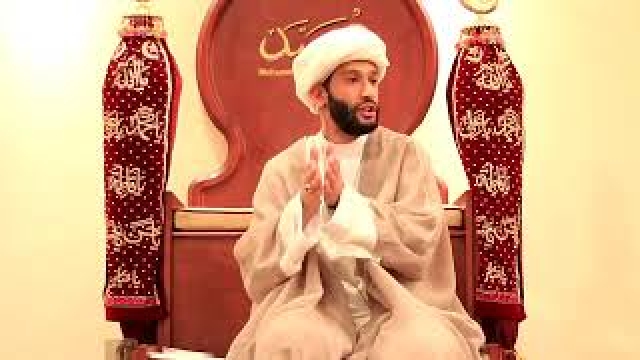
Philosophy Of Ghaybah 14/14 - Imam Mahdi (AJ) And The Shariah Law

A'udhubillahi min ash-shaytan ir-rajeem. Bismillah ir Rahmanir Rahim. Alhamdu lillaahi Rabbil 'aalameen, Al-Hamdulillah il-ladhee hadaanaa lihaadha, wa maa kunna linahtadiya law laaa ann hadaana Allah (7:43), wassalaatu wassalamu 'ala ashrafil anbiyai wal mursaleen, khaatim in-nabiyeen, sayedin il-mumajjad, basheerin il-musaddaq, al-mustafal amjad mahmudil Ahmad, abil Qasimi Muhammad [Allahumma Salli alaa Muhammad wa aali Muhammad].
Wa 'ala ahli bayti at-tayyibeen at-tahireen al-ma'sumeen, wa la'natullahi 'ala al-dhalimeena, minal-awwaleena wal akhireen. Amma ba'ad, faqad qal Allahu subhana wa ta'ala fi Kitabih il-Majeed, wa Furqanih il-Hameed, wa qawluh ul-haqq, Bismillahir Rahmanin Raheem, "Wa lammaa jaaa'ahum Kitabum min 'indil laahi musaddiqul limaa ma'ahum, wa kaanoo min qablu yastaftihoona 'alal ladheena kafaroo falammaa jaaa'ahum maa 'arafu kafaru bih; fa la'natul laahi 'alal kaafireen"(2:89). Aamanna billah. Sadaqa Allahu al-Ali ul-Adheem. Salawat ala Muhammad wa aali Muhammad [Allahumma Salli alaa Muhammad wa aali Muhammad].
Awaited Saviour of humanity, Imam al-Mahdi, alayhi assalam, my respected teachers, elders, brothers and sisters, assalam 'alaykum jamee'un wa rahmatullahi wa barakatuh [wa aleykum assalam, wa rahmatullahi wa barakatu].
Our discussions concerning the philosophy of ghayba of the Awaited Saviour humanity, Imam al-Mahdi, ajjalallahu ta'ala faraja shareef [Allahumma Salli alaa Muhammad wa aali Muhammad] has concerned itself with several very broad areas. We started with this primary verse from Suratul Baqara, in which Allah Subhana wa Ta'ala describes the conditions and the mentality of the Jewish people of Medina in that they used to expect and had prepared themselves for the coming of their savior, Rasul Allah Muhammad sallallahu alayhi wa alihi wa sallam [Allahumma Salli alaa Muhammad wa aali Muhammad]. And that when he came, 'maa 'arafoo kafaroo bih; fala 'natul laahi 'alal kaafireen', - that they did not recognize him and they belied him; as such, the everlasting curse of our love is upon those who openly reject.
And so we used this verse as a means to state that we do not want to fall into the same pitfalls as the Jewish community of Medina did. And therefore, we have to increase our ma'rifa of the Imam alayhi assalam. Ma'rifa is not found in knowing his name or in his lineage or in the things that are so fundamental or so basic in terms of knowledge of who this Imam is. It is that many people know many of the names of the prophets or know many of the names of the Imams, but the insightful nature of those individuals still escapes them.
And so for us to have a greater degree of ma'rifa of the Imam alayhi assalam, we need to have better comprehension of his mission and methodology. We spent much time talking about how the Prophet elevated a very low community to its apex, to its thorough completion, and how the Imam alayhi assalam must do the same with this world. He is a global figure and therefore we must understand him in light of the modern world that we see, the challenges that are at hand. We spoke about the methodology of Rasul Allah in Mecca and Medina and how this would become manifested by the Imam, alayhi assalam. And hopefully this has given us something to think about differently as to how we normally consider and conceive the Imam, alayhi assalam.
Our conclusion this evening will look at two questions that we posed in the first nights, and those were: Why ghayba itself? And how do seven billion people from around the world of all countries, ethnicities, religions, demographics become gravitated towards the message of the Imam, alayhi assalam? The first question seeks to ask: Why the concept of Ghayba itself? Allah Subhana wa Ta'ala being All-Knowing, All-Wise, All-Just has chosen this format to take away the Imam alayhi assalam from our eyes for such a long period. Therefore, this must be the perfect system to ensure his coming is a successful one. How and why is this the case?
The second question of how seven billion people gravitate towards the Imam seeks to again make him a very real figure and to demystify the movement of the Imam. Think about this question. Seven billion people from around the world. When the Prophet came, he dealt with the Arabian community. And in the era of the event of Ghadir Khumm, when the appointment of Amir al-Mu'mineen alayhi assalam was performed, we are told that there were 100,000 Muslims at that time. The Imam of our time, alayhi assalam, has to contend with seven billion. That's not to say that he's greater, but we look at it from the global scale. In the very realest sense, how does the Imam manage to make people of such width and diversity gravitate towards him?
Think about it this way. We believe that Imam, alayhi assalam, is going to bring his Shari'ah and his methodology of governance to this world. We are very understanding and aware of the words Shari'ah and fiqh and what they mean to us. And so if one was to suggest that the Imam is going to come and preside over a world and bring Shari'ah to that world, you and I would not fear the term Shari'ah. But if I said to you or I said to the average person within this world that in 50 years time, I'm picking a figure, in 50 years time there will be a man who is by the name of Muhammad, because that is his name and he's going to bring a revolution around the world and establish Islam to dominate the world, and he's going to bring Shari'ah across the entirety of the world. I ask you a simple question. How do you think the majority of the world will react to that notion?
If I went outside here, let's say I went to Texas as well and I said that Shari'ah is coming, Shari'ah will rule. I wonder how they would react. I think you understand how the world would react. The majority and in fact, even Muslims, many of them would say they want Shari'ah, but the reality is that they may not actually want to be governed under Shari'ah Law. Let me give you an example. If I said to many Western Muslims, go and live in Iran, I'm not saying that Iran is the beacon of Shari'ah, but it may be one of the closest things that we have in its current form and current system.
If I said to many Muslims around the world, go and move to Iran, where there is at least the best expression of Shari'ah in the world, the majority of people would still say no. Muslims wouldn't want Shari'ah. Non-Muslims are so afraid of Shari'ah that even if you bring the term to them, they would flee and fight in order to ensure Shari'ah doesn't come here. In fact, how many times in social media have we seen plaques: 'No Allah in America', 'No Shari'ah in Britain', 'Shari'ah go to hell'? These things are there, present within the majority of the Western world because the way in which they've been told about Shari'ah is very different to the reality of what Shari'ah actually is. What is Shari'ah? As we stated in the previous nights, it is actually the higher goals of Islam to get the best out of each and every human being, to bring them from a state of weakness to a state of strength, to remove and manage their insecurities, to bring unity at the level of society and humanity. This is actually what Shari'ah is aiming to achieve.
But if we said Shari'ah was coming, the majority of the world would fear and would flee [wa aleykum assalam wa rahmatullah]. Yet at our level of conviction, it is our belief that the vast majority of the world itself will end up accepting the Shari'ah of Imam al-Hujja, ajjalallahu ta'ala faraja shareef [Allahumma Salli alaa Muhammad wa aali Muhammad]. A person who spends even the most elementary time pondering upon Imam al-Mahdi alayhi assalam and his global Mahdian movement would want to reconcile how is it the majority of the world would not want Shari'ah to govern them today, yet what we believe in is that people will gravitate towards the governance of this particular individual. How do you reconcile this issue? And if we say he's going to come this Friday May Allah hasten his reappearance, it's a very real question of how he does it and how the world begins to gravitate towards him. How does this event happen?
We're going to look at discussion points of the philosophy of ghayba from two great scholars and try to elaborate upon them and discuss them in light of our own reflections and some of the discussions that we've been having. We will look firstly at a point made by His Eminence Ayatullah Sayyid Kamal al-al-Haiydari, dama tawfeeqahu, one of the great Marajae of our time and living scholars. And then we will conclude with a statement from His Eminence Marhoom Ayatollah Shaheed Muhammad Baqir as-Sadr, rahmatullahi alaih. Both of these two have great works upon the Imam of our time. And we will try to see the way in which they had discussed this philosophy of Ghayba. In regards to his Eminence Sayyid Kamal Haiyderi, may Allah grant him the longest of lives to serve our community, he is a very insightful Marja. All of our Marajae, may Allah bless them, are insightful. He has many lessons that are available on YouTube that people can watch and learn from. And he has a discussion when he poses this question and he says, what is the philosophy of ghayba? He actually starts this discussion this way and then he poses a different set of questions in order to explain this philosophy of ghayba. Why does Allah Subhana wa Ta'ala choose such a lengthy period of ghayba as being His perfect system to ensure governance upon the world?
He poses certain questions. He says, think about this. We have many diseases in the world today, such as cancer. And he names them. He's sitting with his students in his bathul al-kharij class. He says, 'Tell me, did Rasul Allah Muhammad sallallahu alayhi wa alihi wa sallam [Allahumma Salli alaa Muhammad wa aali Muhammad] not know how to cure cancer? Think about this question: did Rasul Allah not know how to cure cancer or any of the diseases that are present within this world? In fact, there is a narration from Amir al-Mu'mineen Ali ibn abi Talib salawatullah wa salamuhu alaih [Allahumma Salli alaa Muhammad wa aali Muhammad]. 'li kully illatin dawa'a' for every single cause, for every single disease, there is a medicine for it'. Everything that has been created is within that system. So if Amir al-Mu'mineen says this, we ask the question, did Rasul Allah not know the dawa to all of these diseases? The students answer, 'Yes. We believe he would know the answers to all of these diseases, how to cure cancer and so on and so forth'. So Sayyid Kamal, Ustaad, poses another question. Well, why didn't he give us these answers then? As in why isn't there, somewhere in Bihar al-Anwaar, one narration that says one day you're going to come to cancer and you're going to have these kinds of machinery or these types of research mechanisms at your hand, this is the way to cure cancer; something that, according to Cancer Research UK, the most prominent organization dealing with cancer in the United Kingdom, one out of every two people will get cancer in the United Kingdom going forward. Such a horrendous disease. Now, why didn't Rasul Allah give us the answer? Sayyid Kamal responds by saying, 'Had Rasul Allah given us the answers to everything within the texts, then where would be our struggle and where would be our own sense of human accomplishment?'
We are here for a purpose. At the individual level, but also at the societal level. We are tasked by God Almighty to achieve certain things. And if everything was handed to us, then we would not be able to accomplish anything ourselves. Where would be our feat of unearthing the treasures of this world and beginning to explore the universe for ourselves and understanding God Almighty and His greatness for ourselves? In fact, there is a verse of Quran that says that things will be given to us over a period of time.
Allah Subhana wa Ta'ala says in Suratul Hijr that with Him are all the treasures of knowledge, everything, the knowledge of all the sciences. And He gives them to us over a period of time. He releases them to us over a period of time. 'Wa im min shai'in illaa 'indanaa khazaaa 'inuhoo wa maa nunazziluhooo illaa biqadarim ma'loom' (15:21), the verse says. Now, if you understand this conceptually, why did Rasul Allah not give to us all the answers of everything within the universe?
Because you and I are tasked with struggle and achievement.He says this is the reason for the ghayba of Imam al-Mahdi alayhi assalam. He takes the Imam away from our eyes so that in our own ways, yes, as individuals, but in general, as a society, as a global community, we are tasked with accomplishment and achievement ourselves. If the Imam is present here today, all we would do is flock to him for every question that we have.
Master, how do we create a just economic system? Master, how do we create a just political system? Master, what is the best way of education? Master, what is the best way of teaching from the pulpit? Master, what is the best way of arriving at Pluto? Every question we would just go to him. And what would happen? Where would be our achievement? Where would be our own sense of accomplishment? Where would be us that managed to break those intellectual barriers and for us to feel like we have really explored God and the system of creation? And so it is a blessing for the human being that he is not present for us to be able to accomplish, semi-independent of the Imam, alayhi assalam.
But then we say, 'But my Lord, without my Imam's presence, this world collapses into such a state of immorality. We still have slavery. We have sex slaves. We have oppression and exploitation on everything from our own natural resources to humankind. We have created bombs that can kill half a million people, destroy entire cities within a few seconds. Where is the human accomplishment? And here is that balance between the evil that is present within the world and the striving of the goodness that is present within the world. It is that eternal battle that is taking place.
Now, if you understand that the Imam's absence from our eyes, the purpose of which is to aid our own accomplishment, what could be a greater accomplishment than humanity arriving at a pedestal whereby they are worthy of having a world being able to behold its own human saviour? Curing cancer is great. Rasul Allah didn't give us the answers because we were supposed to go out and accomplish it ourselves. He didn't give us the answer of how to reach Pluto because this is something we are seeking to do ourselves.
In the same way, as a society, the greatest global accomplishment that humankind can achieve is to create a world that is worthy and ready to behold the coming of Imam al-Mahdi, ajjalallahu ta'ala faraja shareef [Allahumma Salli alaa Muhammad wa aali Muhammad]. And the same way you and I are tasked with defeating cancer in the absence of the Imam, arriving at Pluto in the absence of the Imam, we are tasked with arriving at creating a world which can behold the coming of our Imam, alayhi assalam. Now here we go back to some of our primary discussions and begin to tie up loose ends and put everything together.
We stated, and this is key, that the philosophy of the ghayba is different from the theology of the ghayba. The theology of the ghayba limits our thinking that the Imam's ghayba is a very Shi'a-centric ghayba. The philosophy objects to this and says, no, he is a global figure and therefore his absence and therefore his return is predicated on a global state and not just on a Shi'a readiness. This challenges our notions because the majority of speakers, ulema, books and rhetoric that you always hear says something to this effect: we are waiting for 313 people. Growing up, all I heard about the Imam was, 'Ah, if only we had 313 real Shi'a, the Imam would be here by now'. If you predicate the coming of the Imam in a Shi'a-centric vision that, yes, his coming is predicated on 313 individuals. The reality is the ahadith about 313 individuals, not necessarily as the means for the Imam to come, but rather as the generals of the Imam's army. After that, the narrations go further, that there aren't just 313, but then there are thousands within his army.
Now, here, if you've understood that the Imam's position is as a global Imam, his coming cannot be predicated upon the preparation solely of 313. If he is for humankind, if he is for all faiths, all sects, all cultures, all demographics, his coming is predicated on the preparedness of all faiths, all countries, all demographics as well. It requires the preparation of Cambodia to Venezuela and all that is in between. Their preparation is as important as mine and your preparation for him to be able to come. If I just box him that only 313 Shi'a need to be prepared and then he's going to come, I have completely misunderstood the global nature of the Mahdian movement, entirely. I may as well just leave now and have not understood anything about the global nature of this movement. His coming is not, not predicated on 313 people. His movement is predicated on a global state of readiness. Why is that?
Simply put, if he is to come and he is there for all of mankind, and mankind by and large reject him, then what was the point of his coming in the first place? Think about 124 thousand prophets have come before him, 11 Imams have come before him. None of them were accepted universally, correct or not? All of them were rejected. Amir al-Mu'mineen, according to the hadith, he was told by Rasul Allah, if you have 40 people with you, take the Quran and go to war against the munafiqeen and establish your Imamate. When the first three khulafa usurped caliphate from Amir al-Mu'mineen alayhi assalam, in the Shiite perspective, he didn't even have 40 people with him. Imam Husayn alayhi assalam, when he rose against the tyrant Yazeed, what happened? He had 72 people with him or maximum 120, in another tradition. This Imam, al-Mahdi salamullah alaihi is the first Imam to be a global Imam to bring the entirety of the world under global justice, to bring out humanity's best from all seven and a half billion people.
If he's going to be rejected by seven billion people, then what's the point of him coming in the first place? Therefore, his coming must be concise and must be in line with a general state of global preparation. Otherwise, he'll be rejected by the rest of the world. The rest of the world will go to war with him and then he will have to go to war with the rest of the world. His coming is predicated on a global state of readiness. Now, if we understood this properly, it has certain impacts upon the way in which we think, because clearly it's no longer about Shi'a preparedness, it's about human preparedness.
Instead of me thinking about just Shi'a preparedness, I would now engage with the rest of the world on discussions about messianism and the Messiah figure, irrespective of what his name is. I don't care if he's Jesus. I don't care if he's the the inheritor of Buddha. At the end of the day, when he comes, he will be a savior for all humanity. That's all I care for. That's all you should care for. Therefore, you and I should be working towards bringing a human savior, even if he's Jesus Christ.
Let's start together at the point of humanity and say, I have a human savior. You have a human savior. Let us work hand in hand to bring that human savior, because no matter what his name is or no matter what his lineage is, he's going to be the savior of humankind. It's going to be good for us all. At least now we get to see God's truth on Earth. I could be wrong. You could be wrong. But at least now we have just systems rather than systems of exploitation of this world. This would be our first conclusion, and that is a discussion within itself.
A second conclusion that would come from him being predicated alayhi assalam, on a global movement would be to try to observe whether the world is being prepared for his coming or not, because if he's coming solely for 313 Shi'as and based upon 313 Shi'as, all I'm going to do is look at Iran and Iraq and Syria and Lebanon and say, well, these people are, you know, truly in love with the Imam, but yet he hasn't come. We still can't find 313 truly dedicated people in Najaf? It's because he's not coming based on 313 Shi'as.
We now look at the global states of preparation and their preparation is as important as my preparation, and this is when we see the world is becoming prepared for the Imam. Around the world, we see protests and movements for a better state of living, for example, in the Muslim world and in the non-Muslim world. In the Muslim world, only from 2010 did we see what was known as the Arab Spring. They were moving and marching and demonstrating and willing to give their lives for things which were inherently synonymous to the Imam's movement.
They moved for a better political system to remove dictatorship, to remove monarchical systems, to remove oppression. This is exactly what the Imam is coming for. They moved for a better economic system. This is exactly what the Imam is coming for. They moved in order to remove oppression within the Arabian world. This is exactly what the Imam is coming for.
The Arab world began to move. Prior to that, from 2008 to 2010, the non Arab world began to move. And we've spoken about this three or four years ago when we talked about Occupy Wall Street. Occupy Wall Street was a movement not organized by Muslims, not organized by Shi'as. In fact, by and large, it was ignored by Shi'as because our vision is very tunnel vision. All I care about is 313 people being prepared but actually that's not what Islam is about. And so when we saw people in India and in the States and in Canada and in Britain and in Australia camping out for months, demanding a better political system, a better economic system, this was evidence that the world itself was moving and demanding more from its leadership.
The world is in flux. Look at the world and how difficult it is economically, be you in Spain or in Greece, be it militarily and what's going on in the Middle East, be it religious violence that is taking place in Africa, or be it poverty that is spreading or has spread throughout South America - the whole world is in a state of tumult, but different types of tumult. Every human being is facing something, or at least 99 percent of human beings are facing something. It makes sense that the whole world is shifting and demanding a better governance for itself. Now, here we go back into the Quran and we think about Rasul Allah and the way that Quran demonstrated its own movement.
The Quran shows us a very beautiful verse about ghayba and an absence of leadership, divine leadership and how human beings began to desire a better world to live in. There is a verse from Suratul Yasin, that you and I read every single week and then we forget about it. Allah Subhana wa Ta'ala says: 'Litundhira qawmam maaa undhira aabaaa'uhum fahum ghaafiloon' (36:6), Rasul Allah was sent to warn people of whom their fathers had not been warned, and thus they lapsed into absolute heedlessness. Yes? Mecca was as a city, by and large, started by Ibrahim alayhi assalam. Then he had his son, Ismail, alayhi assalam present in Mecca. After a period, there was no more divine guidance in Mecca, was there?
After the lapse and no more divine guidance being present in Mecca, hundreds, thousands of years passed and eventually Mecca dissolved into such a community, the type that we described a few nights back. 'La'amruka innahum lafee sakratihim ya'mahoon'(15:72), most surely these people are wondering blindly in their intoxications. Burying their daughters alive, inheriting women, selling off family members to pay for debt, going to war with each other arbitrarily, prostituting out their own slaves, going to perform tawaf singing, clapping, dancing naked in front of the Ka'ba - can you find a more community more morally bereft?
What happens? It is devoid of guidance. And so it fell and collapsed into that kind of society. What did we say when we spoke about Mecca? Because each demographic of society was so oppressed, so downtrodden, when Rasul Allah came, 'Litundhira qawmam maaa undhira aabaaa'uhum fahum ghaafiloon'(15:72), they gravitated towards the message of Rasul Allah. If you are a woman, you are so downtrodden, when Rasul Allah said you are the highest of levels within the eyes of Allah Subhana wa Ta'ala; as a mother, Paradise is underneath your feet; every woman should try to seek knowledge and better themselves; women flocked in Medina towards that message. When blacks who were downtrodden saw themselves as equal in the eyes of Allah Subhana wa Ta'ala: 'inna akramakum 'indal laahi atqaakum'(49:13) - they flocked to the message of Rasul Allah. When tribes that were so used to going to war and devastating themselves due to war, Rasul Allah said, 'innmal mominoona ikhwa'(49:10)- people are brothers of each other, they flocked towards the message of Rasul Allah. But it required a gap in time when there was no divine leadership prevalent for society to collapse in on itself, to genuinely be willing to accept the message of Rasul Allah Muhammad sallal-lahu alayhi wa alihi wa sallam [Allahumma Salli alaa Muhammad wa aali Muhammad].
Had a messenger been present in Meccan all that time, they would have rejected him the same way every other prophet had been rejected before. Fast forward 1400 years. We do not have divine guidance present amongst ourselves. The same things that were prevalent within Mecca and Medina are prevalent today in the world. In terms of Mecca, shackling of the intellect and morality today. People constantly going to war with each other, the exploitation of women, the suppression of ethnic minorities. It is exactly like Mecca was 1400 years ago today.
And then you moved to Medina and you see Medina present today before Rasul Allah. Faith groups hating each other, warring each other, manipulating and plagiarizing their divine books the same way the Christians and the Jews and the Zoroastrians had done in Medina prior to Rasul Allah. The same way when Rasul Allah came to Mecca and offered them and afforded them all these ways out, they gravitated to him. Except what? Except the elites of the community that they felt they had something to lose.
He came to Medina and managed to make all of them lose the insecurities. The same way, when Mahadi salamullah alaih comes he comes to a world and each and every demographic that is so downtrodden, that is so badly exploited will have realized the world that they have been forced into, when he comes in and offers them a better way of living, seven billion people will rush and gravitate towards Imam al-Mahdi, ajjalallahu ta'ala faraja shareef [Allahumma Salli alaa Muhammad wa aali Muhammad].
'Litundhira qawmam maaa undhira aabaaa'uhum fahum ghaafiloon'(15:72). We are in that state today and he is coming to warn the people that are heedless around the world. What did his Eminence Sayyid Kamal al-Haiydari daama tawfeeqahu say? He said the purpose of not giving us those answers was for us to arrive there ourselves. It is for humanity to arrive at a point whereby it is ready and willing to accept a human savior. All those people who are downtrodden, the world is shifting, and each of the jigsaw pieces are being put in order to behold the entirety of the picture. It is as simple as that.
When you see a community such as the one we spoke about in Guadeloupe, don't think of that as exclusive or separate to the Mahdian global movement, that community that is devoid of leadership, that is killing each other, that is spreading such immorality. They will be amongst the first to gravitate to a human savior that can genuinely provide them a solution out of the tumult in which they are living in.
When you see the Yazidan community running to the hills without protection from humankind, wondering where are those superpowers that claim moral standpoints, where are NATO and the peacekeeping force? When a human savior comes to them in order to provide them with security and safety, they will flock and gravitate to him straight away. Each community in the world that is in its own challenge, the only one individual that has the keys and the answers is the Awaited Savior.
If you have 60 percent unemployment like in Greece or 40 percent unemployment like in Spain, and he has an economic solution for you, you will rush towards such a human being because a human being is in need of guidance. This is innate within us. In fact, the Hadith talk about this so beautifully. There is a narration from our sixth Imam Ja'far Al-Sadiq salawatullah wa salamuhu alaih[Allahumma Salli alaa Muhammad wa aali Muhammad], whereby he says the Imam will come after humanity has exhausted each type of governorship. Every type of governorship would have come for the opportunity for humanity to say we tried, but we failed. Marxism came and went. Democracy will come and it will go. Monarchical systems, sultanates, sheikdoms. You will have the black community that will say we champion our black president. He will come. He will go. He will fail at bringing justice in this world. A white female president will come next year to you. She will come. She will fail at bringing justice around the world. She will pass.
You will have Marajae with turbans and theocracies. They will come. They will go and fail at bringing justice around the whole world. Only when humanity matures and realizes for itself only a divine guide can bring justice to this world, will humanity be ready to accept a human savior and not before then; and not before then. Only when it comes from within [the heart] that humanity is willing to accept a divine guide because we are so downtrodden, so much engaged in destroying our own world, only then can a human savior come because otherwise we would reject him like we rejected his forefathers.
We rejected all the prophets before them. We rejected 11 Imams before them. The only time humanity can accept a human saviour is when it comes from [the heart] in here. And those conditions need to be set correctly within the world for the world at large to be able to accept a human savior. Therefore, he cannot come before then. Sayyid Kamal al-Haiydari has understood this perfectly. It is for us to defeat cancer. It is for us to arrive at Pluto. It is for us to arrive at a human stage of maturity whereby we are ready to accept a human saviour.
When he comes and he talks about Shari'ah, it won't be the type of Shari'ah that you and I think about. It won't be these ways. It'll be the way Rasul Allah implemented Shari'ah for people. It will be the way Ali ibn abi Talib applied Shari'ah for people. And that is why humanity would not reject the Shari'ah of the human saviour, because they will see Shari'ah as it is supposed to be, not the way you and I divide and hate with people for the sake of Shari'ah, but for the sake of bringing humanity together as Shari'ah is intended to do for humanity.
Now here, if you understood this, this is the philosophy of ghayba. Ghayba has to be there - you have to have the removal of a human saviour, of the Imam of your time to engender and to foster that reality amongst human beings so that each demographic of society, each culture, each nation, each sect arrives at a state whereby they are ready to accept another human saviour from within themselves. When he comes and he begins that global Mahdian movement, they don't look upon him as an enemy , they look upon him as a true savior for themselves.
If you've understood this, and this is the philosophy of the ghayba itself. His Eminence, Shaheed Muhammad Baqir al-Sadr, rahmatullahi alayhi, has a different set of words, but they are so beautiful and so powerful. Often I'm asked or we ask a question and it becomes repetitive. It becomes cliche. The question is, 'Well, how do I prepare for the coming of Mahdi? What do we do to prepare for him?' As you see in point one, we have to prepare the world for him as much as we have to prepare ourselves for him: Cambodia and Venezuela and Canada and New Zealand are as much in need of preparation as you and I within these four walls.
Shaheed Muhammad Baqir al-Sadr, rahmatullahi alayhi, says the most outstanding of lines. He says in his notes on Imam alayhi assalam: the ghayba is an inexhaustible source of strength for human beings. Look at those words: the ghayba, the concept of Mahdiism is an inexhaustible source of strength for human beings. Why? Because those that believe in a messiah figure truly and honestly always look forward to tomorrow. You can have ISIS and the thoughts of Ibn Tamiya. You can have occupied Palestine and occupied Arabia, and you can have all types of exploitation of humanity and the world itself. But the belief in a human savior that is going to come tomorrow gives you strength that tomorrow the sun will rise and tomorrow will be a better day.
It's an inexhaustible source of strength that Mahdi salamullah alaih becomes for you and I that no matter how much we are beheaded, no matter how much we are bombed in our own mosques, Mahdi will come and bring justice for us. It's an inexhaustible source of strength. Let me explain it to you in a different way. Imagine I am Mark Zuckerberg or I am Bill Gates. I'm sure you all know who they are. Imagine I am Mr. Big Bucks and you're my son. I have all of the industry. I have all of everything, what you could need. I have all these millions and billions and I have all the treasures. And I say to you, 'Son, I'm going to hand it all over to you. You want to be head of Microsoft? Here are the keys. You want the mansions. Here are the keys. You want the islands. Here are the keys. But there's a condition before I give you Microsoft and my private islands and my private jets'.
And he says, 'Dad, no problem. Whatever the condition is, I will go and fulfill it. I'll make sure I go and achieve the condition'. He will say, 'I spent my lifetime building these businesses. I worked tirelessly to understand the markets and to be able to move in sync with movements and be a step ahead of the game. There is no way I'm handing you the keys to Microsoft and everything that it comes with unless you are ready and worthy to take over my business from me. You have to be what I am, but of your own ilk and your own time. You need to be a step ahead of the game. You need to understand the markets. You need to understand the industry. Like I've understood it all. I'm not going to let the business just collapse'. So what does the son say? The son responds by saying, 'Dad, no problem. Whatever I have to do to ensure I'm prepared, I will do it'.
And where does the son go? The son goes to Harvard Business School and he sits with all the great CEOs of the world and he sits on these various boards and he makes as many networks with people in the business world as he can. He makes sure that at the top level of industry and commerce, at the level of governments, he's there involved in the conversation to prove his preparedness to inherit the business from his father. And only then does the father hand over the keys of the business and say, 'Now I consider you worthy of taking over from me.'
In the same way, Mahdi salamullah alaih cannot return until he sees preparation in the world that ensures he is able to come and start his Mahdian global movement. Therefore, it requires us to be that prepared, to work that hard, to work that smart, just like the son would in order to ensure he inherits Microsoft from his father. It requires us to understand what Mahdi truly wants from us and then to go out and achieve it, to ensure that he comes.
And when he comes, he can only do it based upon the efforts and the preparedness of this world as it's supposed to be. The Quran says this in Chapter number 22, Suratul Hajj verse number 41. Allah Subhana wa Ta'ala says, 'wa im makkan naahum fil ardi'(22:41), - it's a conditional statement: if We were to establish you in the land, if We were to establish whom in the land? The sixth Imam, alayhi assalam says this verse is for Mahdi salamullah alaih. If we were to establish you in the world, there would be people at this point, the sixth Imam says these people and the attitudes and the attributes that he's about to describe are not the 313. Listen, this verse is not the 313. These attributes are for those that paved the way for Mahdi salamullah alaih, paved the way for him. 'wa im makkan naahum fil ardi,'- if We're going to establish you, Mahdi in the land, there would be people that believe and they do good deeds. They do Amr bil Maroof wa Nahi anil Munkar and they establish salat and they establish zakat.
Those people that bring these Mahdi salamullah alaih back, they have of four kinds: they establish salat and zakat and they are people who perform Amr bil Maroof wa Nahi anil Munkar. Globally, that is what is needed to happen. Globally, we are expected to help the world prepare for his coming. If We are to establish you within the world, the people of the world do Amr bil Maroof wa Nahi anil Munkar to the entirety of the world.
This is that inexhaustible strength that is coming to us that no matter how dark the times come, no matter how difficult this world becomes, you and I know that tomorrow, inshaAllah, Mahdi will come. And it is predicated on a global preparedness and it is predicated on how hard I work to bring the Imam alaihi salam back into this world to bring about justice throughout the entirety of the world InshaAllah. Wal hamdulillah Rabbal Aalameen, wasallahumma ‘ala Sayedina wa Nabiyyina Muhammad wa ‘ala alehi at-Tahireen. [Allahumma Salli alaa Muhammad wa aali Muhammad].
Please raise your hands. Let us join each other in dua – we ask Allah Subhanahu wa Ta’ala sincerely to hasten the reappearance of the Awaited Saviour; to allow us to be alongside him at all times in our life and in our death; if we are to pass away from this world before his coming, to raise us from our graves so that we may partake in the victory of Muhammad wa aali Muhammad. Ya Allah, there are many people around the world going through such desperate times grant them all safety, security and victory for the sake of Muhammad and aale Muhammad. We ask you Ya Allah that in the final moments of our life, we die in the love of Muhammad and aale Muhammad. Wa assalamu alaykum jamee'un wa Rahmatullahi Wa barakatuh.
Please conclude this series with three loud salawaat in honor of the Awaited Saviour of humanity, the Master and Lord of our age, Imam al-Mahdi, ajjalallahu ta'ala faraja shareef [Allahumma Salli alaa Muhammad wa aali Muhammad, Allahumma Salli alaa Muhammad wa aali Muhammad, Allahumma Salli alaa Muhammad wa aali Muhammad].
A'udhubillahi min ash-shaytan ir-rajeem. Bismillah ir Rahmanir Rahim. Alhamdu lillaahi Rabbil 'aalameen, Al-Hamdulillah il-ladhee hadaanaa lihaadha, wa maa kunna linahtadiya law laaa ann hadaana Allah (7:43), wassalaatu wassalamu 'ala ashrafil anbiyai wal mursaleen, khaatim in-nabiyeen, sayedin il-mumajjad, basheerin il-musaddaq, al-mustafal amjad mahmudil Ahmad, abil Qasimi Muhammad [Allahumma Salli alaa Muhammad wa aali Muhammad].
Wa 'ala ahli bayti at-tayyibeen at-tahireen al-ma'sumeen, wa la'natullahi 'ala al-dhalimeena, minal-awwaleena wal akhireen. Amma ba'ad, faqad qal Allahu subhana wa ta'ala fi Kitabih il-Majeed, wa Furqanih il-Hameed, wa qawluh ul-haqq, Bismillahir Rahmanin Raheem, "Wa lammaa jaaa'ahum Kitabum min 'indil laahi musaddiqul limaa ma'ahum, wa kaanoo min qablu yastaftihoona 'alal ladheena kafaroo falammaa jaaa'ahum maa 'arafu kafaru bih; fa la'natul laahi 'alal kaafireen"(2:89). Aamanna billah. Sadaqa Allahu al-Ali ul-Adheem.
Salawat ala Muhammad wa aali Muhammad [Allahumma Salli alaa Muhammad wa aali Muhammad].
Erwarteter Retter der Menschheit, Imam al-Mahdi, alayhi assalam, meine verehrten Lehrer, Ältesten, Brüder und Schwestern, assalam 'alaykum jamee'un wa rahmatullahi wa barakatuh [wa aleykum assalam, wa rahmatullahi wa barakatu].
Unsere Diskussionen über die Philosophie der ghayba des erwarteten Erlösers der Menschheit, Imam al-Mahdi, ajjalallahu ta'ala faraja shareef [Allahumma Salli alaa Muhammad wa aali Muhammad] haben sich mit mehreren sehr breiten Bereichen beschäftigt. Wir begannen mit diesem primären Vers aus Suratul Baqara, in dem Allah Subhana wa Ta'ala die Bedingungen und die Mentalität der jüdischen Menschen von Medina beschreibt, indem sie das Kommen ihres Retters, Rasul Allah Muhammad sallallahu alayhi wa alihi wa sallam [Allahumma Salli alaa Muhammad wa aali Muhammad], erwarteten und sich darauf vorbereitet hatten.
Und dass, als er kam, 'maa 'arafoo kafaroo bih; fala 'natul laahi 'alal kaafireen', - dass sie ihn nicht erkannten und ihn ablehnten; so liegt der ewige Fluch unserer Liebe auf denen, die offen ablehnen.
Und so haben wir diesen Vers als Mittel benutzt, um zu erklären, dass wir nicht in die gleichen Fallen fallen wollen, wie es die jüdische Gemeinde von Medina tat. Und deshalb müssen wir unsere Ma'rifa für den Imam alayhi assalam erhöhen. Ma'rifa besteht nicht darin, seinen Namen zu kennen oder seine Abstammung oder die Dinge, die so grundlegend sind oder so grundlegend in Bezug auf das Wissen, wer dieser Imam ist. Es ist so, dass viele Menschen viele der Namen der Propheten kennen oder viele der Namen der Imame kennen, aber die erkenntnisreiche Natur dieser Individuen entgeht ihnen trotzdem.
Und damit wir ein größeres Maß an Ma'rifa für den Imam alayhi assalam haben, müssen wir ein besseres Verständnis für seine Mission und Methodik haben. Wir haben viel Zeit damit verbracht, darüber zu sprechen, wie der Prophet eine sehr niedrige Gemeinschaft zu ihrem Höhepunkt, zu ihrer gründlichen Vollendung erhob, und wie der Imam alayhi assalam das Gleiche mit dieser Welt tun muss. Er ist eine globale Figur und deshalb müssen wir ihn im Lichte der modernen Welt, die wir sehen, und der Herausforderungen, die es gibt, verstehen.
Wir sprachen über die Methodik von Rasul Allah in Mekka und Medina und wie diese durch den Imam, alayhi assalam, manifestiert werden würde. Und hoffentlich hat uns das etwas gegeben, um anders darüber nachzudenken, wie wir normalerweise den Imam, alayhi assalam, betrachten und begreifen.
Unser Fazit heute Abend wird sich mit zwei Fragen befassen, die wir in den ersten Abenden gestellt haben, und das waren: Warum ghayba selbst? Und wie werden sieben Milliarden Menschen aus der ganzen Welt aller Länder, Ethnien, Religionen, Demographien von der Botschaft des Imam, alayhi assalam, angezogen? Die erste Frage zielt darauf ab, zu fragen: Warum das Konzept der Ghayba selbst? Allah Subhana wa Ta'ala, der allwissend, allweise und allgerecht ist, hat dieses Format gewählt, um den Imam, alayhi assalam, für eine so lange Zeit aus unseren Augen zu nehmen.
Daher muss dies das perfekte System sein, um sicherzustellen, dass sein Kommen ein erfolgreiches ist. Wie und warum ist dies der Fall?
Die zweite Frage, wie sieben Milliarden Menschen zum Imam gravitieren, soll ihn wieder zu einer sehr realen Figur machen und die Bewegung des Imams entmystifizieren. Denken Sie über diese Frage nach. Sieben Milliarden Menschen aus allen Teilen der Welt. Als der Prophet kam, hatte er es mit der arabischen Gemeinschaft zu tun. Und in der Zeit des Ereignisses von Ghadir Khumm, als die Ernennung des Amir al-Mu'mineen alayhi assalam durchgeführt wurde, wird uns gesagt, dass es damals 100.000 Muslime gab.
Der Imam unserer Zeit, alayhi assalam, hat es mit sieben Milliarden zu tun. Das soll nicht heißen, dass er größer ist, aber wir betrachten es vom globalen Maßstab aus. Wie schafft es der Imam im wahrsten Sinne des Wortes, dass sich Menschen von solcher Breite und Vielfalt zu ihm hingezogen fühlen?
Betrachten Sie es so. Wir glauben, dass Imam, alayhi assalam, seine Schari'ah und seine Methodik der Regierungsführung in diese Welt bringen wird. Wir sind uns der Worte Shari'ah und fiqh sehr bewusst und verstehen, was sie für uns bedeuten. Wenn man also sagen würde, dass der Imam kommen und über eine Welt herrschen und die Schari'ah in diese Welt bringen wird, würden Sie und ich den Begriff Schari'ah nicht fürchten. Aber wenn ich Ihnen oder dem Durchschnittsmenschen in dieser Welt sagen würde, dass es in 50 Jahren, ich wähle eine Zahl, in 50 Jahren einen Mann geben wird, der den Namen Muhammad trägt, denn das ist sein Name, und er wird eine Revolution in der Welt auslösen und den Islam etablieren, um die Welt zu beherrschen, und er wird die Shari'ah über die gesamte Welt bringen.
Ich stelle Ihnen eine einfache Frage. Wie denken Sie, dass die Mehrheit der Welt auf diese Vorstellung reagieren wird?
Wenn ich hier rausgehen würde, sagen wir mal, ich würde auch nach Texas gehen und sagen, die Scharia kommt, die Scharia wird herrschen. Ich frage mich, wie sie reagieren würden. Ich denke, Sie verstehen, wie die Welt reagieren würde. Die Mehrheit und in der Tat sogar Muslime, viele von ihnen würden sagen, dass sie die Shari'ah wollen, aber die Realität ist, dass sie vielleicht nicht wirklich unter dem Shari'ah Gesetz regiert werden wollen. Lassen Sie mich Ihnen ein Beispiel geben.
Wenn ich vielen westlichen Muslimen sagen würde, geht und lebt im Iran, dann sage ich nicht, dass der Iran das Leuchtfeuer der Shari'ah ist, aber es könnte eines der Dinge sein, die dem am nächsten kommen, was wir in seiner aktuellen Form und seinem aktuellen System haben.
Wenn ich vielen Muslimen auf der ganzen Welt sagen würde, geht und zieht in den Iran, wo es zumindest die beste Ausprägung der Shari'ah in der Welt gibt, würde die Mehrheit der Menschen immer noch nein sagen. Muslime würden die Shari'ah nicht wollen. Nicht-Muslime haben so viel Angst vor der Shari'ah, dass sie, selbst wenn man ihnen den Begriff bringt, fliehen und kämpfen würden, um sicherzustellen, dass die Shari'ah nicht hierher kommt. In der Tat, wie oft haben wir in den sozialen Medien Schilder gesehen: 'No Allah in America', 'No Shari'ah in Britain', 'Shari'ah go to hell'?
Diese Dinge sind da, präsent in der Mehrheit der westlichen Welt, weil die Art und Weise, wie ihnen über die Schari'ah erzählt wurde, sich sehr von der Realität der Schari'ah unterscheidet. Was ist Shari'ah? Wie wir in den vorangegangenen Abenden erklärt haben, ist es eigentlich das höhere Ziel des Islam, das Beste aus jedem einzelnen Menschen herauszuholen, ihn aus einem Zustand der Schwäche in einen Zustand der Stärke zu bringen, seine Unsicherheiten zu beseitigen und zu bewältigen, Einheit auf der Ebene der Gesellschaft und der Menschheit zu bringen.
Das ist es eigentlich, was die Shari'ah anstrebt.
Aber wenn wir sagen würden, dass die Schari'ah kommt, würde die Mehrheit der Welt Angst haben und fliehen [wa aleykum assalam wa rahmatullah]. Doch auf unserer Ebene der Überzeugung ist es unser Glaube, dass die große Mehrheit der Welt selbst am Ende die Schari'ah von Imam al-Hujja, ajjalallahu ta'ala faraja shareef [Allahumma Salli alaa Muhammad wa aali Muhammad] akzeptieren wird. Eine Person, die auch nur die elementarste Zeit damit verbringt, über Imam al-Mahdi alayhi assalam und seine globale Mahdi-Bewegung nachzudenken, würde in Einklang bringen wollen, wie es sein kann, dass die Mehrheit der Welt nicht will, dass die Schari'ah sie heute regiert, und doch glauben wir daran, dass die Menschen zur Regierung dieses besonderen Individuums gravitieren werden.
Wie bringen Sie dieses Thema unter einen Hut? Und wenn wir sagen, er wird an diesem Freitag kommen, möge Allah sein Erscheinen beschleunigen, dann ist es eine sehr reale Frage, wie er es tut und wie die Welt beginnt, zu ihm zu gravitieren. Wie wird dieses Ereignis geschehen?
Wir werden uns Diskussionspunkte der Philosophie der ghayba von zwei großen Gelehrten ansehen und versuchen, sie auszuarbeiten und im Lichte unserer eigenen Überlegungen und einiger der Diskussionen, die wir geführt haben, zu diskutieren. Wir werden uns zunächst einen Punkt ansehen, der von Seiner Eminenz Ayatullah Sayyid Kamal al-al-Haiydari, dama tawfeeqahu, einem der großen Marajae unserer Zeit und lebenden Gelehrten, gemacht wurde. Und dann werden wir mit einer Aussage von Seiner Eminenz Marhoom Ayatollah Shaheed Muhammad Baqir as-Sadr, rahmatullahi alaih, schließen.
Diese beiden haben große Werke über den Imam unserer Zeit. Und wir werden versuchen, die Art und Weise zu sehen, in der sie diese Philosophie von Ghayba diskutiert haben. In Bezug auf seine Eminenz Sayyid Kamal Haiyderi, möge Allah ihm das längste Leben gewähren, um unserer Gemeinschaft zu dienen, ist er ein sehr aufschlussreicher Marja. Alle unsere Marja, möge Allah sie segnen, sind einfühlsam. Er hat viele Lektionen, die auf YouTube verfügbar sind, die sich die Leute ansehen und daraus lernen können.
Und er hat eine Diskussion, in der er diese Frage stellt und sagt, was ist die Philosophie von ghayba? Er beginnt diese Diskussion tatsächlich auf diese Weise und stellt dann eine andere Reihe von Fragen, um diese Philosophie von ghayba zu erklären. Warum wählt Allah Subhana wa Ta'ala eine so lange Periode von ghayba als Sein perfektes System, um die Herrschaft über die Welt zu gewährleisten?
Er stellt bestimmte Fragen. Er sagt, denken Sie darüber nach. Wir haben heute viele Krankheiten auf der Welt, wie zum Beispiel Krebs. Und er benennt sie. Er sitzt mit seinen Schülern in seiner Bathul al-kharij Klasse. Er sagt: "Sagt mir, wusste Rasul Allah Muhammad sallallahu alayhi wa alihi wa sallam [Allahumma Salli alaa Muhammad wa aali Muhammad] nicht, wie man Krebs heilen kann? Denken Sie über diese Frage nach: Wusste Rasul Allah nicht, wie man Krebs oder irgendeine der Krankheiten, die es in dieser Welt gibt, heilen kann?
In der Tat gibt es eine Überlieferung von Amir al-Mu'mineen Ali ibn abi Talib salawatullah wa salamuhu alaih [Allahumma Salli alaa Muhammad wa aali Muhammad]. 'li kully illatin dawa'a' für jede einzelne Ursache, für jede einzelne Krankheit, gibt es eine Medizin für sie. Alles, was erschaffen wurde, befindet sich innerhalb dieses Systems. Wenn also Amir al-Mu'mineen dies sagt, stellen wir die Frage, ob Rasul Allah nicht die dawa für all diese Krankheiten kannte? Die Studenten antworten: "Ja.
Wir glauben, dass er die Antworten auf all diese Krankheiten kennen würde, wie man Krebs heilen kann und so weiter und so fort". Also stellt Sayyid Kamal, Ustaad, eine weitere Frage. Nun, warum hat er uns diese Antworten dann nicht gegeben? Warum gibt es nicht, irgendwo in Bihar al-Anwaar, eine Erzählung, die besagt, dass man eines Tages zum Krebs kommen wird und diese Art von Maschinen oder diese Art von Forschungsmechanismen zur Hand haben wird, dies ist der Weg, Krebs zu heilen; etwas, das laut Cancer Research UK, der prominentesten Organisation, die sich mit Krebs in Großbritannien beschäftigt, einer von zwei Menschen in Großbritannien in Zukunft an Krebs erkranken wird.
Eine so schreckliche Krankheit. Nun, warum hat Rasul Allah uns nicht die Antwort gegeben? Sayyid Kamal antwortet, indem er sagt: "Wenn Rasul Allah uns die Antworten auf alles in den Texten gegeben hätte, wo wäre dann unser Kampf und wo wäre unser eigenes Gefühl der menschlichen Vollendung?
Wir sind aus einem bestimmten Grund hier. Auf individueller Ebene, aber auch auf gesellschaftlicher Ebene. Wir sind von Gott, dem Allmächtigen, beauftragt, bestimmte Dinge zu erreichen. Und wenn uns alles in die Hand gegeben würde, dann könnten wir selbst nichts erreichen. Wo bliebe unsere Leistung, die Schätze dieser Welt auszugraben und zu beginnen, das Universum selbst zu erforschen und Gott den Allmächtigen und Seine Größe selbst zu verstehen? Tatsächlich gibt es einen Vers im Quran, der besagt, dass uns die Dinge über einen bestimmten Zeitraum hinweg gegeben werden.
Allah Subhana wa Ta'ala sagt in Suratul Hijr, dass bei Ihm alle Schätze des Wissens sind, alles, das Wissen aller Wissenschaften. Und Er gibt sie uns über einen Zeitraum von Zeit. Er gibt sie uns über eine Zeitspanne hinweg frei. 'Wa im min shai'in illaa 'indanaa khazaaa 'inuhoo wa maa nunazziluhooo illaa biqadarim ma'loom' (15:21), sagt der Vers. Nun, wenn Sie dies konzeptionell verstehen, warum hat Rasul Allah uns nicht alle Antworten auf alles im Universum gegeben?
Er sagt, dass dies der Grund für die ghayba von Imam al-Mahdi alayhi assalam ist. Er nimmt den Imam von unseren Augen weg, damit wir auf unsere eigene Weise, ja, als Individuen, aber im Allgemeinen, als Gesellschaft, als globale Gemeinschaft, selbst mit Leistung und Errungenschaften beauftragt sind. Wenn der Imam heute hier anwesend wäre, würden wir mit jeder Frage, die wir haben, nur zu ihm strömen.
Meister, wie schaffen wir ein gerechtes Wirtschaftssystem? Meister, wie schaffen wir ein gerechtes politisches System? Meister, was ist der beste Weg der Erziehung? Meister, was ist der beste Weg, von der Kanzel aus zu lehren? Meister, was ist der beste Weg, um zu Pluto zu gelangen? Jede Frage würden wir einfach an ihn richten. Und was würde geschehen? Wo bliebe unsere Leistung? Wo wäre unser eigenes Gefühl der Vollendung? Wo wären wir, die es geschafft haben, diese intellektuellen Barrieren zu durchbrechen, und für uns das Gefühl, Gott und das System der Schöpfung wirklich erforscht zu haben?
Und so ist es ein Segen für den Menschen, dass er nicht anwesend ist, damit wir in der Lage sind, etwas zu vollbringen, halb-unabhängig vom Imam, alayhi assalam.
Aber dann sagen wir: "Aber mein Herr, ohne die Anwesenheit meines Imams bricht diese Welt in einen solchen Zustand der Unmoral zusammen. Wir haben immer noch Sklaverei. Wir haben Sexsklaven. Wir haben Unterdrückung und Ausbeutung von allem, von unseren eigenen natürlichen Ressourcen bis hin zur Menschheit. Wir haben Bomben entwickelt, die eine halbe Million Menschen töten und ganze Städte innerhalb weniger Sekunden zerstören können. Wo ist die menschliche Errungenschaft? Und hier ist dieses Gleichgewicht zwischen dem Bösen, das in der Welt vorhanden ist, und dem Streben nach dem Guten, das in der Welt vorhanden ist.
Es ist dieser ewige Kampf, der da stattfindet.
Wenn Sie nun verstehen, dass die Abwesenheit des Imams von unseren Augen, deren Zweck es ist, unsere eigene Errungenschaft zu unterstützen, was könnte eine größere Errungenschaft sein, als dass die Menschheit einen Sockel erreicht, durch den sie würdig ist, dass die Welt ihren eigenen menschlichen Erlöser erblicken kann? Krebs zu heilen ist großartig. Rasul Allah hat uns nicht die Antwort gegeben, wir sollten hinausgehen und es selbst vollbringen. Er hat uns nicht die Antwort gegeben, wie wir Pluto erreichen können, weil dies etwas ist, das wir selbst zu tun versuchen.
Auf die gleiche Weise ist es die größte globale Errungenschaft, die die Menschheit als Gesellschaft erreichen kann, eine Welt zu schaffen, die würdig und bereit ist, das Kommen von Imam al-Mahdi, ajjalallahu ta'ala faraja shareef [Allahumma Salli alaa Muhammad wa aali Muhammad] zu sehen. Und genauso wie Sie und ich die Aufgabe haben, in Abwesenheit des Imams den Krebs zu besiegen, in Abwesenheit des Imams Pluto zu erreichen, haben wir die Aufgabe, eine Welt zu schaffen, die das Kommen unseres Imams, alayhi assalam, sehen kann.
Hier kehren wir nun zu einigen unserer ursprünglichen Diskussionen zurück und beginnen, lose Enden zu verknüpfen und alles zusammenzufügen.
Wir haben festgestellt, und das ist der Schlüssel, dass die Philosophie der ghayba sich von der Theologie der ghayba unterscheidet. Die Theologie der ghayba schränkt unser Denken ein, dass die ghayba des Imams eine sehr schia-zentrische ghayba ist. Die Philosophie widerspricht dem und sagt, nein, er ist eine globale Figur und deshalb ist seine Abwesenheit und damit seine Rückkehr auf einen globalen Zustand bezogen und nicht nur auf eine schiitische Bereitschaft. Das stellt unsere Vorstellungen in Frage, denn die Mehrheit der Redner, Ulema, Bücher und Rhetorik, die man immer hört, sagt etwas in dieser Richtung: Wir warten auf 313 Menschen.
Als ich aufgewachsen bin, war alles, was ich über den Imam gehört habe: 'Ah, wenn wir nur 313 echte Schiiten hätten, wäre der Imam schon da'. Wenn man das Kommen des Imams in einer schia-zentrierten Sichtweise voraussetzt, dass, ja, sein Kommen von 313 Personen abhängt. In Wirklichkeit handelt es sich bei den Ahadith über 313 Individuen nicht unbedingt um die Mittel für das Kommen des Imams, sondern eher um die Generäle der Armee des Imams. Danach gehen die Erzählungen weiter, dass es nicht nur 313 sind, sondern dass es Tausende innerhalb seiner Armee gibt.
Wenn Sie nun verstanden haben, dass der Imam ein globaler Imam ist, kann sein Kommen nicht nur von der Vorbereitung von 313 abhängen. Wenn er für die Menschheit ist, wenn er für alle Glaubensrichtungen, alle Sekten, alle Kulturen, alle Bevölkerungsgruppen ist, dann setzt sein Kommen auch die Vorbereitung aller Glaubensrichtungen, aller Länder und aller Bevölkerungsgruppen voraus. Es erfordert die Vorbereitung von Kambodscha bis Venezuela und allem, was dazwischen liegt. Deren Vorbereitung ist genauso wichtig wie meine und Ihre Vorbereitung, damit er kommen kann.
Wenn ich ihm einfach unterstelle, dass nur 313 Schiiten vorbereitet werden müssen und er dann kommen wird, habe ich die globale Natur der mahdianischen Bewegung völlig missverstanden. Ich könnte genauso gut jetzt gehen und habe nichts von der globalen Natur dieser Bewegung verstanden. Sein Kommen ist nicht, nicht auf 313 Menschen festgelegt. Seine Bewegung basiert auf einem globalen Zustand der Bereitschaft. Warum ist das so?
Einfach ausgedrückt, wenn er kommen soll und er für die ganze Menschheit da ist und die Menschheit ihn im Großen und Ganzen ablehnt, was war dann der Sinn seines Kommens in erster Linie? Denken Sie an 124 Tausend Propheten sind vor ihm gekommen, 11 Imame sind vor ihm gekommen. Keiner von ihnen wurde universell akzeptiert, richtig oder nicht? Alle von ihnen wurden abgelehnt. Amir al-Mu'mineen, laut dem Hadith, wurde ihm von Rasul Allah gesagt, wenn du 40 Leute bei dir hast, nimm den Quran und zieh in den Krieg gegen die Munafiqeen und errichte dein Imamat.
Als die ersten drei khulafa das Kalifat von Amir al-Mu'mineen alayhi assalam usurpierten, hatte er aus schiitischer Sicht nicht einmal 40 Leute bei sich. Imam Husayn alayhi assalam, als er sich gegen den Tyrannen Yazeed erhob, was geschah da? Er hatte 72 Leute bei sich oder maximal 120, in einer anderen Überlieferung. Dieser Imam, al-Mahdi salamullah alaihi ist der erste Imam, der ein globaler Imam ist, um die gesamte Welt unter globale Gerechtigkeit zu bringen, um das Beste der Menschheit aus allen siebeneinhalb Milliarden Menschen herauszuholen.
Wenn er von sieben Milliarden Menschen abgelehnt wird, was ist dann der Sinn seines Kommens? Deshalb muss sein Kommen prägnant sein und im Einklang mit einem allgemeinen Zustand der globalen Vorbereitung stehen. Ansonsten wird er vom Rest der Welt abgelehnt werden. Der Rest der Welt wird mit ihm in den Krieg ziehen und dann wird er mit dem Rest der Welt in den Krieg ziehen müssen. Sein Kommen setzt einen globalen Zustand der Bereitschaft voraus. Nun, wenn wir das richtig verstanden haben, hat das bestimmte Auswirkungen auf unsere Denkweise, denn es geht eindeutig nicht mehr um die Bereitschaft der Schiiten, sondern um die Bereitschaft der Menschen.
Anstatt mich nur auf die Schiiten vorzubereiten, würde ich mich jetzt mit dem Rest der Welt auf Diskussionen über den Messianismus und die Messias-Figur einlassen, unabhängig davon, wie er heißt. Es ist mir egal, ob er Jesus ist. Es ist mir egal, ob er der Erbe von Buddha ist. Am Ende des Tages, wenn er kommt, wird er ein Retter für die ganze Menschheit sein. Das ist alles, was mir wichtig ist. Das ist alles, worum Sie sich kümmern sollten.
Deshalb sollten Sie und ich darauf hinarbeiten, einen menschlichen Erlöser zu bringen, selbst wenn er Jesus Christus ist.
Lassen Sie uns gemeinsam am Punkt der Menschlichkeit beginnen und sagen: Ich habe einen menschlichen Retter. Du hast einen menschlichen Erlöser. Lasst uns Hand in Hand arbeiten, um diesen menschlichen Erlöser zu bringen, denn egal, wie sein Name ist oder egal, wie seine Abstammung ist, er wird der Erlöser der Menschheit sein. Das wird für uns alle gut sein. Wenigstens bekommen wir jetzt Gottes Wahrheit auf der Erde zu sehen. Ich könnte falsch liegen. Du könntest falsch liegen.
Aber zumindest haben wir jetzt gerechte Systeme und nicht Systeme der Ausbeutung dieser Welt. Das wäre unsere erste Schlussfolgerung, und das ist eine Diskussion in sich selbst.
Eine zweite Schlussfolgerung, die sich daraus ergeben würde, dass er, alayhi assalam, auf eine globale Bewegung angewiesen ist, wäre zu versuchen zu beobachten, ob die Welt auf sein Kommen vorbereitet wird oder nicht, denn wenn er nur für 313 Schiiten kommt und auf 313 Schiiten basiert, ist alles, was ich tun werde, den Iran und den Irak und Syrien und den Libanon zu betrachten und zu sagen, nun, diese Leute sind, wissen Sie, wirklich in Liebe zum Imam, aber dennoch ist er nicht gekommen.
Wir können immer noch nicht 313 wirklich engagierte Menschen in Nadschaf finden? Es liegt daran, dass er nicht aufgrund von 313 Schiiten kommt.
Wir schauen jetzt auf die globalen Zustände der Vorbereitung, und ihre Vorbereitung ist genauso wichtig wie meine Vorbereitung, und da sehen wir, dass die Welt sich auf den Imam vorbereitet. Auf der ganzen Welt sehen wir Proteste und Bewegungen für einen besseren Lebenszustand, zum Beispiel in der muslimischen Welt und in der nicht-muslimischen Welt. In der muslimischen Welt haben wir erst ab 2010 das gesehen, was als Arabischer Frühling bekannt wurde. Sie bewegten sich und marschierten und demonstrierten und waren bereit, ihr Leben für Dinge zu geben, die von Natur aus gleichbedeutend mit der Bewegung des Imams waren.
Sie bewegten sich für ein besseres politisches System, um die Diktatur zu beseitigen, um monarchische Systeme zu beseitigen, um Unterdrückung zu beseitigen. Das ist genau das, wofür der Imam kommt. Sie bewegten sich für ein besseres Wirtschaftssystem. Das ist genau das, wofür der Imam kommt. Sie zogen um, um die Unterdrückung innerhalb der arabischen Welt zu beseitigen. Das ist genau das, wofür der Imam kommen wird.
Die arabische Welt begann sich zu bewegen. Davor, von 2008 bis 2010, begann sich die nicht-arabische Welt zu bewegen. Und wir haben vor drei oder vier Jahren darüber gesprochen, als wir über Occupy Wall Street sprachen. Occupy Wall Street war eine Bewegung, die nicht von Muslimen organisiert wurde, nicht von Schiiten organisiert wurde. Tatsächlich wurde sie im Großen und Ganzen von Schiiten ignoriert, weil unsere Vision ein Tunnelblick ist. Alles, was mich interessiert, ist, dass 313 Menschen vorbereitet werden, aber eigentlich ist das nicht das, worum es im Islam geht.
Als wir also sahen, wie die Menschen in Indien und in den Staaten und in Kanada und in Großbritannien und in Australien monatelang kampierten und ein besseres politisches System, ein besseres Wirtschaftssystem forderten, war das ein Beweis dafür, dass die Welt selbst sich bewegte und mehr von ihrer Führung verlangte.
Die Welt ist im Fluss. Schauen Sie sich die Welt an und wie schwierig es wirtschaftlich ist, sei es in Spanien oder in Griechenland, sei es militärisch und was im Nahen Osten vor sich geht, sei es die religiöse Gewalt, die in Afrika stattfindet, oder sei es die Armut, die sich in Südamerika ausbreitet oder ausgebreitet hat - die ganze Welt ist in einem Zustand des Tumults, aber unterschiedlicher Arten von Tumult. Jeder Mensch ist mit etwas konfrontiert, oder zumindest 99 Prozent der Menschen sind mit etwas konfrontiert.
Es macht Sinn, dass die ganze Welt in Bewegung ist und eine bessere Regierungsführung für sich selbst fordert. Nun, hier gehen wir zurück in den Koran und denken an Rasul Allah und die Art und Weise, wie der Koran seine eigene Bewegung demonstrierte.
Der Koran zeigt uns einen sehr schönen Vers über ghayba und eine fehlende Führung, göttliche Führung und wie die Menschen begannen, sich eine bessere Welt zu wünschen, in der sie leben können. Es gibt einen Vers aus Suratul Yasin, den Sie und ich jede Woche lesen und dann vergessen wir ihn. Allah Subhana wa Ta'ala sagt: 'Litundhira qawmam maaa undhira aabaaa'uhum fahum ghaafiloon' (36:6), Rasul Allah wurde gesandt, um die Menschen zu warnen, vor denen ihre Väter nicht gewarnt worden waren, und so verfielen sie in absolute Unachtsamkeit.
Ja? Mekka wurde als Stadt im Großen und Ganzen von Ibrahim, alayhi assalam, gegründet. Dann hatte er seinen Sohn, Ismail, alayhi assalam, in Mekka anwesend. Nach einer gewissen Zeit gab es keine göttliche Führung mehr in Mekka, nicht wahr?
Nachdem die göttliche Führung in Mekka nicht mehr vorhanden war, vergingen Hunderte, Tausende von Jahren und schließlich löste sich Mekka in eine solche Gemeinschaft auf, wie wir sie vor ein paar Nächten beschrieben haben. 'La'amruka innahum lafee sakratihim ya'mahoon' (15:72), ganz sicher sind diese Leute in ihrem Rausch blindlings unterwegs. Ihre Töchter lebendig begraben, Frauen erben, Familienmitglieder verkaufen, um Schulden zu bezahlen, willkürlich gegeneinander in den Krieg ziehen, ihre eigenen Sklaven prostituieren, singend, klatschend und nackt vor der Ka'ba tawaf machen - kann man eine Gemeinschaft finden, die moralisch beraubter ist?
Was passiert? Es ist ohne Führung. Und so fiel und kollabierte sie in diese Art von Gesellschaft. Was haben wir gesagt, als wir über Mekka sprachen? Weil jede Bevölkerungsgruppe der Gesellschaft so unterdrückt war, so geknechtet, als Rasul Allah kam, 'Litundhira qawmam maaa undhira aabaaa'uhum fahum ghaafiloon' (15:72), zogen sie sich zur Botschaft Rasul Allahs hin. Wenn du eine Frau bist, bist du so unterdrückt, als Rasul Allah sagte, du bist die höchste Stufe in den Augen von Allah Subhana wa Ta'ala; als Mutter ist das Paradies unter deinen Füßen; jede Frau sollte versuchen, Wissen zu suchen und sich selbst zu verbessern; Frauen strömten in Medina zu dieser Botschaft.
Als Schwarze, die unterdrückt waren, sich als gleichwertig in den Augen von Allah Subhana wa Ta'ala sahen: 'inna akramakum 'indal laahi atqaakum'(49:13) - strömten sie zur Botschaft von Rasul Allah. Als die Stämme, die so daran gewöhnt waren, in den Krieg zu ziehen und sich durch den Krieg zu zerstören, Rasul Allah sagte: 'innmal mominoona ikhwa'(49:10)- die Menschen sind Brüder voneinander, strömten sie zur Botschaft Rasul Allahs. Aber es brauchte eine Lücke in der Zeit, in der keine göttliche Führung vorherrschte, damit die Gesellschaft in sich selbst zusammenbrach, um wirklich bereit zu sein, die Botschaft von Rasul Allah Muhammad sallal-lahu alayhi wa alihi wa sallam [Allahumma Salli alaa Muhammad wa aali Muhammad] anzunehmen.
Wäre die ganze Zeit über ein Gesandter in Mekka gewesen, hätten sie ihn genauso abgelehnt wie jeden anderen Propheten zuvor. Spulen Sie 1400 Jahre vor. Wir haben keine göttliche Führung, die unter uns anwesend ist. Die gleichen Dinge, die in Mekka und Medina vorherrschend waren, sind heute in der Welt vorherrschend. In Bezug auf Mekka, die Fesselung des Intellekts und der Moral heute. Menschen, die ständig gegeneinander Krieg führen, die Ausbeutung von Frauen, die Unterdrückung von ethnischen Minderheiten.
Es ist heute genau so, wie Mekka vor 1400 Jahren war.
Und dann zog man nach Medina, und man sieht das heutige Medina vor Rasul Allah. Glaubensgruppen, die sich hassen, sich gegenseitig bekriegen, ihre göttlichen Bücher manipulieren und plagiieren, so wie es die Christen und die Juden und die Zoroastrier in Medina vor Rasul Allah getan hatten. Genauso wie Rasul Allah nach Mekka kam und ihnen all diese Auswege anbot und ermöglichte, zogen sie zu ihm. Außer was? Außer den Eliten der Gemeinschaft, die das Gefühl hatten, sie hätten etwas zu verlieren.
Er kam nach Medina und schaffte es, dass sie alle ihre Unsicherheiten verloren. Auf die gleiche Weise, wenn Mahadi salamullah alaih kommt, kommt er in eine Welt und jede einzelne Bevölkerungsgruppe, die so unterdrückt ist, die so schlecht ausgebeutet wird, wird die Welt, in die sie gezwungen wurden, erkannt haben, wenn er kommt und ihnen eine bessere Lebensweise anbietet, werden sieben Milliarden Menschen eilen und sich zu Imam al-Mahdi, ajjalallahu ta'ala faraja shareef [Allahumma Salli alaa Muhammad wa aali Muhammad] hingezogen fühlen.
'Litundhira qawmam maaa undhira aabaaa'uhum fahum ghaafiloon'(15:72). Wir befinden uns heute in diesem Zustand und er kommt, um die Menschen zu warnen, die auf der ganzen Welt unachtsam sind. Was hat seine Eminenz Sayyid Kamal al-Haiydari daama tawfeeqahu gesagt? Er sagte, der Zweck, uns diese Antworten nicht zu geben, sei, dass wir selbst dort ankommen. Es geht darum, dass die Menschheit an einem Punkt ankommt, an dem sie bereit und willens ist, einen menschlichen Retter zu akzeptieren.
All die Menschen, die geknechtet sind, die Welt verschiebt sich, und jedes der Puzzleteile wird so zusammengesetzt, dass man das Gesamtbild sehen kann. So einfach ist das.
Wenn Sie eine Gemeinschaft wie die, über die wir in Guadeloupe gesprochen haben, sehen, denken Sie nicht, dass sie exklusiv oder getrennt von der globalen Mahd-Bewegung ist, diese Gemeinschaft, die ohne Führung ist, die sich gegenseitig umbringt, die solche Unmoral verbreitet. Sie werden zu den ersten gehören, die sich zu einem menschlichen Retter hingezogen fühlen, der ihnen wirklich eine Lösung aus dem Tumult bieten kann, in dem sie leben.
Wenn Sie sehen, wie die Yazidan-Gemeinschaft ohne Schutz durch die Menschheit in die Berge rennt und sich fragt, wo sind die Supermächte, die moralische Standpunkte für sich beanspruchen, wo sind die NATO und die Friedenstruppe? Wenn ein menschlicher Retter zu ihnen kommt, um ihnen Sicherheit und Geborgenheit zu geben, werden sie sich sofort in Scharen zu ihm begeben und ihn anziehen. Jede Gemeinschaft in der Welt, die sich in ihrer eigenen Herausforderung befindet, ist das einzige Individuum, das die Schlüssel und die Antworten hat: der erwartete Retter.
Wenn Sie 60 Prozent Arbeitslosigkeit haben wie in Griechenland oder 40 Prozent Arbeitslosigkeit wie in Spanien, und er hat eine wirtschaftliche Lösung für Sie, dann werden Sie auf einen solchen Menschen zustürmen, denn ein Mensch hat ein Bedürfnis nach Führung. Das ist uns angeboren. In der Tat sprechen die Hadithe so schön darüber. Es gibt eine Erzählung von unserem sechsten Imam Ja'far Al-Sadiq salawatullah wa salamuhu alaih [Allahumma Salli alaa Muhammad wa aali Muhammad], in der er sagt, dass der Imam kommen wird, nachdem die Menschheit jede Art von Statthalterschaft erschöpft hat.
Jede Art von Statthalterschaft wäre gekommen, um der Menschheit die Möglichkeit zu geben, zu sagen, wir haben es versucht, aber wir haben versagt. Der Marxismus kam und ging. Die Demokratie wird kommen und gehen. Monarchische Systeme, Sultanate, Scheichtümer. Die schwarze Gemeinde wird sagen: "Wir sind für unseren schwarzen Präsidenten. Er wird kommen. Er wird gehen. Er wird versagen, wenn es darum geht, Gerechtigkeit in diese Welt zu bringen. Nächstes Jahr wird eine weiße Präsidentin zu Ihnen kommen.
Sie wird kommen. Sie wird versagen, wenn es darum geht, der Welt Gerechtigkeit zu bringen. Sie wird gehen.
Sie werden Marajae mit Turbanen und Theokratien haben. Sie werden kommen. Sie werden gehen und dabei scheitern, der ganzen Welt Gerechtigkeit zu bringen. Erst wenn die Menschheit reif ist und für sich selbst erkennt, dass nur ein göttlicher Führer dieser Welt Gerechtigkeit bringen kann, wird die Menschheit bereit sein, einen menschlichen Retter zu akzeptieren, und nicht vorher; und nicht vorher. Nur wenn es von innen [aus dem Herzen] kommt, dass die Menschheit bereit ist, einen göttlichen Führer zu akzeptieren, weil wir so geknechtet sind, so sehr damit beschäftigt, unsere eigene Welt zu zerstören, nur dann kann ein menschlicher Retter kommen, weil wir ihn sonst ablehnen würden, wie wir seine Vorväter abgelehnt haben.
Wir haben alle Propheten vor ihnen abgelehnt. Wir haben 11 Imame vor ihnen abgelehnt. Die einzige Zeit, in der die Menschheit einen menschlichen Retter akzeptieren kann, ist, wenn er von hier drinnen [aus dem Herzen] kommt. Und diese Bedingungen müssen in der Welt richtig gestellt werden, damit die Welt im Ganzen einen menschlichen Retter akzeptieren kann. Daher kann er nicht vorher kommen. Sayyid Kamal al-Haiydari hat dies perfekt verstanden. Es liegt an uns, den Krebs zu besiegen.
Es liegt an uns, bei Pluto anzukommen. Es liegt an uns, ein menschliches Reifestadium zu erreichen, in dem wir bereit sind, einen menschlichen Erlöser zu akzeptieren.
Wenn er kommt und über Shari'ah spricht, wird es nicht die Art von Shari'ah sein, an die Sie und ich denken. Es wird nicht diese Art sein. Es wird die Art sein, wie Rasul Allah die Shari'ah für die Menschen umgesetzt hat. Es wird die Art sein, wie Ali ibn abi Talib die Shari'ah für die Menschen umsetzte. Und das ist der Grund, warum die Menschheit die Shari'ah des menschlichen Erlösers nicht ablehnen wird, denn sie wird die Shari'ah so sehen, wie sie sein soll, nicht so, wie du und ich mit den Menschen teilen und hassen, um der Shari'ah willen, sondern um die Menschheit zusammenzubringen, wie es die Shari'ah für die Menschheit tun soll.
Nun hier, wenn Sie das verstanden haben, das ist die Philosophie von Ghayba. Ghayba muss da sein - Sie müssen die Entfernung eines menschlichen Erlösers, des Imams Ihrer Zeit, haben, um diese Realität unter den Menschen zu erzeugen und zu fördern, so dass jede demografische Gesellschaft, jede Kultur, jede Nation, jede Sekte in einen Zustand gelangt, in dem sie bereit ist, einen anderen menschlichen Erlöser aus sich selbst heraus zu akzeptieren. Wenn er kommt und diese globale Mahdi-Bewegung beginnt, sehen sie ihn nicht als Feind an, sondern als einen wahren Retter für sich selbst.
Wenn Sie das verstanden haben, und das ist die Philosophie der ghayba selbst. Seine Eminenz, Shaheed Muhammad Baqir al-Sadr, rahmatullahi alayhi, hat einen anderen Satz von Worten, aber sie sind so schön und so kraftvoll. Oft wird mir eine Frage gestellt oder wir stellen eine Frage und sie wiederholt sich. Sie wird zum Klischee. Die Frage lautet: "Nun, wie bereite ich mich auf das Kommen von Mahdi vor? Was tun wir, um uns auf ihn vorzubereiten?
' Wie Sie in Punkt eins sehen, müssen wir die Welt genauso auf ihn vorbereiten, wie wir uns selbst auf ihn vorbereiten müssen: Kambodscha und Venezuela und Kanada und Neuseeland bedürfen genauso der Vorbereitung wie Sie und ich innerhalb dieser vier Wände.
Shaheed Muhammad Baqir al-Sadr, rahmatullahi alayhi, sagt die herausragendste aller Zeilen. Er sagt in seinen Notizen über Imam alayhi assalam: die ghayba ist eine unerschöpfliche Kraftquelle für den Menschen. Schauen Sie sich diese Worte an: die ghayba, das Konzept des Mahdiismus ist eine unerschöpfliche Quelle der Kraft für die Menschen. Und warum? Weil diejenigen, die an eine Messiasfigur glauben, wirklich und ehrlich immer auf das Morgen schauen. Sie können ISIS und die Gedanken von Ibn Tamiya haben. Man kann das besetzte Palästina und das besetzte Arabien haben, und man kann alle Arten von Ausbeutung der Menschheit und der Welt selbst haben.
Aber der Glaube an einen menschlichen Retter, der morgen kommen wird, gibt Ihnen die Kraft, dass morgen die Sonne aufgehen wird und morgen ein besserer Tag sein wird.
Es ist eine unerschöpfliche Quelle der Kraft, die Mahdi salamullah alaih für Sie und mich wird, dass, egal wie sehr wir geköpft werden, egal wie sehr wir in unseren eigenen Moscheen bombardiert werden, Mahdi kommen und Gerechtigkeit für uns bringen wird. Das ist eine unerschöpfliche Quelle der Kraft. Lassen Sie es mich Ihnen auf eine andere Weise erklären. Stellen Sie sich vor, ich bin Mark Zuckerberg oder ich bin Bill Gates. Ich bin sicher, Sie alle wissen, wer sie sind.
Stellen Sie sich vor, ich bin Mr. Big Bucks und Sie sind mein Sohn. Ich habe die ganze Industrie. Ich habe alles von allem, was man brauchen könnte. Ich habe all diese Millionen und Milliarden und ich habe all die Schätze. Und ich sage zu dir: "Sohn, ich werde dir alles übergeben. Du willst Chef von Microsoft werden? Hier sind die Schlüssel. Du willst die Villen. Hier sind die Schlüssel. Du willst die Inseln.
Hier sind die Schlüssel. Aber es gibt eine Bedingung, bevor ich Ihnen Microsoft und meine Privatinseln und meine Privatjets gebe.
Und er sagt: "Papa, kein Problem. Was auch immer die Bedingung ist, ich werde hingehen und sie erfüllen. Ich werde dafür sorgen, dass ich gehe und die Bedingung erfülle". Er wird sagen: "Ich habe mein Leben damit verbracht, diese Unternehmen aufzubauen. Ich habe unermüdlich daran gearbeitet, die Märkte zu verstehen und in der Lage zu sein, mit den Bewegungen Schritt zu halten und dem Spiel einen Schritt voraus zu sein. Ich werde Ihnen auf keinen Fall die Schlüssel zu Microsoft und allem, was dazugehört, überlassen, wenn Sie nicht bereit und würdig sind, mein Geschäft von mir zu übernehmen.
Sie müssen das sein, was ich bin, aber von Ihrer eigenen Sorte und zu Ihrer eigenen Zeit. Sie müssen dem Spiel einen Schritt voraus sein. Sie müssen die Märkte verstehen. Sie müssen die Branche verstehen. So wie ich das alles verstanden habe. Ich werde das Geschäft nicht einfach zusammenbrechen lassen'. Und was sagt der Sohn? Der Sohn antwortet: "Papa, kein Problem. Was auch immer ich tun muss, um sicherzustellen, dass ich vorbereitet bin, ich werde es tun".
Und wo geht der Sohn hin? Der Sohn geht zur Harvard Business School und er sitzt mit all den großen CEOs der Welt zusammen und er sitzt in diesen verschiedenen Vorständen und er knüpft so viele Netzwerke mit Leuten in der Geschäftswelt, wie er kann. Er stellt sicher, dass er auf der obersten Ebene der Industrie und des Handels, auf der Ebene der Regierungen, an den Gesprächen beteiligt ist, um seine Bereitschaft zu beweisen, das Geschäft von seinem Vater zu erben. Und erst dann übergibt der Vater die Schlüssel des Geschäfts und sagt: "Jetzt halte ich dich für würdig, das Geschäft von mir zu übernehmen.
Auf die gleiche Weise kann Mahdi, salamullah alaih, nicht zurückkehren, bis er Vorbereitungen in der Welt sieht, die sicherstellen, dass er kommen und seine globale Mahdi-Bewegung starten kann. Daher erfordert es von uns, dass wir so vorbereitet sind, so hart arbeiten, so klug arbeiten, so wie es der Sohn tun würde, um sicherzustellen, dass er Microsoft von seinem Vater erbt. Es erfordert, dass wir verstehen, was Mahdi wirklich von uns will, und dass wir dann hinausgehen und es erreichen, um sicherzustellen, dass er kommt.
Und wenn er kommt, kann er es nur auf der Grundlage der Bemühungen und der Vorbereitung dieser Welt tun, wie sie sein soll. Der Quran sagt dies im Kapitel Nummer 22, Suratul Hajj Vers Nummer 41. Allah Subhana wa Ta'ala sagt: 'wa im makkan naahum fil ardi' (22:41), - es ist eine bedingte Aussage: wenn Wir dich im Land etablieren würden, wenn Wir wen im Land etablieren würden? Der sechste Imam, alayhi assalam, sagt, dass dieser Vers für Mahdi, salamullah alaih, ist.
Wenn Wir dich in der Welt etablieren würden, gäbe es an dieser Stelle Leute, sagt der sechste Imam, diese Leute und die Einstellungen und die Eigenschaften, die er beschreiben wird, sind nicht die 313. Hört zu, dieser Vers ist nicht die 313. Diese Attribute sind für diejenigen, die den Weg für Mahdi, salamullah alaih, geebnet haben, den Weg für ihn geebnet haben. 'wa im makkan naahum fil ardi,'- wenn Wir dich, Mahdi, im Lande einsetzen, dann gibt es Leute, die glauben und die gute Taten tun.
Sie tun Amr bil Maroof wa Nahi anil Munkar und sie verrichten das Salat und sie verrichten die Zakat.
Die Leute, die diesen Mahdi salamullah alaih zurückbringen, sind von vier Arten: sie etablieren Salat und Zakat und sie sind Leute, die Amr bil Maroof wa Nahi anil Munkar verrichten. Global gesehen ist das, was geschehen muss. Global gesehen wird von uns erwartet, dass wir der Welt helfen, sich auf sein Kommen vorzubereiten. Wenn Wir dich in der Welt etablieren sollen, dann tun die Menschen der Welt Amr bil Maroof wa Nahi anil Munkar für die Gesamtheit der Welt.
Das ist diese unerschöpfliche Kraft, die zu uns kommt, dass, egal wie dunkel die Zeiten kommen, egal wie schwierig diese Welt wird, Sie und ich wissen, dass morgen, inshaAllah, Mahdi kommen wird. Und es beruht auf einer globalen Bereitschaft und es beruht darauf, wie hart ich daran arbeite, den Imam alaihi salam zurück in diese Welt zu bringen, um Gerechtigkeit in der gesamten Welt zu bewirken, inshaAllah. Wal hamdulillah Rabbal Aalameen, wasallahumma 'ala Sayedina wa Nabiyyina Muhammad wa 'ala alehi at-Tahireen.
[Allahumma Salli alaa Muhammad wa aali Muhammad].
Bitte heben Sie Ihre Hände. Lasst uns gemeinsam ein Dua sprechen - wir bitten Allah Subhanahu wa Ta'ala aufrichtig, das Wiedererscheinen des erwarteten Erlösers zu beschleunigen; uns zu erlauben, zu jeder Zeit in unserem Leben und in unserem Tod an seiner Seite zu sein; wenn wir vor seinem Kommen aus dieser Welt scheiden, uns aus unseren Gräbern zu erwecken, damit wir am Sieg von Muhammad wa aali Muhammad teilhaben können. Ya Allah, es gibt viele Menschen auf der Welt, die durch solch verzweifelte Zeiten gehen, gewähre ihnen alle Sicherheit, Geborgenheit und Sieg um Muhammads und aale Muhammads willen.
Wir bitten dich, Ya Allah, dass wir in den letzten Momenten unseres Lebens in der Liebe zu Muhammad und aale Muhammad sterben. Wa assalamu alaykum jamee'un wa Rahmatullahi Wa barakatuh.
Bitte beenden Sie diese Serie mit drei lauten Salawaat zu Ehren des erwarteten Erlösers der Menschheit, des Meisters und Herrn unseres Zeitalters, Imam al-Mahdi, ajjalallahu ta'ala faraja shareef [Allahumma Salli alaa Muhammad wa aali Muhammad, Allahumma Salli alaa Muhammad wa aali Muhammad, Allahumma Salli alaa Muhammad wa aali Muhammad].