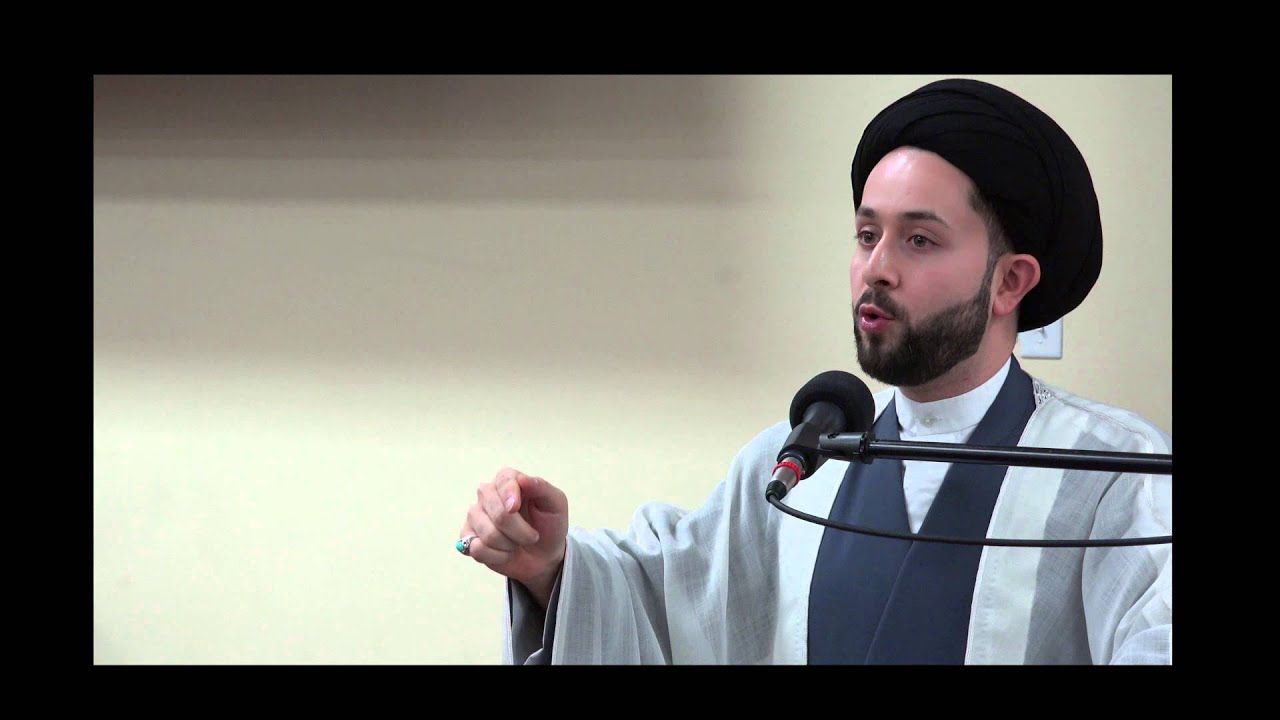
Change is Within Us - Ramadan 1435/2014

Al-Fudhayl ibn al-Ayyadh was a gangster, a mobster. He would stop people and their caravans and he would strip them away from everything that they had. This was his job, and he had the biggest gay present in that period of time. What was his job? He would stop the caravans and he would strip them away from everything that they had. So people have to be extra cautious to avoid the routes of Al-Fudhayl ibn al-Ayyadh.
One day he was near Iraq, there was a caravan coming from Khurasan and there was a caravan that passed by. He stopped the caravan. The man came out of the caravan. He said, Fudhayl, what do you need?
He said, I need all your money, all your wealth, everything that you have. He said, tayyb, I will bring that to you. So he went. He brought all the money. He took off his clothes, he put it there. He brought all the suitcases, he put it apart, maybe. He said, Fudhayl, leave us. This is everything that we have. He said, Why don't you want me to go and look inside your carriage?
He said, I prefer you don't do that, I've given you everything that you have. So Fudhayl became curious. He went and he opened the carriage and he saw a beautiful young woman sitting in the carriage. He said to him, who is she? He said, she's my daughter.
So Fudhayl took everything. And he sent his spies to the house of this man. He said, Follow this man, see where he's going to go tonight for obvious reasons and no one could say anything to Fudhayl. So they went and found exactly where this man was staying and this man was pleading for mercy.
This man was begging in the middle of the night. When Fudhayl was done, he went to the house of this man. He was going and climbing on the wall. He reached the bedroom of this young woman. Suddenly he looked down in the yard.
He saw an elderly man sitting in his Sajjada (prayer mat) and his musalla praying the night prayers and reciting this Ayat: "alam yani lilladheena amanu, and takhsha'a qulubuhum li Dhikri Allah" (57:16), 'has time not arrived for believers to feel humility in their hearts with the remembrance of Allah'. Fudhayl heard. He was shocked. He became paralyzed. He could not move.
This man repeated the Ayah again, "alam yani..." (57:16) and Fudhayl asked himself for one moment, he said, has time arrived for me or no? And he responded. He said, Bala (means yes in Arabic), yes, that time has arrived. He climbed down from the wall and he ran away. He doesn't know where to go. He can't go back to his people. He can't go back to his gang. He has no place to go. He's reflecting, crying.
So he went, he was sitting in a remote location. He found some people sitting there. He said to them, what are you doing here? They said, we are waiting for a couple of more hours to make sure Fudhayl and his gang have left this route so we can make our way. We're scared of Fudhayl. This man has terrorized so many people. So he said to them: Fudhayl no longer exists. He died. They said, what do you mean? How did he die? He is young. He said yes. He died moments ago.
They said, who are you? He said, I am Fudhayl. Which Fudhayl? Fudhayl ibn al-Ayyadh. You were telling us he died. Now you're telling us. Are you okay? He said yes I'm okay. The Fudhayl that you're scared of, has died. This is a new Fudhayl. Let me take you to your residence. He took them. He took them. He began his process of Tawba [repentance] until he reached where he needs to be.
When a person opens his heart. Allah Subhana wa Ta'ala, glances at our hearts "inna Allaha yandhuru li qulubina wa la yandhuroo yusuharina", Allah does not look at how we look. Allah looks at our hearts. Allah sees through this clothes that we're wearing. Allah looks at our hearts. And Allah looks at the heart of Fudhayl, and He said, you deserve to become one of the students of Ja'far ibn Muhammad Al-Sadiq.
Imam Al-Sadiq died in the year 148 after the Hirjah. Fudhayl Ibn al-Ayyadh was a student for seven or eight years. And when a Imam Ja'far Al-Sadiq died, obviously it was the biggest misery for Fudhayl. They came to him, they said to him, ya Fudhayl, what did you learn from Ja'far al-Sadiq? What did he teach you?
So he summed up what he learned from Imam al-Sadiq. One, he said, Imam al-Sadiq taught me: "kafaa bi-Llahi muhibbah". "Kafaa bi-Llahi muhibbah", Allah has enough for me. Allah has enough to love me. I don't need anyone else to be loved by beside Allah, "Kafaa bi-Llahi muhibbah".
Al-Fudhayl ibn al-Ayyadh war ein Gangster, ein Mafioso. Er hielt Leute und ihre Karawanen an und nahm ihnen alles weg, was sie besaßen. Das war sein Job, und er war der größte Schwule in dieser Zeit. Was war seine Aufgabe? Er hielt die Karawanen an und nahm ihnen alles weg, was sie besaßen. Die Leute müssen also besonders vorsichtig sein, um die Routen von Al-Fudhayl ibn al-Ayyadh zu vermeiden.
Eines Tages war er in der Nähe des Irak, wo eine Karawane aus Khurasan kam und eine Karawane vorbeizog. Er hielt die Karawane an. Der Mann kam aus der Karawane heraus. Er sagte: "Fudhayl, was brauchst du?
Er sagte: "Ich brauche euer ganzes Geld, euren ganzen Reichtum, alles, was ihr habt. Er sagte, tayyb, ich werde es dir bringen. Also ging er hin. Er brachte das ganze Geld. Er zog seine Kleider aus und legte sie dorthin. Er brachte alle Koffer mit und stellte sie auseinander. Er sagte: "Fudhayl, lass uns allein. Das ist alles, was wir haben. Er sagte: "Warum willst du nicht, dass ich in deinen Wagen schaue?
Er sagte: "Mir ist es lieber, du tust das nicht, ich habe dir alles gegeben, was du hast. Da wurde Fudhayl neugierig. Er ging hin und öffnete die Kutsche, und er sah eine schöne junge Frau in der Kutsche sitzen. Er fragte ihn: "Wer ist sie? Er sagte: "Sie ist meine Tochter.
Also nahm Fudhayl alles mit. Und er schickte seine Spione in das Haus dieses Mannes. Er sagte: "Folgt diesem Mann und seht nach, wohin er heute Nacht aus offensichtlichen Gründen gehen wird, und niemand konnte Fudhayl etwas sagen. Also gingen sie hin und fanden genau heraus, wo dieser Mann wohnte, und dieser Mann bat um Gnade.
Dieser Mann bettelte mitten in der Nacht. Als Fudhayl fertig war, ging er zu dem Haus dieses Mannes. Er ging und kletterte an der Wand hoch. Er erreichte das Schlafzimmer der jungen Frau. Plötzlich schaute er in den Hof hinunter.
Er sah einen älteren Mann in seiner Sajjada (Gebetsteppich) und seiner Musalla sitzen, der das Nachtgebet verrichtete und diese Ayat rezitierte: "alam yani lilladheena amanu, und takhsha'a qulubuhum li Dhikri Allah" (57:16), 'ist die Zeit noch nicht gekommen, dass die Gläubigen Demut in ihren Herzen empfinden mit dem Gedenken an Allah'. Fudhayl hörte es. Er war schockiert. Er wurde wie gelähmt. Er konnte sich nicht bewegen.
Dieser Mann wiederholte die Ayah: "alam yani" (57:16), und Fudhayl fragte sich einen Moment lang, ob die Zeit für mich gekommen ist oder nicht. Und er antwortete. Er sagte: "Bala" (bedeutet "ja" auf Arabisch), ja, die Zeit ist gekommen. Er kletterte von der Mauer herunter und rannte weg. Er weiß nicht, wohin er gehen soll. Er kann nicht zu seinem Volk zurückkehren. Er kann nicht zu seiner Bande zurückkehren. Er weiß nicht, wohin er gehen soll. Er denkt nach und weint.
Also ging er hin, er saß an einem abgelegenen Ort. Er fand einige Leute, die dort saßen. Er fragte sie: "Was macht ihr hier? Sie sagten, wir warten noch ein paar Stunden, um sicher zu sein, dass Fudhayl und seine Bande diese Route verlassen haben, damit wir uns auf den Weg machen können. Wir haben Angst vor Fudhayl. Dieser Mann hat schon so viele Menschen terrorisiert. Also sagte er zu ihnen: Fudhayl gibt es nicht mehr. Er ist tot. Sie sagten: Was meinst du damit? Wie ist er gestorben? Er ist doch noch jung. Er sagte ja. Er ist vor wenigen Augenblicken gestorben.
Sie fragten: "Wer bist du? Er sagte: "Ich bin Fudhayl. Welcher Fudhayl? Fudhayl ibn al-Ayyadh. Du hast uns gesagt, er sei tot. Jetzt sagst du es uns. Geht's dir gut? Er sagte ja, es geht mir gut. Der Fudhayl, vor dem du dich fürchtest, ist gestorben. Dies ist ein neuer Fudhayl. Ich bringe dich zu deinem Haus. Er hat sie mitgenommen. Er hat sie mitgenommen. Er begann seinen Prozess der Tawba [Reue], bis er dort angekommen ist, wo er sein muss.
Wenn ein Mensch sein Herz öffnet. Allah Subhana wa Ta'ala, blickt auf unsere Herzen "inna Allaha yandhuru li qulubina wa la yandhuroo yusuharina", Allah schaut nicht darauf, wie wir aussehen. Allah schaut auf unser Herz. Allah sieht durch die Kleidung, die wir tragen. Allah sieht unser Herz an. Und Allah schaut auf das Herz von Fudhayl, und Er sagte, du verdienst es, einer der Schüler von Ja'far ibn Muhammad Al-Sadiq zu werden.
Imam Al-Sadiq starb im Jahr 148 nach der Hirjah. Fudhayl Ibn al-Ayyadh war sieben oder acht Jahre lang ein Schüler. Und als Imam Ja'far Al-Sadiq starb, war das natürlich das größte Elend für Fudhayl. Sie kamen zu ihm und sagten zu ihm: "Ya Fudhayl, was hast du von Ja'far al-Sadiq gelernt? Was hat er dich gelehrt?
So fasste er zusammen, was er von Imam al-Sadiq gelernt hatte. Erstens, sagte er, lehrte mich Imam al-Sadiq: "kafaa bi-Llahi muhibbah". "Kafaa bi-Llahi muhibbah", Allah hat genug für mich. Allah hat genug, um mich zu lieben. Ich brauche niemanden außer Allah, von dem ich geliebt werde, "Kafaa bi-Llahi muhibbah".