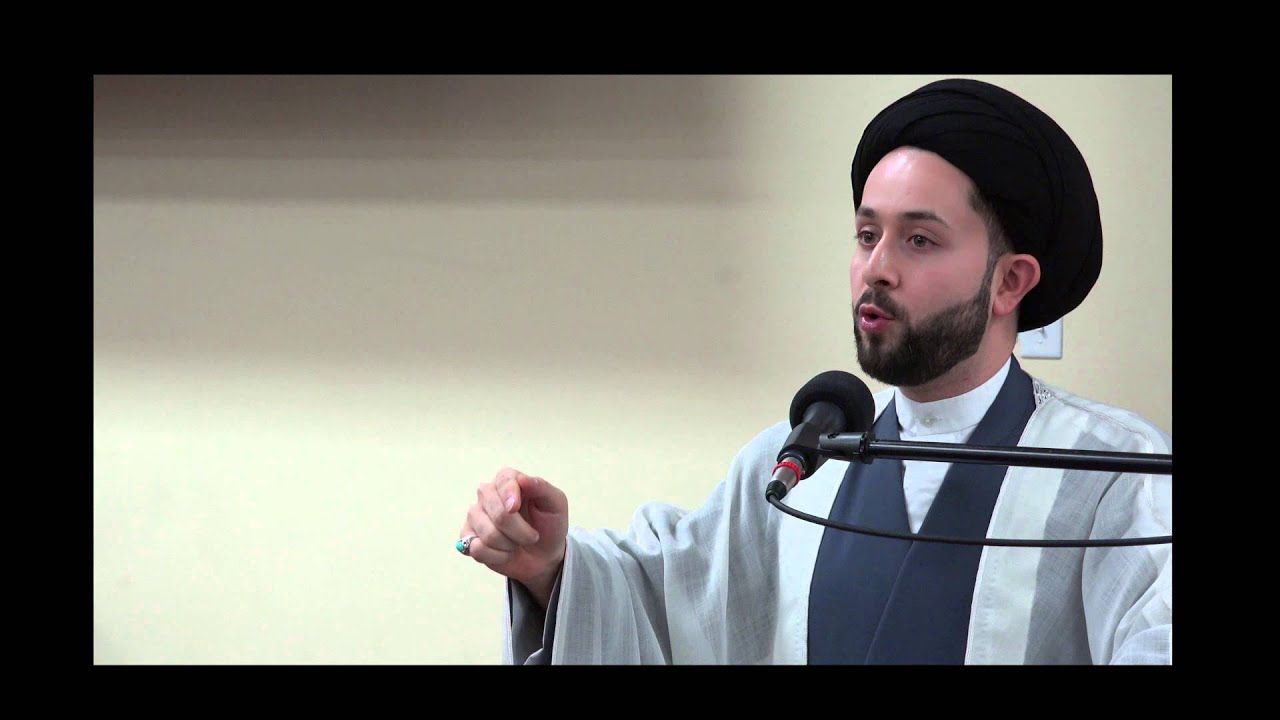
Media Strategies To Control People's Minds - Ramadan 1435/2014

The first strategy is to personalize the news that they give you. And the second strategy is to dramatize the news that they give you. Now in the first strategy, when the media media personalizes the news that it offers you, delivers you, it does not give you the full context. It only gives you that angle that they want you to see. They only give you the perspective that they want you to hear.
They don't give you the full context of what's going on. And obviously, when you only see one side of the event, you will process it differently. You will interact with it differently. The media is excellent in providing you one angle of any story, the angle that they want you to hear because they want a reaction from you. And how do they get their desired reaction? By presenting you that specific angle that they want you to hear.
Oftentimes in the media, just as a very small example, you hear about many of these people who come out of the media to denounce the religion of Islam. They tell you, look at this backwards faith which implements segregation between the males and females. When you go to their mosques, you see them separated. The males are sitting on one side of the home, whereas the females are sitting on the other side of the home.
The way they present you, this information is such that the average viewer thinks that the reason why Muslims do this is because women have a lower standard, because women have a lower place in society.
Die erste Strategie besteht darin, die Nachrichten, die sie Ihnen übermitteln, zu personalisieren. Die zweite Strategie besteht darin, die Nachrichten zu dramatisieren, die sie uns liefern. Bei der ersten Strategie, bei der die Medien die Nachrichten, die sie Ihnen anbieten, personalisieren, geben sie Ihnen nicht den vollständigen Kontext. Sie geben Ihnen nur den Blickwinkel, den sie Ihnen zeigen wollen. Sie geben dir nur die Perspektive, die du hören sollst.
Sie geben Ihnen nicht den vollen Kontext des Geschehens. Und wenn Sie nur eine Seite des Ereignisses sehen, werden Sie es natürlich anders verarbeiten. Sie werden anders damit umgehen. Die Medien sind hervorragend darin, Ihnen einen Blickwinkel auf eine Geschichte zu bieten, den Blickwinkel, den Sie hören wollen, weil sie eine Reaktion von Ihnen wollen. Und wie erreichen sie die gewünschte Reaktion? Indem sie Ihnen diesen speziellen Blickwinkel präsentieren, den sie hören wollen.
Oft hört man in den Medien, um nur ein kleines Beispiel zu nennen, von vielen dieser Menschen, die aus den Medien kommen, um die Religion des Islam anzuprangern. Sie sagen: Seht euch diesen rückständigen Glauben an, der die Trennung zwischen Männern und Frauen einführt. Wenn man in ihre Moscheen geht, sieht man sie getrennt. Die Männer sitzen auf der einen Seite des Hauses, während die Frauen auf der anderen Seite des Hauses sitzen.
Die Art und Weise, wie sie Ihnen diese Informationen präsentieren, ist so, dass der durchschnittliche Zuschauer denkt, dass der Grund, warum Muslime dies tun, darin liegt, dass Frauen einen niedrigeren Standard haben, weil Frauen einen niedrigeren Platz in der Gesellschaft haben.
La prima strategia consiste nel personalizzare le notizie che vi danno e la seconda strategia nel drammatizzare le notizie che vi danno. Ora, nella prima strategia, quando i media personalizzano le notizie che vi offrono, non vi danno il contesto completo, ve le mostrano soltanto dall'angolazione che vogliono farvi vedere, vi presentano soltanto la prospettiva che vogliono farvi sentire. Non vi danno il contesto completo di quello che sta succedendo.
E ovviamente, quando vedete soltanto un lato dell'evento, lo elaborate in modo diverso, interagite con esso in modo diverso. I media sono bravissimi nel fornirvi l'angolazione che vogliono farvi sentire di qualsiasi storia, perché vogliono una reazione da parte vostra. E come ottengono la reazione desiderata? Presentandovi quella specifica angolazione.
Nei media - giusto per fare un piccolo esempio - si sente parlare molto di persone che si fanno avanti per denunciare la religione dell'Islam. Vi dicono: "Guardate com'è arretrata questa religione che impone la segregazione tra i maschi e le femmine! Quando vai nelle loro moschee, li vedi separati: i maschi sono seduti da un lato della stanza, mentre le femmine sono sedute dall'altro lato". Vi presentano queste informazioni in modo da far pensare allo spettatore medio che la ragione per cui i musulmani lo fanno è perché le donne sono considerate inferiori, perché le donne hanno un posto inferiore nella società.