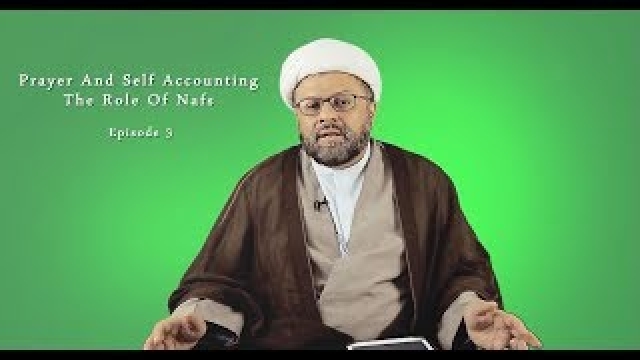
Self Accounting 1/3

Bismillah ar-Rahman ar-Rahim, Wa salla Allahu ala Muhammad wa aalihi at-Tayyibeen at-Taahireen al-Masumeen.
One of the most important teachings of Imam ar-Ridha, alayhi assalam, is the importance of accounting of oneself or self-accounting, which in Arabic we call Muhasabah. Muhasabah is a process of actually trying to think about what you have done throughout the day and whether you did what was right or what was wrong.
Usually ethicians give a complete program on how to control yourself and how to make yourself very fruitful and powerful.
What they do is they present the program as such, they say in the morning, the first thing that you should do is a kind of Musharatah. Musharatah is to try to put conditions on yourself that, for example, today you will do this, you will not do this.
For example, you were not very open-handed, you are stingy. So you would commit yourself and you would condition yourself and say that throughout the day, I will make sure that I will give or for example, within this day, I will give some sadaqah, I will help the poor and so on, although I am stingy, but I will try my best to do what is necessary.
Or for example, you know that you do not pray on time, so you put a condition on yourself in the morning, you do Musharatah and you make a condition on yourself that today I'm going to pray on time and whenever the prayer time comes, I'm going to pray on time.
Or for example, you had the bad habit of looking at other people in a lustful way. You condition yourself and you put a condition on yourself in the morning and do Musharatah that today, I am not going to look at what is Haram, for example.
This is the first stage which is known as Musharatah. And then the second stage is known as Muraqabah. The ethicians say that after you have made conditions on yourself in the morning that you will do this and you will not do this, you will do what is halal and you will not do what is haram. You will go towards Mustahabbaat and you will actually refrain from the Makruhaat and those things that Allah does not like. After having done that to yourself, then you are vigilant over yourself.
And that is known as Muraqabah. The whole day, although you are actually busy with what you are doing normally, but you are very vigilant over yourself, lest you do things which are not allowed and you are also vigilant of what you had promised yourself in the morning.
And then the next step, after having been vigilant throughout the day, which is known as Al-Muraqabah, then comes Muhasabah, which Imam ar-Ridha alayhi assalam, is talking about.
The Hadith that Imam ar-Ridha alayhi assalam says, is "Man haasaba nafsahu rabiha, wa man ghafala anha khasira". Whosoever accounts himself will get a profit, will profit actually with regard to himself, "wa man ghafila", one who is indifferent, who is negligent, "anha", in such a way that he does not account himself, "khasira", he would be at a loss.
So Imam ar-Ridha alayhi assalam, says that if you really want to get a profit in terms of spiritual upliftment, then always do self-accounting.
In fact, in some of the Riwayaat we are told that account yourself before you are accounted on the day of judgment "Haasibu qabla an tuhaasabu".
This is something very, very important.
Inshallah we will discuss about some other important steps which is in line with this Muhasabah, this beautiful hadith of Imam ar-Ridha alayhi assalam. For the moment we stop for this episode.
Wa alhamdu lillahi Rabbi al-aalameen, wa salla Allahu ala Muhammad wa aalihi at-Tayyibeen at-Taahireen al-Masumeen.
Bismillahi ar-Rahman ar-Rahim, Wa salla Allahu ala Muhammad wa aalihi at-Tayyibin at-Taahirin al-Masumeen.
Uno degli insegnamenti più importanti dell'Imam ar-Ridha (a) è l'importanza dell'esame di coscienza o dell'auto-critica, che in arabo chiamiamo 'muhasabah'. La 'muhasabah' è un processo che consiste nel cercare di pensare a ciò che si è fatto durante il giorno e se si è fatto ciò che era giusto o ciò che era sbagliato.
Di solito gli studiosi di etica assegnano un programma completo su come controllare se stessi e come divenire efficaci e potenti. Quello che fanno è presentare il programma così: la mattina per prima cosa bisogna fare una specie di 'musharatah'. 'Musharatah' è cercare di imporsi delle condizioni, per esempio stabilire che oggi farai questo o non lo farai quest'altro. Per esempio sai di non essere moltogeneroso, sei avaro, così ti impegni e ti imponi di donare per tutto il giorno o, per esempio, entro il tal giorno, darò un po' di sadaka, aiuterò i poveri e così via, anche se sono avaro, ma farò del mio meglio per fare ciò che è necessario.
Oppure, per esempio, sai che non preghi in orario, quindi la mattina te lo poni come condizione, fai 'musharatah', oggi ti impegni a pregare in orario: ogni volta che arriva il tempo della preghiera, pregherò in orario. Oppure, per esempio, avevi la cattiva abitudine di guardare le altre persone con desiderio: allora la mattina prendi questo impegno, te lo poni come condizione e fai 'musharatah': oggi -per esempio - non guarderò ciò che è 'haram' [illecito].
Questa è la prima fase, detta 'musharatah'. Poi viene il secondo stadio, noto come 'muraqabah'. Gli studiosi di etica dicono che, dopo aver posto delle condizioni a te stesso al mattino - che farai questo e non farai quest'altro, farai ciò che è 'halal' [lecito] e non farai ciò che è 'haram', ti dedicherai alle 'mustahabbaat' [azioni raccomandate] ed eviterai le 'makruhaat' [azioni sconsigliate] e da quelle cose che non piacciono ad Allah - dopo aver fatto questo, vigilerai su te stesso. E questo è detto 'muraqabah'. Per tutto il giorno, anche se sei impegnato in quello che fai normalmente, vigili molto attentamente su te stesso per evitare di fare cose che non ti sono permesse e vigili anche su quello che ti sei ripromesso al mattino.
Il passo successivo, dopo essere stato vigile per tutto il giorno - e questo si hiama 'al-Muraqabah - arriva la 'muhasabah', di cui parla l'Imam ar-Ridha (a). L'hadith dell'imam ar-Ridha (a) dice: "Man haasaba nafsahu rabiha, wa man ghafala anha khasira", "Chi pratica l'esame di coscienza ne trarrà profitto", in realtà si guadagnerà il rispetto per se stesso, "wa man ghafila", "chi è indifferente, chi è negligente - "anha" - così da non rendersi conto di se stesso - "khasira" - ci perderà".
Quindi l'Imam ar-Ridha (a) dice che se si vuole davvero ottenere un profitto in termini di elevazione spirituale, allora bisogna praticare con costanza l'esame di coscienza. Infatti in alcuni dei 'riwayaat' [narrazione, aneddoto] ci viene detto: esamina te stesso prima di essere esaminato nel Giorno del Giudizio: "Haasibu qabla an tuhaasabu". E' qualcosa di molto, molto importante.
'InshaAllah' [se Dio vuole] discuteremo di alcuni altri passi importanti che sono in linea con questo 'muhasabah', con questo bellissimo hadith dell'Imam ar-Ridha (a). Per il momento, per questo episodio ci fermiamo qui.
Wa alhamdu lillahi Rabbi al-aalamin, wa salla Allahu ala Muhammad wa aalihi at-Tayyibin at-Taahirin al-Masumin.