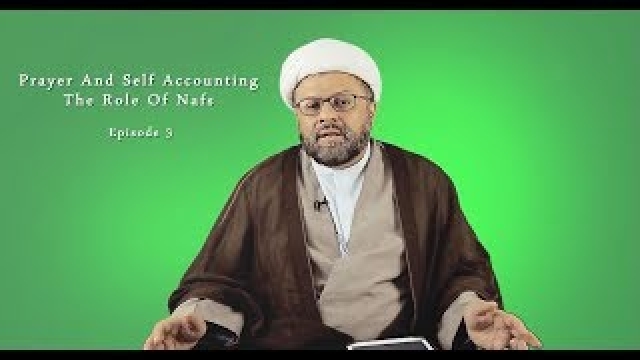
Self Accounting 2/3

Bismillah Al-Rahman Al-Rahim. We began a very important discussion on one of the most important conditions of spiritual wayfaring, which also the Ethicians mention, when they give a program for a person who would like to develop himself. And that is "Muhasaba", self accounting. If a person does this self accounting every day, then actually he would change and transform and become a good person and even gain spiritual upliftment. So self accounting is very, very important.
And this is one of the teachings of Imam Al-Rida, alayhi al-salam; he is reported to have said, as we mentioned in our previous episode "Man haasaba nafsahu Rabiha" - "Whosoever accounts himself will gain profit". "Wa man ghafala anhaa khasira" - "and whosoever is negligent about this self accounting will gain a loss or will get a loss".
Now, from here you come to realize that self accounting is extremely fundamental for profiting, not materially, when Imam Al-Rida, alayhi al-salam, says that he will profit, it doesn't mean material profit. Obviously, if it refers to business, we would say it would be material profit. But this is actually accounting yourself: what did you do throughout the day? If you account yourself, then you will change and become a better person and gain that spirituality, which is very, very essential.
So we were talking of the program that the Ethicians mention. They say the first thing that you do is in the morning when you wake up, there are things which you are weak about. Let's say, you know, that you cannot control your smoking: so you you are a chain smoker, for example. For example, you don't, you can't control your eyes. Whenever a beautiful woman is passing by, you have to look at her, for example, which is haraam for a person. When a person, when a beautiful woman passes by and she is "Ghair Mahram". She is not lawful for one to look at, then that is haram and so on.
There are weak points that you have and there are things that you want to do but you don't do. For example, you want to help the poor, but because of your stinginess, you cannot help the poor and so on. So in the morning you do "Musharata". That means you tell yourself that "I am going to do this. I am not going to do that. I will make sure that I don't do these sins that have become a habit in myself. And I will make sure that I do these good things that I am weak upon. I cannot do them because of the weakness that I have, because of the jealousy, because of the pride, because of the stinginess that I have and so on".
So when you do this in the morning, then the second step you take is "Al-Muraaqaba", which the Ulema say that now you start being vigilant over yourself, see yourself always. What are you doing? How are you spending your time?
For example, one of your weak points is to be loquacious, to speak a lot. You want to control your tongue, so make sure that whenever somebody comes and you would like to speak, think about it properly. What are we going to discuss about? What will I tell him? What should I speak and what should I not speak? And so on. So you are doing "Muraqaba".
At the end of the day, when you are sleeping or you are about to sleep, is when you do "Muhasaba". It means you start accounting yourself, that today what did I do? In one of the Hadith, which is a very important hadith, we are told by Imam Al-Kazim, alayhi al-salam, the father of Imam Al-Rida, alayhi al-salam, that whenever a person wants to do Muhasaba and he does Muhaaaba, that means he accounts himself and he sees that he did some good things, then he should thank Allah Subhana Wa Ta'ala because obviously Allah Subhana Wa Ta'ala has promised whosoever thanks I will increase for him - "La in Shakartum La azidan na kum"(14:7)
And let's say when he is doing Muhasaba, he sees that he has done some things bad. He has not changed himself then he should do Istighfar. This process should go on because if a person is always vigilant like that, a time will come that he will wake up because he is serious about that.
InshaAllah, we will continue about this important discussion in our next session. "Wal Hamdo Lillahe Raabil Aalamin, wa sal lal laahu ala Muhammad wa aalihi al-tayyibin al-tahireen Al Masumeen.
Bismillah Al-Rahman Al-Rahim. Abbiamo iniziato una discussione molto importante su una delle condizioni più importanti del viaggio spirituale, che anche gli studiosi di morale citano quando assegnano un programma a una persona che vuole progredire spiritualmente: stiamo parlando della 'muhasaba', l'esame di coscienza. Se una persona fa questo esame di coscienza ogni giorno, allora davvero cambierà, si trasformerà, diventerà una persona buona e otterrà anche un miglioramento spirituale. Quindi l'esame di coscienza è molto, molto importante.
E questo è uno degli insegnamenti dell'Imam Al-Rida, alayhi assalam, di cui, come abbiamo visto nell'episodio precedente , si riportano queste parole: "Man haasaba nafsahu Rabiha", "Chi fa i conti con se stesso ne trarrà profitto", "Wa man ghafala anhaa khasira" - "e chi è negligente riguardo a questa esame di coscienza, ci perderà".
Ora, da questo si capisce che l'esame di coscienza è estremamente importante per il 'profitto'. Non in senso materiale: quando l'Imam Al-Rida, alayhi assalam, dice "ne trarrà profitto" parla del profitto materiale. Ovviamente, se si riferisse agli affari parleremmo di un profitto materiale, ma in realtà qui si parla di fare i conti con te stesso: cosa hai fatto durante il giorno? Se fai i conti con te stesso, allora cambierai, diventerai una persona migliore e otterrai quella spiritualità che è assolutamente essenziale.
Parlavamo dunque del programma che raccomandano gli studiosi di morale. Dicono che la prima cosa da fare la mattina quando ci si sveglia è considerare le cose in cui si è deboli. Diciamo che non tu non riesca a controllare il tuo desiderio di fumare, così, ad esempio, sei un fumatore seriale. O, ad esempio, non riesci a controllare il tuo sguardo: ogni volta che passa una bella donna la devi guardare, per esempio, il che è haraam. Quando passa una bella donna ed è 'ghair mahram', non è lecito guardarla, allora questo è haram. E così via. Ognuno ha i propri punti deboli. E ci sono cose che si vorrebbero fare ma non si fanno, per esempio, vorresti aiutare i poveri, ma a causa della tua avarizia non li aiuti, e così via.
Così al mattino, fai 'musharata'. Questo significa che dici a te stesso: "Farò questo. Non farò quest'altro. Farò in modo di non commettere questi peccati che sono diventati un'abitudine per me e farò in modo di fare queste cose buone in cui sono debole, che non riesco a fare a causa della mia debolezza, della mia gelosia, superbia,orgoglio, avarizia e così via".
Dunque al mattino dopo aver fatto questo, il secondo passo è 'al-Muraaqaba': gli Ulema [studiosi della religione] dicono che ora inizi a vigilare su te stesso, hai sempre te stesso davanti agli occhi. Cosa stai facendo? Come passi il tuo tempo? Per esempio, uno dei tuoi punti deboli è quello di essere loquace, di parlare molto. Vuoi controllare la tua lingua, quindi fai in modo che ogni volta che arriva qualcuno e provi il desiderio di parlare, pensaci bene: di cosa parleremo? Cosa gli dirò? Cosa dovrei dire e cosa non dovrei dire? E così via. Stai facendo 'muraqaba'.
Alla fine della giornata, quando si dorme o si sta per dormire, si fa 'muhasaba. Significa che ti fai un esame di coscienza: che cosa ho fatto oggi? In uno degli hadith, che è un hadith molto importante, ci viene detto dall'Imam Al-Kadim, alayhi assalam, il padre dell'Imam Al-Rida, alayhi assalam, che ogni qual volta una persona vuole fare 'muhasaba', e fa 'muhaaaba' - cioè fa l'esame di coscienza - e vede che ha fatto delle cose buone, allora dovrebbe ringraziare Allah Subhana Wa Ta'ala perché Allah Subhana Wa Ta'ala ha promesso: "A chi sarà riconoscente darò ancora di più", "La in Shakartum La azidannakum"(Qur'an 14:7). E diciamo che quando fa 'muhasaba' e vede che ha fatto qualcosa di male, che non è cambiato, allora dovrebbe fare 'istighfar' [chiedere perdono a Dio].
Questo processo dovrebbe andare avanti, perché se una persona è sempre vigile in questo modo, viene il momento in cui si risveglia, perché fa sul serio.
InshaAllah [se Dio vuole], continueremo questa importante discussione nella nostra prossima sessione. Wal Hamdo Lillahi Raabil Aalamin, wa sal lal laahu ala Muhammad wa aalihi al-tayyibin al-tahirin Al Masumin.