Rules Of Fasting 1/9
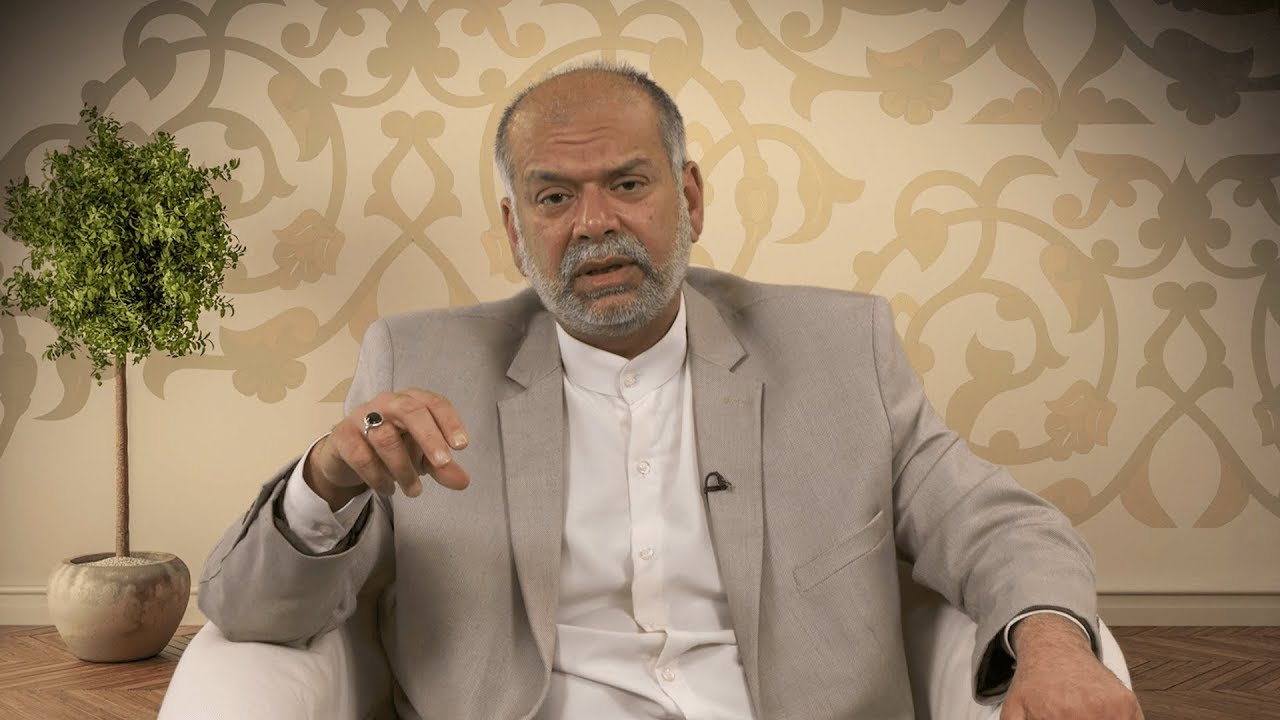
Sheikh Abbas Jaffer talks about some of the spiritual aspects of the journey in this holy month and also clarifies the method of ascertaining the first day of the month.

Bismillahi, al-Rahman, al-Rahim. We are going through the Holy month of Ramadhan and may Allah Subhana wa Ta'ala accept our a'maal, accept our fasting in this month. Truly, the month of Ramadhan is one of the great blessings of God. In Hadith, we have that this is Shahru Allah. It is a month attributed to Allah Subhana wa Ta'ala Himself. It is a month in which the doors of Mercy are open, the doors of Jannah are open according to Hadith, and the doors of Hell are closed.
When we come into the month of Ramadhan, as Muslims of course, we are determined to fast. We are ready to fast but in our hearts sometimes, especially in the early days, there is some feeling as what is Allah Subhana wa Ta'ala getting from this difficulty that I am going through? I am staying hungry, I am staying thirsty, my routine has changed, it's other way round and there is a little bit of resentment or at least, there is a little bit of curiosity. Yet Allah Subhana wa Ta'ala says that this is a month of Rahmah. The Prophet, salla Allahu alayhi wa alihi wa sallam, and the A'imma 'alayhim us-salam, kept on saying that you don't understand what you have entered and how great is the blessing.
So in this series of talks, InshaAllah wa Ta'ala, we will have a program where for the first few minutes we will talk about different aspects of this great blessing and then towards the end of each segment, we will speak about some masa'il that may be useful and may be necessary to know InshaAllah wa Ta'ala.
When we look in the Qur'an, Allah Subhana wa Ta'ala, when He introduces the fast, He does it in a very beautiful way. Sometimes we just read it quickly. We may not appreciate the beauty in it. Allah Subhana wa Ta'ala in Surah Al-Baqarah says "A'udhu billahi min al-shaytan al-rajim. Ya ayyuha alladheena amanu, kutiba 'alaikumu as-siyaamu kama kutiba 'ala alladheena min qablikum la'allakum tattaqoon" (2:183) . And then he says "Ayyamam ma'doodaat" (2:184).
One of the scholars writes something beautiful. He says: if you study this from a psychological point of view, there is some beauty and meaning in this. He gives the example of when there is a nurse who wants to inoculate or give an injection to a child and the child is nervous, doesn't know what is going to happen. The nurse will do it in a few steps. First one, she will take out the injection and put it on the table. And then she will say that I am going to inject you with this but your brother, older brother, when he was your age, I did the same to him. I have not chosen you for this purpose to somehow trouble you, it is something that I have done to your brother as well, and I do it so that you do not fall ill. There is a reason why I do it. And then you say to it, it will hurt, but only for a second.
Now, when we look at this Ayah, Allah Subhana wa Ta'ala, first of all, "Ya ayyuha alladheena amanu" (2:183), He makes us comfortable. You are not ordinary people, you are believers, you are beloved to Me because you have believed in Me, you have Iman. So He makes us comfortable with what is to come. "kutiba 'alaikumu as-siyaam" (2:183). Now the injection is put in front of us. I am going to make this wajib on you, this fasting but I haven't singled you out for it. "Kama kutiba 'ala alladheena min qablikum" (2:183). People before you also had the same thing. And then, what is the benefit? What is the benefit of it? He says, "La'allakum tattaqoon" (2:183) . If you fast, you may achieve something great, piety and Taqwa. And then just like the nurse said, it will hurt a little bit. Allah says ""Ayyamam ma'doodaat" (2:184), only for a few days, it isn't something forever. But there is great blessing in this.
So we understand now from this that there is something in the fast that we have to look for. It isn't something that we get over and say 'Alhamdulillah, the month is over, may Allah accept what we could do.' But there is something we need to be searching in this and what should we search? What is the benefit of the fast?
If we look at Hadith, there's a very famous Hadith that Rasul Allah, salla Allahu alayhi wa alihi wa sallam , gave at the end of the month of Sha'ban and it is in Uyun Akhbar ar-Ridha and in many other places. In this Hadith, it goes like this that 'Qaala inna Rasul Allah, salla Allahu alayhi wa alihi, khatabna dhaata yawm.' The Prophet gave us a sermon on one of the days, 'Fa qala,' and he said 'Ayyuha an-naas,' O people 'Innahu qad aqbala ilaykum Shahru Allah.' I want you to know that the Month of Allah has now approached you. And what has it brought with it? 'Bi 'l-barakah, wa ar-rahmah, wa al-maghfirah.' These are the things that are available. It is like a divine banquet that Allah places with many beautiful things there but they are not going to be given to you in your pocket. You have to go out and try to get this barakah, get this maghfirah, get this rahmah.
'Huwa inda Allahi afdhalu ush-shuhoor.' The best of months Allah could create was this month. And 'Wa ayyamahu afdhalu al-ayaam.' There are no days better than the days of the month of Ramadhan. No other days equal this. 'Wa layaalihi afdhalu al-layaali.' It's nights are the best of nights. 'Wa as-sa'aatuhu afdhalu as-sa'aat.' It means what? And that is why many, many people of knowledge, they reduce their other works in this month. Why? Because everything else can happen another time. But these days and nights and moments will not come in the rest of the year. There is so much to gain.
So what is barakah? Because we call the month itself, Mahe Mubarak Ramadhan, month of, we say to each other 'Ramadhan Mubarak.' Barakah means growth, growth and we want to grow. How do we want to grow? We want our spirit to grow through this. The only way our spirit grows, you see our spirit, our soul, is with our body. I think of them as twins. So sometimes you have twins. One twin is very loud. Give me this, Baba, give me that, Baba and you hear him all the time. The other twin, he's quiet but doesn't mean he doesn't have his own needs. He has his needs, but he's quiet. Sometimes only when that first loud twin goes away to his grandfather or something and you are faced this, with this one. You can hear about his needs. The body is very loud. Feed me, clothe me, give me this comfort, give me that comfort. The soul, it is a little bit less loud, right?
When Allah Subhana wa Ta'ala, in the month of Ramadhan temporarily puts the body away, you cannot eat now. Some of the comforts you are used to, you cannot do. Then, there is a chance for the soul and the spirit to grow. So barakah is growth and it's a growth that stays. Something that comes as a blessing and then it doesn't go away. It stays, barakah. This is available in the month of Ramadhan.
And also Rahmah. Rahmah, because what we see as trouble sometimes, is Mercy, because in return for keeping hungry, and thirsty, and obedient to Allah, Allah Subhana wa Ta'ala's blessings come down continuously. Sins are forgiven. Opportunities are there to get closer to God. All these things where something that you do at another month, is multiplied greatly in this month. These are all Rahmah of Allah Subhana wa Ta'ala.
And Maghfirah. Maghfirah, forgiveness, we have it Hadith that on the, every day of Jumu'ah, Allah Subhana wa Ta'ala forgives 600,000 souls from the Fire of Hell. But and, 'Min an-naar kulluhum kadi stawjabuha.' All of them were deserving of the Hell. 'Wa fee kulla saa'atin min layli aw nahaarin min Shahri Ramadhan.' But in the month of Ramadhan, in every hour, Allah Subhana wa Ta'ala, releases thousands and thousands of people whose necks were already consigned to hell, even though they deserved it, out of His Forgiveness. All it needs is somebody to talk about, to ask Allah for forgiveness. InshaAllah, we will look at that in one of the talks to come.
So this is to give an idea of what this month possesses for us. What is out there for us. If we are mindful, we can make a lot of it. If we do not take notice, then we will just pass through the month with its hunger and thirst and maybe we do not get everything that Allah Subhana wa Ta'ala has destined for us in this month. We pray to Allah Subhana wa Ta'ala to give us this tawfiq, InshaAllah wa Ta'ala.
I want to speak about a few masa'ils towards the end and to see if these are things that sometimes we question, we sometimes we wonder about, sometimes we need to apply, to know and of course these are available. The important thing to realise is that you can go to the Risalat Amaliyah of your mujtahid and see these things. However, I picked up the common things.
The first thing, of course, is that at the beginning of the month, people ask and people wonder, 'Well has the month started? Has the month not started? How do we know that the moon has been cited?' So generally, the Ulema state, the fuqaha tell us that there are 4 ways. One is, that you see the moon. So at the end of Shaban, you go and you look and you find the moon yourself and you know that because I have seen it, that personal Itminan is there, that the moon has been cited.
The other way is know, 2 reliable adil people come to you and they inform you, that the moon has been cited and they are trustworthy and based on their testimony, you can assume that it is the first of the month of Ramadhan the next day. Or alternatively, the third way is 30 days of Shaban have finished. Now you don't have to look for the moon. Khub, Shaban, 30 days finished, there is no day of 31 and so it is the first, first month of Ramadhan or the news that moon has been seen, has become common in the town. Everybody knows about it. It is not something that people are debating and these are the way to know.
What is your duty, shar'aan, religious wise? Your duty is immediately that happens to prepare yourself to fast in the month of Ramadhan by making your niyyah that, 'I InshaAllah will fast.' Now you can make your niyyah on a day to day basis. Every day, you make a niyyah for the next day. This is possible. Sometimes, though, maybe you forget or whatever, you might want to make a niyyah for the whole month. This is also acceptable, that on the first night, you say 'From tomorrow, I will be fasting in the month of Ramadhan for the pleasure of Allah Subhana wa Ta'ala, as is my duty, wajib qurbatan ilayhi,' and you make the niyyah for the whole month that this is InshaAllah, my decision, my niyyah rather. And then, if you wish, you can revisit it every day. InshaAllah wa Ta'ala, may Allah Subhana wa Ta'ala accept our a'maal, InshaAllah wa Ta'ala. "Wa aakhiru da'waana an al-hamdu li-Llahi Rabbi al-'Alameen" (10:10).
Bismillahi, al-Rahman, al-Rahim. Wir gehen durch den heiligen Monat Ramadhan und möge Allah Subhana wa Ta'ala unser a'maal, unser Fasten in diesem Monat annehmen. Wahrlich, der Monat Ramadhan ist einer der großen Segnungen Gottes. Im Hadith heißt es, dass dies Shahru Allah ist. Es ist ein Monat, der Allah Subhana wa Ta'ala selbst zugeschrieben wird. Es ist ein Monat, in dem die Tore der Barmherzigkeit offen sind, die Tore von Jannah sind laut Hadith offen und die Tore der Hölle sind geschlossen.
Wenn wir in den Monat Ramadhan kommen, sind wir als Muslime natürlich entschlossen zu fasten. Wir sind bereit zu fasten, aber in unseren Herzen gibt es manchmal, besonders in den ersten Tagen, ein Gefühl: Was hat Allah Subhana wa Ta'ala von diesen Schwierigkeiten, die ich durchmache? Ich bleibe hungrig, ich bleibe durstig, meine Routine hat sich verändert, es ist andersherum und es gibt ein kleines bisschen Groll oder zumindest ein kleines bisschen Neugier. Doch Allah Subhana wa Ta'ala sagt, dass dies ein Monat des Rahmah ist. Der Prophet, salla Allahu alayhi wa alihi wa sallam, und die A'imma 'alayhim us-salam, sagten immer wieder, dass ihr nicht versteht, was ihr betreten habt und wie groß der Segen ist.
Daher werden wir in dieser Vortragsreihe, InshaAllah wa Ta'ala, ein Programm haben, in dem wir in den ersten paar Minuten über verschiedene Aspekte dieses großen Segens sprechen und dann gegen Ende jedes Abschnitts über einige Masa'il sprechen, die nützlich und notwendig sein können, um InshaAllah wa Ta'ala zu kennen.
Wenn wir uns den Koran ansehen, tut Allah Subhana wa Ta'ala das Fasten auf eine sehr schöne Art und Weise einführen. Manchmal lesen wir ihn nur schnell. Wir mögen die Schönheit darin nicht zu schätzen wissen. Allah Subhana wa Ta'ala sagt in Surah Al-Baqarah "A'udhu billahi min al-shaytan al-rajim. Ya ayyuha alladheena amanu, kutiba 'alaikumu as-siyaamu kama kutiba 'ala alladheena min qablikum la'allakum tattaqoon" (2:183) . Und dann sagt er: "Ayyamam ma'doodaat" (2:184).
Einer der Gelehrten schreibt etwas Schönes. Er sagt: Wenn man das aus psychologischer Sicht betrachtet, liegt darin eine gewisse Schönheit und Bedeutung. Er gibt das Beispiel einer Krankenschwester, die ein Kind impfen oder ihm eine Spritze geben will, und das Kind ist nervös, weiß nicht, was passieren wird. Die Krankenschwester wird dies in mehreren Schritten tun. Zuerst nimmt sie die Spritze heraus und legt sie auf den Tisch. Und dann wird sie sagen, dass ich dir diese Spritze geben werde, aber dein Bruder, dein älterer Bruder, als er so alt war wie du, hat das gleiche getan. Ich habe dich nicht ausgewählt, um dich irgendwie zu quälen, sondern ich habe es auch mit deinem Bruder gemacht, und ich tue es, damit du nicht krank wirst. Es gibt einen Grund, warum ich es tue. Und dann sagst du zu ihm, es wird weh tun, aber nur eine Sekunde lang.
Wenn wir uns diese Ayah ansehen, sagt Allah Subhana wa Ta'ala zuallererst: "Ya ayyuha alladheena amanu" (2:183), Er macht es uns bequem. Ihr seid keine gewöhnlichen Menschen, ihr seid Gläubige, ihr seid Mir lieb, weil ihr an Mich geglaubt habt, ihr habt Iman. Er macht uns also mit dem vertraut, was kommen wird. "kutiba 'alaikumu as-siyaam" (2:183). Jetzt wird uns die Injektion vorgesetzt. Ich werde dir dieses Fasten auferlegen, aber ich habe dich nicht dafür ausgewählt. "Kama kutiba 'ala alladheena min qablikum" (2:183). Auch die Menschen vor euch hatten das Gleiche. Und was ist dann der Nutzen? Was ist der Nutzen davon? Er sagt: "La'allakum tattaqoon" (2:183) . Wenn du fastest, kannst du etwas Großes erreichen, Frömmigkeit und Taqwa. Und dann, wie die Krankenschwester sagte, wird es ein wenig weh tun. Allah sagt: "Ayyamam ma'doodaat" (2:184), nur für ein paar Tage, es ist nicht etwas für immer.
Aber es liegt ein großer Segen darin.
So verstehen wir nun, dass es etwas im Fasten gibt, auf das wir achten müssen. Es ist nicht etwas, über das wir hinweggehen und sagen: "Alhamdulillah, der Monat ist vorbei, möge Allah akzeptieren, was wir tun konnten. Aber es gibt etwas, wonach wir suchen müssen, und was sollten wir suchen? Was ist der Nutzen des Fastens?
Wenn wir uns den Hadith ansehen, gibt es einen sehr berühmten Hadith, den Rasul Allah, salla Allahu alayhi wa alihi wa sallam, am Ende des Monats Sha'ban gegeben hat und der in Uyun Akhbar ar-Ridha und an vielen anderen Stellen steht. In diesem Hadith heißt es: "Qaala inna Rasul Allah, salla Allahu alayhi wa alihi, khatabna dhaata yawm". Der Prophet hat uns an einem der Tage eine Predigt gehalten: 'Fa qala', und er sagte: 'Ayyuha an-naas,' O Leute 'Innahu qad aqbala ilaykum Shahru Allah.' Ich möchte, dass ihr wisst, dass der Monat Allahs nun auf euch zugekommen ist. Und was hat er mit sich gebracht? 'Bi 'l-barakah, wa ar-rahmah, wa al-maghfirah.' Das sind die Dinge, die verfügbar sind. Es ist wie ein göttliches Festmahl, das Allah mit vielen schönen Dingen ausrichtet, aber sie werden dir nicht in die Tasche gesteckt. Du musst hinausgehen und versuchen, diese barakah, diese maghfirah, diese rahmah zu bekommen.
Huwa inda Allahi afdhalu ush-shuhoor". Der beste aller Monate, den Allah erschaffen konnte, war dieser Monat. Und 'Wa ayyamahu afdhalu al-ayaam.' Es gibt keine besseren Tage als die Tage des Monats Ramadhan. Keine anderen Tage kommen diesem gleich. Wa layaalihi afdhalu al-layaali. Seine Nächte sind die besten der Nächte. Wa as-sa'aatuhu afdhalu as-sa'aat. Was bedeutet das? Und das ist der Grund, warum viele, viele Wissende, ihre anderen Arbeiten in diesem Monat reduzieren. Und warum? Weil alles andere zu einem anderen Zeitpunkt geschehen kann. Aber diese Tage und Nächte und Momente wird es im Rest des Jahres nicht mehr geben. Es gibt so viel zu gewinnen.
Was ist also Barakah? Weil wir den Monat selbst "Mahe Mubarak Ramadhan" nennen, den Monat, in dem wir zueinander "Ramadhan Mubarak" sagen. Barakah bedeutet Wachstum, Wachstum und wir wollen wachsen. Wie wollen wir wachsen? Wir wollen, dass unser Geist dadurch wächst. Der einzige Weg, auf dem unser Geist wächst, ist der, dass unser Geist, unsere Seele, mit unserem Körper wächst. Ich betrachte sie als Zwillinge. Manchmal hat man also Zwillinge. Ein Zwilling ist sehr laut. Gib mir dies, Baba, gib mir das, Baba, und du hörst ihn die ganze Zeit. Der andere Zwilling ist leise, aber das heißt nicht, dass er keine eigenen Bedürfnisse hat. Er hat seine Bedürfnisse, aber er ist still. Manchmal nur, wenn der erste laute Zwilling zu seinem Großvater geht oder so, und man ist mit diesem, mit diesem konfrontiert. Du kannst seine Bedürfnisse hören. Der Körper ist sehr laut. Füttere mich, kleide mich, gib mir diesen Trost, gib mir jenen Trost.
Die Seele ist ein bisschen weniger laut, oder?
Wenn Allah Subhana wa Ta'ala im Monat Ramadhan den Körper vorübergehend ablegt, könnt ihr nicht mehr essen. Einige der Annehmlichkeiten, an die man gewöhnt ist, kann man nicht tun. Das ist eine Chance für die Seele und den Geist, zu wachsen. Barakah ist also Wachstum, und es ist ein Wachstum, das bleibt. Etwas, das als Segen kommt und dann nicht mehr verschwindet. Es bleibt, barakah. Dies ist im Monat Ramadhan möglich.
Und auch Rahmah. Rahmah, weil das, was wir manchmal als Schwierigkeiten sehen, Barmherzigkeit ist, denn im Gegenzug dafür, dass wir hungrig und durstig bleiben und Allah gehorsam sind, kommen Allah Subhana wa Ta'ala's Segnungen unaufhörlich herab. Sünden werden vergeben. Es gibt Möglichkeiten, Gott näher zu kommen. All diese Dinge, die man in einem anderen Monat tut, werden in diesem Monat vervielfacht. Das alles sind Rahmah von Allah Subhana wa Ta'ala.
Und Maghfirah. Maghfirah, Vergebung, wir haben den Hadith, dass Allah Subhana wa Ta'ala an jedem Tag des Jumu'ah 600.000 Seelen aus dem Höllenfeuer vergibt. Und: "Min an-naar kulluhum kadi stawjabuha". Sie alle hätten die Hölle verdient. 'Wa fee kulla saa'atin min layli aw nahaarin min Shahri Ramadhan.' Aber im Monat Ramadhan befreit Allah Subhana wa Ta'ala in jeder Stunde Tausende und Abertausende von Menschen, deren Hälse bereits zur Hölle verurteilt waren, obwohl sie es verdienten, aus Seiner Vergebung. Alles, was es braucht, ist jemand, der darüber spricht, um Allah um Vergebung zu bitten. InshaAllah, wir werden uns das in einem der nächsten Vorträge ansehen.
Dies soll einen Eindruck davon vermitteln, was dieser Monat für uns bereithält. Was es da draußen für uns gibt. Wenn wir achtsam sind, können wir eine Menge daraus machen. Wenn wir nicht aufpassen, dann werden wir nur durch den Monat mit seinem Hunger und Durst gehen und vielleicht nicht alles bekommen, was Allah Subhana wa Ta'ala für uns in diesem Monat bestimmt hat. Wir beten zu Allah Subhana wa Ta'ala, uns diesen Tawfiq zu geben, InshaAllah wa Ta'ala.
Ich möchte gegen Ende über einige Masa'ils sprechen, um zu sehen, ob es sich dabei um Dinge handelt, die wir manchmal in Frage stellen, über die wir uns manchmal wundern, die wir manchmal anwenden müssen, um sie zu wissen, und die natürlich verfügbar sind. Das Wichtigste ist, dass man in die Risalat Amaliyah seines Mujtahids gehen kann, um diese Dinge zu sehen. Ich habe jedoch die üblichen Dinge aufgeschnappt.
Der erste Punkt ist natürlich, dass die Leute zu Beginn des Monats fragen und sich fragen: "Hat der Monat denn schon angefangen? Hat der Monat noch nicht begonnen? Woher wissen wir, dass der Mond zitiert worden ist?' Im Allgemeinen sagen uns die Ulema, die Fuqaha, dass es vier Möglichkeiten gibt. Die eine ist, dass man den Mond sieht. Am Ende des Shaban gehst du also hin, schaust nach und findest den Mond selbst, und du weißt, weil ich ihn gesehen habe, dass der persönliche Itminan da ist, dass der Mond zitiert worden ist.
Die andere Möglichkeit ist, dass zwei zuverlässige adil zu dir kommen und dir mitteilen, dass der Mond zitiert wurde und sie vertrauenswürdig sind und du aufgrund ihrer Aussage davon ausgehen kannst, dass am nächsten Tag der erste des Monats Ramadhan ist. Oder die dritte Möglichkeit ist, dass die 30 Tage des Shaban abgelaufen sind. Jetzt braucht man nicht mehr nach dem Mond zu suchen. Khub, Shaban, 30 Tage sind vorbei, es gibt keinen Tag 31 und so ist es der erste, erste Monat des Ramadhan oder die Nachricht, dass der Mond gesehen wurde, hat sich in der Stadt verbreitet. Jeder weiß davon. Es ist nicht etwas, worüber die Leute debattieren, und das ist der Weg, es zu erfahren.
Was ist deine Pflicht, Shar'aan, in religiöser Hinsicht? Deine Pflicht ist es, dich sofort auf das Fasten im Monat Ramadhan vorzubereiten, indem du deine Niyya machst: "InshaAllah werde ich fasten. Nun kannst du deine Niyya jeden Tag aufs Neue machen. Jeden Tag machst du ein Niyya für den nächsten Tag. Das ist möglich. Manchmal jedoch, wenn man es vergisst oder was auch immer, möchte man vielleicht eine Niyyah für den ganzen Monat machen. Das ist auch akzeptabel, dass du in der ersten Nacht sagst: "Ab morgen werde ich im Monat Ramadhan zum Wohlgefallen Allahs Subhana wa Ta'ala fasten, wie es meine Pflicht ist, wajib qurbatan ilayhi", und du machst die Niyyah für den ganzen Monat, dass dies InshaAllah, meine Entscheidung, meine Niyyah ist. Und dann kannst du, wenn du möchtest, jeden Tag darauf zurückkommen. InshaAllah wa Ta'ala, möge Allah Subhana wa Ta'ala unsere a'maal annehmen, InshaAllah wa Ta'ala. "Wa aakhiru da'waana an al-hamdu li-Llahi Rabbi al-'Alameen" (10:10).