Rules Of Fasting 3/9
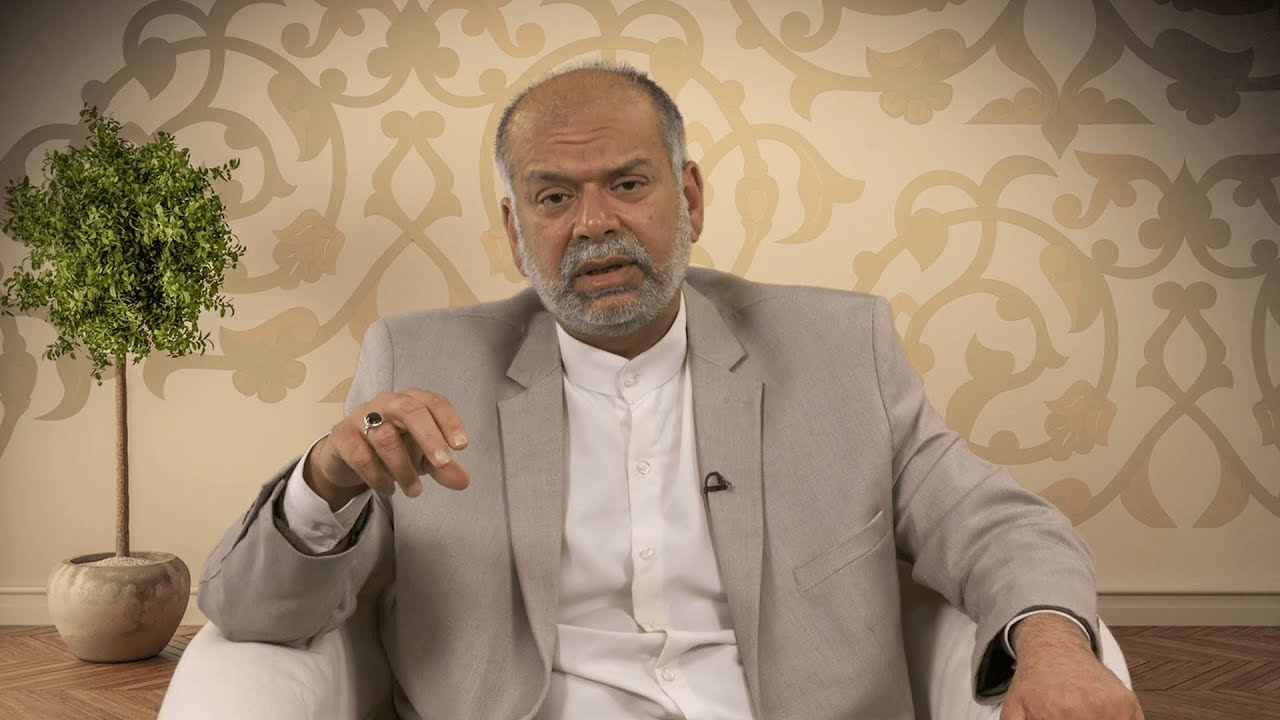
Sheikh Abbas Jaffer talks about attaining Taqwah in the Holy month of Ramadan as well as some of the things which makes your fast void in this episode of The Rules of Fasting.

Bismillahi, al-Rahman, al-Rahim. Ramadhan Mubarak. May Allah Subhana wa Ta'ala accept all our 'Amal that we have managed to do so far and give us the tawfiq to carry on taking the best from this month, InshaAllah wa Ta'ala. When Allah Subhana wa Ta'ala introduces the month of fasting in the Qur'an after He says fasting has been made compulsory on you, the way it was made compulsory on the people before you, He adds a statement of reason. He says "La'allakum tattaqoon" (2:183). This La'alla is that perhaps, maybe, if everything is right, the prize at the end of the day is Taqwa. The fasting will lead you to Taqwa if all other conditions are met. So we want to know what is this Taqwa? And why is it so important?
In actual fact, according to the Qur'an, the single reason for the distinction and fadheela of one human being over another human being is this one factor only. Nothing else matters. You cannot go to Allah Subhana wa Ta'ala and say how generous you are, how rich you are. Allah is richer, Allah is more generous. You cannot say to Allah that these are my merits and these are my good acts and all this, over the other people. The merit that Allah is interested in is Taqwa.
He says "'A'udhu billahi min al-shaytan al-rajim. Ya ayyuha an-nas." (49:13). 'O People.' Not even O Muslim, in O People, O Mankind. "Inna khalaqnakum min dhakarin wa untha" (49:13). You are all created from one man, one woman. "Wa ja'alnakum shu'ooban wa qaba'il" (49:13). 'I made you into these tribes and nations.' We have different colours. We have different, we look different, we speak differently. We have different classes in society. Why? "Li ta'arafoo" (49:13). 'So that you may recognise each other.' But don't think that whatever level you are, whichever land you live in, whatever you have in possessions and assets, don't think that that makes a difference to Me. What makes to me, what makes a difference to me is " Inna akramakum 'inda Allahi atqakum" (49:13). 'The ones from you who have honour in the Eyes of God are those who possess this Taqwa.'
So if Taqwa is the goal of fasting and if Taqwa is the means of distinction in the Eyes of God, we need to try to figure out what it is and how to gain it and how to keep it. So when we look at Taqwa, it is a kind of protection that we keep around us, a shield, if you like, that stops us from going into an area which would displease Allah. This is what it is. It is a shield and it means that being so conscious of God at every moment that you do not step into a direction which you know Allah displeased with. And certainly you do not do it by accident, by purpose. And you hope not to do it by accident. So this Taqwa, this shield, that you present around you, how does it come about?
Well first of all, it comes about by you being very mindful of every single thing you do and every single thing you say. That you ask yourself, that is this a direction that I am taking, is this towards God or is this something that maybe I stray into a thing where I am defying God or God was not pleased with this? So this constant mindfulness is the first thing.
And Taqwa is strengthened by 'Amal, by action. By Iman and 'Amal. It is something that becomes stronger and stronger as you begin to obey God more and more. It is not something you can just design and say from tomorrow 'I will be muttaqqi.' It is something that comes with practise. When one begins to obey Allah Subhana wa Ta'ala, after faith, then the result is Taqwa. One of them, of course, is the fast. But how can we put this into practise?
You see what happens sometimes is we do not have the faith. We don't have the belief. Yes, we have the teachings, but really, will it work or not? We don't know. So when we don't know, then our actions are not with conviction. For example, you are told the fasting will give you Taqwa. You're not sure how or you are told that salat will keep you away from fahsha, or you are told the hijab is wajib and necessary. You say or you are told halal is good and haram is dangerous. You say 'I'm trying to think about this, it doesn't make sense to me. It's the same food, same food. I can't see the difference. It's the same modesty, same modesty. I can't see.' This is where we sometimes get stuck. Taqwa will come from faith in what you have been taught.
I can give you an example. Allah Subhana wa Ta'ala is saying to us that there is a reward at the end of this activity. I can't see it because my 'aql, my mind cannot conceive it. Suppose I say to you 'My friend, 20 metres away from you is the most beautiful painting you have ever seen. It is the most glorious thing. You are 20 metres away. Go and see how beautiful it is.' So you say 'Before I go there, I must see it from here. I must try to understand it.'
It's dark, so you take out your torch and you shine it towards the painting. The problem is your painting, your torch only works ten metres. It's not more powerful than that. So you put it to ten metres. You don't see anything. You say 'You know what? I don't think there is a painting because I can't see it'. However, if you walk ten metres, out of faith, out of trust, that I have been told this by someone I trust. The Qur'an has told me this. My Prophet has told me this. You trust him and you do the 'Amal, when you reach ten metres and you shine your torch, you will see that, that painting, which you could have never seen from point zero but you can see it from ten metres and you think, Masha Allah, it really is there. It's so beautiful.
So Taqwa comes from' Amal. You have to act. Act on what you know is wajib. Stay away from what you know is haram. Do the mustahabbat, for Allah Subhana wa Ta'ala, do everything and you watch how this taqwa comes about. So, and Taqwa is a journey. Everybody has a little bit of Taqwa. Allah Subhana wa Ta'ala, in the Qur'an says that the Qur'an was revealed, "Hudan li 'l-muttaqeen" (2:2). So you say, well, is it 'Hudan li 'l-muttaqeen,' then it's not hudan for others. It's not a guide for others, only for the people of Taqwa. No. Everybody has a small level of Taqwa. For example, even a person who is not a Muslim or a person who has no faith. He has a level of Taqwa. For example, he will not go on the streets without clothes on. This is his level because you ask him 'Why don't you do that?' He says 'This is my level of shame. I would not do this.'
But when we come to the journey towards Allah Subhana wa Ta'ala, there are many grades of this Taqwa, depending on your effort. Even Rasul Allah, salla Allahu alayhi wa alihi wa sallam , is told 'Ittaqu Allah,' so he, there is a journey. Everybody is on this journey. And when you come on this journey, how do you know you have Taqwa? Taqwa is manifestation of Allah's Will in action. This is how it is and it's proportional to one's faith. And of course, when you have this, Allah Subhana wa Ta'ala, puts you in the most honourable group. In the Qur'an, He says "Yawma nahshuru ul-muttaqeena ila ar-Rahmani wafda" (19:85). On that day, the muttaqeen will be called and called to Allah in an honoured group of people. They will be men of wafd. They will be called with honour. "Wa nasooqu ul-mujrimeena ila Jahannama wirda" (19:86). While, the sinners and those who do not have Taqwa are told to proceed towards Jahannam.
So we have to ask ourselves carefully, that this fasting should not be in vain. It has a purpose, it has a meaning, it has a goal. We need to try to achieve that goal. Much can be said about Taqwa. Much has been said about Taqwa, and it's not a concept that is new to us. Nahjul Balagha's main theme is Taqwa. Amir ul-Mu'minin 'alayhi as-salam never far from this idea of Taqwa. So we can learn many things from the Seerah of the Ulema, from the Seerah of Ahlul Bayt also, 'alayhim us-salam , in the first instance, how to go about this. InshaAllah Ta'ala, may Allah be, make us successful in this InshaAllah wa Ta'ala.
On the issue of the masa'il, there are certain things that we should not do when we fast, because if we do them, they nullify the fast. They are called muftirat. They break the fast and there is a whole list of them. There's about 8, there's about 9 of them, listed by the Fuqaha. So today's InshaAllah and tomorrow's segment, we will look at these to make sure we understand.
The first thing, of course, is eating and drinking. And by eating and drinking we mean intentional eating and drinking. So if somebody, for example, because it is, he forgot in the early days of month of Ramadhan and so on, and they, you drank water because somebody gave it to you and you realise later on 'Astaghfiru Allah, I am fasting. How did I do this?' It doesn't invalidate the fast. The moment you realise you must stop. If there is some water in your mouth, you spit it out and your fast is still ok, and there is no Qadha either. So it is intentional eating and drinking, but by forgetting, it does not invalidate the fast.
Sometimes people say I'm not eating, but I'm tasting or I'm trying to chew the food, make it softer for my child, or I'm tasting it because I'm cooking the food and I want to make sure the salt, you know at the end of a day of fasting, you don't want to get the salt wrong. People get angry. Maybe. But anyway, you're tasting it. It's ok, because why? It does not go down the throat. It's not eating something. And you just, once you once you finish, you can just spit out that and not swallow it.
Some people say, well, suppose I have saliva in my mouth and lots of saliva and I swallow that. Is that like drinking? No. If the saliva is in the mouth and you are swallowing it, it's ok.
There are other masa'il, sometimes people say, like for example, a person might think 'I'm using an asthma pump, an inhaler. Now that is going down. Is it going into and breaking my fast as food?' No, it's allowed because it does not, does not enter the stomach, it enters, rather the respiratory tract and so this is something that does not break the fast.
Essentially people say, if I take an injection, if I take an injection, for example, you take an injection and an anesthetic for some treatment, right? That does not break the fast. The Fuqaha say, if it is some sort of tonic that you take it and it gives you strength and this is makruh, but does not break the fast either, because it does not go down the throat into the stomach. But generally speaking, we should stay away from those things that somehow give us food in a different way. As technology goes forward. God knows, I was hearing about things that are put on the skin, stuck on the skin and they give some sort of strength and some sort of nourishment. So far, the Fuqaha rule this is makruh.
The second thing is that physical intimacy with your spouse breaks the fast. So sexual intimacy or even and this comes Istimna and masturbation, these kind of things, they if they are done in the fast, they break the fast. So those are things that we need to keep in mind.
And the third thing is ascribing lies to Allah Subhana wa Ta'ala and to Rasul Allah and to A'imma alayhim us-salam , and including you know, as per precaution, Janabe Sayyida as-salamu Allahi 'alayha, as well the Ma'soomeen 'alayhim us-salam. What does ascribing lies mean? It means either yourself saying 'That this is in the Qur'an. This, the Prophet definitely said, this happened to Imam Al-Husayn in Karbala,' when you know that this is not happening and you know for a fact that it did not happen, but somehow you are saying it. This, if done knowingly while you are fasting, breaks the fast. Or if someone asks you has, 'Is this what the Prophet said?' And you know he said it, but for some reason, you say 'No, he didn't say this.' Whichever way, if you are doing, attributing a lie, it may be a mistake, that's something else. You find out later on that what I said was wrong. But at that time, you thought it was right, that doesn't break the fast.
So we have to be careful, more careful than normal when we are speaking on behalf of what Allah may have said or the Prophet or the A'imma alayhim us-salam, that it can break the fast. Wa as-salamu alaykum, wa rahmatullahi, wa barakatuh.
Bismillahi, al-Rahman, al-Rahim. Ramadhan Mubarak. Möge Allah Subhana wa Ta'ala all unser 'Amal annehmen, das wir bis jetzt geschafft haben, und uns die Tawfiq geben, um weiterhin das Beste aus diesem Monat zu nehmen, InshaAllah wa Ta'ala. Wenn Allah Subhana wa Ta'ala im Qur'an den Fastenmonat einführt, nachdem Er gesagt hat, dass das Fasten für euch verpflichtend gemacht wurde, so wie es für die Menschen vor euch verpflichtend gemacht wurde, fügt Er eine Erklärung der Gründe hinzu. Er sagt "La'allakum tattaqoon" (2:183). Dieses La'alla bedeutet, dass vielleicht, wenn alles richtig ist, der Preis am Ende des Tages Taqwa ist. Das Fasten wird dich zu Taqwa führen, wenn alle anderen Bedingungen erfüllt sind. Wir wollen also wissen, was ist dieses Taqwa? Und warum ist sie so wichtig?
Tatsächlich ist nach dem Koran der einzige Grund für die Unterscheidung und die Fadheela eines Menschen gegenüber einem anderen Menschen nur dieser eine Faktor. Nichts anderes ist wichtig. Du kannst nicht zu Allah Subhana wa Ta'ala gehen und sagen, wie großzügig du bist, wie reich du bist. Allah ist reicher, Allah ist großzügiger. Du kannst nicht zu Allah sagen, dass dies meine Verdienste sind und dass dies meine guten Taten sind und all dies, im Vergleich zu den anderen Menschen. Der Verdienst, an dem Allah interessiert ist, ist Taqwa.
Er sagt: "'A'udhu billahi min al-shaytan al-rajim. Ya ayyuha an-nas." (49:13). 'O Volk.' Nicht einmal O Muslim, in O Volk, O Menschheit. "Inna khalaqnakum min dhakarin wa untha" (49:13). Ihr seid alle aus einem Mann und einer Frau erschaffen worden. "Wa ja'alnakum shu'ooban wa qaba'il" (49:13). Ich habe euch zu diesen Stämmen und Völkern gemacht. Wir haben verschiedene Farben. Wir sehen unterschiedlich aus, wir sprechen unterschiedlich. Wir haben verschiedene Klassen in der Gesellschaft. Und warum? "Li ta'arafoo" (49:13). Damit ihr euch gegenseitig erkennen könnt. Aber glaubt nicht, dass es für mich einen Unterschied macht, welchen Stand ihr habt, in welchem Land ihr lebt, was ihr an Besitz und Vermögen habt. Was für Mich einen Unterschied macht, was für Mich einen Unterschied macht, ist "Inna akramakum 'inda Allahi atqakum" (49:13). Diejenigen von euch, die Ehre in den Augen Gottes haben, sind diejenigen, die diese Taqwa besitzen.
Wenn also Taqwa das Ziel des Fastens ist und wenn Taqwa das Mittel zur Unterscheidung in den Augen Gottes ist, müssen wir versuchen herauszufinden, was es ist und wie man es erlangt und wie man es bewahrt. Wenn wir also Taqwa betrachten, ist es eine Art Schutz, den wir um uns herum haben, ein Schild, wenn man so will, das uns davon abhält, in einen Bereich zu gehen, der Allah missfallen würde. Das ist es, was es ist. Es ist ein Schild, und es bedeutet, dass man sich in jedem Moment so sehr Gottes bewusst ist, dass man nicht in eine Richtung geht, von der man weiß, dass sie Allah missfällt. Und sicherlich tust du es nicht aus Versehen, sondern mit Absicht. Und du hoffst, dass du es nicht aus Versehen tust. Wie kommt es also zu dieser Taqwa, diesem Schutzschild, den ihr um euch herum errichtet?
Nun, zuallererst kommt es dadurch zustande, dass Sie sehr achtsam mit jeder einzelnen Sache sind, die Sie tun und jeder einzelnen Sache, die Sie sagen. Dass du dich fragst, ob das eine Richtung ist, die ich einschlage, ob das auf Gott zugeht oder ob ich vielleicht in eine Richtung abschweife, in der ich mich Gott widersetze oder in der Gott nicht zufrieden war. Diese ständige Achtsamkeit ist also das Wichtigste.
Und Taqwa wird durch 'Amal, durch Handeln, gestärkt. Durch Iman und 'Amal. Es ist etwas, das stärker und stärker wird, wenn man Gott mehr und mehr gehorcht. Es ist nicht etwas, das man sich einfach ausdenken kann und von morgen an sagt: "Ich werde muttaqqi sein. Es ist etwas, das mit der Praxis kommt. Wenn man beginnt, Allah Subhana wa Ta'ala zu gehorchen, nach dem Glauben, dann ist das Ergebnis Taqwa. Eine davon ist natürlich das Fasten. Aber wie können wir das in die Praxis umsetzen?
Sehen Sie, was manchmal passiert, ist, dass wir keinen Glauben haben. Wir haben nicht den Glauben. Ja, wir haben die Lehren, aber wird es wirklich funktionieren oder nicht? Wir wissen es nicht. Wenn wir es also nicht wissen, dann handeln wir nicht mit Überzeugung. Man sagt Ihnen zum Beispiel, dass das Fasten Ihnen Taqwa geben wird. Du bist dir nicht sicher, wie, oder man sagt dir, dass das Salat dich von Fahsha fernhalten wird, oder man sagt dir, dass der Hijab wajib und notwendig ist. Du sagst oder man sagt dir, halal ist gut und haram ist gefährlich. Sie sagen: "Ich versuche, darüber nachzudenken, aber es ergibt für mich keinen Sinn. Es ist das gleiche Essen, das gleiche Essen. Ich kann den Unterschied nicht erkennen. Es ist die gleiche Bescheidenheit, die gleiche Bescheidenheit. Ich kann es nicht sehen. Das ist der Punkt, an dem wir manchmal feststecken. Taqwa entsteht aus dem Glauben an das, was man euch gelehrt hat.
Ich kann Ihnen ein Beispiel geben. Allah Subhana wa Ta'ala sagt uns, dass es am Ende dieser Tätigkeit eine Belohnung gibt. Ich kann es nicht sehen, weil mein 'aql, mein Verstand es nicht begreifen kann. Angenommen, ich sage zu dir: "Mein Freund, 20 Meter von dir entfernt ist das schönste Gemälde, das du je gesehen hast. Es ist das prächtigste Ding. Du bist 20 Meter entfernt. Geh hin und sieh, wie schön es ist.' Du sagst also: "Bevor ich dorthin gehe, muss ich es von hier aus sehen. Ich muss versuchen, es zu verstehen.
Es ist dunkel, also nimmst du deine Taschenlampe und leuchtest auf das Gemälde. Das Problem ist, dass dein Gemälde und deine Taschenlampe nur zehn Meter weit reichen. Sie ist nicht stärker als das. Also stellst du sie auf zehn Meter. Du kannst nichts sehen. Du sagst: "Weißt du was? Ich glaube nicht, dass es ein Gemälde gibt, weil ich es nicht sehen kann". Wenn du jedoch zehn Meter weitergehst, dann aus Glauben, aus Vertrauen, dass mir dies von jemandem gesagt wurde, dem ich vertraue. Der Koran hat mir das gesagt. Mein Prophet hat mir das gesagt. Wenn du ihm vertraust und den 'Amal machst, wenn du zehn Meter weit kommst und mit deiner Taschenlampe leuchtest, dann wirst du das Gemälde sehen, das du vom Nullpunkt aus niemals hättest sehen können, aber du kannst es aus zehn Metern Entfernung sehen und du denkst: Masha Allah, es ist wirklich da. Es ist so schön.
Taqwa kommt also von 'Amal. Ihr müsst handeln. Handle nach dem, von dem du weißt, dass es wajib ist. Halte dich von dem fern, von dem du weißt, dass es haram ist. Tu das Mustahabbat, für Allah Subhana wa Ta'ala, tu alles und du wirst sehen, wie diese Taqwa entsteht. Und Taqwa ist eine Reise. Jeder hat ein kleines bisschen Taqwa. Allah Subhana wa Ta'ala sagt im Qur'an, dass der Qur'an offenbart wurde, "Hudan li 'l-muttaqeen" (2:2). Du sagst also, nun, ist es 'Hudan li 'l-muttaqeen', dann ist es kein Hudan für andere. Es ist kein Leitfaden für andere, nur für die Leute mit Taqwa. Nein. Jeder hat ein kleines Maß an Taqwa. Zum Beispiel auch eine Person, die kein Muslim ist, oder eine Person, die keinen Glauben hat. Er hat ein gewisses Maß an Taqwa. Er wird zum Beispiel nicht unbekleidet auf die Straße gehen. Das ist seine Ebene, denn wenn man ihn fragt: "Warum tust du das nicht?
", sagt er: "Das ist meine Ebene der Scham. Ich würde das nicht tun.'
Aber wenn wir zur Reise zu Allah Subhana wa Ta'ala kommen, gibt es viele Stufen dieser Taqwa, je nach Anstrengung. Sogar Rasul Allah, salla Allahu alayhi wa alihi wa sallam , wird gesagt: "Ittaqu Allah", also er, es gibt eine Reise. Jeder befindet sich auf dieser Reise. Und wenn man auf diese Reise kommt, woher weiß man dann, dass man Taqwa hat? Taqwa ist die Manifestation von Allahs Willen in Aktion. So ist es, und es ist proportional zum Glauben. Und natürlich, wenn man das hat, stellt Allah, Subhana wa Ta'ala, einen in die ehrenvollste Gruppe. Im Qur'an sagt Er: "Yawma nahshuru ul-muttaqeena ila ar-Rahmani wafda" (19:85). An jenem Tag werden die Muttaqeen in einer ehrenvollen Gruppe von Menschen zu Allah gerufen und angerufen. Sie werden Männer von wafd sein. Sie werden mit Ehre angerufen werden. "Wa nasooqu ul-mujrimeena ila Jahannama wirda" (19:86). Den Sündern und denjenigen, die kein Taqwa haben, wird hingegen gesagt, dass sie nach Jahannam gehen sollen.
Wir müssen uns also sorgfältig fragen, ob dieses Fasten nicht umsonst ist. Es hat einen Zweck, es hat einen Sinn, es hat ein Ziel. Wir müssen versuchen, dieses Ziel zu erreichen. Über Taqwa kann viel gesagt werden. Es ist viel über Taqwa gesagt worden, und es ist kein Konzept, das für uns neu ist. Das Hauptthema von Nahjul Balagha ist Taqwa. Amir ul-Mu'minin 'alayhi as-salam war nie weit von dieser Idee von Taqwa entfernt. So können wir viele Dinge aus der Seerah der Ulema, auch aus der Seerah der Ahlul Bayt 'alayhim us-salam lernen, in erster Linie, wie man damit umgeht. InshaAllah Ta'ala, möge Allah sein, mache uns darin erfolgreich InshaAllah wa Ta'ala.
Was die Masa'il betrifft, so gibt es bestimmte Dinge, die wir nicht tun sollten, wenn wir fasten, denn wenn wir sie tun, machen sie das Fasten zunichte. Sie werden Muftirat genannt. Sie brechen das Fasten und es gibt eine ganze Liste von ihnen. Es gibt etwa 8 oder 9 von ihnen, die von den Fuqaha aufgelistet werden. Im heutigen InshaAllah und im morgigen Abschnitt werden wir uns diese ansehen, um sicherzustellen, dass wir sie verstehen.
Der erste Punkt ist natürlich Essen und Trinken. Und mit Essen und Trinken meinen wir absichtliches Essen und Trinken. Wenn also jemand zum Beispiel in den ersten Tagen des Ramadhan-Monats vergisst, Wasser zu trinken, weil es ihm jemand gegeben hat, und er später feststellt: "Astaghfiru Allah, ich faste. Wie habe ich das gemacht?' Das macht das Fasten nicht ungültig. In dem Moment, in dem du es merkst, musst du aufhören. Wenn man etwas Wasser im Mund hat, spuckt man es aus und das Fasten ist immer noch in Ordnung, und es gibt auch keine Qadha. Es ist also absichtliches Essen und Trinken, aber wenn man es vergisst, ist das Fasten nicht ungültig.
Manchmal sagen die Leute, ich esse nicht, aber ich koste, oder ich versuche, das Essen zu kauen, es für mein Kind weicher zu machen, oder ich koste, weil ich das Essen koche, und ich will sichergehen, dass das Salz nicht falsch ist, wissen Sie, am Ende eines Fastentages. Die Leute werden wütend. Das mag sein. Aber egal, man schmeckt es. Das ist in Ordnung, denn warum? Es geht nicht die Kehle hinunter. Man isst ja nicht irgendwas. Und wenn man fertig ist, kann man es einfach ausspucken und muss es nicht schlucken.
Manche Leute sagen: "Nehmen wir an, ich habe Speichel im Mund, viel Speichel, und den schlucke ich. Ist das wie Trinken? Nein. Wenn der Speichel im Mund ist und man ihn herunterschluckt, ist es in Ordnung.
Es gibt noch andere Masa'il, manchmal sagen die Leute zum Beispiel: "Ich benutze eine Asthma-Pumpe, einen Inhalator. Das geht jetzt runter. Gilt das als Essen und als Fastenbrechen?' Nein, es ist erlaubt, denn es gelangt nicht in den Magen, sondern in die Atemwege, und somit ist es etwas, das das Fasten nicht bricht.
Im Grunde genommen sagen die Leute, wenn ich eine Injektion nehme, wenn ich eine Injektion nehme, zum Beispiel, Sie nehmen eine Injektion und ein Anästhetikum für eine Behandlung, richtig? Das bricht nicht das Fasten. Die Fuqaha sagen, wenn es sich um eine Art Stärkungsmittel handelt, das man einnimmt und das einem Kraft gibt, dann ist das makruh, aber es bricht auch nicht das Fasten, weil es nicht durch die Kehle in den Magen gelangt. Aber im Allgemeinen sollten wir uns von Dingen fernhalten, die uns auf eine andere Art und Weise Nahrung geben. Die Technologie schreitet voran. Gott weiß, ich habe von Dingen gehört, die auf die Haut aufgetragen werden, die auf die Haut geklebt werden und die eine Art von Kraft und eine Art von Nahrung geben. Bis jetzt haben die Fuqaha entschieden, dass dies makruh ist.
Die zweite Sache ist, dass körperliche Intimität mit deinem Ehepartner das Fasten bricht. Sexuelle Intimität oder sogar - und hier kommen Istimna und Masturbation ins Spiel - diese Art von Dingen brechen das Fasten, wenn sie während des Fastens durchgeführt werden. Das sind also Dinge, die wir im Auge behalten müssen.
Und die dritte Sache ist die Zuschreibung von Lügen zu Allah Subhana wa Ta'ala und zu Rasul Allah und zu A'imma alayhim us-salam , und auch, wie ihr wisst, vorsichtshalber zu Janabe Sayyida as-salamu Allahi 'alayha, sowie zu den Ma'soomeen 'alayhim us-salam. Was bedeutet die Zuschreibung von Lügen? Es bedeutet, dass man entweder selbst sagt: "Das steht im Koran. Das hat der Prophet mit Sicherheit gesagt, das ist Imam Al-Husayn in Karbala passiert", wenn man weiß, dass dies nicht der Fall ist und man weiß mit Sicherheit, dass es nicht passiert ist, aber irgendwie sagt man es. Wenn du dies wissentlich tust, während du fastest, brichst du das Fasten. Oder wenn dich jemand fragt: "Hat der Prophet das gesagt? Und du weißt, dass er es gesagt hat, aber aus irgendeinem Grund sagst du: "Nein, das hat er nicht gesagt. Wie auch immer, wenn du eine Lüge unterstellst, kann das ein Fehler sein, das ist etwas anderes. Sie finden später heraus, dass das, was ich gesagt habe, falsch war.
Aber zu diesem Zeitpunkt dachten Sie, dass es richtig war, das bricht nicht das Fasten.
Wir müssen also vorsichtig sein, vorsichtiger als sonst, wenn wir im Namen dessen sprechen, was Allah gesagt haben mag oder der Prophet oder die A'imma alayhim us-salam, dass es das Fasten brechen kann. Wa as-salamu alaykum, wa rahmatullahi, wa barakatuh.